
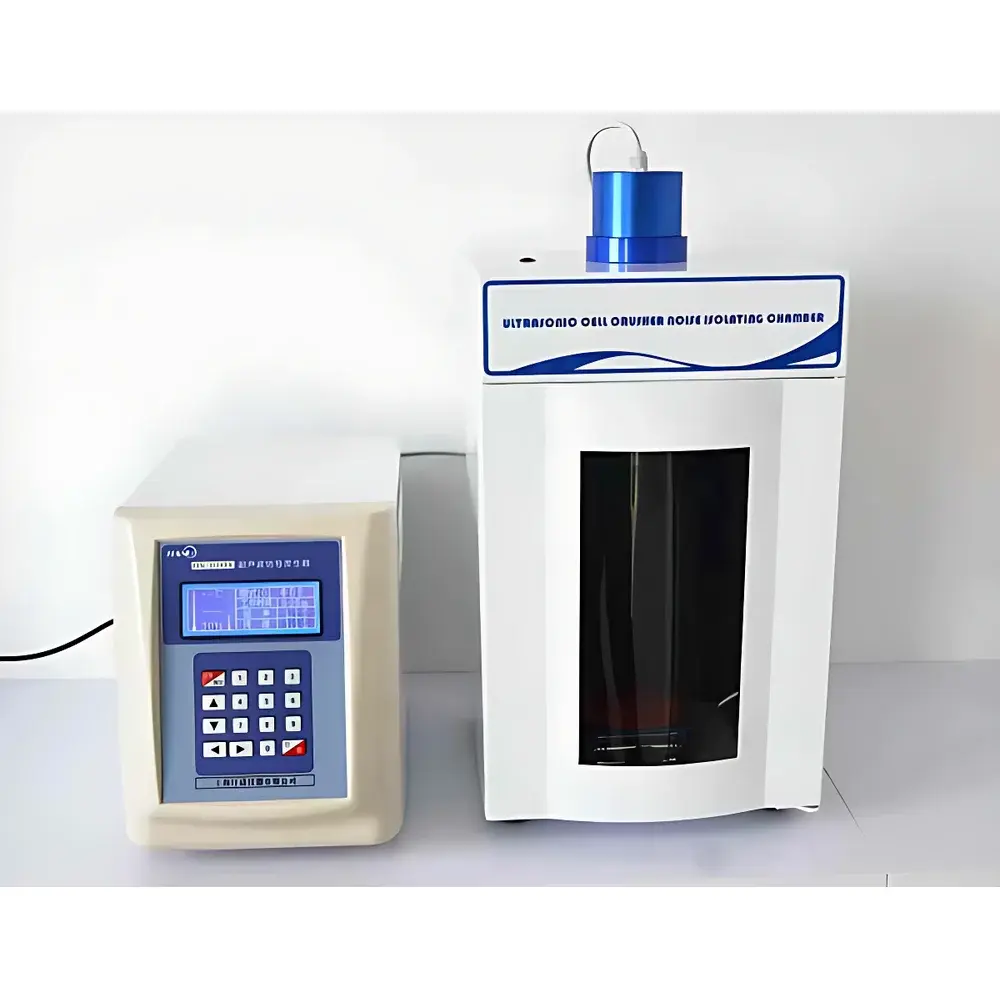
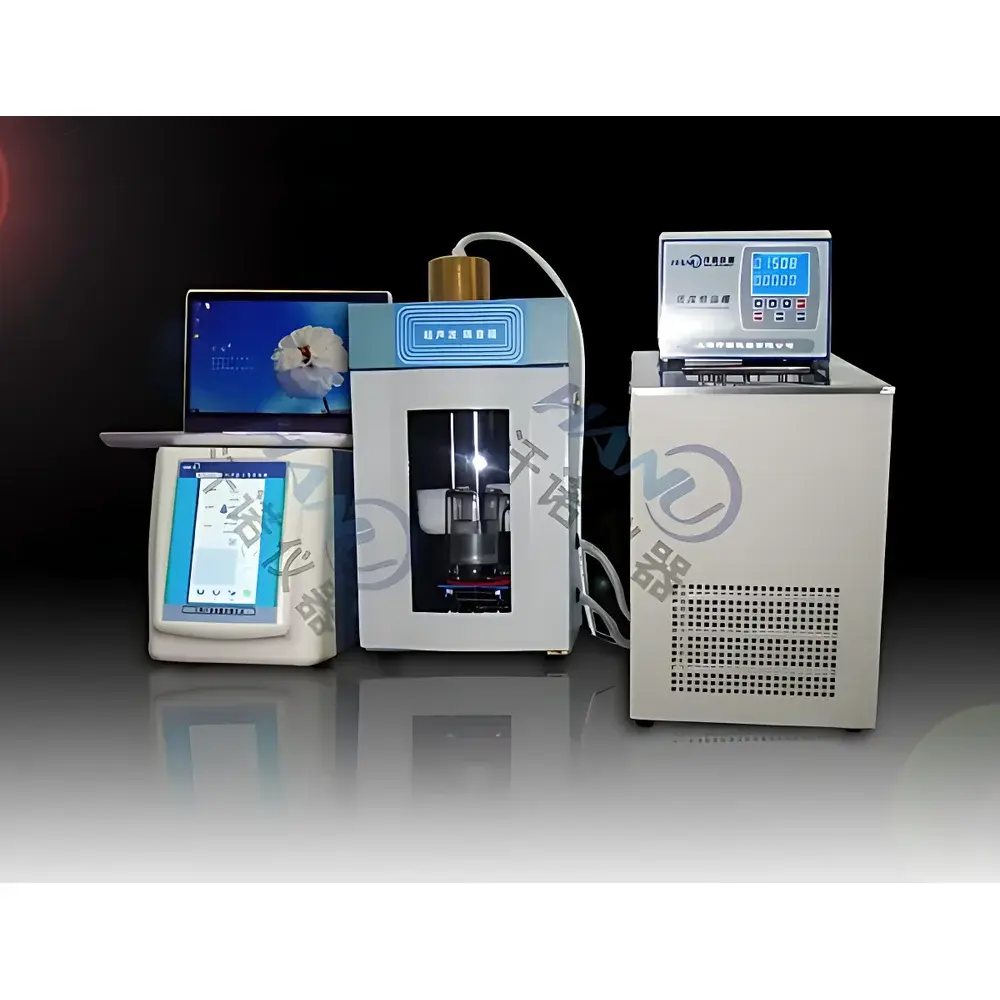
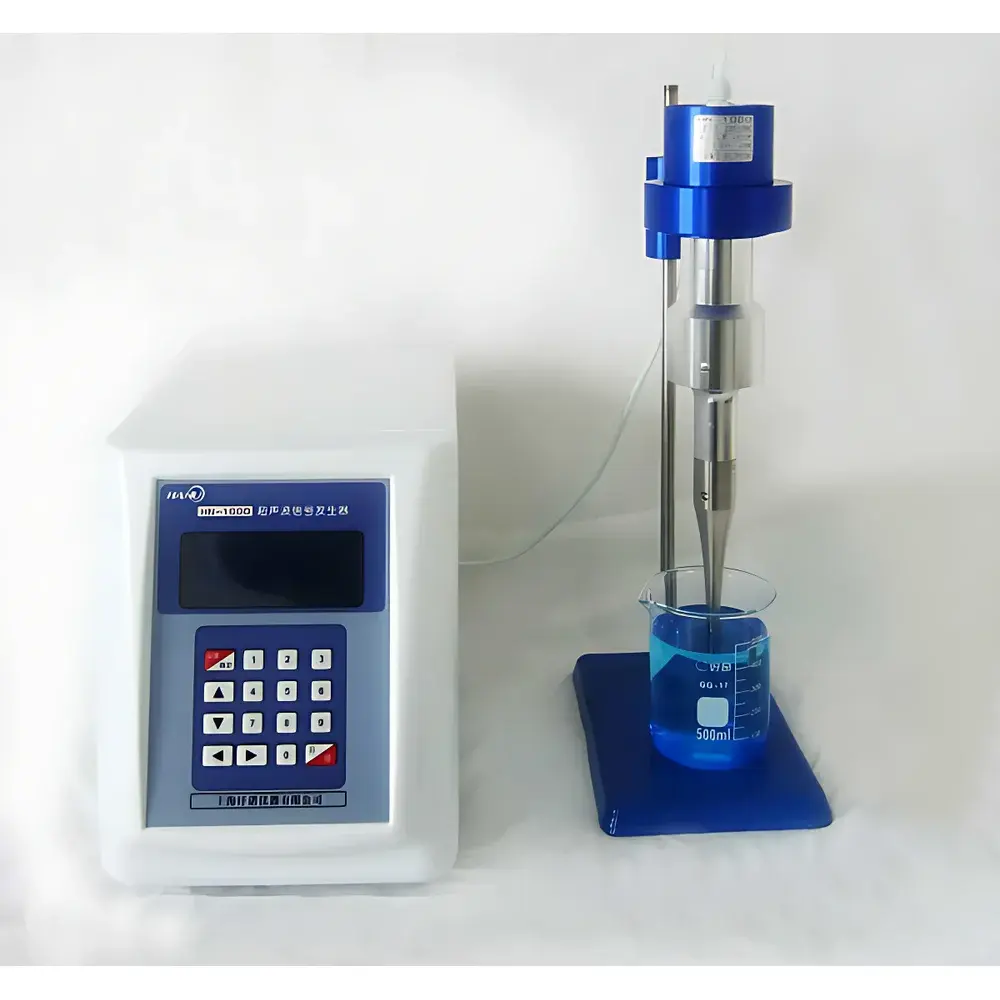
Hanuo HN-1000Y Liquid-Crystal Display Ultrasonic Cell Disruptor
| Brand | Hanuo |
|---|---|
| Origin | Shanghai, China |
| Manufacturer Type | Authorized Distributor |
| Product Category | Domestic |
| Model | HN-1000Y |
| Instrument Type | Ultrasonic Cell Disruptor |
| Ultrasonic Power | 1000 W |
| Operating Frequency | 22 kHz |
| Temperature Range | 0–99 °C |
| Sample Volume Capacity | 1000 mL |
| Sample Throughput | Single-sample operation |
Overview
The Hanuo HN-1000Y Liquid-Crystal Display Ultrasonic Cell Disruptor is an engineered benchtop system designed for controlled, reproducible cell lysis and particle dispersion in life science and bioprocessing laboratories. It operates on the principle of high-intensity ultrasonic cavitation—where rapid pressure fluctuations in a liquid medium generate transient microbubbles that collapse violently, producing localized shear forces, shockwaves, and thermal energy sufficient to disrupt cellular membranes, homogenize tissues, emulsify suspensions, or exfoliate nanomaterials. Unlike continuous-wave systems with fixed amplitude, the HN-1000Y employs frequency-tracking feedback circuitry to maintain resonance stability across varying load impedances (e.g., viscosity, volume, temperature), ensuring consistent energy delivery regardless of sample composition. Its 22 kHz nominal operating frequency falls within the optimal range for balancing penetration depth and cavitation intensity in aqueous biological matrices, making it suitable for both fragile eukaryotic cells and robust prokaryotes or spores.
Key Features
- Liquid-crystal display (LCD) interface with intuitive navigation and real-time parameter visualization—including power output (%), elapsed time, cycle count, and current bath temperature.
- Automatic frequency tracking and impedance compensation to sustain resonant coupling between transducer and probe under dynamic loading conditions.
- Integrated Peltier-assisted temperature control module with ±0.5 °C accuracy over 0–99 °C range; programmable upper-limit cutoff prevents thermal denaturation of heat-sensitive biomolecules.
- High-efficiency piezoelectric transducer fabricated with optimized ceramic stack architecture, delivering >85% electroacoustic conversion efficiency at rated 1000 W input.
- Programmable duty cycle: ultrasonication time (1 s–99 min) and pause interval (1 s–99 min) are independently configurable to minimize cumulative thermal load during extended protocols.
- Microprocessor-based controller stores up to 50 user-defined method profiles with timestamped execution logs—enabling method standardization across operators and shifts.
- Acoustically damped enclosure constructed from multi-layer composite panels (mass-loaded vinyl + viscoelastic polymer), achieving >45 dB(A) noise reduction at 1 m distance.
- Titanium alloy (Grade 5, Ti-6Al-4V) probe with precision-machined nodal geometry, corrosion-resistant surface finish, and fatigue-rated mechanical integrity for >10,000 operational cycles.
- Amplitude auto-regulation system dynamically adjusts drive voltage to maintain constant tip displacement (±3% deviation) across changing acoustic loads—critical for inter-batch reproducibility in GMP-aligned workflows.
Sample Compatibility & Compliance
The HN-1000Y accommodates single samples ranging from 0.2 mL to 1000 mL in volume, supporting common vessel formats including centrifuge tubes (15–50 mL), beakers, jacketed reactors, and custom immersion wells. Probe options include Φ2 mm, Φ3 mm, Φ12 mm, and Φ15 mm tapered tips—each calibrated for specific impedance matching and energy density distribution. The instrument complies with IEC 61000-6-3 (EMC emission limits) and IEC 61000-6-2 (immunity requirements). While not certified for Class I Division 1 hazardous locations, its electrical design conforms to UL/CSA 61010-1 safety standards for laboratory equipment. For regulated environments, audit-trail-capable data export (CSV via USB) supports alignment with GLP documentation practices and internal SOP validation.
Software & Data Management
No proprietary software installation is required. All operational parameters and runtime logs are managed locally via the embedded microcontroller. Timestamped method records—including start/stop times, total active sonication duration, average power delivered, and peak temperature reached—are stored in non-volatile memory and exportable as plain-text CSV files through a standard USB-A port. This architecture eliminates dependency on third-party drivers or cloud services, ensuring compatibility with air-gapped networks common in pharmaceutical QC labs. Data integrity is preserved via cyclic redundancy check (CRC-16) validation during file write operations.
Applications
- Cell lysis for protein extraction from E. coli, yeast, mammalian suspension cultures, and plant protoplasts.
- Nucleic acid shearing prior to NGS library preparation (fragment size controllable via amplitude/duration tuning).
- Preparation of uniform liposome and polymeric nanoparticle dispersions for drug delivery formulation development.
- Disaggregation of amyloid fibrils and inclusion bodies in recombinant protein refolding studies.
- Ultrasound-assisted extraction of bioactive compounds (e.g., polyphenols, alkaloids) from botanical matrices.
- Inactivation of viruses and prions in biosafety level 2 (BSL-2) containment workflows, when combined with validated chemical inactivation steps.
FAQ
What is the maximum recommended continuous operating time per cycle?
For thermal management and transducer longevity, continuous operation beyond 5 minutes is discouraged without active cooling; users should employ ≥1:1 duty cycle (e.g., 3 min ON / 3 min OFF) for sessions exceeding 15 minutes.
Can the HN-1000Y be integrated into automated liquid handling platforms?
It features TTL-compatible remote start/stop I/O ports (opto-isolated), enabling synchronization with robotic arms or PLC-controlled reactors—though full protocol scripting requires external logic controllers.
Is probe sterilization supported?
Titanium alloy probes tolerate autoclaving (121 °C, 20 min, saturated steam); however, repeated sterilization may accelerate surface oxidation—routine ethanol wipe-down is recommended for routine use.
Does the system support ISO/IEC 17025-compliant calibration?
While the unit includes factory calibration traceable to national standards, formal accredited calibration requires third-party metrology service using NIST-traceable hydrophone-based acoustic power measurement per ASTM E1777-20.
What maintenance intervals are advised?
Visual inspection of probe threads and gasket integrity every 200 hours; transducer performance verification (via calorimetric power test) annually or after 1000 cumulative operating hours.




