
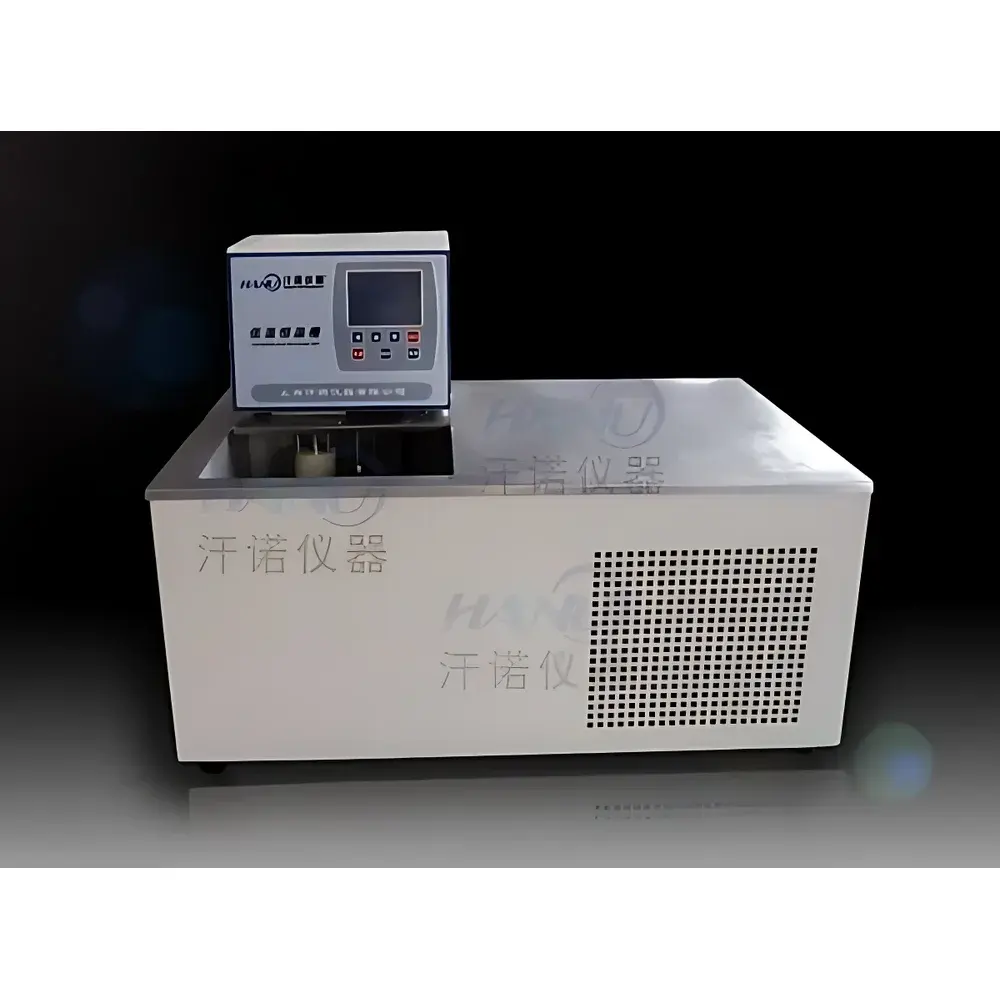
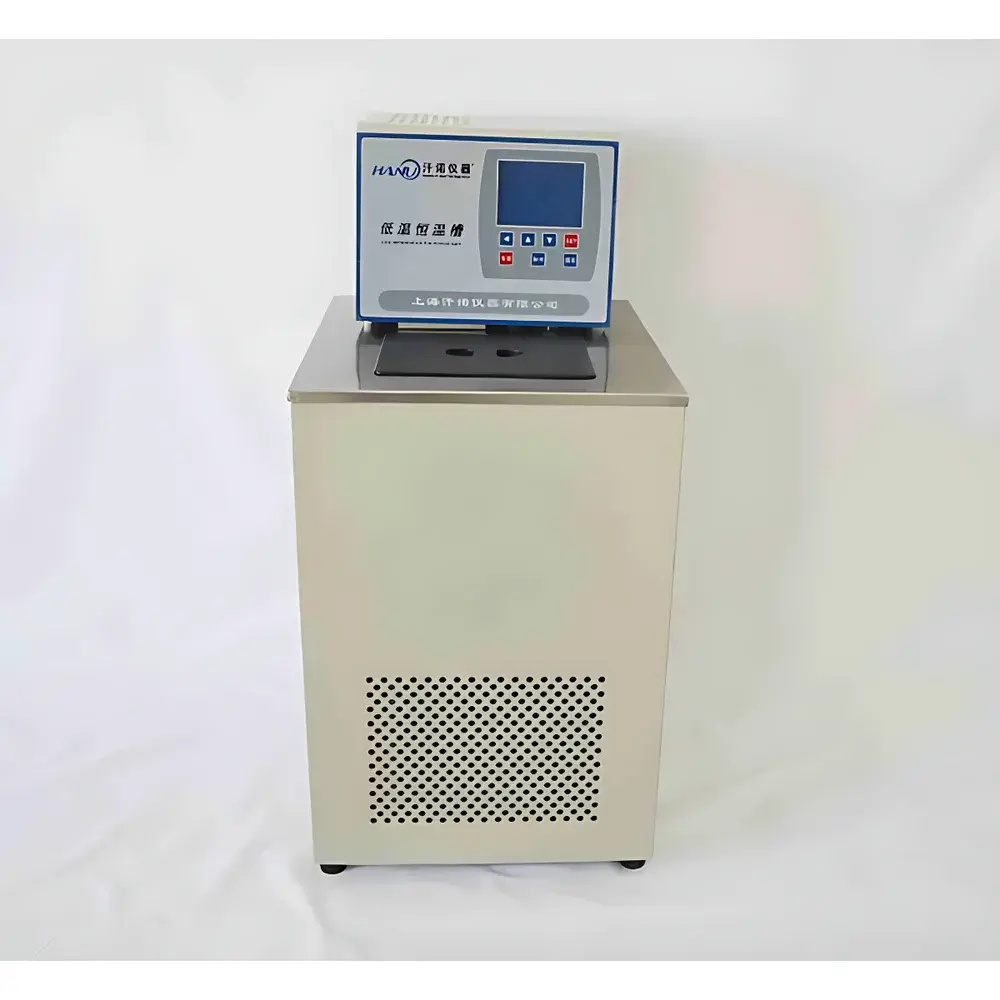
Hanuo DCW-2008 Low-Temperature Constant-Temperature Circulating Bath
| Brand | Hanuo |
|---|---|
| Origin | Shanghai, China |
| Manufacturer Type | Authorized Distributor |
| Product Category | Domestic |
| Model | DCW-2008 |
| Instrument Type | Constant-Temperature Bath |
| Circulation Mode | Internal & External |
| Temperature Control | Refrigeration & Heating |
| Bath Volume | 6 L |
| Temperature Range | −20 °C to 100 °C |
| Temperature Stability | ±0.05 °C |
| Working槽 Dimensions (L×W×H) | 280 mm × 250 mm × 140 mm |
| Opening Size | 235 mm × 160 mm |
| Circulation Flow Rate | 4 L/min |
Overview
The Hanuo DCW-2008 Low-Temperature Constant-Temperature Circulating Bath is a precision-engineered thermal control system designed for laboratory environments requiring stable, programmable temperature regulation across a broad operational range. Utilizing a dual-mode compressor-based refrigeration system coupled with high-efficiency resistive heating elements, the unit maintains precise thermal equilibrium via PID-controlled feedback loops and platinum resistance temperature sensors (PT100). Its core function is to serve as a reliable external temperature source or sink—delivering consistent thermal energy to external devices (e.g., spectrophotometers, viscometers, reaction jackets, or material testing chambers) through an integrated external circulation loop, while simultaneously maintaining uniform internal bath temperature for direct sample immersion. Engineered for continuous operation under variable load conditions, the DCW-2008 meets the stringent thermal stability requirements of analytical method validation, calibration protocols, and ISO/IEC 17025-compliant testing workflows.
Key Features
- Wide operational temperature span from −20 °C to +100 °C, enabling low-temperature kinetics studies, high-temperature solubility assays, and intermediate-range stability testing.
- High-precision temperature control with ±0.05 °C stability at setpoint, verified under static load conditions per ASTM E2251-22 Annex A1.
- Dual-circulation architecture supports both internal bath homogenization and external heat exchange via a 4 L/min adjustable flow pump with pressure-regulated output (0–0.3 MPa).
- Stainless steel 304 bath tank (280 × 250 × 140 mm) with reinforced insulation and corrosion-resistant fluid path components compatible with water, ethanol/water mixtures, and silicone oil (viscosity ≤ 50 cSt).
- Intuitive 4.3-inch TFT LCD interface with real-time temperature display, ramp-soak programming, over-temperature/low-level alarms, and auto-recovery after power interruption.
- Integrated safety systems include dry-run protection, compressor overheat cutoff, and liquid level sensor interlock to prevent heater activation below minimum fill volume.
Sample Compatibility & Compliance
The DCW-2008 accommodates a wide variety of sample formats and auxiliary equipment—including glassware up to 2 L capacity, jacketed reactors, rotary evaporator condensers, and external analytical probes. Its external circulation port (G1/4″ BSP) enables seamless integration with OEM instruments requiring chilled or heated coolant supply. The unit complies with IEC 61010-1:2010 for electrical safety in laboratory equipment and meets CE marking requirements for electromagnetic compatibility (EMC Directive 2014/30/EU). While not certified for Class I Division 1 hazardous locations, it is suitable for general-purpose use in ISO Class 7 cleanrooms and GLP-regulated laboratories when operated within specified ambient conditions (15–30 °C, <80% RH non-condensing). Documentation includes factory calibration certificate traceable to NIM (National Institute of Metrology, China), supporting audit readiness for FDA 21 CFR Part 11-aligned quality systems where electronic records are maintained.
Software & Data Management
The DCW-2008 operates autonomously via its embedded controller but supports optional RS485 (Modbus RTU) or USB-to-serial interface for remote monitoring and control using third-party SCADA or LIMS platforms. Data logging functionality records timestamped temperature values at user-defined intervals (1–600 seconds) to internal flash memory (up to 10,000 data points), exportable via USB drive in CSV format. When integrated into validated environments, the device supports audit trail generation—including operator ID, parameter changes, alarm events, and system resets—as required under GMP Annex 11 and USP guidelines for analytical instrument qualification. No proprietary software installation is required; configuration remains accessible through standard terminal emulation tools.
Applications
- Calibration of temperature-sensitive transducers (RTDs, thermistors, infrared sensors) across extended ranges.
- Thermal conditioning of samples prior to rheological, DSC, or TGA analysis to ensure baseline consistency.
- Controlled-rate cooling/heating of chemical reactions in jacketed glass reactors to optimize yield and selectivity.
- Stabilization of optical components (e.g., laser diodes, interferometer stages) requiring sub-0.1 °C thermal drift suppression.
- Support of accelerated stability studies (ICH Q1A) for pharmaceutical formulations under defined temperature stress conditions.
- Environmental simulation for materials testing—e.g., polymer glass transition assessment, elastomer modulus profiling, or battery electrolyte viscosity mapping.
FAQ
What fluids are compatible with the DCW-2008 bath?
Deionized water, 30–50% aqueous ethylene glycol solutions, and low-viscosity silicone oils (≤50 cSt) are recommended. Avoid halogenated solvents, strong acids/bases, or fluids with freezing points above −20 °C.
Can the unit maintain −20 °C continuously under full external load?
Yes—when paired with a properly sized external heat exchanger (<1.5 kW thermal load) and ambient temperature ≤25 °C, sustained operation at −20 °C is achievable with ≤±0.1 °C deviation.
Is external circulation flow rate adjustable?
Yes—the built-in centrifugal pump offers stepless flow control from 0 to 4 L/min, with pressure compensation to maintain consistent delivery across varying backpressure conditions.
Does the DCW-2008 support protocol-based temperature ramps?
Yes—up to 10 multi-segment ramp-soak programs can be stored, each with independent rate (0.1–10 °C/min), dwell time (1–9999 min), and endpoint hold logic.
What maintenance is required for long-term reliability?
Biannual inspection of condenser coil cleanliness, annual replacement of bath fluid (if water-based), and verification of PT100 sensor accuracy against NIST-traceable reference standards every 12 months.



