
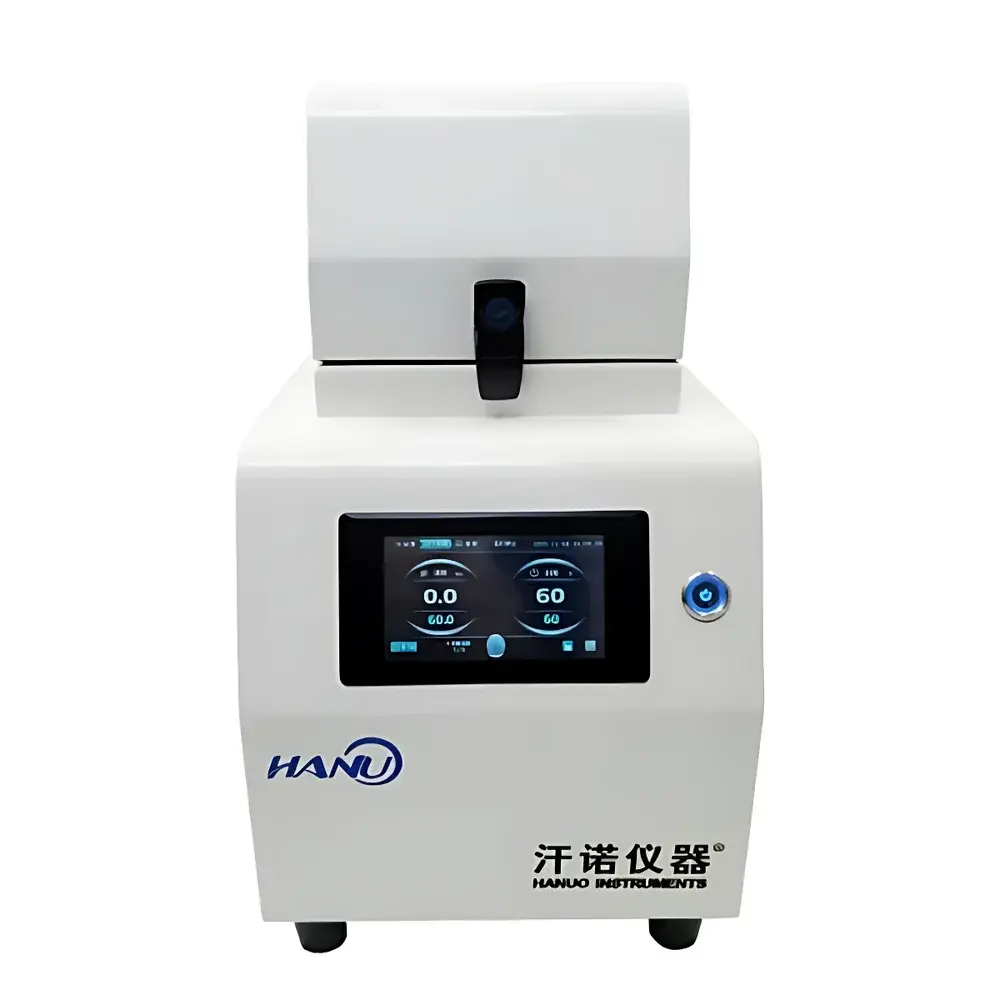
Hanuo Daxluot-96 High-Throughput Cryogenic Tissue Grinder
| Brand | Hanuo |
|---|---|
| Origin | Shanghai, China |
| Model | Daxluot-96 |
| Sample Type | Soft biological tissues |
| Feed Size | <30 mm |
| Final Particle Size | <0.01 mm (≈10 µm) |
| Throughput | 4 × 96 samples per run |
| Operating Modes | Dry grinding, wet grinding, cryogenic grinding |
| Vibration Frequency | 0–70 Hz |
| Time Range | 0 s – 99 min |
| Noise Level | <55 dB(A) |
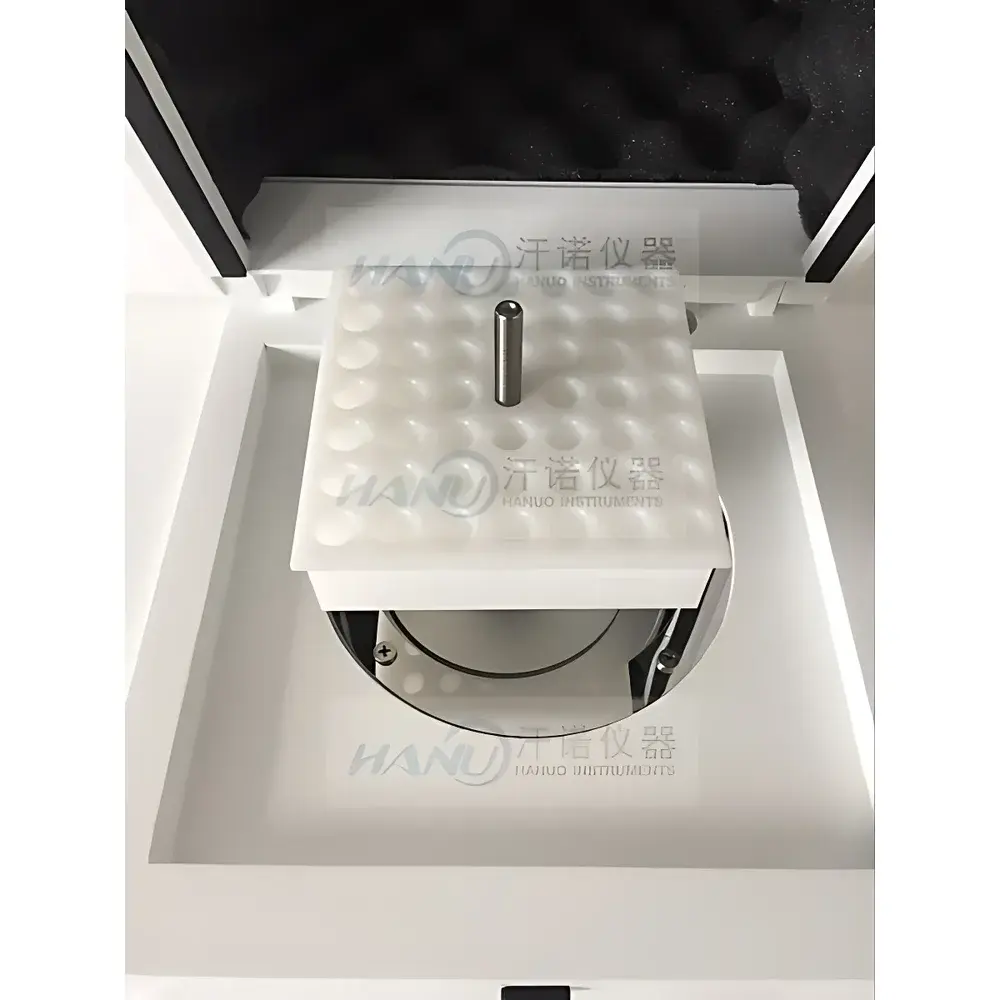
| Compatible Vial Formats | 96 × 0.2–0.5 mL, 96 × 2 mL, 12 × 5 mL, 8 × 7–15 mL, 2 × 25 mL, 2 × 50 mL |
| Grinding Media | Stainless steel, chrome steel, zirconia, tungsten carbide, quartz sand (0.1–30 mm diameter) |
| Adapter Material | PTFE or alloy steel |
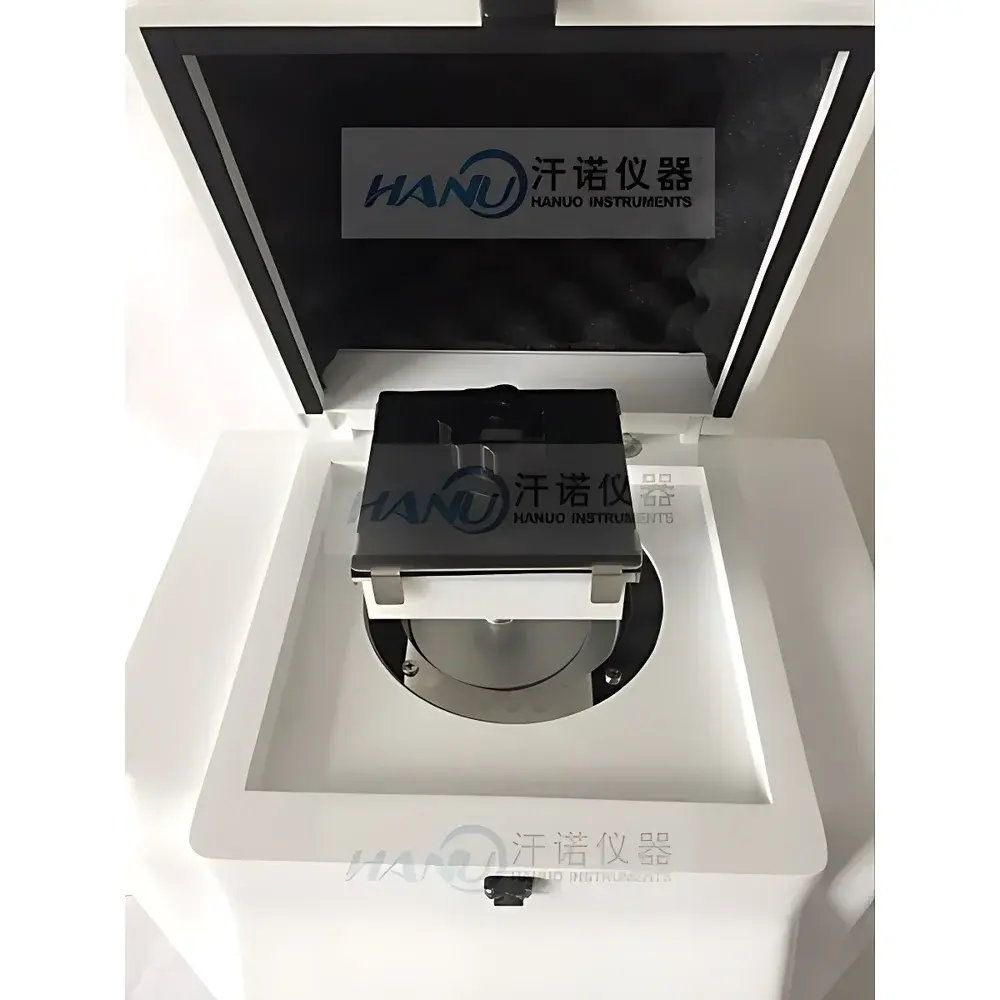
| Auto-centering clamping system | Yes |
| Acceleration/Deceleration | ≤2 s to max/min speed |
Overview
The Hanuo Daxluot-96 High-Throughput Cryogenic Tissue Grinder is an engineered solution for rapid, reproducible mechanical homogenization of soft biological samples under controlled thermal conditions. It operates on the principle of high-frequency vertical vibration—distinct from orbital or horizontal agitation—ensuring uniform energy transfer across all sample positions and eliminating inter-row variability inherent in arc-motion systems. This architecture delivers consistent shear and impact forces via grinding beads within sealed tubes, enabling efficient cell lysis, tissue disintegration, and subcellular component release without significant thermal degradation. Designed for laboratories performing large-scale nucleic acid (DNA/RNA) or protein extraction, the system supports parallel processing of up to 384 samples per hour (4 × 96) while maintaining sample integrity through optional cryogenic operation using liquid nitrogen pre-cooled adapters.
Key Features
- Vertical oscillation mechanism ensures uniform energy distribution across all 96 positions—no batch-to-batch or row-to-row inconsistency.
- Cryogenic compatibility: Adapters can be immersed in liquid nitrogen for 1–2 minutes prior to loading; no re-chilling required during operation, minimizing LN₂ consumption and handling risk.
- Programmable protocol library: 30 pre-configured tissue-specific grinding parameters stored in touchscreen interface; user-defined methods support repeatable method transfer between operators and shifts.
- Auto-centering clamping system with mechanical safety lock prevents tube displacement or ejection during high-speed operation (up to 70 Hz).
- Wide vial compatibility: Supports standard formats including 0.2–0.5 mL PCR strips, 2 mL microcentrifuge tubes, 5 mL round-bottom tubes, and custom volumes up to 50 mL—enabling flexibility across extraction workflows.
- Low-noise design (<55 dB[A]) suitable for shared laboratory environments without dedicated acoustic enclosures.
- Rapid acceleration/deceleration (<2 s) enables precise control over kinetic energy input, critical for fragile samples such as plant mesophyll or primary neuronal cultures.
Sample Compatibility & Compliance
The Daxluot-96 is validated for use with soft and moderately fibrous biological matrices, including but not limited to: plant tissues (rice seeds, maize leaves, Arabidopsis roots), animal organs (liver, spleen, muscle, lung), cultured cells (HEK293, CHO), microbial pellets (E. coli, S. cerevisiae, fungal spores), and environmental samples (soil microbiome lysates). It does not support hard or mineralized tissues (e.g., bone, tooth enamel) without pretreatment. While not certified to ISO/IEC 17025 or FDA 21 CFR Part 11 out-of-the-box, the instrument’s programmable parameters, audit-trail-capable touchscreen logging (with optional external data export), and method-lock functionality align with GLP/GMP-aligned sample preparation SOPs. All grinding media options—including zirconia and tungsten carbide—are chemically inert and non-leaching, ensuring compatibility with downstream qPCR, RNA-seq, and LC-MS applications.
Software & Data Management
Operation is managed via a 7-inch capacitive touchscreen with intuitive icon-driven navigation. The embedded firmware supports time-stamped method execution logs, including frequency, duration, pause intervals, and cycle count. Methods may be exported via USB to CSV for integration into LIMS or ELN platforms. No proprietary software installation is required on host PCs; raw parameter files are human-readable text. Optional RS-232 or Ethernet connectivity (firmware upgrade dependent) allows remote monitoring in centralized core facilities. All user accounts support password-protected access levels, and method editing requires administrator privileges—supporting traceability requirements in regulated environments.
Applications
- High-throughput genomic DNA isolation from plant seed banks or clinical biobanks.
- RNA stabilization and lysis prior to TRIzol®-based extraction or column purification.
- Preparation of homogenates for enzyme activity assays, metabolite profiling, or Western blotting.
- Soil metagenomic sample prep where mechanical disruption enhances bacterial cell rupture versus bead-beating alternatives.
- Standardized tissue pulverization for histopathology-grade frozen sectioning or MALDI imaging substrate preparation.
- Cell wall disruption in yeast and filamentous fungi for proteomic analysis.
FAQ
Can the Daxluot-96 process hard or calcified tissues?
It is not recommended for untreated bone, teeth, or woody plant stems. Such samples require pre-fragmentation or specialized milling attachments not included with this model.
Is liquid nitrogen handling integrated into the instrument?
No—LN₂ immersion is performed manually prior to adapter mounting. The system itself contains no cryogenic plumbing or temperature sensors.
What maintenance is required for long-term reliability?
Monthly inspection of clamping arms and gasket integrity; annual calibration of vibration amplitude (per manufacturer service bulletin); cleaning of grinding chamber with 70% ethanol after each use.
Are grinding beads supplied with the system?
Basic stainless-steel beads (2 mm diameter) are included. Zirconia, tungsten carbide, and quartz options must be ordered separately based on application requirements.
Does the instrument meet CE or UL safety standards?
The unit complies with IEC 61000-6-2 (EMC immunity) and IEC 61000-6-4 (EMC emissions), and carries the CE marking for laboratory equipment. UL listing is not applicable as it is not intended for industrial continuous-duty operation.



