
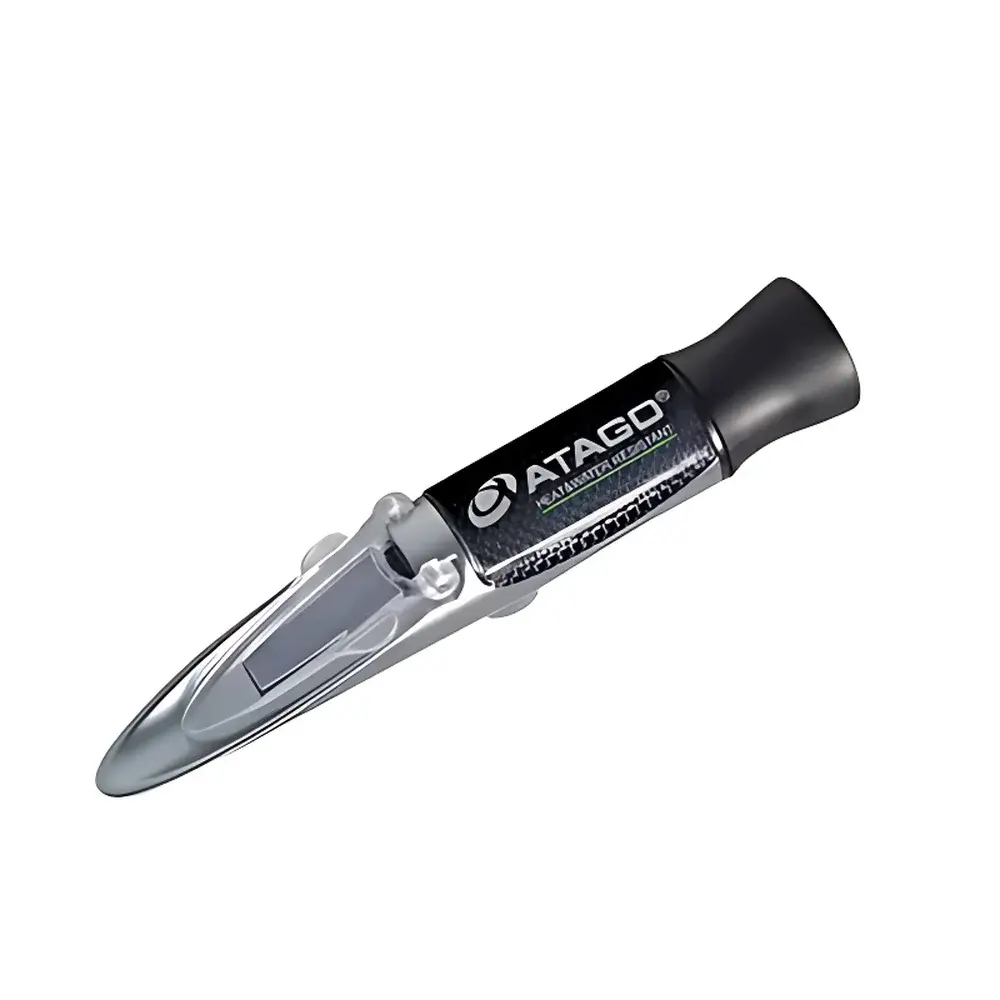
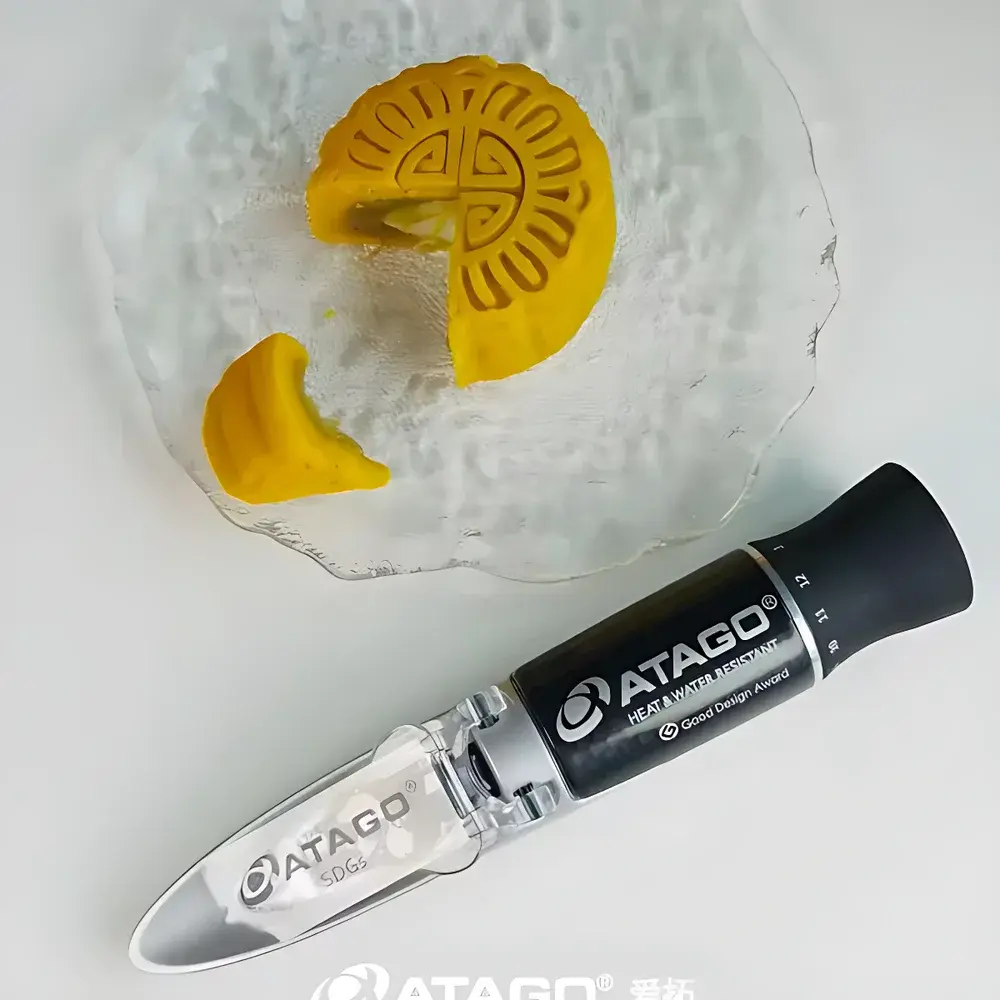
ATAGO MASTER-93H High-Temperature Food Filling Refractometer
| Brand | ATAGO |
|---|---|
| Origin | Japan |
| Model | MASTER-93H |
| Type | Handheld Refractometer |
| Measurement Range | 45–93% Brix |
| Accuracy | ±0.5% Brix |
| Temperature Compensation | Automatic (ATC) |
| Waterproof Rating | IP65 |
| Construction | Stainless Steel Housing |
| Sample Volume | <0.3 mL |
| Response Time | <3 seconds |
| Compliance | ISO 2173, AOAC 985.24, ASTM D1074 |
Overview
The ATAGO MASTER-93H is a specialized handheld refractometer engineered for rapid, on-site Brix concentration measurement in high-viscosity, elevated-temperature food fillings—particularly those used in traditional Asian confectionery manufacturing, including mooncake pastes (e.g., lotus seed, red bean, jujube), fruit preserves, caramelized syrups, and nut-based fillings. Operating on the principle of critical angle refraction, the instrument determines soluble solids content by measuring the refractive index of a small liquid or semi-liquid sample at ambient or elevated temperatures (up to 80 °C surface contact). Its optical system employs a high-stability Abbe-type prism with temperature-compensated sapphire-grade optical glass, enabling direct Brix readout without external calibration under variable thermal conditions. Unlike standard benchtop or digital refractometers, the MASTER-93H is purpose-built for industrial food production environments where thermal stability, mechanical durability, and process-integrated verification are essential—not merely for quality assurance, but for regulatory compliance with national food labeling standards.
Key Features
- Stainless steel housing with IP65-rated ingress protection—resistant to steam, condensation, and repeated sanitation cycles in humid production areas.
- Automatic Temperature Compensation (ATC) across 10–50 °C ambient range, eliminating manual correction when measuring warm fillings directly from kettles or cooling belts.
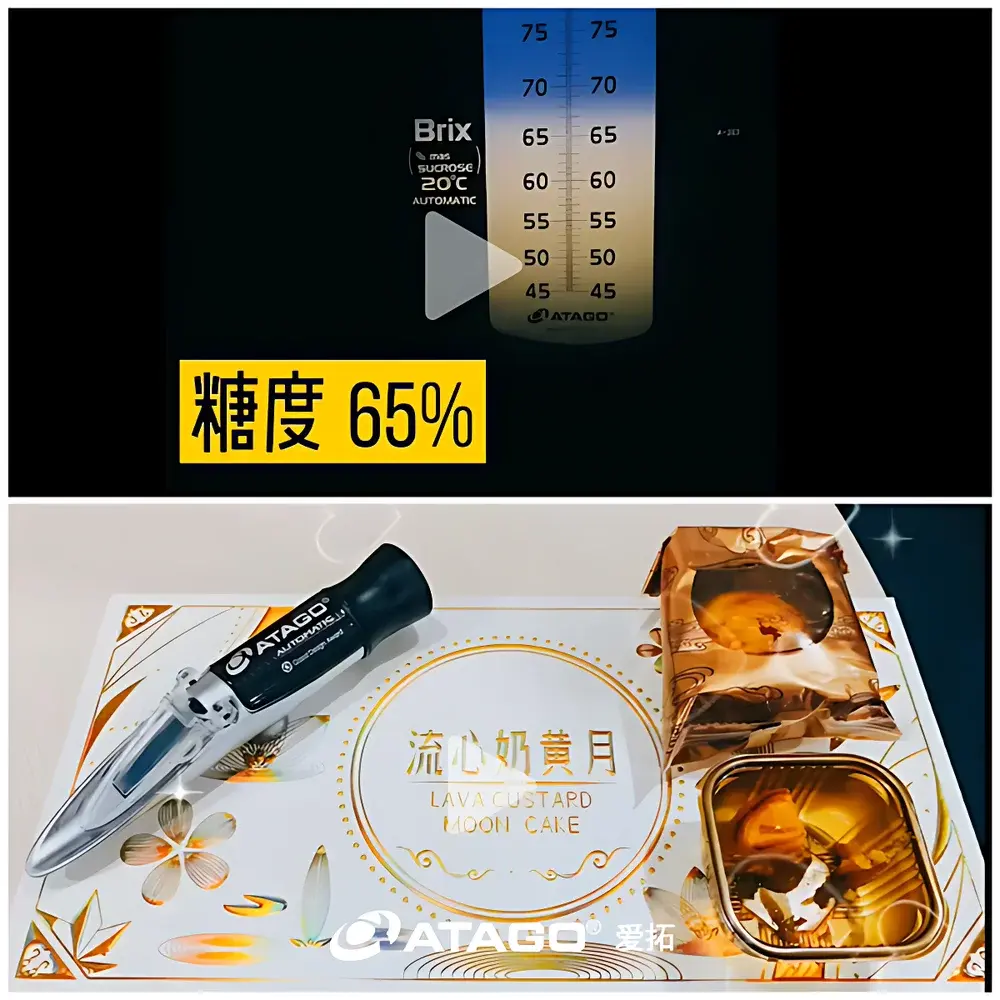
- Optimized prism geometry and high-contrast scale design for reliable visual reading—even under low-light factory lighting or glove-wearing operation.
- No batteries or electronics required: fully mechanical, analog optical operation ensures zero downtime, no firmware updates, and intrinsic safety in explosion-hazard zones.
- Minimal sample requirement (<0.3 mL) reduces material waste and enables frequent in-process checks during batch cooking, homogenization, and cooling stages.
- Calibration traceable to NIST-traceable sucrose reference solutions; compatible with internal verification using ATAGO’s certified Brix standard fluids (e.g., 50% and 80% Brix).
Sample Compatibility & Compliance
The MASTER-93H is validated for use with opaque, viscous, and thermally unstable matrices—including roasted nut pastes, molasses-thickened syrups, gelatinized starch fillings, and oil-emulsified bean pastes—where conventional digital refractometers fail due to air bubble entrapment or thermal sensor drift. It meets methodological alignment with ISO 2173 (fruit products), AOAC Official Method 985.24 (sugar content in processed foods), and ASTM D1074 (refractive index of viscous liquids). In regulatory contexts, its measurements support compliance with GB/T 19855–2015 (Chinese National Standard for Mooncakes), particularly for verifying total sugar limits: ≤50 g/100 g for Cantonese-style pastes, ≤40 g/100 g for Beijing-style, and ≤0.5 g/100 g for labeled “sugar-free” products. While the refractometer measures soluble solids (predominantly sucrose, glucose, fructose), correlation with HPLC-quantified mono-/disaccharide profiles has been established per internal validation protocols used by Tier-1 OEM suppliers in China and Southeast Asia.
Software & Data Management
As a purely optical, non-digital instrument, the MASTER-93H does not incorporate onboard memory, Bluetooth, or data export functionality. This design choice prioritizes operational robustness, audit readiness, and GLP-aligned documentation workflows. Users record readings manually into paper-based batch logs or integrate them into LIMS via secondary entry—ensuring full traceability without electronic signature dependencies. For enterprises operating under FDA 21 CFR Part 11 or ISO/IEC 17025 requirements, the absence of software eliminates validation overhead associated with electronic records. Calibration logs, operator ID, sample ID, and environmental temperature are documented contemporaneously with each measurement—supporting full forensic reconstruction during internal audits or third-party inspections.
Applications
- Real-time Brix verification during paste cooking and concentration control in mooncake and tangyuan manufacturing lines.
- In-process monitoring of syrup density in fruit jam and preserve production—reducing over-boiling energy costs and preventing Maillard degradation.
- QC screening of incoming raw materials (e.g., maltose syrup, inverted sugar) prior to blending.
- Verification of “low-sugar” or “no-added-sugar” claims in finished goods, aligned with GB 28050–2011 nutrition labeling requirements.
- Research and development labs evaluating formulation changes affecting water activity and shelf-life stability.
- Contract manufacturers performing co-packing services requiring documented Brix consistency across multiple client SKUs.
FAQ
Does the MASTER-93H require periodic recalibration?
Yes—calibration against certified sucrose standards is recommended before each shift or after exposure to extreme thermal cycling. A two-point verification (e.g., 50% and 80% Brix standards) is sufficient for routine use.
Can it measure samples containing suspended solids or particulates?
It is intended for homogeneous, filterable phases. Particulate-laden samples must be centrifuged or filtered (≤5 µm pore size) prior to measurement to avoid prism scratching and optical interference.
Is the scale readable under steam-heavy conditions?
Yes—the etched stainless steel scale and high-contrast black-on-white reticle remain legible even with condensation on the eyepiece cover, provided the prism surface is wiped clean before each use.
How does ATC function without electronics?
The ATC mechanism uses a bimetallic strip integrated into the prism mount, which physically adjusts the light path angle in response to ambient temperature—no power source or sensors required.
What is the service life expectancy under continuous factory use?
With proper cleaning (using lint-free cloth and distilled water only) and avoidance of abrasive solvents, the optical assembly typically exceeds 10 years of daily use in high-volume production settings.



