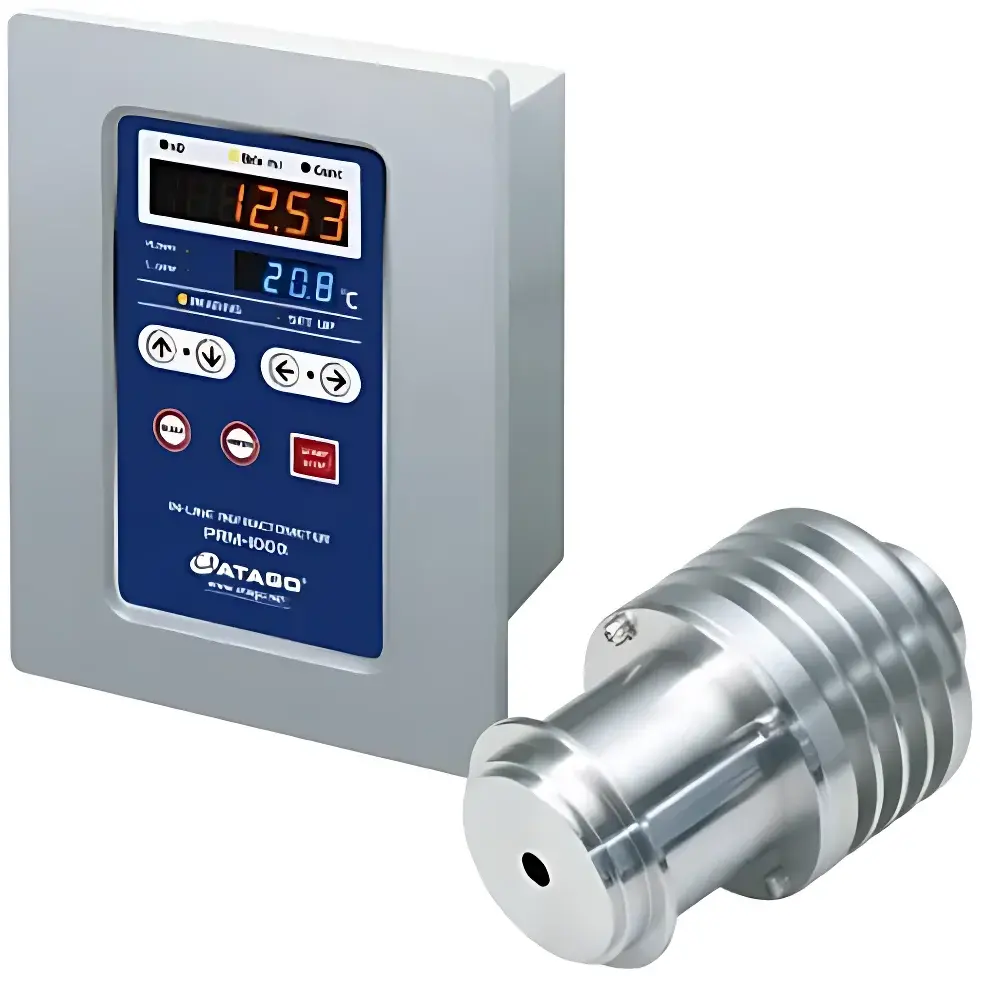
ATAGO PRM-100α DX High-Precision Online Refractometer
| Brand | ATAGO |
|---|---|
| Origin | Japan |
| Model | PRM-100α DX |
| Measurement Range | Refractive Index (nD): 1.32000–1.55700 |
| Brix | 0.00–100.00% |
| Resolution | nD: 0.0001 or 0.00001 |
| Brix | 0.1% or 0.01% |
| Accuracy | nD: ±0.00010 |
| Brix | ±0.05% |
| Temperature Control Range | 5.0–100.0 °C |
| Wetted Materials | SS316L + Sapphire |
Overview
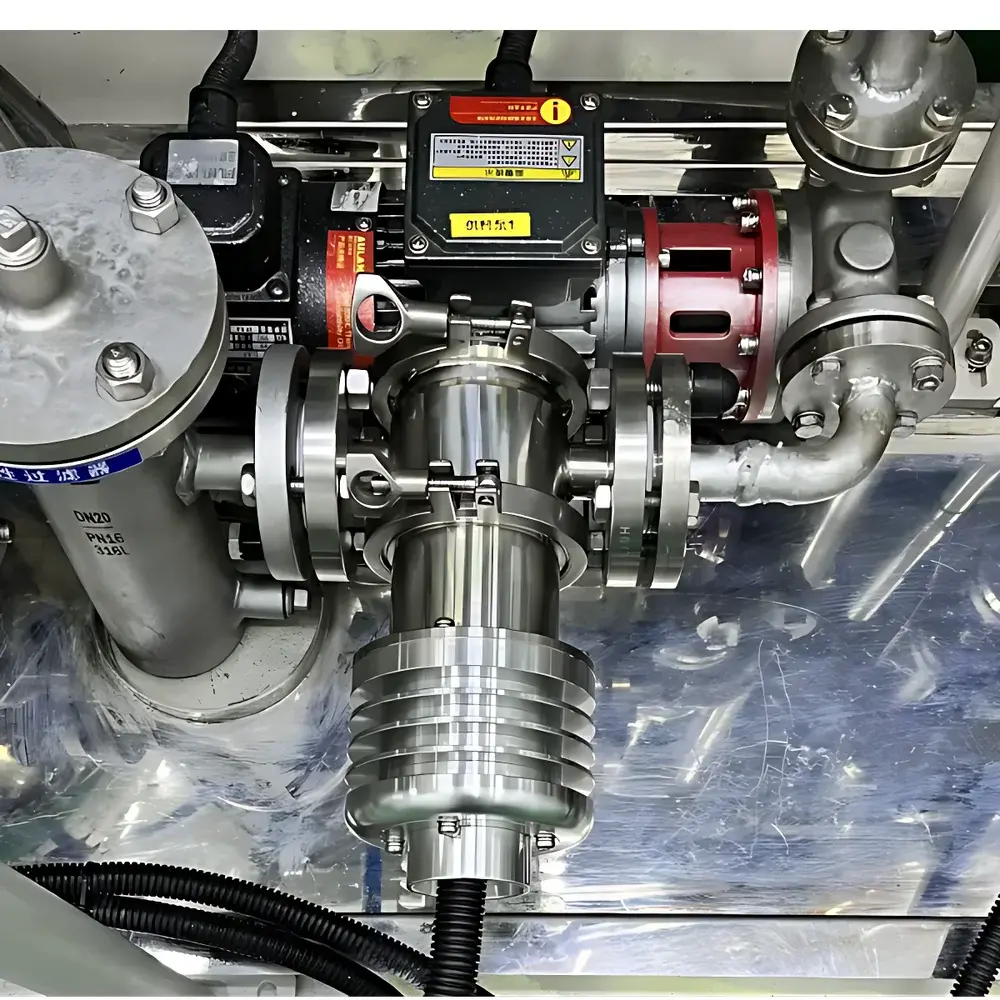
The ATAGO PRM-100α DX High-Precision Online Refractometer is an industrial-grade process analytical instrument engineered for continuous, real-time measurement of refractive index (nD), Brix (% w/w sucrose equivalent), and concentration in liquid streams. It operates on the principle of critical-angle refractometry: a collimated light beam is directed onto the interface between a high-refractive-index sapphire prism and the process fluid; the resulting critical angle shift is precisely measured and converted into refractive index values using Snell’s law. Built-in temperature compensation (ATC) ensures stable output across dynamic thermal conditions—critical for applications where process temperature fluctuates between 5.0 °C and 100.0 °C. Designed for permanent installation in pipelines or tanks, the system comprises two physically separated units: a ruggedized sensor head (IP67 rated) and a wall- or panel-mounted display/controller (also IP67). With a maximum pressure rating of 0.98 MPa and wetted parts fabricated from ASTM-certified SS316L stainless steel and synthetic sapphire—resistant to corrosion, abrasion, and thermal shock—the PRM-100α DX meets stringent hygienic and operational requirements in regulated manufacturing environments.
Key Features
- High-resolution optical detection with selectable resolution modes: nD resolution down to 0.00001 and Brix resolution down to 0.01%, configurable via internal settings
- Stable accuracy under controlled conditions: ±0.00010 for nD and ±0.05% for Brix, validated against NIST-traceable sucrose reference standards per ISO 21542 and AOAC Official Method 932.12
- Integrated temperature-controlled measurement path with automatic temperature compensation (ATC) compliant with ASTM D1218 and ISO 2859-1 sampling protocols
- Seven-segment LED display with high-brightness color coding—designed for legibility at distances up to 15 meters under ambient lighting or low-visibility plant conditions
- Modular architecture supports long-distance cabling: standard 15 m sensor-to-display cable (extendable up to 200 m without signal degradation)
- Dual analog and digital outputs: isolated 4–20 mA current loop (HART-compatible upon request) and RS-232C serial interface for integration with DCS, SCADA, or MES platforms
- Low-power consumption (30 VA) and universal AC input (100–240 V, 50/60 Hz), enabling deployment across global facility power infrastructures
Sample Compatibility & Compliance
The PRM-100α DX is compatible with aqueous solutions, syrups, emulsions, coolants, cleaning agents, pharmaceutical intermediates, and other optically transparent or semi-transparent liquids with viscosity ≤ 500 cP. Its sapphire prism and SS316L sample chamber ensure chemical resistance to acidic, alkaline, and organic media encountered in food, beverage, biopharmaceutical, and fine chemical processes. The instrument complies with IEC 61000-6-2 (immunity) and IEC 61000-6-4 (emissions), carries CE marking for EMC and LVD directives, and supports validation documentation packages aligned with FDA 21 CFR Part 11 (when paired with compliant data logging software), EU GMP Annex 11, and ISO/IEC 17025 traceability frameworks. Pressure and temperature ratings conform to ASME B31.3 process piping design criteria.
Software & Data Management
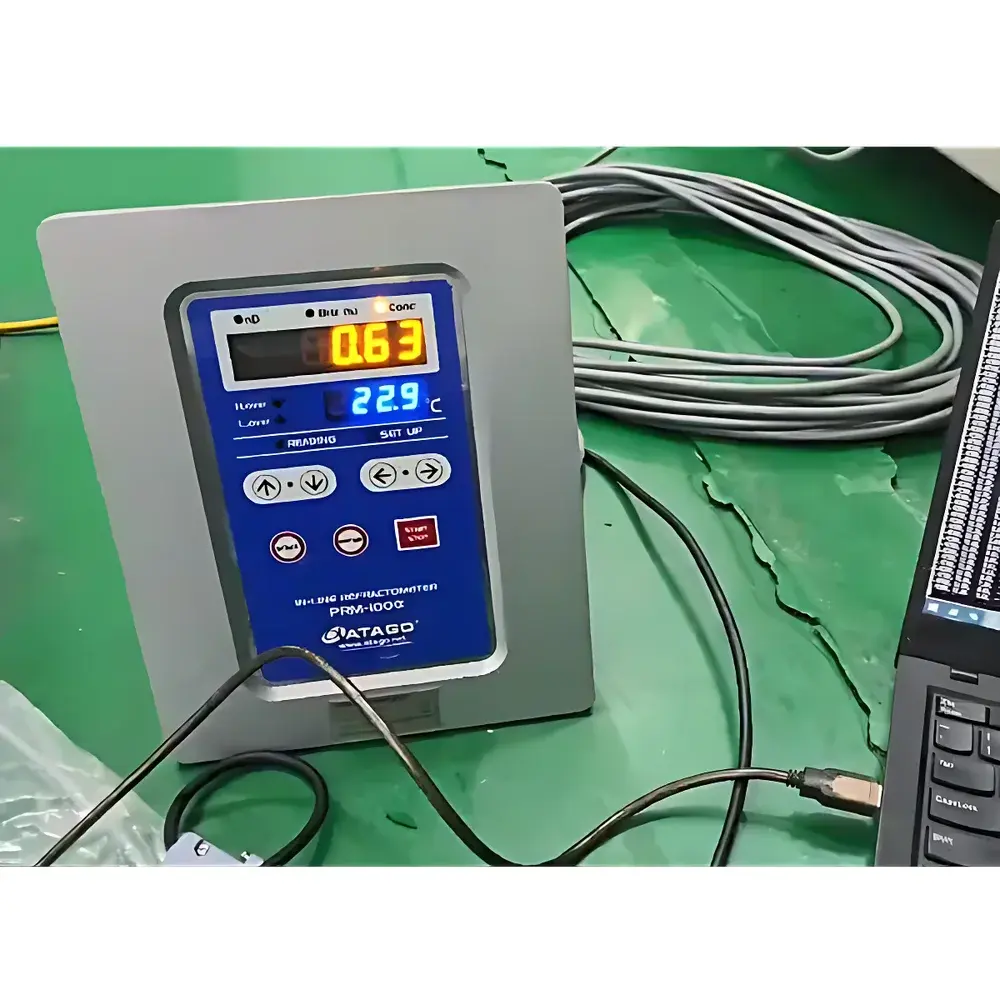
While the PRM-100α DX operates as a standalone field instrument, its RS-232C interface enables bidirectional communication with host systems for remote configuration, real-time data acquisition, and alarm threshold management. When integrated with ATAGO’s optional PC-based software suite (e.g., RefexLink™), users gain access to time-stamped trend logs, calibration history tracking, audit trails, and exportable CSV/Excel reports—supporting GLP/GMP-compliant record retention. The system supports configurable data polling intervals (1–60 seconds), user-defined pass/fail limits, and event-triggered notifications via external PLC or HMI interfaces.
Applications
- Continuous Brix monitoring during sugar syrup concentration, juice evaporation, and dairy product standardization in food & beverage lines
- In-line concentration control of cutting fluids, quench oils, and metalworking lubricants to maintain optimal tribological performance
- Real-time verification of detergent and caustic concentrations in CIP (clean-in-place) systems, ensuring validated cleaning efficacy per ISO 15877 and EHEDG guidelines
- Monitoring of active pharmaceutical ingredient (API) solutions during crystallization, dilution, and blending operations in API synthesis suites
- Concentration verification of polymer solutions, glycol-based heat transfer fluids, and electroplating baths in chemical manufacturing
FAQ
What is the maximum allowable process pressure for the sensor head?
The detection unit is rated for continuous operation at up to 0.98 MPa (142 psi) at temperatures ≤ 80 °C.
Can the PRM-100α DX measure opaque or highly viscous liquids?
It requires optical transmission through the sample; turbid, particulate-laden, or highly scattering fluids may require inline filtration or flow-cell conditioning to ensure measurement integrity.
Is temperature calibration required separately from refractive index calibration?
No—the built-in Pt100 RTD sensor is factory-calibrated and traceable to ITS-90; no user recalibration is needed unless physical damage occurs.
How is compliance with regulatory audit requirements supported?
The instrument supports full electronic calibration records, change logs, and user-access-level controls when used with validated software; raw analog outputs are suitable for hardwired integration into auditable control systems.
What maintenance is recommended for long-term accuracy?
Annual verification against certified sucrose standards and visual inspection of the sapphire prism surface for scratches or coating buildup are advised; no routine optical alignment is required due to monolithic prism construction.