
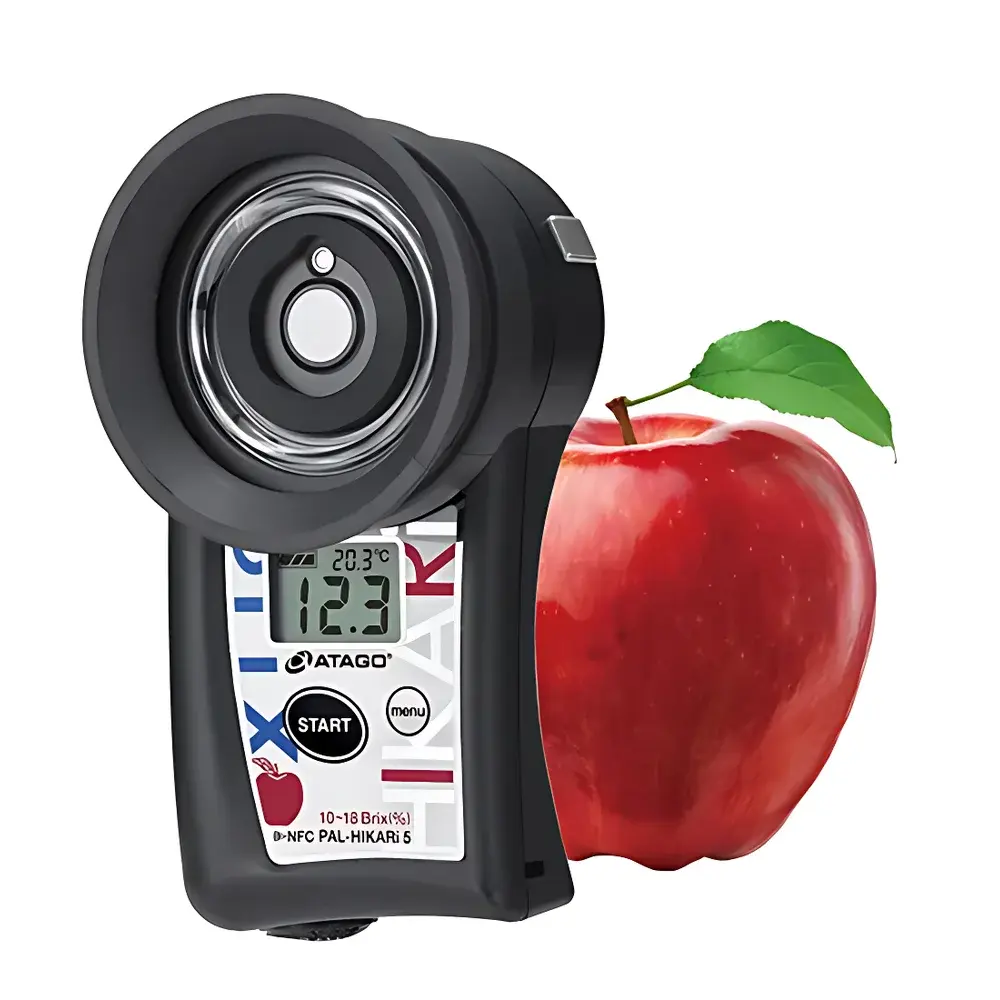
ATAGO PAL-HIKARi 5 Non-Destructive Apple Saccharimeter
| Brand | ATAGO |
|---|---|
| Origin | Japan |
| Model | PAL-HIKARi 5 (Apple-Specific) |
| Instrument Type | Non-Destructive |
| Measurement Principle | Near-Infrared (NIR) Absorption |
| Brix Range | 10.0–18.0% |
| Temperature Range | 5.0–35.0°C |
| Brix Resolution | 0.1% |
| Temperature Resolution | 0.1°C |
| Brix Accuracy | ±0.1% (subject to apple cultivar and environmental conditions) |
| Repeatability | ±0.5% Brix |
| Automatic Temperature Compensation | 5.0–35.0°C |
| Battery Life | ~4,000 measurements (2×AAA alkaline) |
| IP Rating | IP64 |
| Dimensions | 6.1 × 4.4 × 11.5 cm |
| Weight | 120 g (host unit only) |
| Accessories | Spare O-rings (R-type, 3 pcs/set, Cat. No. RE-39003) |
Overview
The ATAGO PAL-HIKARi 5 Non-Destructive Apple Saccharimeter is a handheld, near-infrared (NIR) optical instrument engineered for rapid, in-situ quantification of soluble solids content (SSC), expressed as Brix (%w/w), directly on intact apples without mechanical sampling. Unlike conventional refractometers requiring juice extraction or destructive core sampling, the PAL-HIKARi 5 employs proprietary NIR spectroscopy at specific absorption bands sensitive to C–O and O–H vibrational modes in sucrose, fructose, and glucose—enabling non-invasive interrogation of subsurface fruit tissue (~1–3 mm depth) through calibrated optical coupling. Its measurement architecture is optimized exclusively for apple cultivars, with factory calibration traceable to NIST-traceable sucrose standards and validated across common commercial varieties including Fuji, Gala, Honeycrisp, and Granny Smith under controlled post-harvest conditions. Designed for field-deployable operation, the device operates within ambient temperature ranges typical of orchard, packinghouse, and cold-chain logistics environments (5.0–35.0°C), incorporating real-time automatic temperature compensation to minimize thermal drift in optical signal response.
Key Features
- True non-destructive measurement: No cutting, coring, or juicing required—maintains fruit integrity for subsequent ripening, storage, or sale.
- Apple-specific optical calibration: Pre-loaded spectral models account for varietal differences in skin thickness, flesh density, and chlorophyll interference.
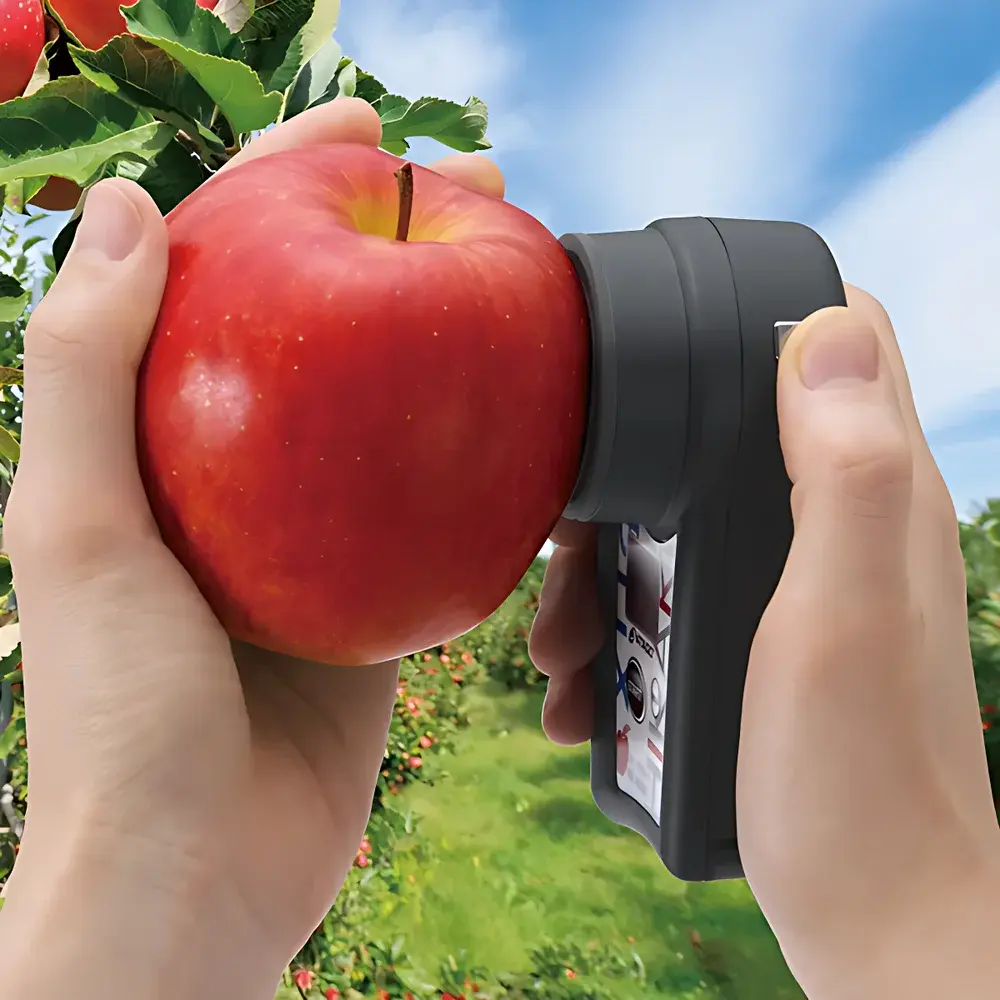
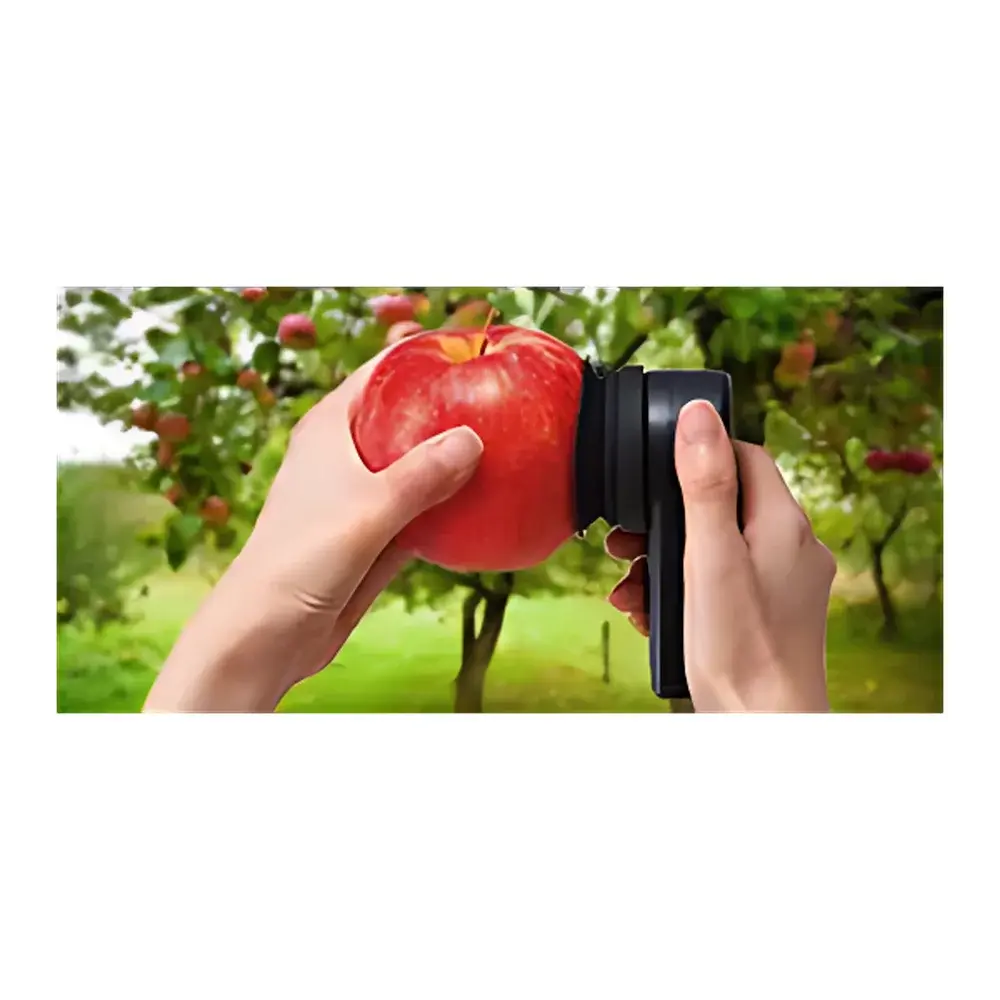
- Three-second measurement cycle: Press START, apply consistent probe pressure against clean, dry apple surface, and obtain stabilized Brix reading with digital display.
- Integrated temperature sensor with auto-compensation: Simultaneously records sample surface temperature and adjusts Brix output per ISO 2173:2003 Annex A guidelines for temperature-dependent SSC correlation.
- Rugged portable design: IP64-rated enclosure resists dust ingress and water splashes; lightweight (120 g) with ergonomic grip for extended handheld use in orchards or grading lines.
- Statistical functionality: Supports sequential measurement mode with on-device averaging of up to 10 readings to improve precision in heterogeneous lots.
- Low-power operation: Dual AAA alkaline batteries sustain ~4,000 measurements; no external charger or USB dependency required.
Sample Compatibility & Compliance
The PAL-HIKARi 5 is validated for use on mature, commercially harvested apples exhibiting intact epidermis, absence of surface lesions >2 mm, and minimal wax residue. It is not intended for immature fruit (6.5 N), or apples with heavy fungal contamination (e.g., bitter rot, sooty blotch). While not certified to FDA 21 CFR Part 11, its measurement protocol aligns with GLP-aligned quality control workflows in agri-food laboratories. Data outputs comply with ISO 5725-2:2019 repeatability criteria (r ≤ 0.5% Brix) when operated per ATAGO’s Standard Operating Procedure (SOP-PALH5-EN). The device meets IEC 60529 for IP64 ingress protection and conforms to RoHS Directive 2011/65/EU for hazardous substance restrictions.
Software & Data Management
The PAL-HIKARi 5 operates as a standalone instrument with no embedded Bluetooth, Wi-Fi, or PC connectivity. All measurement data remain local to the LCD display; no onboard memory or export capability is provided. Users intending to log or trend results must manually record values into external systems (e.g., LIMS, Excel, farm management software). For traceability, each unit includes a unique serial number and calibration certificate referencing JIS Z 8015-2019 verification procedures. Offset correction (±0.1–0.5% Brix) may be applied via physical button sequence to accommodate site-specific calibration drift—documented per internal QA protocols.
Applications
- Orchard maturity assessment: Enables real-time, tree-by-tree Brix mapping to optimize harvest timing, reduce pre-harvest drop, and synchronize picking windows across blocks.
- Packinghouse sorting: Integrates into inline or spot-check workflows for grade-based segregation (e.g., U.S. Grade A ≥12.0% Brix; Export Grade ≥14.5% Brix) prior to waxing or packaging.
- Postharvest research: Supports studies on controlled-atmosphere storage effects on sugar metabolism, ethylene inhibition trials, and rootstock–scion interaction analyses.
- Export compliance verification: Facilitates rapid lot-level screening at port inspection points to meet destination-country SSC requirements (e.g., China GB/T 10651–2008, Australia AS 5013.1–2018).
- Horticultural education: Used in university extension programs to demonstrate non-destructive phenotyping techniques and quantitative fruit quality metrics.
FAQ
Can the PAL-HIKARi 5 measure fruits other than apples?
No. Its optical path length, NIR wavelength selection (760–1050 nm), and calibration matrix are specifically developed for apple tissue optical properties. Cross-application to pears, citrus, or stone fruits introduces unquantified bias and is not supported.
Does surface moisture affect accuracy?
Yes. Condensation, dew, or residual washing water must be wiped from the measurement site prior to contact; water films attenuate NIR signal and cause underestimation by 0.2–0.6% Brix.
How often does the unit require recalibration?
ATAGO recommends annual verification using certified sucrose reference standards (e.g., 12.0% and 16.0% Brix gels); field recalibration is not user-serviceable.
Is the probe tip replaceable?
Yes. The optical window assembly (including sapphire lens and O-ring seal) is serviced as a single module (Cat. No. RE-39003); replacement preserves measurement consistency and IP64 integrity.
What is the minimum fruit size for reliable measurement?
Apples must have a minimum equatorial diameter of 65 mm to ensure full probe contact area coverage and avoid edge-diffraction artifacts.




