
ATAGO CM-Baseα-plus Online Refractometer
| Brand | ATAGO |
|---|---|
| Origin | Japan |
| Model | CM-Baseα-plus |
| Product Type | Online Refractometer |
| Temperature Control | Yes |
| Digital Display | Yes |
| Measurement Range | 0.0–93.0% Brix (ATC) |
| Accuracy | ±0.5% Brix |
| Resolution | 0.1% Brix |
| Temperature Compensation Range | 10–95°C |
| Output | RS-232C + 4–20 mA |
| IP Rating | IP64 |
| Power Supply | DC 24 V |
| Dimensions | 90 × 90 × 58 mm |
| Weight | 830 g (host only) |
Overview
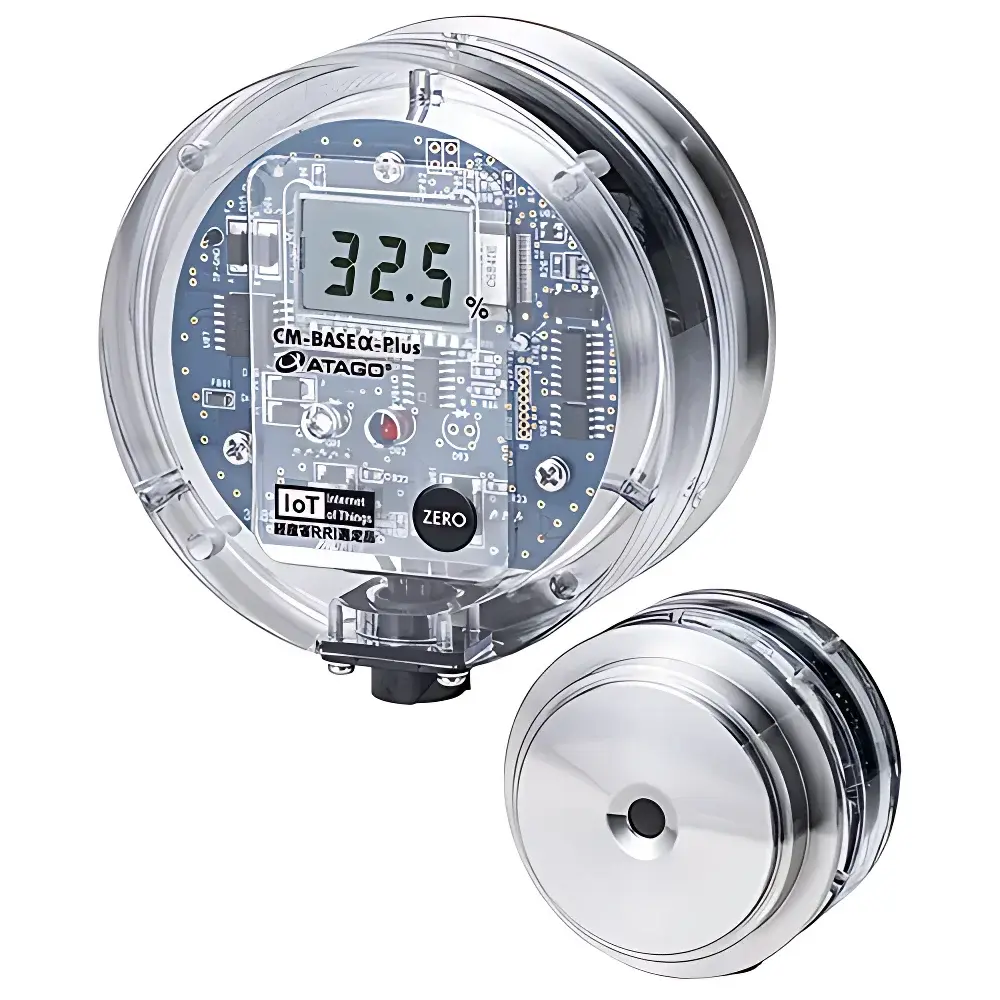
The ATAGO CM-Baseα-plus Online Refractometer is an industrial-grade, in-line optical instrument engineered for continuous, non-invasive concentration monitoring of aqueous and solvent-based cleaning solutions in real time. It operates on the fundamental principle of refractometry: as the concentration of dissolved solutes increases—whether surfactants, alkaline agents, alcohols, or chelating compounds—the refractive index of the solution rises predictably. By directing a collimated light beam through a sapphire prism in direct contact with the process stream and detecting the critical angle of total internal reflection via a high-stability photodiode array, the device quantifies refractive index with metrological traceability. This value is then converted to % Brix—a standardized sucrose-equivalent concentration scale widely adopted in industrial cleaning validation—using a calibrated polynomial algorithm embedded in firmware. Unlike offline sampling methods, the CM-Baseα-plus eliminates manual intervention, measurement lag, and sampling bias, enabling closed-loop process control in high-throughput manufacturing environments.
Key Features
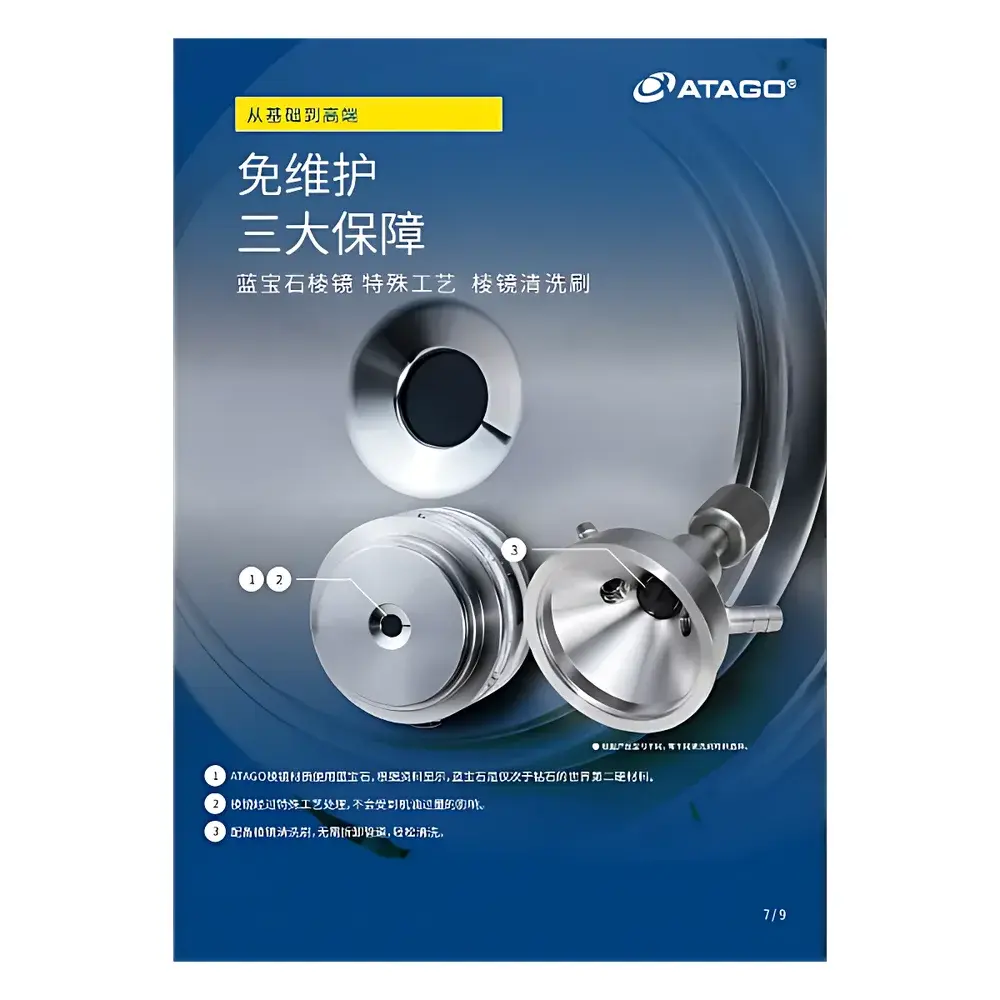
- Non-contact optical sensing architecture: Sapphire prism interface ensures chemical resistance and long-term stability, even in highly conductive, caustic, or abrasive cleaning media (e.g., sodium hydroxide-based metal degreasers).
- Integrated Automatic Temperature Compensation (ATC): Real-time thermal correction across 10–95°C eliminates drift caused by ambient or process temperature fluctuations—critical for consistency in hot wash or rinse stages.
- High-speed continuous measurement: Sub-second response time supports dynamic process monitoring during fill, circulation, and drain cycles without signal averaging delays.
- Robust industrial design: IP64-rated enclosure resists dust ingress and water splashing; compact form factor (90 × 90 × 58 mm) enables installation in confined equipment spaces or inline pipe manifolds.
- Dual-output connectivity: Simultaneous analog (4–20 mA) output for PLC/SCADA integration and digital (RS-232C) interface for configuration, diagnostics, and data logging.
Sample Compatibility & Compliance
The CM-Baseα-plus is validated for use with a broad spectrum of industrial cleaning formulations, including but not limited to alkaline aqueous cleaners, neutral pH surfactant blends, ethanol/isopropanol-based degreasers, and low-conductivity solvent mixtures. Its sapphire prism surface tolerates pH extremes (pH 0–14), high ionic strength (>100 mS/cm), and transient particulate loads typical in metalworking fluid recirculation systems. While the instrument itself does not carry CE or UL certification as a standalone component, its electrical interface complies with IEC 61000-6-2 (EMC immunity) and IEC 61000-6-4 (EMC emission) standards. When integrated into validated cleaning systems, it supports adherence to ISO 14644 (cleanroom monitoring), ASTM D2777 (precision and bias of liquid concentration measurements), and FDA 21 CFR Part 11 requirements when paired with compliant data acquisition software featuring audit trail, electronic signature, and user access control.
Software & Data Management
The CM-Baseα-plus functions as a deterministic sensor node—not a standalone data system—but is fully interoperable with industry-standard SCADA platforms (e.g., Siemens WinCC, Rockwell FactoryTalk) and MES-level quality management systems. Its 4–20 mA output provides linear, zero-shift-free analog representation of Brix values over the full 0.0–93.0% range, while RS-232C enables bidirectional communication for firmware updates, calibration verification, and timestamped raw refractive index reporting. For GxP-regulated environments, third-party software solutions (e.g., LabArchives, DeltaV Historian) can be configured to capture, timestamp, and archive readings with full ALCOA+ (Attributable, Legible, Contemporaneous, Original, Accurate, Complete, Consistent, Enduring, Available) compliance. Built-in EEPROM stores calibration constants and operational history, supporting GLP/GMP traceability during equipment qualification (IQ/OQ/PQ).
Applications
- Metal fabrication: Real-time monitoring of alkaline soak tanks and ultrasonic cleaning baths to maintain optimal saponification efficiency and prevent residue buildup on machined surfaces.
- Semiconductor wafer cleaning: Precise control of dilute SC-1 (NH₄OH:H₂O₂:H₂O) and SC-2 (HCl:H₂O₂:H₂O) chemistries during RCA clean steps to ensure particle removal repeatability.
- Automotive component washing: Closed-loop feedback for conveyorized spray washers handling brake calipers, engine blocks, or transmission housings.
- Medical device reprocessing: Validation of enzymatic detergent concentration in washer-disinfectors per AAMI ST-79 guidelines.
- Food equipment CIP systems: Monitoring of caustic soda and nitric acid concentrations during multi-stage cleaning cycles to meet FDA and EU hygiene directives.
FAQ
Does the CM-Baseα-plus require periodic recalibration?
Yes—annual calibration against NIST-traceable sucrose standards is recommended for routine operation; however, field verification using certified reference solutions (e.g., 10.0%, 40.0%, 70.0% Brix) can be performed at user-defined intervals.
Can it measure non-sucrose-based cleaning agents accurately?
Yes—the instrument reports % Brix as a refractive index proxy; for non-sucrose solutes, users must establish a custom correlation curve between measured Brix and actual active ingredient concentration via laboratory titration or HPLC validation.
Is the sapphire prism susceptible to fouling in high-particulate streams?
While sapphire offers exceptional hardness (Mohs 9), prolonged exposure to abrasive slurries may necessitate optional flow-cell designs with self-cleaning wipers or ultrasonic agitation modules—available as OEM accessories.
What is the minimum flow rate required for stable measurement?
A laminar, bubble-free flow of ≥0.5 L/min across the prism surface is required; turbulent or pulsating flows may induce measurement noise and should be mitigated with flow straighteners or buffer tanks.
How does temperature compensation work in practice?
An integrated Pt100 RTD sensor measures prism surface temperature continuously; firmware applies a second-order polynomial correction derived from ATAGO’s proprietary Brix–nD–T database, ensuring accuracy within ±0.5% Brix across the full 10–95°C operating band.




