
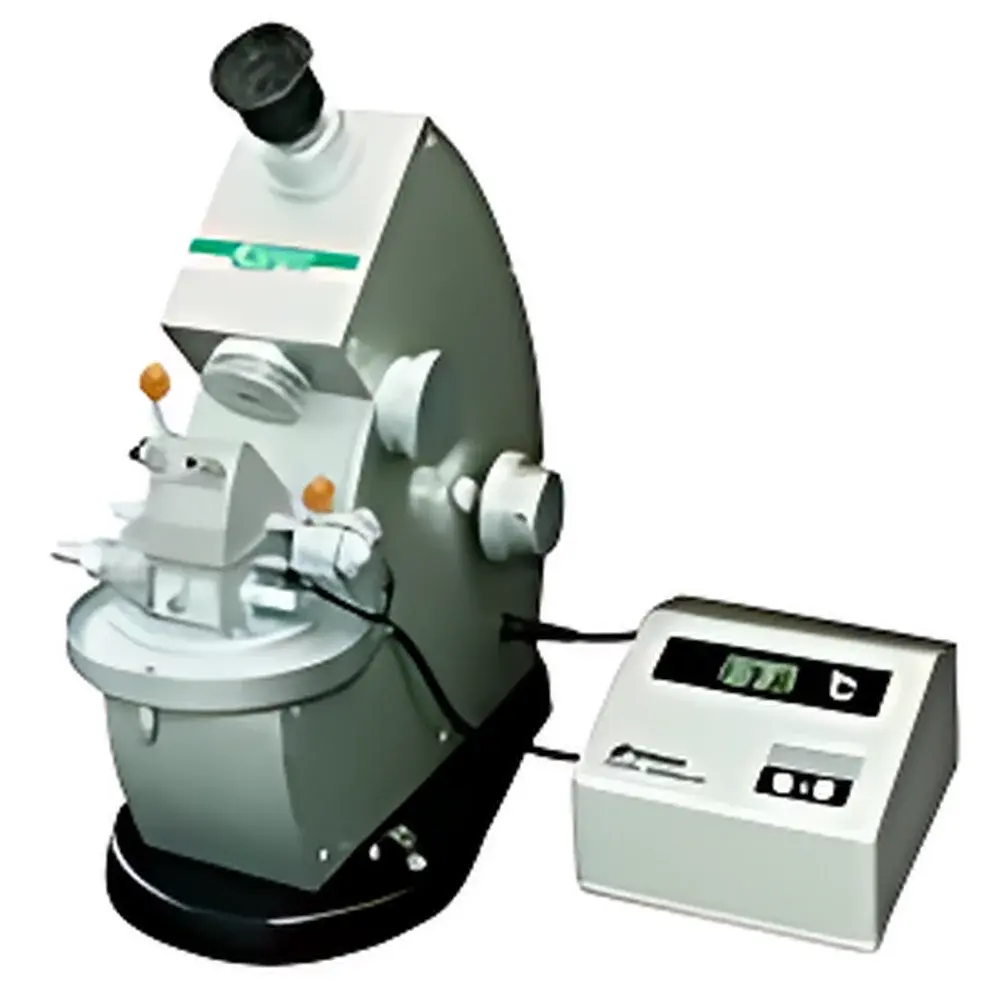
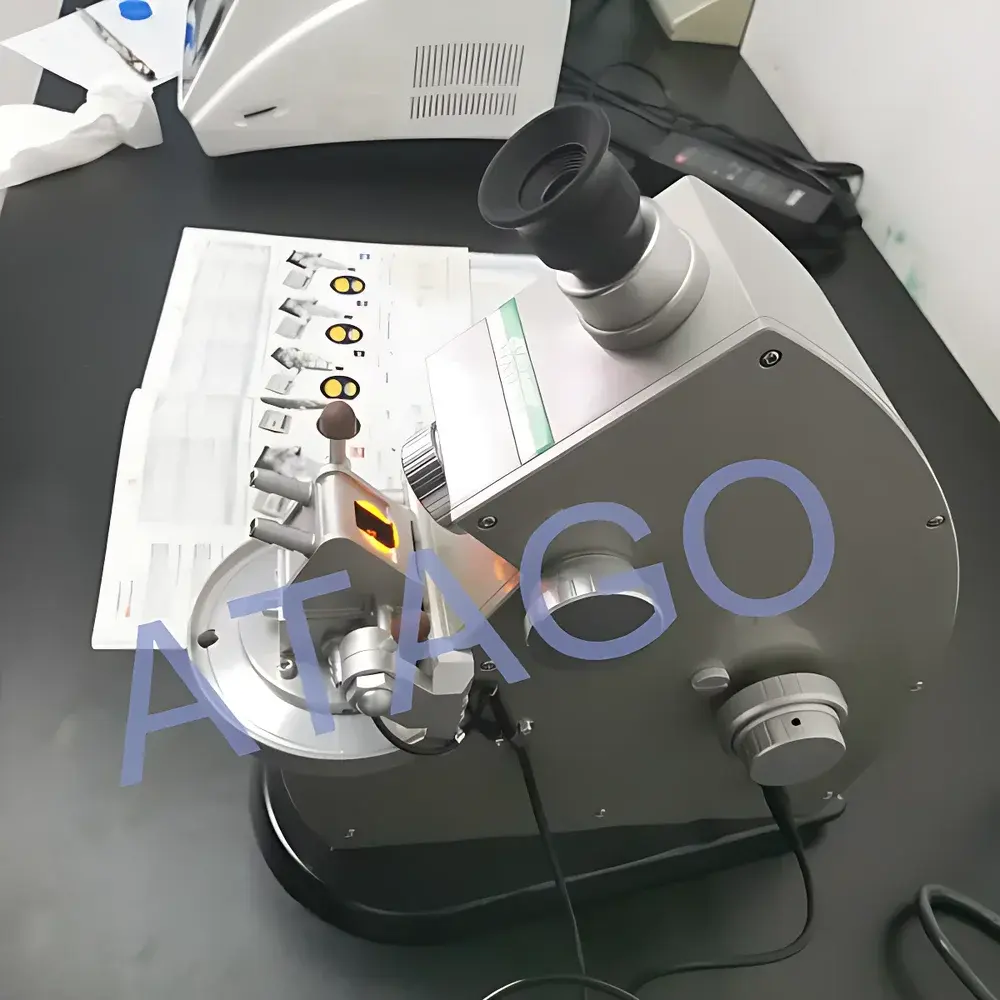
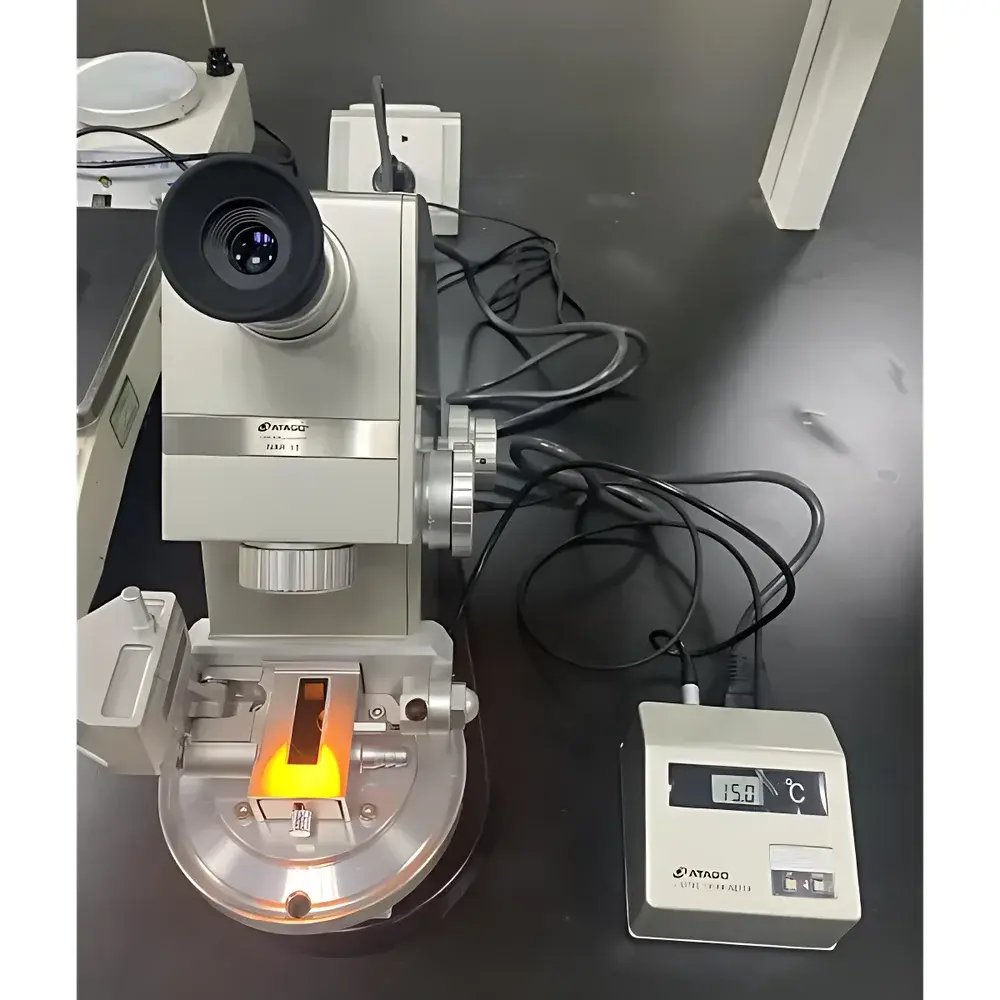
ATAGO NAR-3T High-Precision Benchtop Abbe Refractometer
| Brand | ATAGO |
|---|---|
| Origin | Japan |
| Model | NAR-3T |
| Product Type | Benchtop Refractometer |
| Temperature Control | Yes |
| Digital Display | Yes |
| Measurement Range | Refractive Index (nD) 1.30000–1.71000, Brix 0.00–95.00% |
| Measurement Accuracy | Refractive Index (nD) ±0.0001, Brix ±0.05% |
| Resolution | Refractive Index (nD) 0.0002, Brix 0.1% |
| Temperature Range | 5–50°C |
| Temperature Accuracy | ±0.2°C (ambient), 5–40°C operational |
| Power Supply | AC 100–240 V, 50/60 Hz |
| Power Consumption | 5 VA |
| Dimensions (Main Unit) | 12 × 31 × 34 cm |
| Weight (Main Unit) | 9.0 kg |
| Dimensions (Temperature Display Module) | 10 × 11 × 7 cm |
| Weight (Temperature Display Module) | 0.5 kg |
Overview
The ATAGO NAR-3T High-Precision Benchtop Abbe Refractometer is an optical instrument engineered for rigorous quantitative analysis of transparent and translucent liquid and semi-solid samples based on the principle of total internal reflection. It operates in accordance with the classical Abbe refractometry method—measuring the critical angle at which light transitions from a high-refractive-index prism (typically BK7 glass) into the sample medium—and converts this angular measurement into a precise refractive index (nD) value at the sodium D-line wavelength (589.3 nm). Designed for laboratory environments requiring traceable, repeatable, and operator-independent measurements, the NAR-3T integrates a stabilized halogen light source, optimized collimation optics, and a high-resolution CCD-based detection system to minimize chromatic aberration and thermal drift. Its extended nD range (1.30000–1.71000) accommodates diverse media—from low-index solvents (e.g., ethanol, acetone) to high-index resins and polymer melts—while maintaining ASTM D1218 and ISO 2859-1 compliance for sampling and acceptance testing protocols.
Key Features
- Stabilized tungsten-halogen illumination system ensuring consistent spectral output and long-term photometric stability
- Thermally regulated prism block with integrated Peltier-based temperature control (5–50°C), enabling isothermal measurements per ISO 21148 and USP <731>
- Dual-channel digital display: simultaneous real-time readout of nD (to 0.00001 resolution) and Brix (% w/w sucrose equivalence), with automatic temperature compensation (ATC)
- High-precision Abbe-type optical train featuring achromatic lens assembly and adjustable focus eyepiece for parallax-free visual alignment
- Compliant with GLP documentation requirements: built-in audit trail for calibration events, user logins, and parameter modifications (when paired with optional ATAGO DataLogger software)
- Modular architecture supporting external temperature probe integration and RS-232/USB data export for LIMS and ELN compatibility
Sample Compatibility & Compliance
The NAR-3T accepts aqueous solutions, organic solvents, oils, glycols, syrups, emulsions, and thermoplastic melts—provided they are optically homogeneous and non-scattering within the visible spectrum. Sample volume requirement is ≤0.2 mL per measurement. The instrument conforms to international metrological standards including JIS K 0061 (Japanese Industrial Standard for refractometers), ISO 21148:2017 (Refractometers — Specifications and methods of test), and supports FDA 21 CFR Part 11-compliant workflows when used with validated software configurations. Calibration verification is performed using certified reference standards traceable to NIST SRM 1484 (water) and SRM 84a (sodium nitrate solution), ensuring measurement uncertainty ≤±0.0001 nD under controlled lab conditions (23 ±1°C, RH <60%).
Software & Data Management
The NAR-3T interfaces with ATAGO’s proprietary PC-based DataLogger v3.2 software (Windows 10/11 compatible), enabling automated data capture, statistical process control (SPC) charting, batch report generation, and electronic signature support for 21 CFR Part 11 validation. All measurement records include timestamp, operator ID, ambient temperature/humidity metadata, prism temperature, and raw intensity profile data. Export formats include CSV, PDF, and XML for seamless integration with enterprise quality management systems (QMS) and laboratory information management systems (LIMS). Audit logs retain full history of calibration adjustments, firmware updates, and user access events—critical for GMP/GLP-regulated environments in pharmaceutical and food manufacturing.
Applications
- Quality control of sugar content in fruit juices, soft drinks, and confectionery syrups per AOAC 932.12 and ICUMSA methods
- Concentration monitoring of coolants, cutting fluids, and antifreeze formulations in metalworking and automotive OEM supply chains
- Batch release testing of active pharmaceutical ingredients (APIs) and excipients in solvent-based suspensions and ointment bases
- Process validation of polymerization reactions via refractive index tracking during resin curing (e.g., epoxy, polyurethane)
- Raw material verification in lithium-ion battery electrolyte production (LiPF6 in carbonate blends)
- Research-grade characterization of nanofluids, ionic liquids, and bio-based lubricants in academic and industrial R&D labs
FAQ
What is the recommended calibration frequency for the NAR-3T in a GLP-compliant laboratory?
Calibration verification using certified standards should be performed before each analytical session or at least once per shift; full recalibration is required after instrument relocation, major maintenance, or if drift exceeds ±0.0001 nD over consecutive checks.
Can the NAR-3T measure samples with suspended solids or turbidity?
No—only optically clear, non-scattering samples yield valid Abbe refractive index readings. Turbid or particulate-laden samples must be filtered (0.45 µm membrane) or centrifuged prior to analysis.
Is temperature control mandatory for Brix measurements?
Yes. Brix values are temperature-dependent; all official Brix tables (e.g., ICUMSA, AOAC) assume measurement at 20°C. The NAR-3T’s integrated Peltier system ensures strict thermal equilibration per ISO 21148 Annex B.
Does the instrument support custom scale programming for non-sucrose solutes?
Yes—via DataLogger software, users may define and validate custom concentration scales (e.g., NaCl, ethylene glycol, H2SO4) using multi-point calibration curves traceable to primary standards.
What safety certifications does the NAR-3T hold for global deployment?
It carries CE marking (EMC Directive 2014/30/EU and Low Voltage Directive 2014/35/EU), UL 61010-1 certification for North America, and PSE mark for Japan, confirming compliance with IEC 61010-1:2010 for electrical safety in laboratory equipment.





