
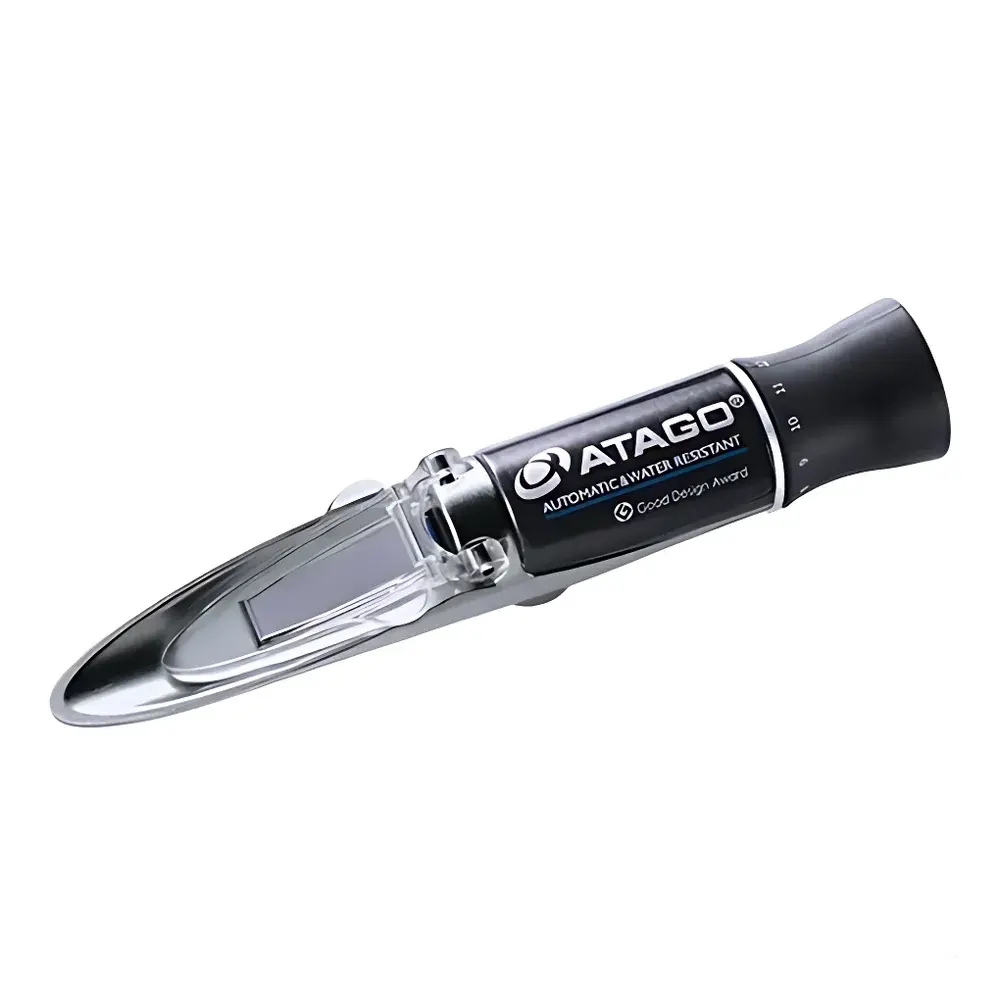
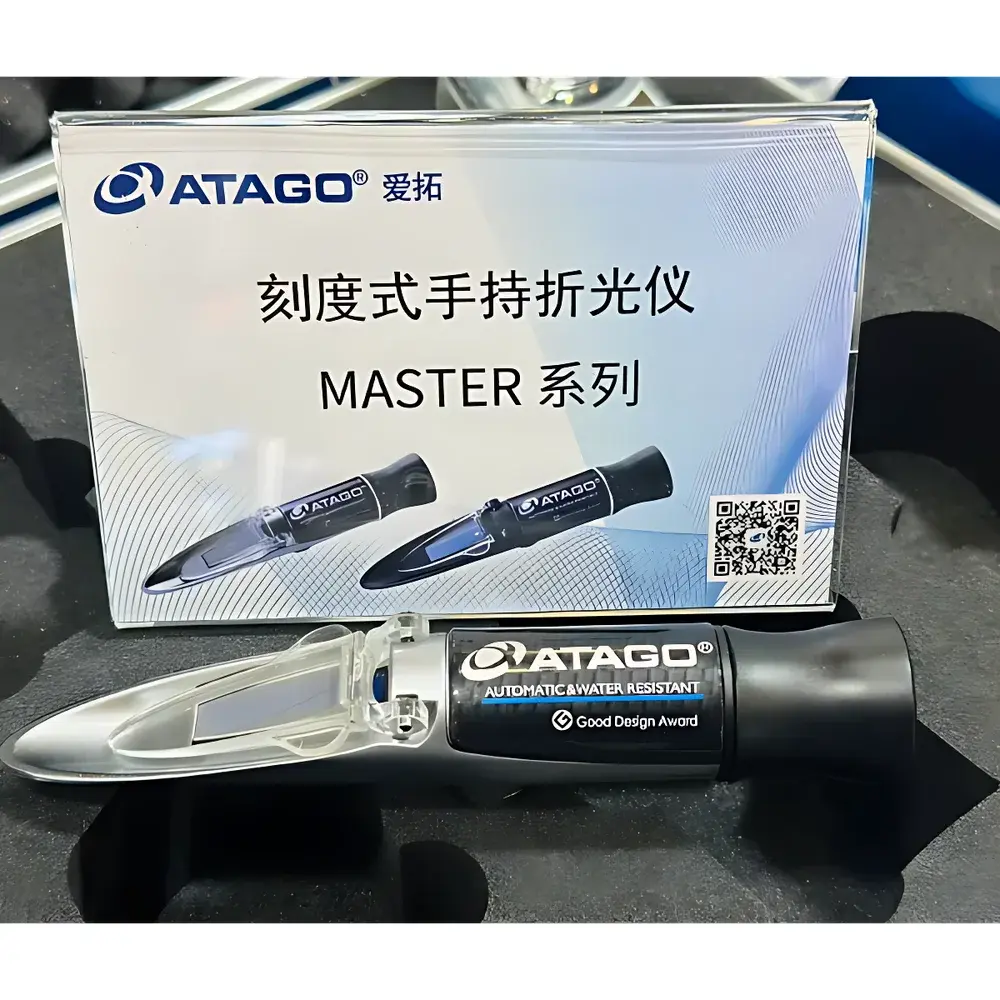
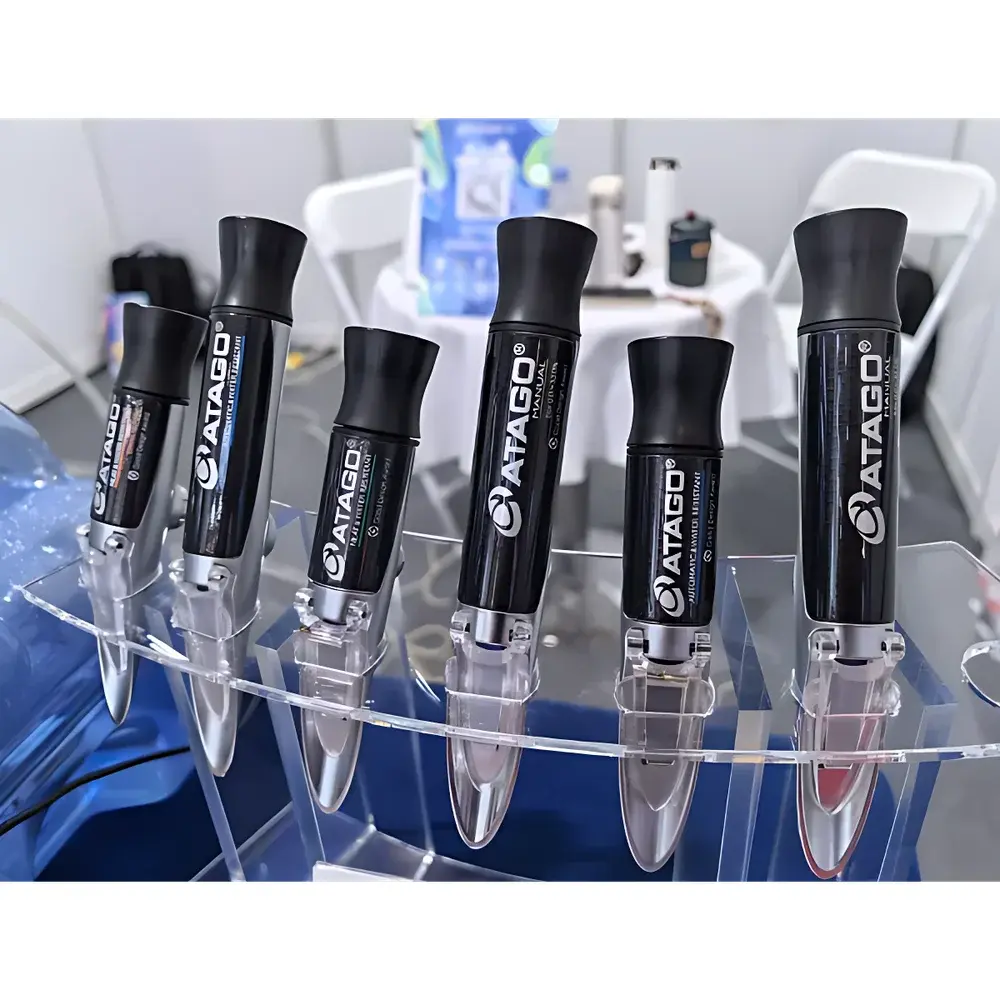
ATAGO MASTER-53α Analog Handheld Refractometer
| Brand | ATAGO |
|---|---|
| Origin | Japan |
| Model | MASTER-53α |
| Product Type | Analog Handheld Refractometer |
| Measurement Range | Brix 0.0–53.0% (with Automatic Temperature Compensation and Water Correction) |
| Accuracy | ±0.2% Brix at 20°C |
| Repeatability | ±0.1% Brix at 20°C |
| Minimum Scale Division | 0.2% Brix |
| IP Rating | IP65 (excluding eyepiece) |
| Dimensions | 3.2 × 3.4 × 16.8 cm |
| Weight | 130 g |
Overview
The ATAGO MASTER-53α Analog Handheld Refractometer is a precision optical instrument engineered for rapid, field-deployable Brix concentration measurement in liquid and semi-liquid samples. Based on the fundamental principle of total internal reflection, it determines refractive index changes induced by solute concentration—primarily sucrose in aqueous solutions—and converts them to Brix values (% w/w) via calibrated scale optics. Designed as the flagship analog variant within ATAGO’s MASTER series, the MASTER-53α features a robust all-metal housing (stainless steel and aluminum alloy), making it suitable for industrial environments where mechanical durability and chemical resistance are critical. Its optical system incorporates high-transmittance prisms and precision-ground scale plates, optimized for visual readability under ambient lighting conditions without external power. The built-in Automatic Temperature Compensation (ATC) mechanism—based on bimetallic thermal expansion—adjusts readings across 10–40°C to reference 20°C, minimizing manual correction errors common in unregulated field use.
Key Features
- All-metal construction (non-resin body) for enhanced structural integrity, abrasion resistance, and long-term stability in high-salt or acidic exposure environments
- Wide Brix range of 0.0–53.0%, specifically calibrated for high-concentration applications such as pickled vegetables, fermented sauces, fruit concentrates, and brine solutions
- Integrated ATC system compliant with ISO 2173:2003 and AOAC 932.12 methodology requirements for temperature-corrected refractometric analysis
- IP65-rated enclosure (excluding eyepiece assembly), providing dust-tight protection and resistance to low-pressure water jets—enabling safe operation in wet processing areas, food production lines, or outdoor agricultural settings
- Optical scale with 0.2% Brix minimum division and parallax-reduced viewing geometry for consistent visual interpolation by trained operators
- No battery or electronic components required—ensuring zero downtime, no calibration drift from aging electronics, and intrinsic compliance with explosion-proof zones where applicable
Sample Compatibility & Compliance
The MASTER-53α is validated for direct measurement of turbid, viscous, or particulate-laden samples—including kimchi brine, soybean paste, miso, molasses, and salt-cured seafood extracts—without filtration or dilution, thanks to its high-contrast optical path design and wide dynamic range. While not intended for volatile organic solvents or strongly corrosive acids (e.g., concentrated HNO₃), its metal prism housing demonstrates superior resistance to chloride-induced pitting compared to resin-bodied alternatives. The instrument conforms to general-purpose laboratory equipment standards under JIS K 0067 (Japanese Industrial Standard for Refractometers) and supports traceability in GLP-compliant workflows when used with documented operator training, periodic verification using NIST-traceable sucrose standards (e.g., 5.0%, 20.0%, and 45.0% Brix reference solutions), and logbook-based usage records.
Software & Data Management
As a purely analog optical instrument, the MASTER-53α does not incorporate digital output, Bluetooth, or software connectivity. Data acquisition is operator-mediated via visual scale reading and manual transcription into laboratory notebooks, LIMS, or Excel-based QA templates. This architecture eliminates cybersecurity vulnerabilities, firmware update dependencies, and electromagnetic interference concerns—making it suitable for regulated manufacturing facilities operating under FDA 21 CFR Part 11 Annex 11 principles where paper-based or validated electronic records are maintained separately. For laboratories requiring digital archiving, ATAGO recommends pairing the MASTER-53α with ISO/IEC 17025-accredited image-capture protocols using calibrated macro-lenses and standardized lighting setups for audit-ready documentation.
Applications
- Quality control of fermented and preserved foods: monitoring salinity and sugar content in pickles, sauerkraut, fish sauce, and salted bean pastes
- In-process verification in juice concentration and syrup blending operations
- Field assessment of fruit ripeness and harvest readiness in orchards and packing houses
- Raw material screening for incoming brines, marinades, and curing solutions in meat and seafood processing
- Educational demonstration of colligative properties and refractive index relationships in chemistry and food science curricula
- Backup verification tool during power outages or electronic refractometer maintenance cycles
FAQ
Does the MASTER-53α require battery power or charging?
No. It is a fully mechanical, optical instrument with no electronic components.
Can it measure samples below 10°C or above 40°C?
Measurements outside the 10–40°C ATC range are possible but require manual temperature correction using published Brix–temperature coefficient tables per ISO 2173.
Is the eyepiece waterproof?
No—the IP65 rating applies to the main body only; the optical eyepiece is sealed but not pressure-wash rated and must be protected from direct water spray.
How often should it be verified with standard solutions?
ATAGO recommends daily verification before first use when deployed in production QC; weekly verification suffices for R&D or infrequent field use.
What distinguishes the MASTER-53α from the MASTER-53Pα?
The MASTER-53α uses a corrosion-resistant metal body, while the MASTER-53Pα employs chemically inert polymer housing—preferred for highly acidic (pH < 2.5) or oxidizing sample matrices where metal contact may induce catalytic degradation.





