
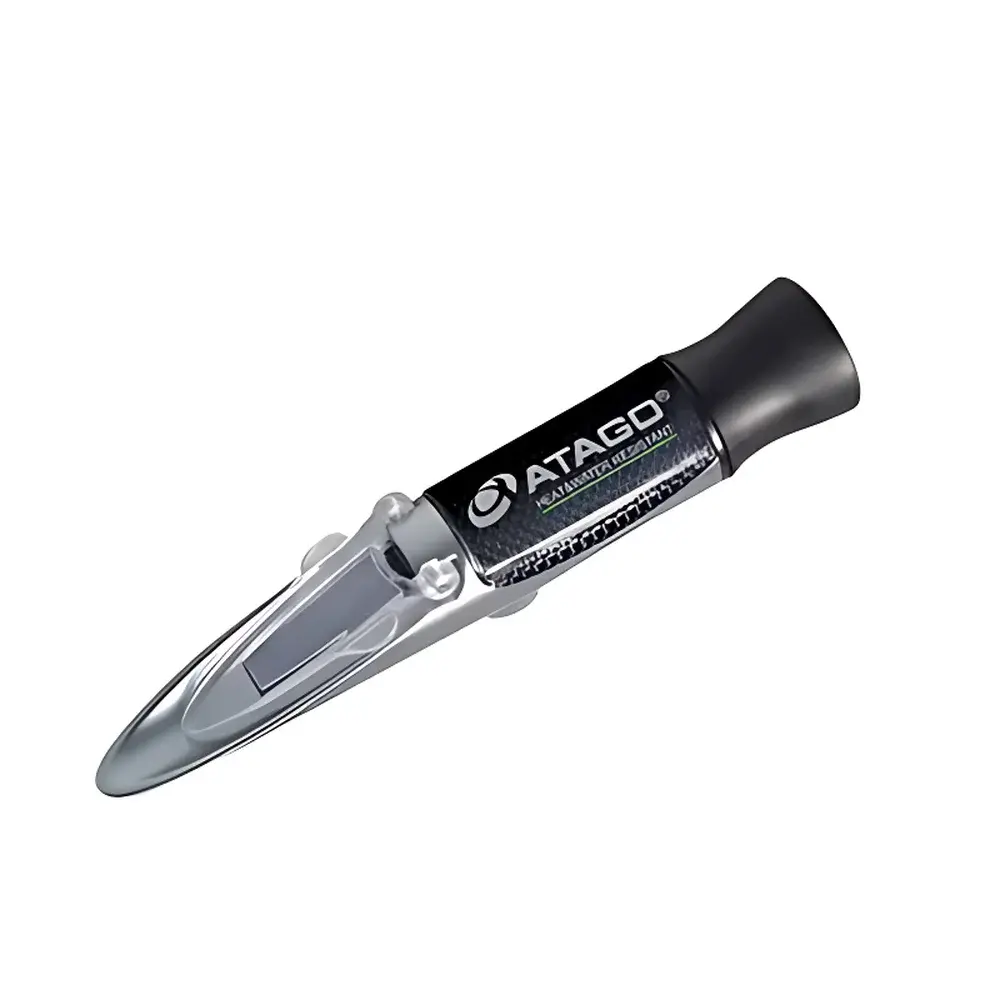
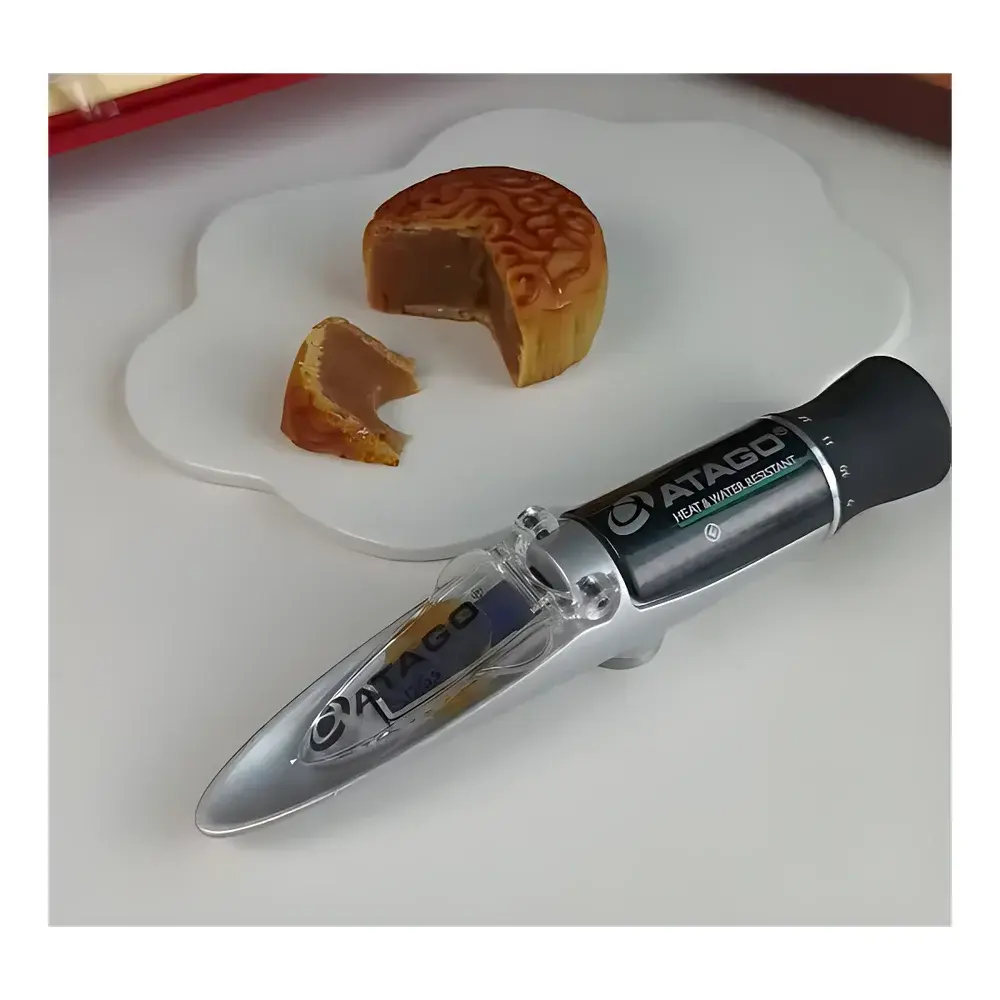
ATAGO MASTER-93H High-Temperature Refractometer for Paste and Syrup Brix Measurement
| Brand | ATAGO |
|---|---|
| Origin | Japan |
| Model | MASTER-93H |
| Measurement Principle | Abbe Refractometry |
| Sample Type | Hot, Viscous, Semi-Solid Pastes |
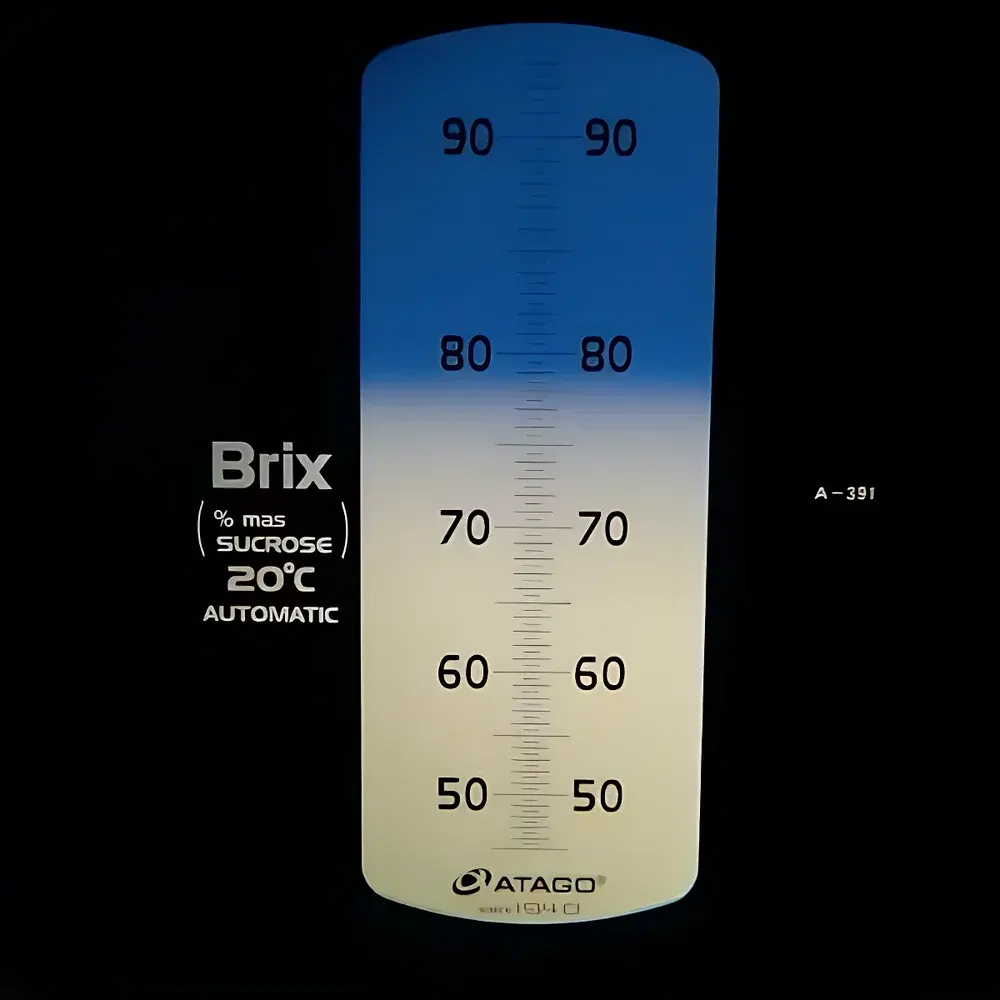
| Measurement Range | Brix 45.0–93.0% |
| Resolution | 0.5% Brix |
| Accuracy | ±0.5% Brix (±0.25% with Automatic Temperature Compensation) |
| Dimensions | 3.2 × 3.4 × 16.8 cm |
| Weight | 130 g |
| Instrument Type | Destructive Sampling Refractometer |
| Compliance | ISO 2173, AOAC 932.12, ASTM D1074, JIS K 0061 |
Overview
The ATAGO MASTER-93H is a compact, handheld high-temperature refractometer engineered specifically for rapid, on-site Brix concentration measurement of thermally stable, viscous, semi-solid food pastes—including fillings, jams, red bean paste, lotus seed paste, caramelized syrups, and concentrated fruit purées. Unlike conventional benchtop or low-range handheld refractometers, the MASTER-93H employs Abbe refractometry with a sapphire prism and high-thermal-stability optical path design, enabling direct measurement of samples at elevated temperatures (up to 100 °C) without pre-cooling. This eliminates thermal quenching artifacts and preserves sample integrity during analysis—critical for quality control in confectionery, bakery, and traditional Asian dessert manufacturing where viscosity and thermal history directly affect sugar solubility and crystallization behavior. The instrument operates on the principle that the refractive index of aqueous sucrose solutions correlates predictably with mass fraction (Brix %), as defined by international standard reference tables (ICUMSA, AOAC, ISO). Its automatic temperature compensation (ATC) algorithm—calibrated across 10–100 °C—corrects for thermal expansion-induced refractive index drift, ensuring metrological traceability per ISO/IEC 17025-aligned laboratory practices.
Key Features
- Optimized sapphire prism with enhanced thermal conductivity and chemical resistance—suitable for repeated contact with acidic, sugary, and particulate-laden pastes.
- True high-temperature operation: Measures hot samples directly (no cooling delay), reducing process interruption and improving throughput in production-line QC environments.
- Automatic Temperature Compensation (ATC) with ±0.25% Brix accuracy over full operational range—validated against NIST-traceable sucrose reference standards.
- Compact ergonomic design (130 g, 16.8 cm length) enables one-handed operation in cramped kitchen labs, pilot plants, or mobile inspection carts.
- Destructive sampling interface: Integrated sample well accommodates viscous material via spatula loading; minimal 0.3 mL sample volume required.
- No battery or external power needed—operates passively via ambient light, eliminating calibration drift from voltage fluctuations or battery aging.
Sample Compatibility & Compliance
The MASTER-93H is validated for use with high-Brix, high-viscosity matrices where conventional refractometers fail due to poor prism wetting, air entrapment, or thermal shock. It meets the physical and metrological requirements of ISO 2173 (fruit products), AOAC Official Method 932.12 (sugar-containing foods), ASTM D1074 (refractive index of liquid hydrocarbons and related materials), and JIS K 0061 (general methods for refractometric analysis). Its measurement uncertainty budget accounts for operator variability, sample homogeneity, and thermal gradient effects—supporting GLP-compliant documentation when paired with ATAGO’s optional digital logging accessories. While not intrinsically compliant with FDA 21 CFR Part 11, its analog optical readout supports audit-ready manual recording in regulated food manufacturing environments operating under HACCP, SQF, or BRCGS protocols.
Software & Data Management
As an analog optical instrument, the MASTER-93H does not incorporate embedded firmware, Bluetooth, or data export capabilities. Its design prioritizes mechanical robustness, long-term calibration stability, and immunity to electromagnetic interference—key considerations in industrial kitchens and steam-intensive processing zones. For digital traceability, users may pair it with ATAGO’s optional RS-232-compatible digital adapter (REF-ADP-01) and PC-based software (RefractoLink v4.2), enabling timestamped Brix logging, statistical process control (SPC) charting, and CSV export compatible with LIMS platforms. All calibration records—including date, reference standard lot number, and technician ID—must be maintained manually per ISO/IEC 17025 Clause 7.7.
Applications
- Real-time Brix verification during jam and preserve cooking—ensuring optimal gel formation and shelf-life stability.
- Lot-to-lot consistency checks for mooncake and pastry fillings prior to packaging.
- In-process monitoring of caramel syrup concentration in confectionery melt tanks.
- QC screening of fermented bean pastes (e.g., doubanjiang, miso) where salt-sugar balance affects microbial safety.
- R&D formulation development for low-moisture, high-sugar functional foods requiring precise water activity prediction.
- Teaching laboratories demonstrating colligative property relationships in food colloids and supersaturated systems.
FAQ
Is the MASTER-93H suitable for measuring non-sucrose sugars like fructose or glucose?
Yes—though calibrated for sucrose equivalence, its refractive index response can be correlated to other mono- and disaccharides using published conversion factors (e.g., ICUMSA Table 12); validation against gravimetric analysis is recommended for critical applications.
Can I measure samples containing suspended solids or pulp?
Yes—the sapphire prism and shallow sample well tolerate fine particulates; however, homogeneous mixing immediately before loading is essential to avoid bias from density stratification.
Does the instrument require recalibration between shifts?
No—its optical geometry is inherently stable; daily verification with a certified 65.0% Brix standard (e.g., ATAGO REF-STD-65) is sufficient per ISO 2173 Annex B.
What is the minimum sample temperature for accurate ATC activation?
ATC functions reliably above 10 °C; below this, manual temperature correction using the included nomograph is advised.
Is cleaning solvent compatibility documented?
Yes—prism cleaning with 70% ethanol or isopropanol is approved; acetone and strong alkaline cleaners are prohibited to prevent prism coating degradation.




