
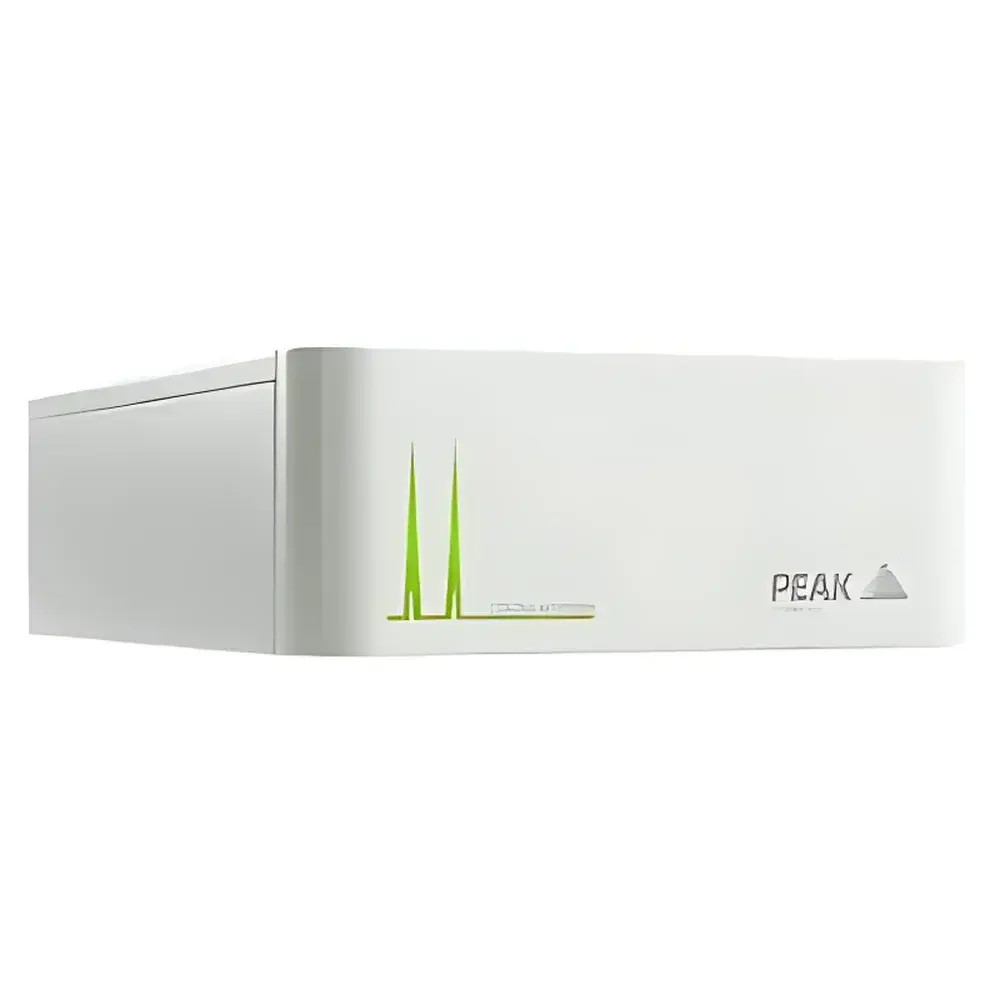
Peak Scientific Corona 1010-CAD Dedicated Nitrogen Generator
| Brand | PEAK |
|---|---|
| Origin | United Kingdom |
| Manufacturer Type | OEM Manufacturer |
| Origin Category | Imported |
| Model | Corona 1010 |
| Nitrogen Generation Principle | Membrane Separation |
| Output Flow Rate | 5 L/min |
| Output Pressure | 80 psi |
| Nitrogen Purity | 98% |
| Dew Point | −40 °C |
| Input Air Pressure | 110–130 psi |
| Power Supply | 110–230 V AC, 50/60 Hz |
| Current Draw | 0.03 A |
| Dimensions (H×W×D) | 156 × 417 × 540 mm |
| Startup Time | 5 minutes |
| Maintenance Interval | Annual filter replacement |
Overview
The Peak Scientific Corona 1010-CAD Dedicated Nitrogen Generator is an engineered solution co-developed with Thermo Fisher Scientific to meet the precise gas supply requirements of the Corona Veo Charged Aerosol Detector (CAD). Designed exclusively for integration with this high-sensitivity analytical detector, the system delivers on-demand, dry, and consistent nitrogen at 98% purity—optimized to support stable baseline performance, reproducible response factors, and long-term detector stability. Utilizing proprietary hollow-fiber membrane separation technology, the generator selectively permeates oxygen, water vapor, and other trace gases from compressed air feedstock, retaining nitrogen with minimal pressure drop and zero consumables beyond the annual filter cartridge. Its compact footprint and stackable architecture enable seamless placement beneath or adjacent to the CAD instrument—eliminating reliance on high-pressure cylinders or centralized lab nitrogen lines.
Key Features
- Dedicated CAD Integration: Pre-validated interface and pressure regulation ensure full compatibility with Thermo Fisher’s Corona Veo CAD, including real-time pressure monitoring and fail-safe shutdown protocols.
- Membrane-Based Generation: Solid-state, oil-free separation process eliminates moving parts in the gas path—ensuring intrinsic safety, silent operation (<45 dBA), and immunity to ambient humidity fluctuations.
- Plug-and-Play Deployment: Integrated pressure regulator, dual-stage filtration (coalescing + activated carbon), and auto-purge sequence enable operational readiness within five minutes of power-on—no external calibration or commissioning required.
- Space-Efficient Modular Design: Vertical stacking capability allows multiple units to be deployed in constrained benchtop environments without compromising service access or airflow clearance.
- Low-Maintenance Architecture: Single annual maintenance event—replacement of the integrated particulate/adsorption filter cartridge—supports GLP-compliant recordkeeping and minimizes instrument downtime.
- Intelligent Status Indication: LED status array provides immediate visual feedback for power-on, ready-for-use, low-input-pressure, and system fault conditions—aligned with ISO/IEC 17025 laboratory environmental monitoring expectations.
Sample Compatibility & Compliance
The Corona 1010-CAD is validated for continuous operation with Thermo Fisher’s Corona Veo CAD across all standard mobile phases—including aqueous, acetonitrile-, and methanol-based eluents—as well as volatile buffers (e.g., ammonium acetate, ammonium formate). Its output meets ASTM D8272-22 specifications for instrument-grade nitrogen used in charged aerosol detection. The unit complies with IEC 61010-1:2010 for electrical safety in laboratory equipment and carries CE marking under the EU Machinery Directive 2006/42/EC. All firmware and hardware configurations are designed to support audit-ready documentation per FDA 21 CFR Part 11 when paired with compliant LIMS or CDS platforms.
Software & Data Management
While the Corona 1010-CAD operates autonomously without software dependency, its analog status outputs (0–10 V DC) and digital relay contacts are compatible with third-party building management systems (BMS) and laboratory infrastructure monitoring platforms. Optional RS-485 Modbus RTU interface enables integration into centralized gas utility dashboards for real-time flow, pressure, and uptime logging—supporting preventive maintenance scheduling and ISO 17025 Clause 6.4.3 resource monitoring requirements. All operational logs—including startup cycles, filter life countdown, and pressure deviation events—are stored locally in non-volatile memory for retrieval during internal quality audits.
Applications
- Charged Aerosol Detection (CAD) in HPLC and UHPLC systems for universal quantitation of non-chromophoric analytes (e.g., carbohydrates, lipids, surfactants, polymers).
- Method transfer and regulatory submission workflows requiring documented, cylinder-free nitrogen supply per ICH Q5C and USP <1058> Analytical Instrument Qualification guidelines.
- High-throughput QC laboratories performing routine assay validation where gas consistency directly impacts %RSD of response factor across batches.
- Multi-instrument labs deploying distributed gas generation to eliminate cross-contamination risks associated with shared nitrogen manifolds.
- Facilities lacking centralized compressed air infrastructure—compatible with optional integrated oil-free scroll compressors (Corona Air Series) to provide full turnkey gas supply.
FAQ
Is the Corona 1010-CAD certified for use with Thermo Fisher instruments?
Yes—it is jointly validated and listed as a recommended accessory for the Corona Veo CAD under Thermo Fisher’s Instrument Compatibility Program.
What compressed air quality is required for optimal membrane performance?
ISO 8573-1 Class 2:2:2 compressed air (≤0.1 µm particles, ≤0.1 mg/m³ oil aerosol, dew point ≤−40 °C) is recommended; the unit includes pre-filtration to accommodate Class 3–4 feed air with appropriate upstream conditioning.
Can this generator support multiple CAD detectors simultaneously?
No—the Corona 1010-CAD is rated for single-instrument duty at 5 L/min continuous flow; parallel deployment of units is required for multi-detector configurations.
Does the system require periodic calibration?
No—membrane separation performance is inherently stable and does not drift over time; only annual filter replacement is required per manufacturer’s maintenance schedule.
How is compliance with 21 CFR Part 11 ensured during data logging?
When interfaced via Modbus RTU to a 21 CFR Part 11–compliant CDS or LIMS, the generator’s timestamped operational events (e.g., pressure excursions, filter expiry alerts) are captured as attributable, legible, and contemporaneous electronic records.
Related Products



