
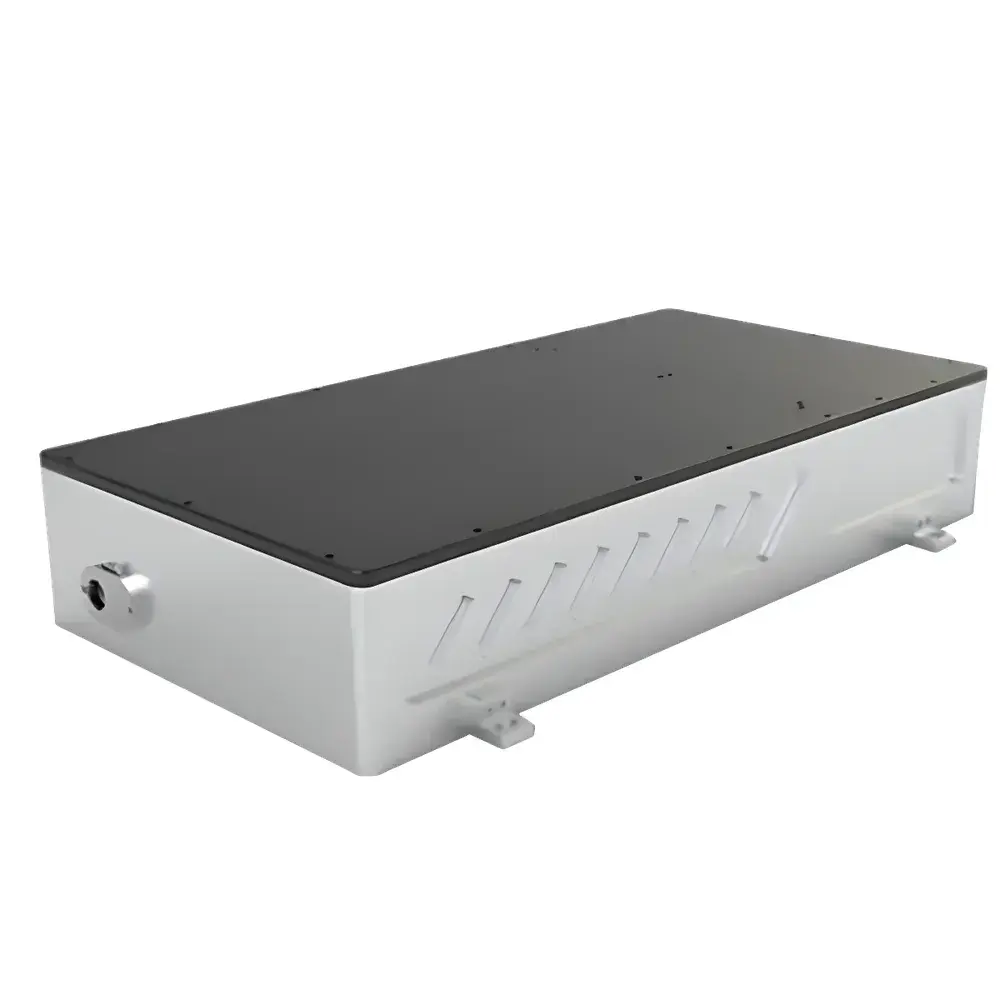
SPL Koline-HPFemo Series High-Power Femtosecond Laser System
| Brand | SPL |
|---|---|
| Origin | Shandong, China |
| Manufacturer Type | Authorized Distributor |
| Country of Origin | China |
| Model | Koline-HPFemo |
| Core Technology | Fiber-seed + CPA + Multi-stage Multi-pass Fiber & Solid-State Amplification |
| Output Format | Collimated Free-Space Beam |
| Communication Interface | RS232 |
| Dimensions | 700 × 350 × 130 mm |
| Cooling | Integrated Air/Water Hybrid Thermal Management |
| Compliance | CE Marked (EN 60825-1:2014, EN 61000-6-3:2019, EN 61000-6-4:2019) |
| Software Control | SPL-LaserControl v3.2 (Windows-based, TCP/IP & RS232 dual protocol support) |
Overview
The SPL Koline-HPFemo Series is a high-repetition-rate, high-average-power femtosecond laser system engineered for industrial micromachining and scientific ultrafast applications. Built upon a hybrid amplification architecture—integrating an in-house developed all-fiber mode-locked oscillator, chirped-pulse amplification (CPA), and multi-stage multi-pass fiber plus solid-state amplifier stages—the system delivers exceptional long-term power stability and pulse-to-pulse consistency. Operating at fundamental wavelengths of 1030 nm, with optional second- and third-harmonic generation modules (515 nm and 343 nm), the Koline-HPFemo supports tunable pulse durations from 300 fs to 10 ps, enabling precise control over nonlinear absorption dynamics in transparent and wide-bandgap materials. Its collimated free-space output beam exhibits M² ≤ 1.2 (typ. Mx² = 1.17, My² = 1.07), ensuring diffraction-limited focusing essential for sub-micron feature fabrication. Designed for integration into OEM platforms and cleanroom-compatible production lines, the system meets IEC 60825-1 Class 4 laser safety requirements and complies with electromagnetic compatibility standards EN 61000-6-3 and EN 61000-6-4.
Key Features
- Hybrid amplification architecture: All-fiber seed source + CPA + multi-pass fiber pre-amplifier + diode-pumped solid-state final amplifier
- Tunable pulse duration: 300 fs – 10 ps, adjustable via internal compressor tuning and dispersion compensation
- Burst-mode operation: Programmable pulse trains (burst width up to 1 µs, intra-burst spacing ≥ 1 ns, burst repetition rate up to 1 MHz)
- High temporal stability: RMS power fluctuation ≤ 1% over 8 hours (23 ± 2°C ambient, active thermal stabilization)
- Flexible triggering: Internal clock synchronization or external TTL/CMOS trigger input (rising-edge sensitive, 3.3–5 V logic)
- Compact footprint: 700 × 350 × 130 mm chassis with front-panel status indicators and rear-mounted RS232 port
- Thermal management: Integrated air-cooled heat sinks for low-power stages; water-cooled plate for solid-state amplifier module (standard 18–25°C coolant supply)
Sample Compatibility & Compliance
The Koline-HPFemo series is compatible with standard optical tables, motorized translation stages, and vacuum-compatible processing chambers. Its near-diffraction-limited beam enables efficient coupling into scanning galvanometers, objective-based focusing systems, and vacuum beamlines. The system conforms to ISO 11146-1:2019 for beam parameter measurement and supports traceable calibration per ISO/IEC 17025-accredited laboratories. For regulated manufacturing environments, firmware logging (with timestamped event records) satisfies basic audit-trail requirements under GLP and GMP frameworks. While not FDA 21 CFR Part 11 certified out-of-the-box, the RS232 interface allows integration with validated SCADA or MES platforms supporting electronic signatures and data integrity protocols.
Software & Data Management
SPL-LaserControl v3.2 provides full remote operation via Windows PC, supporting both RS232 serial and TCP/IP Ethernet communication. The GUI enables real-time monitoring of output power, pulse energy, repetition rate, compressor position, and internal temperature sensors. All operational parameters—including burst configuration, pulse width setpoint, and trigger delay—are stored in non-volatile memory with version-stamped configuration files (.lcfg). Export functions generate CSV logs compliant with ASTM E2911-13 (Standard Practice for Data Exchange in Materials Testing), facilitating post-processing in MATLAB, Python (NumPy/Pandas), or LabVIEW. Firmware updates are delivered via signed binary packages with SHA-256 checksum verification.
Applications
- Photovoltaic cell scribing: Selective ablation of thin-film layers (a-Si, CIGS, perovskite) with minimal thermal damage zone (< 1 µm)
- Hard-brittle material processing: Precision dicing of sapphire, fused silica, and silicon carbide wafers using cold ablation mechanisms
- Direct laser writing: Two-photon polymerization of SU-8, IP-L, and ORMOCER resins with sub-200 nm voxel resolution
- Thin-film patterning: Micron-scale structuring of ITO, graphene oxide, and MXene coatings without substrate delamination
- Optical component fabrication: Waveguide inscription in borosilicate glass and lithium niobate via type-II modification
- Time-resolved pump-probe setups: Synchronized dual-output configurations (e.g., 1030 nm pump + 515 nm probe) available on request
FAQ
What harmonic generation options are available?
Second-harmonic (515 nm) and third-harmonic (343 nm) modules are factory-installed options. Conversion efficiency exceeds 65% (1030 nm → 515 nm) and 40% (1030 nm → 343 nm) at rated average power.
Is water cooling mandatory for continuous operation?
Yes. The solid-state amplifier stage requires a closed-loop chiller delivering 18–25°C deionized water at ≥2 L/min flow rate and ≤1.5 bar backpressure.
Can the system be synchronized with external motion controllers?
Yes. The TTL-compatible external trigger input accepts programmable delay (0–10 ms, 100 ps resolution) relative to master clock, enabling tight coordination with piezo stages or galvo scanners.
Does the laser support automated alignment routines?
No built-in auto-alignment; however, the RS232 command set includes beam dump actuation, shutter control, and power ramping sequences compatible with custom Python or LabVIEW alignment scripts.
What is the typical warm-up time to achieve specified stability?
Power and pointing stability reach specification within 30 minutes after cold start, assuming ambient temperature variation < ±0.5°C/h.



