
SPL ProSp-Micro2000K Micro-Raman Spectroscopy System
| Brand | SPL (Spectrum Laser Optics) |
|---|---|
| Origin | Zhejiang, China |
| Model | ProSp-Micro2000K |
| Instrument Type | Confocal Micro-Raman Spectrometer |
| Spectral Range | 150–4000 cm⁻¹ |
| Spectral Resolution | 6–10 cm⁻¹ |
| Spatial Resolution | 10 µm |
| Minimum Wavenumber | 120 cm⁻¹ |
| Spectral Reproducibility | ±5 cm⁻¹ |
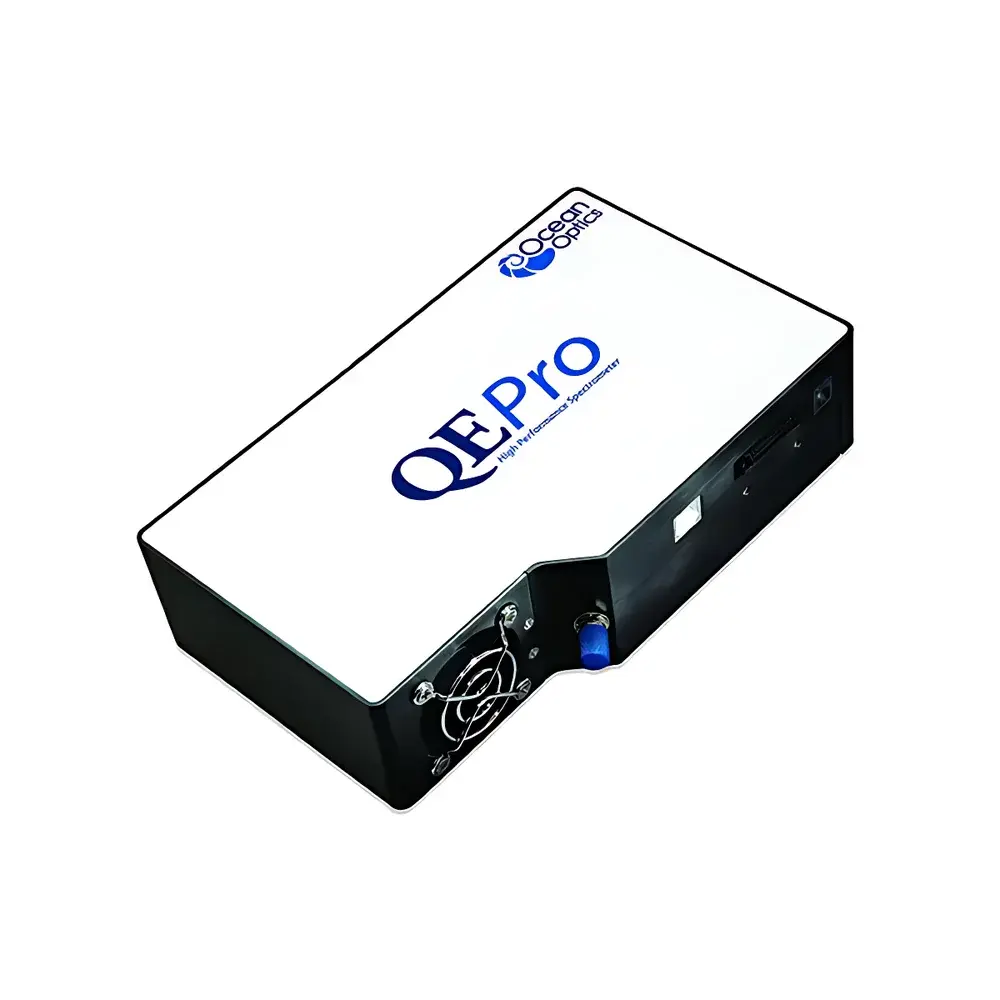
| Detector | Ocean Insight QE Pro (18-bit ADC, >99% linearity, 85,000 dynamic range, peak QE 90%, stray light <0.08% @600 nm) |
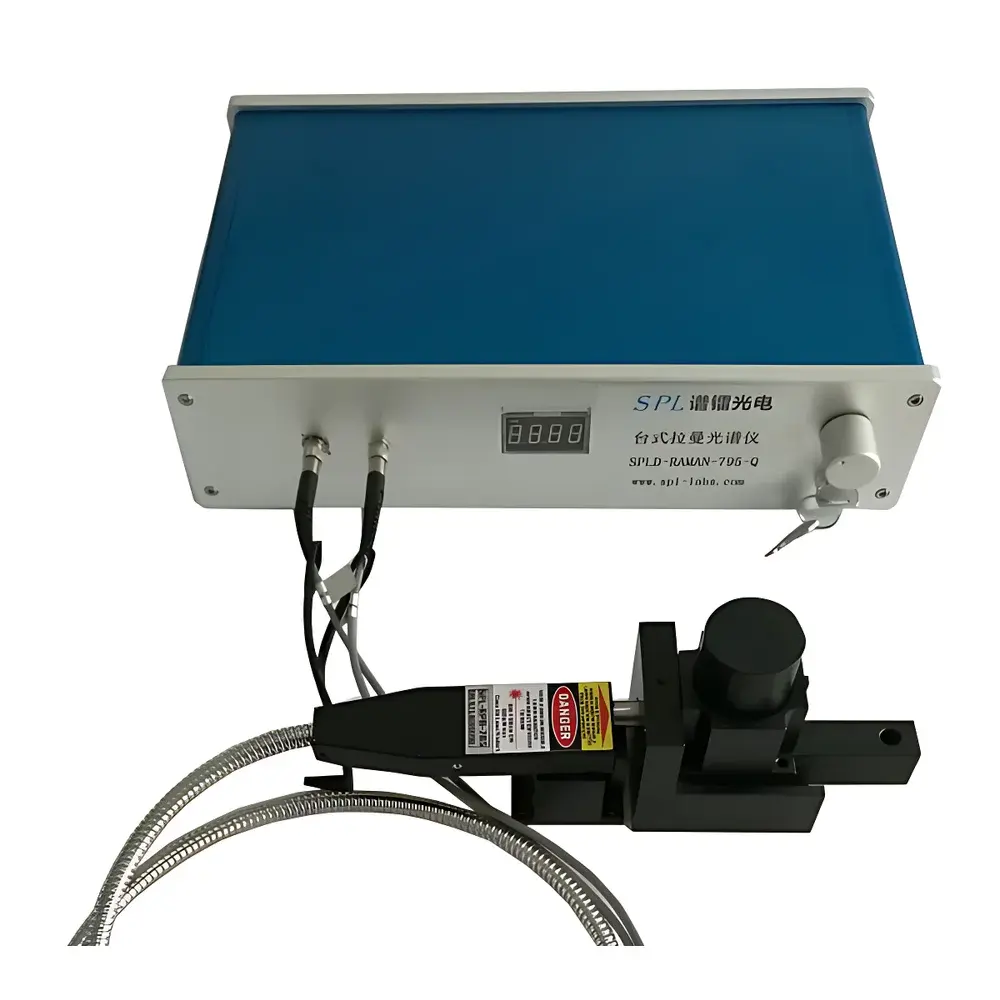
| Excitation Lasers | SPL-LASER-785 (785 nm, 0–500 mW adjustable, linewidth <0.2 nm, 10,000 h lifetime) or SPL-LASER-532 (532 nm, 0–300 mW) |
| Raman Probe | SPL-RPB-785 (OD >6, 7.5 mm focal length) |
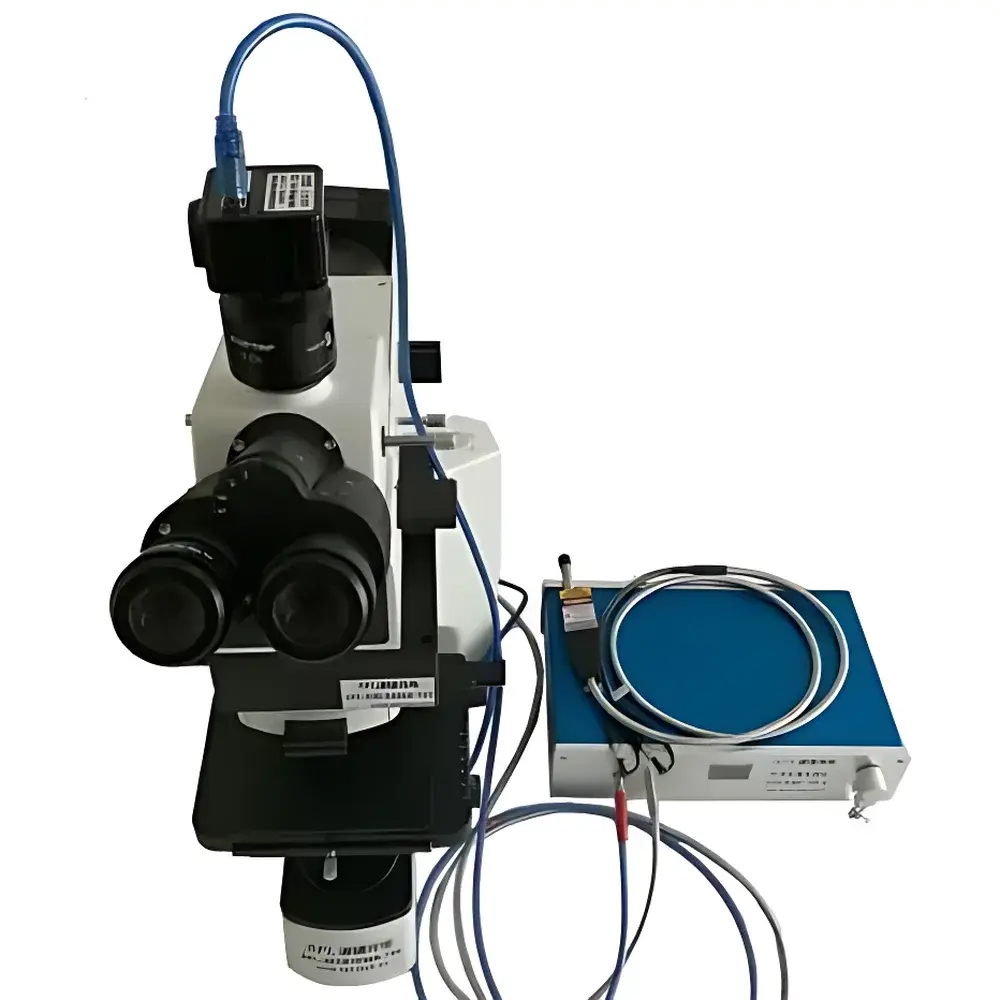
| Microscope | SPL-CX40 metallurgical microscope with 5×/10×/20×/50× objectives (100× optional), 175 × 145 mm stage, 76 × 42 mm travel, 3 MP CMOS camera |
| Modular Integration | Compatible with OEM microscope retrofit and portable Raman configuration |
Overview
The SPL ProSp-Micro2000K Micro-Raman Spectroscopy System is a modular, confocal micro-Raman platform engineered for high-fidelity vibrational spectroscopic analysis at the microscale. Based on inelastic scattering of monochromatic laser light—primarily at 785 nm (with optional 532 nm excitation)—the system captures molecular fingerprint spectra across a broad Raman shift range (150–4000 cm⁻¹), enabling label-free, non-destructive identification and characterization of chemical composition, crystallinity, stress, and phase distribution in solid, liquid, and thin-film samples. Its confocal optical architecture, combined with precise XYZ motorized stage control and diffraction-limited spatial resolution (~10 µm lateral), supports true micro-area spectral mapping without physical contact or sample preparation. Designed for dual operational modes—benchtop laboratory research and field-deployable screening—the system meets core requirements for trace-level detection in regulated environments where analytical rigor, repeatability, and documentation integrity are essential.
Key Features
- Modular confocal micro-Raman architecture: Integrates Ocean Insight QE Pro spectrometer (deep-cooled, 18-bit ADC, >1000:1 SNR, 6 rejection), and ProSp-Micro2000 optical module with optimized light collection efficiency.
- Sub-micron precision positioning: Motorized XYZ translation stage synchronized with real-time CMOS imaging (2048 × 1536, 3 MP) enables reproducible targeting of features as small as 10 µm; compatible with standard metallurgical objectives (5×–100×).
- Dual-mode operability: Configurable as a fixed laboratory system for quantitative micro-spectral mapping or reassembled into a compact portable unit (laser + spectrometer + probe in integrated housing) for on-site screening of raw materials, pharmaceuticals, or hazardous substances.
- Multi-modal spectral capability: Optional tungsten-halogen illumination enables simultaneous micro-reflection spectroscopy (360–2000 nm), supporting complementary analysis of optical constants, thin-film thickness, and surface oxidation states.
- Surface-enhanced Raman compatibility: Integrated mounting interface for ProSp-SERS chips, facilitating detection of low-concentration analytes (e.g., trace contaminants, biomarkers) with signal enhancement factors exceeding 10⁶.
Sample Compatibility & Compliance
The ProSp-Micro2000K accommodates diverse sample geometries—including powders, crystals, wafers, biological tissues, polymer films, gemstones, and heritage artifacts—without requiring sectioning, coating, or solvent extraction. Its non-contact, non-invasive measurement protocol aligns with ISO 8510-2 (Raman spectroscopy for material identification) and ASTM E1840 (standard guide for Raman microscopy). For regulated applications in pharmaceutical QA/QC (e.g., API verification, blend uniformity), the system supports audit-trail-enabled data acquisition via OceanView software compliant with FDA 21 CFR Part 11 requirements when deployed with appropriate user access controls and electronic signature protocols. All spectral metadata—including laser power, integration time, objective magnification, and environmental timestamps—is automatically embedded in exported .spc and .csv files to satisfy GLP/GMP documentation standards.
Software & Data Management
OceanView spectroscopy software provides full instrument control, real-time spectral preview, multi-point mapping, and advanced post-processing (baseline correction, peak fitting, PCA, spectral library matching). Raw data files retain complete acquisition metadata and support batch export in vendor-neutral formats (.jdx, .csv, .spc) for third-party chemometric analysis (e.g., MATLAB, Python scikit-learn, Unscrambler). The software includes built-in NIST-traceable calibration routines using silicon (520.7 cm⁻¹) and cyclohexane reference peaks, ensuring long-term wavenumber accuracy (<±0.5 cm⁻¹ drift over 8-hour operation). Spectral reproducibility (±5 cm⁻¹ peak position deviation across repeated measurements) is verified per IUPAC-recommended protocols for inter-laboratory comparability.
Applications
- Pharmaceutical: Polymorph identification in active pharmaceutical ingredients (APIs), counterfeit drug screening, tablet coating uniformity assessment.
- Materials Science: Graphene layer counting, carbon nanotube chirality assignment, stress mapping in semiconductor heterostructures, degradation analysis in photovoltaic perovskites.
- Forensics & Cultural Heritage: Pigment identification in paintings, ink differentiation in questioned documents, mineralogical profiling of archaeological ceramics.
- Geoscience & Mining: In-situ mineral phase discrimination (e.g., quartz vs. cristobalite), fluid inclusion analysis, metamorphic grade estimation.
- Biomedical Research: Label-free cell typing, lipid droplet quantification in adipocytes, amyloid fibril conformational analysis.
- Food Safety: Adulterant detection (e.g., melamine in milk powder), pesticide residue screening on fruit surfaces, authenticity verification of olive oil and honey.
FAQ
What laser wavelengths are supported, and how do they affect measurement sensitivity?
The system supports 785 nm (standard) and 532 nm (optional) excitation. 785 nm minimizes fluorescence interference in organic and biological samples, while 532 nm offers higher Raman cross-sections for inorganic materials and improved spatial resolution—subject to increased risk of photodegradation or fluorescence background.
Can this system be retrofitted onto an existing microscope?
Yes. The ProSp-Micro2000K modular design allows integration with third-party upright or inverted microscopes via C-mount adapter and fiber-optic coupling; full optical alignment and calibration services are available from SPL technical support.
Is spectral calibration traceable to international standards?
Yes. OceanView includes automated calibration routines using certified silicon and cyclohexane standards, with wavenumber accuracy validated against NIST SRM 2241 and ISO 17830 procedures.
Does the system support automated spectral mapping?
Yes. Motorized XYZ stage control, synchronized with OceanView’s mapping module, enables programmable grid-based acquisition (up to 100 × 100 points), with real-time spectral database generation and false-color intensity overlays.
What data security and compliance features are included for regulated labs?
When configured with role-based user accounts, electronic signatures, and audit-trail logging enabled, OceanView meets FDA 21 CFR Part 11 requirements for electronic records and signatures in GxP environments.




