
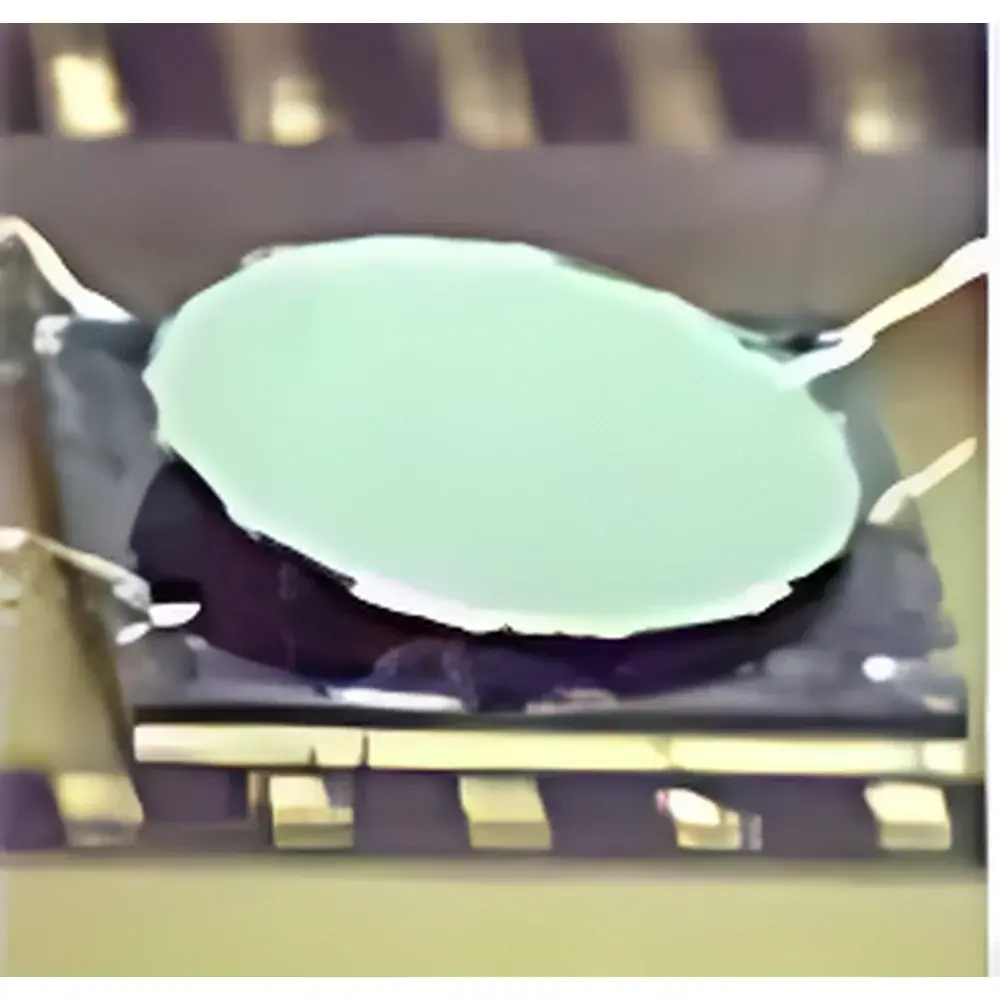
Mesa Photonics Dual-Axis MEMS Micromirror
| Brand | Mesa Photonics |
|---|---|
| Origin | USA |
| Manufacturer Type | Authorized Distributor |
| Origin Category | Imported |
| Model | Dual-Axis MEMS Micromirror |
| Key Components | Solid-State Laser Systems & Optical Control Modules |
| Mirror Diameter Range | 0.8–4.2 mm (custom up to 9.0 mm) |
| Scan Angle | ±16° (Tip/Tilt, full range 32°) |
| Drive Power | <10 µW (continuous operation) |
| Material | Single-Crystal Silicon |
| Surface Finish | High-Reflectivity Dielectric Coating (application-specific R > 99.5% @ target λ) |
| Control Mode | Analog Voltage-Driven (continuous, static & dynamic positioning) |
| Architecture | Gimbal-Free Monolithic MEMS Design |
| Fabrication Technology | ARI-MEMS Process |
Overview
The Mesa Photonics Dual-Axis MEMS Micromirror is a monolithic, gimbal-free microelectromechanical system engineered for high-speed, low-power, analog-controlled two-dimensional optical beam steering. Operating on the principle of electrostatic actuation within a single-crystal silicon substrate, this device enables precise, continuous-tip/tilt motion—delivering ±16° mechanical scan angles (32° total field) across orthogonal axes. Unlike digital micromirror devices (DMDs), which operate in binary “on/off” states, this analog MEMS mirror supports arbitrary angular positioning with sub-millidegree resolution via proportional voltage input—enabling true static holding at any commanded angle with near-zero steady-state power consumption. Its solid-state architecture eliminates wear-prone mechanical linkages, ensuring long-term repeatability (<0.1% angular drift over 10⁷ cycles) and immunity to shock and vibration—critical for integration into portable, embedded, or space-constrained optical systems.
Key Features
- Gimbal-free monolithic design fabricated using ARI-MEMS process technology for superior mechanical stability and thermal consistency
- Analog voltage-driven control: linear relationship between input voltage (typically ±5 V or 0–10 V) and mirror deflection angle—enabling open-loop precision without position feedback sensors
- Ultra-low power operation: <10 µW average drive power during continuous scanning; static hold consumes only leakage current (nA-level)
- High optical quality surface: dielectric multilayer coatings optimized for specific laser wavelengths (e.g., 532 nm, 785 nm, 1064 nm, or broadband 400–1100 nm), achieving R > 99.5% reflectance
- Compact footprint: standard mirror diameters from 0.8 mm to 4.2 mm; custom variants available up to 9.0 mm for extended étendue or diffraction-limited performance
- Hermetic packaging options available for operation in controlled environments (e.g., cleanrooms, vacuum chambers, or humidity-sensitive setups)
Sample Compatibility & Compliance
The micromirror is compatible with continuous-wave (CW) and pulsed solid-state lasers—including Nd:YAG, fiber, diode-pumped, and DPSS sources—across visible to near-infrared spectra. Its single-crystal silicon construction ensures compatibility with standard photolithographic alignment and flip-chip bonding processes used in optomechanical assembly. The device meets ISO 9001-certified manufacturing protocols and conforms to RoHS 2011/65/EU directives. For regulated applications—including medical imaging subsystems or industrial laser safety interlocks—the mirror’s deterministic analog response supports traceable calibration per ISO/IEC 17025 requirements. When integrated into FDA-regulated instrumentation (e.g., OCT or confocal endomicroscopy platforms), its deterministic positioning behavior facilitates compliance with 21 CFR Part 11 audit trail requirements when paired with validated controller firmware.
Software & Data Management
Mesa Photonics provides SDKs supporting Windows, Linux, and real-time OS environments (e.g., QNX, VxWorks), enabling direct register-level access to DAC channels and status registers. APIs support synchronized multi-axis waveform generation (sinusoidal, sawtooth, Lissajous, raster, or arbitrary point-cloud trajectories) with sub-microsecond timing resolution. All driver firmware implements non-volatile parameter storage and supports IEEE 1588 Precision Time Protocol (PTP) synchronization for distributed optical sensor networks. Raw angular position data can be logged with timestamped metadata (including temperature, supply voltage, and error flags) in HDF5 format—ensuring compatibility with MATLAB, Python (h5py), and LabVIEW-based analysis pipelines. Audit logs record all configuration changes, meeting GLP/GMP documentation standards for QC/QA workflows.
Applications
- Laser scanning microscopy: confocal, multiphoton, and light-sheet fluorescence imaging requiring diffraction-limited spot stability and sub-millisecond retrace times
- Free-space optical communications: adaptive beam pointing and tracking in terrestrial and UAV-based FSO links
- 3D LiDAR and time-of-flight sensing: compact, high-frame-rate scanning engines for automotive, robotics, and industrial metrology
- Laser material processing: vector-based marking, selective ablation, and micro-welding with programmable dwell-time control
- Holographic display engines: spatial light modulation for AR/VR waveguide illumination and dynamic focus tuning
- Adaptive optics subsystems: wavefront correction in compact astronomical instruments or ophthalmic aberrometers
FAQ
What is the difference between analog and digital MEMS mirrors?
Analog MEMS mirrors provide continuous, voltage-proportional angular displacement—allowing static positioning at any angle within their range. Digital mirrors (e.g., DMDs) switch between discrete bistable states, limiting them to binary modulation and making them unsuitable for smooth raster or vector scanning without dithering.
Can this mirror be used with femtosecond laser pulses?
Yes—provided the coated surface is specified for high peak-power handling (e.g., chirped mirror coatings or low-dispersion dielectrics). Standard coatings are rated for CW and nanosecond pulses; custom high-damage-threshold variants are available upon request.
Is closed-loop feedback supported?
The base device is open-loop, but Mesa Photonics offers optional capacitive position-sensing variants (with integrated sense electrodes) for real-time angular monitoring and active stabilization in mission-critical applications.
How is thermal drift compensated in long-duration scans?
The monolithic silicon structure exhibits low coefficient of thermal expansion (CTE ≈ 2.6 ppm/K); combined with on-chip temperature monitoring and gain-compensation algorithms in the driver firmware, angular stability remains within ±0.05° over 0–50°C ambient range.
Do you provide optical mounting solutions?
Yes—standard kinematic mounts (e.g., SM1-threaded carriers with XYZ translation and tip/tilt adjustment) and custom flexure-based interface plates are available to ensure minimal stress-induced wavefront distortion during integration.



