
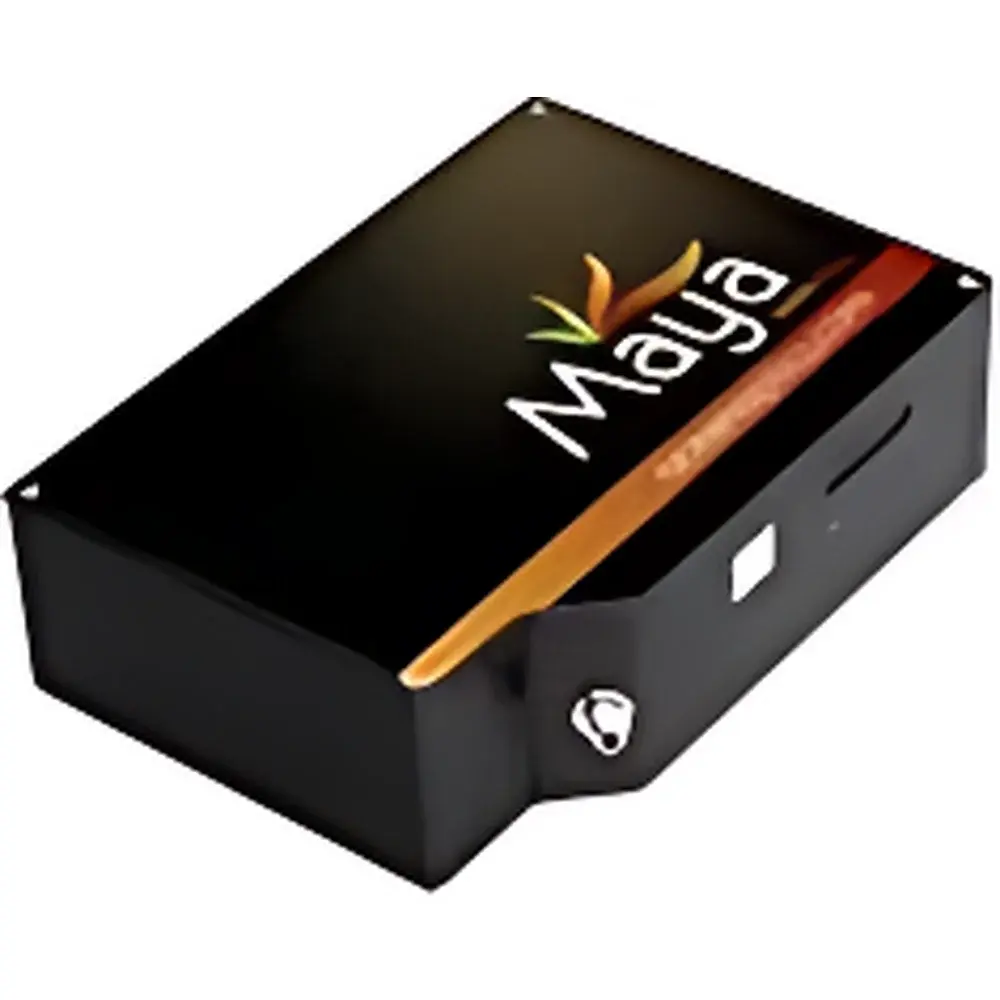
Ocean Optics MAYA2000PRO Fiber Optic Spectrometer
| Brand | Ocean Optics |
|---|---|
| Origin | USA |
| Model | MAYA2000PRO |
| Detector | Hamamatsu S10420 back-illuminated CCD (2048 × 64 pixels) |
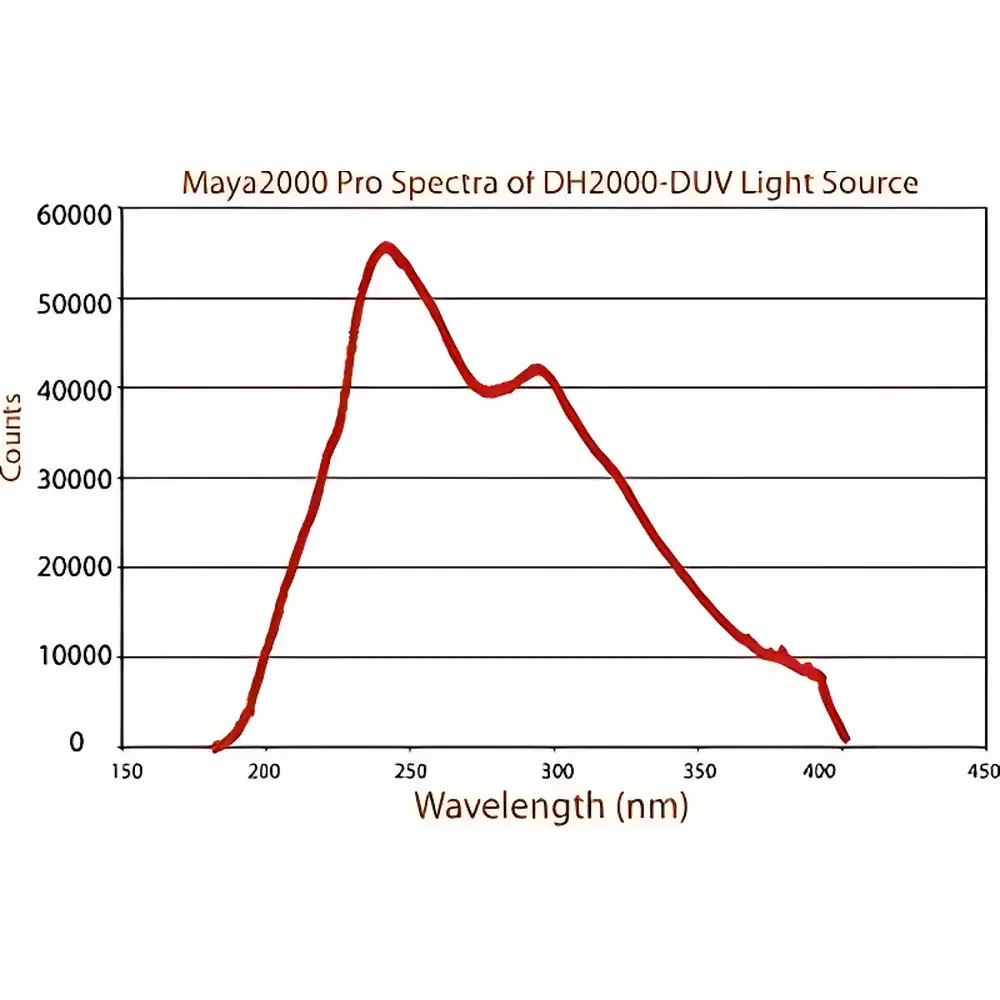
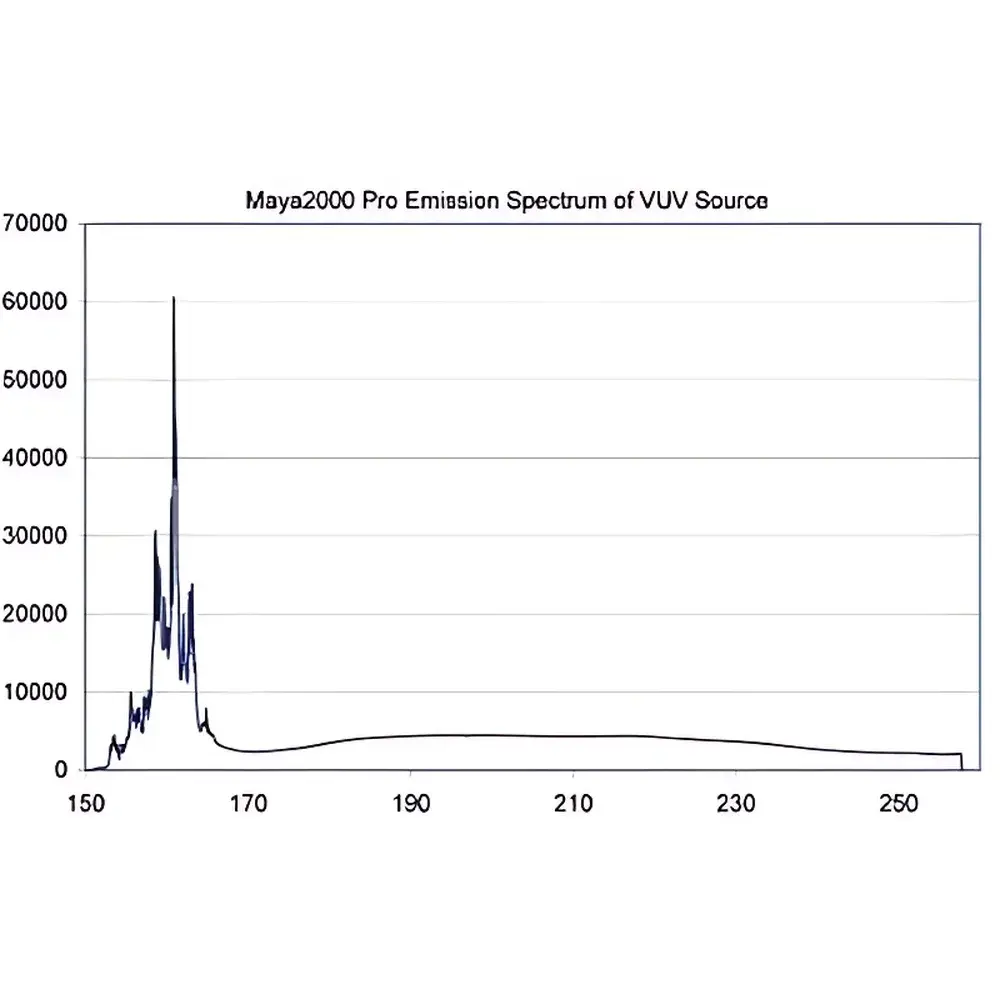
| Spectral Range | 153–1100 nm |
| Wavelength Resolution | 0.035–8.4 nm (dependent on grating and slit selection) |
| Slit Options | 5, 10, 25, 50, 100, 200 µm |
| Integration Time | 17 ms – 10 s |
| Signal-to-Noise Ratio | 450:1 |
| Dimensions | 148.6 × 104.8 × 45.1 mm |
| Weight | 570 g |
| Interface | USB 2.0 (bus-powered) |
| Onboard Programmable Microcontroller | Yes |
| Calibration | User-performable wavelength calibration |
Overview
The Ocean Optics MAYA2000PRO Fiber Optic Spectrometer is a high-performance, compact dispersive spectrometer engineered for demanding UV–Vis–NIR spectroscopic applications requiring deep-ultraviolet sensitivity, high optical resolution, and robust signal fidelity. Based on a Czerny–Turner optical architecture with HR-grade optics and a back-illuminated, deep-depletion CCD detector (Hamamatsu S10420, 2048 × 64 pixels), the MAYA2000PRO achieves extended spectral response down to 153 nm without phosphor or enhanced UV coatings—enabling stable, reproducible quantification of weak UV signals over time. Its design eliminates spectral artifacts associated with UV-enhancement layers, making it particularly suitable for long-duration, low-light measurements where detector stability and radiometric linearity are critical. The spectrometer operates without external power, drawing full functionality from USB 2.0 bus power—a key advantage for portable, OEM-integrated, and field-deployable analytical systems.
Key Features
- Deep-UV capability: Certified spectral response from 153 nm to 1100 nm, validated per ISO 17025 traceable calibration protocols
- Back-illuminated CCD detector with high quantum efficiency (>60% at 200 nm, >90% at 600 nm) and wide dynamic range (up to 4 orders of magnitude)
- Modular optical configuration: 15 interchangeable diffraction gratings and 6 slit widths (5–200 µm) enable application-specific optimization of resolution vs. throughput
- Onboard programmable microcontroller supports real-time trigger synchronization, dark current compensation, and user-defined acquisition sequences
- USB 2.0 interface with embedded firmware; no external power supply or driver installation required on Windows, macOS, or Linux platforms
- User-executable wavelength calibration using Hg/Ar or other NIST-traceable emission lines—fully compliant with GLP documentation requirements
Sample Compatibility & Compliance
The MAYA2000PRO interfaces seamlessly with standard SMA 905 fiber-optic cables (e.g., Ocean Insight’s QP series) and supports direct coupling to cuvette holders, integrating spheres, gas cells, and probe-based sampling accessories. It is routinely deployed in regulated environments for ASTM E308-compliant color measurement, USP UV–Vis absorbance validation, and ISO 13485-aligned QC workflows. The device complies with IEC 61326-1 (EMC for laboratory equipment) and meets RoHS 3 and REACH material restrictions. Firmware supports audit-trail logging and digital signature-capable calibration reports—facilitating 21 CFR Part 11 readiness when integrated with compliant LIMS or ELN platforms.
Software & Data Management
Ocean Insight’s OceanView software provides full instrument control, real-time spectral visualization, multi-curve overlay, and export to CSV, TXT, or HDF5 formats. The SDK (C/C++, Python, MATLAB, LabVIEW, .NET) enables deterministic integration into custom automation frameworks. All spectral data include embedded metadata: timestamp, integration time, detector temperature (via onboard thermistor), grating ID, slit width, and calibration file hash—ensuring full data provenance. Batch processing scripts support automated peak identification (using Savitzky–Golay derivatives), baseline correction (asymmetric least squares), and concentration calculation via Beer–Lambert modeling with error propagation.
Applications
- Fluorescence spectroscopy: High-S/N detection of low-yield fluorophores (e.g., tryptophan, NADH) in biological samples and pharmaceutical formulations
- Raman spectroscopy: Coupled with 532 nm or 785 nm lasers for fingerprint-region analysis of polymorphs, crystallinity, and stress in solid dosage forms
- Gas-phase absorption spectroscopy: Quantitative monitoring of O3, NO2, SO2, and ClO in environmental air quality systems
- UV curing process control: Real-time tracking of photoinitiator consumption and monomer conversion kinetics
- Plasma diagnostics: Line-ratio analysis of atomic hydrogen (656.3 nm), oxygen (777.4 nm), and nitrogen bands in low-pressure plasma reactors
- Educational labs: Modular optics platform for teaching spectroscopic principles, detector physics, and chemometric preprocessing
FAQ
What is the minimum detectable absorbance for the MAYA2000PRO in UV-VIS transmission mode?
The theoretical absorbance detection limit depends on optical pathlength and source stability, but under typical 1 cm quartz cuvette conditions with deuterium–halogen illumination, the system achieves <0.002 AU RMS noise over 1 s integration.
Can the MAYA2000PRO be used in vacuum or purged environments?
Yes—the sealed aluminum housing and fused-silica entrance window allow operation under dry nitrogen purge or low-vacuum (<10 mbar); optional vacuum-compatible fiber connectors are available.
Is factory recalibration required annually?
No—user-performed wavelength and intensity calibration using traceable standards satisfies ISO/IEC 17025 clause 6.4.6; however, annual verification against NIST SRM 2036 is recommended for GMP applications.
Does the spectrometer support synchronized multi-channel acquisition?
Yes—via TTL trigger input and output; up to four MAYA2000PRO units can be hardware-synchronized with sub-millisecond jitter using external clock distribution.
How is stray light performance characterized?
Stray light is measured per ASTM E275: <0.05% at 220 nm when using a 25 µm slit and 300 grooves/mm grating; values improve with narrower slits and higher groove density gratings.





