
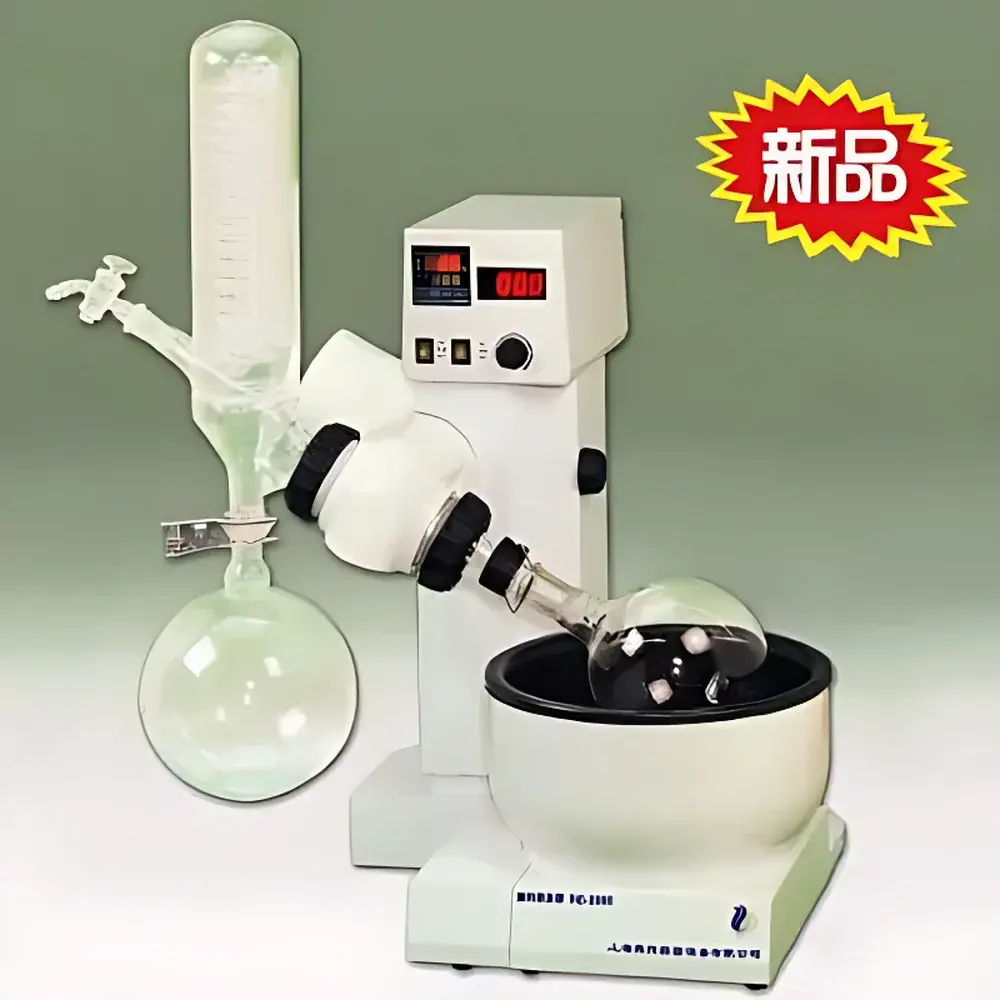
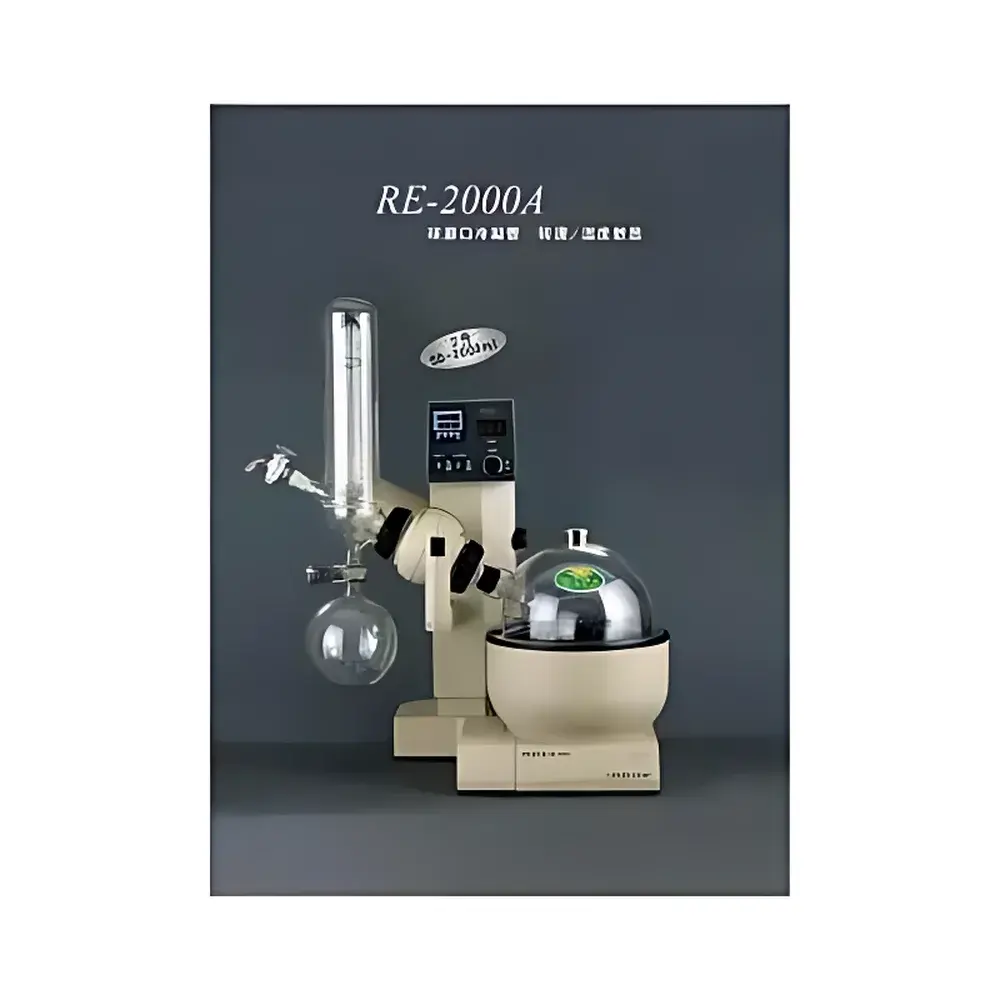
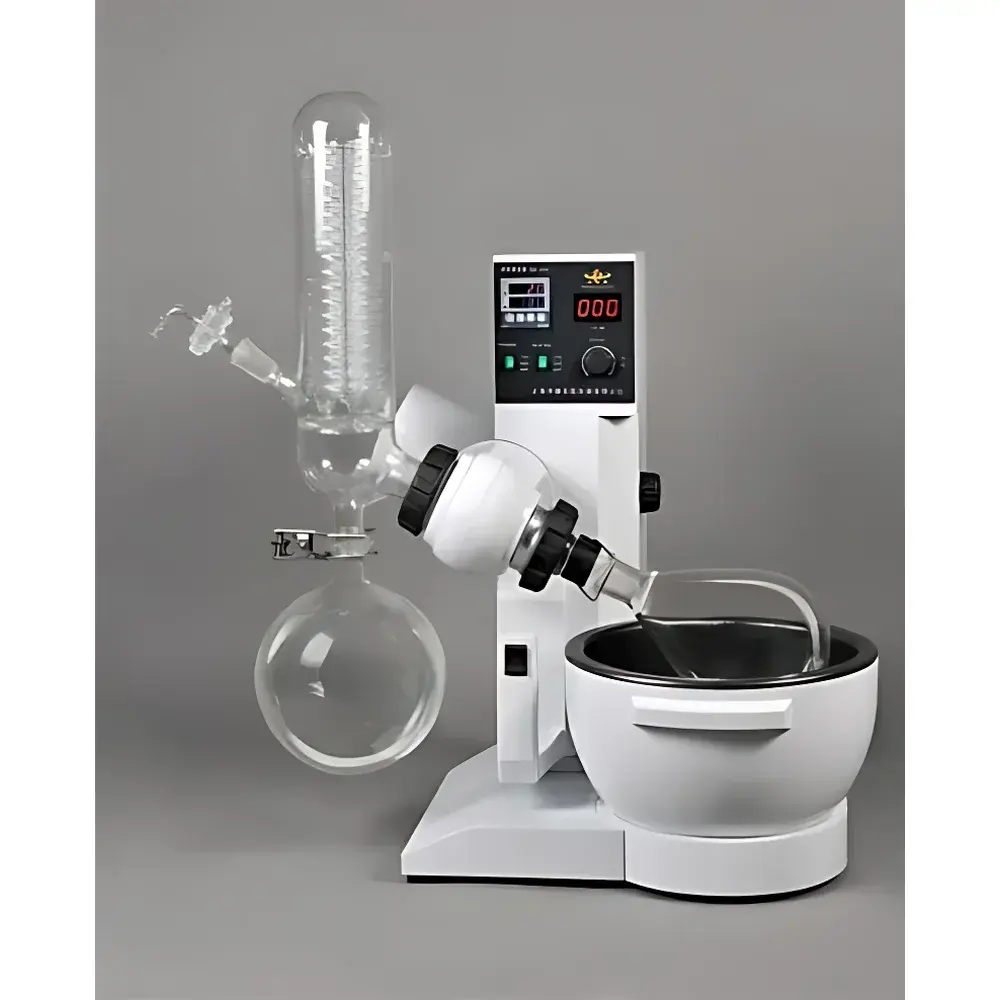
Yarong RE2000A Rotary Evaporator
| Brand | Yarong |
|---|---|
| Origin | Shanghai, China |
| Model | RE2000A |
| Rotational Speed Range | 20–200 rpm (digital display) |
| Vertical Lift Range | 0–150 mm (motorized, automatic) |
| Heating Bath | PTFE-coated stainless steel, fully enclosed heater, 1.4 kW |
| Temperature Control | PID-regulated, digital water bath temperature display, ambient to 90 °C |
| Condenser | Vertical, dual-reflux, high-temperature borosilicate glass with standard spherical ground joints (24/29 or 29/32, configurable) |
| Total Power Consumption | 1.5 kW |
| Voltage/Frequency | 220 V AC, 50 Hz |
| Cooling Method | External coolant circulation (recommended) or tap water (with flow control) |
Overview
The Yarong RE2000A Rotary Evaporator is a benchtop vacuum distillation system engineered for efficient solvent removal, concentration, and gentle sample recovery in synthetic chemistry, natural product isolation, and pharmaceutical R&D laboratories. Operating on the principle of reduced-pressure evaporation, it rotates a sample flask under controlled vacuum while immersing its contents in a precisely regulated heating bath. This combination lowers the boiling point of solvents—enabling rapid, low-temperature evaporation—and minimizes thermal degradation of heat-sensitive compounds. The RE2000A integrates core engineering elements essential for reproducible rotary evaporation: a digitally controlled variable-speed drive, motorized vertical lift mechanism, PTFE-coated heating bath with closed-loop temperature regulation, and a vertically oriented dual-reflux condenser fabricated from high-purity borosilicate glass (e.g., Pyrex®-grade). Its design adheres to fundamental ISO 8573-1 (compressed air purity) and IEC 61010-1 (laboratory electrical safety) compliance frameworks, making it suitable for GLP-aligned workflows where instrument traceability and operational consistency are required.
Key Features
- Digital rotational speed control (20–200 rpm) with real-time LED display ensures precise adjustment of centrifugal force and film dynamics across diverse solvent viscosities and flask sizes.
- Motorized vertical lift (0–150 mm travel) enables safe, repeatable positioning of the evaporation flask relative to the heating bath—critical for method transfer and operator ergonomics.
- PTFE-composite heating bath with fully enclosed 1.4 kW heating element delivers uniform thermal distribution and corrosion resistance against acidic or halogenated solvents.
- PID-based temperature controller with digital bath temperature readout (ambient to 90 °C, ±1 °C accuracy) supports programmable ramp-hold profiles for multi-step evaporation protocols.
- Vertical dual-reflux condenser constructed from premium borosilicate glass features standardized spherical ground joints (interchangeable 24/29 or 29/32 taper options), optimized surface area, and high thermal conductivity for >95% condensation efficiency with common organic solvents (e.g., ethyl acetate, dichloromethane, methanol).
- Integrated vacuum seal integrity monitoring via optional pressure sensor port (compatible with external vacuum controllers meeting ISO 27874 standards for vacuum system validation).
Sample Compatibility & Compliance
The RE2000A accommodates standard round-bottom flasks (50 mL to 5 L) and is compatible with a broad spectrum of volatile and semi-volatile solvents—including acetone, toluene, THF, ethanol, and aqueous buffers—provided appropriate vacuum levels and cooling capacity are maintained. All wetted parts (condenser, vapor duct, collection flask, and rotary joint seals) are chemically inert borosilicate glass or fluoropolymer-lined, ensuring compatibility with mild acids, bases, and polar aprotic media. While not certified for Class I Division 1 hazardous locations, the unit meets CE marking requirements for electromagnetic compatibility (EN 61326-1) and low-voltage safety (EN 61010-1). For regulated environments, it supports audit-ready documentation when paired with validated vacuum pumps and chiller units compliant with FDA 21 CFR Part 11 data integrity expectations (via external logging systems).
Software & Data Management
The RE2000A operates as a standalone analog-digital hybrid instrument: all critical parameters (rotation speed, bath temperature, lift position) are locally monitored and adjusted via front-panel controls with digital displays. It does not include embedded microprocessor-based software or network connectivity. However, analog output signals (0–10 V or 4–20 mA) for temperature and rotation speed are available upon request for integration into centralized Lab Information Management Systems (LIMS) or SCADA platforms. When used in conjunction with third-party vacuum controllers (e.g., Vacuubrand VACUU·SELECT or KNF NP series), full parameter logging, alarm history, and electronic signature capability can be achieved—facilitating compliance with ISO/IEC 17025 and USP analytical instrument qualification guidelines.
Applications
- Solvent removal following column chromatography or solid-phase extraction (SPE) in analytical and preparative labs.
- Concentration of peptide solutions, enzyme extracts, and nucleic acid preparations without denaturation.
- Recovery of thermolabile natural products (e.g., terpenoids, alkaloids) from plant extracts under sub-boiling conditions.
- Removal of residual solvents from polymer synthesis intermediates prior to NMR or GPC analysis.
- Parallel evaporation support in medicinal chemistry workflows using multiple RE2000A units synchronized via external vacuum manifolds.
FAQ
What ground joint size is standard on the RE2000A condenser and rotary assembly?
The default configuration uses 29/32 spherical ground joints; 24/29 joints are available as a factory-configurable option.
Can the RE2000A be operated under inert atmosphere (e.g., nitrogen or argon)?
Yes—by connecting an inert gas inlet to the vapor duct’s septum port or using a gas-tight adapter kit, enabling oxygen-sensitive reactions and preventing oxidation during evaporation.
Is the heating bath temperature calibration traceable to national standards?
Calibration certificates (NIST-traceable) for the integrated PT100 sensor can be provided upon request, aligned with ISO/IEC 17025 calibration procedures.
What is the maximum recommended vacuum level for optimal condensation efficiency?
For most applications, a working pressure between 10–50 mbar (7.5–37.5 Torr) is advised; lower pressures may reduce condenser performance unless chilled coolant (≤5 °C) is supplied.
Does the RE2000A meet requirements for use in GMP manufacturing environments?
As a Class II laboratory device, it serves as a supporting tool in GMP processes when qualified per IQ/OQ protocols and operated within documented SOPs—but requires complementary validation of associated vacuum and cooling systems.



