
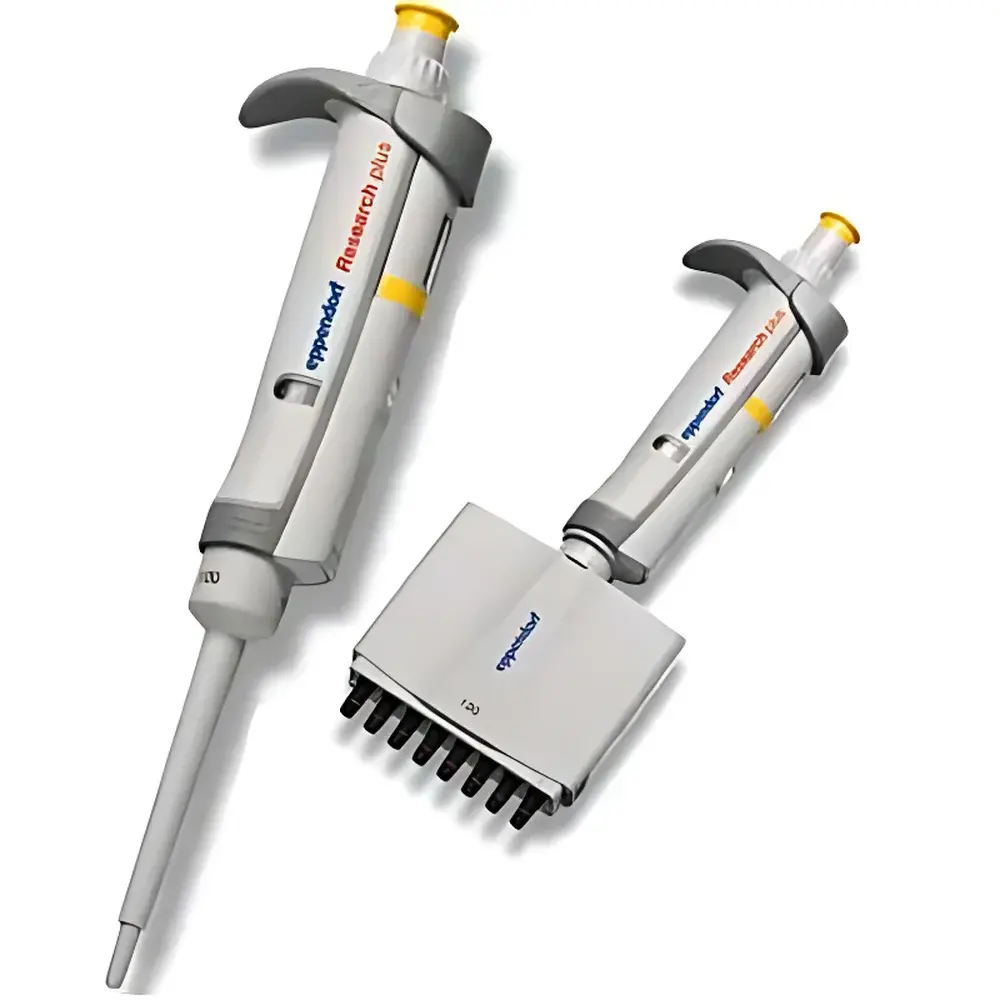
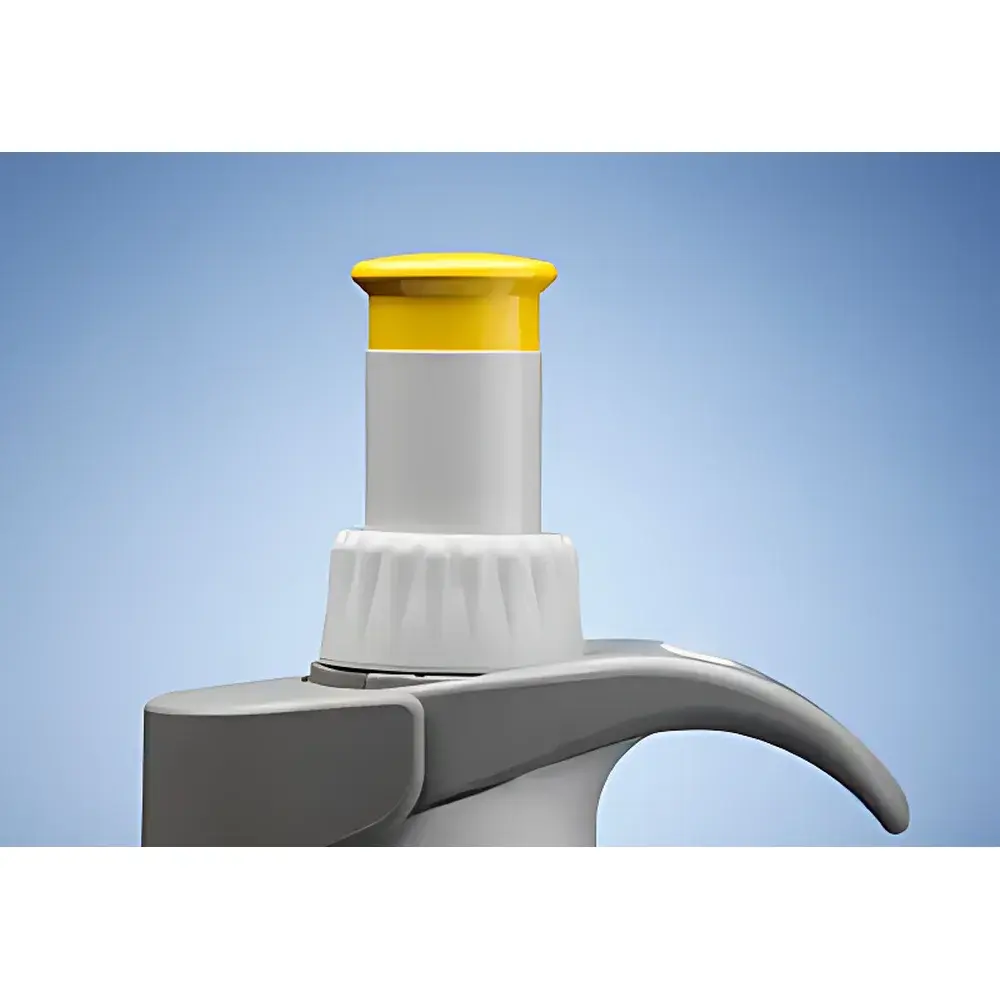
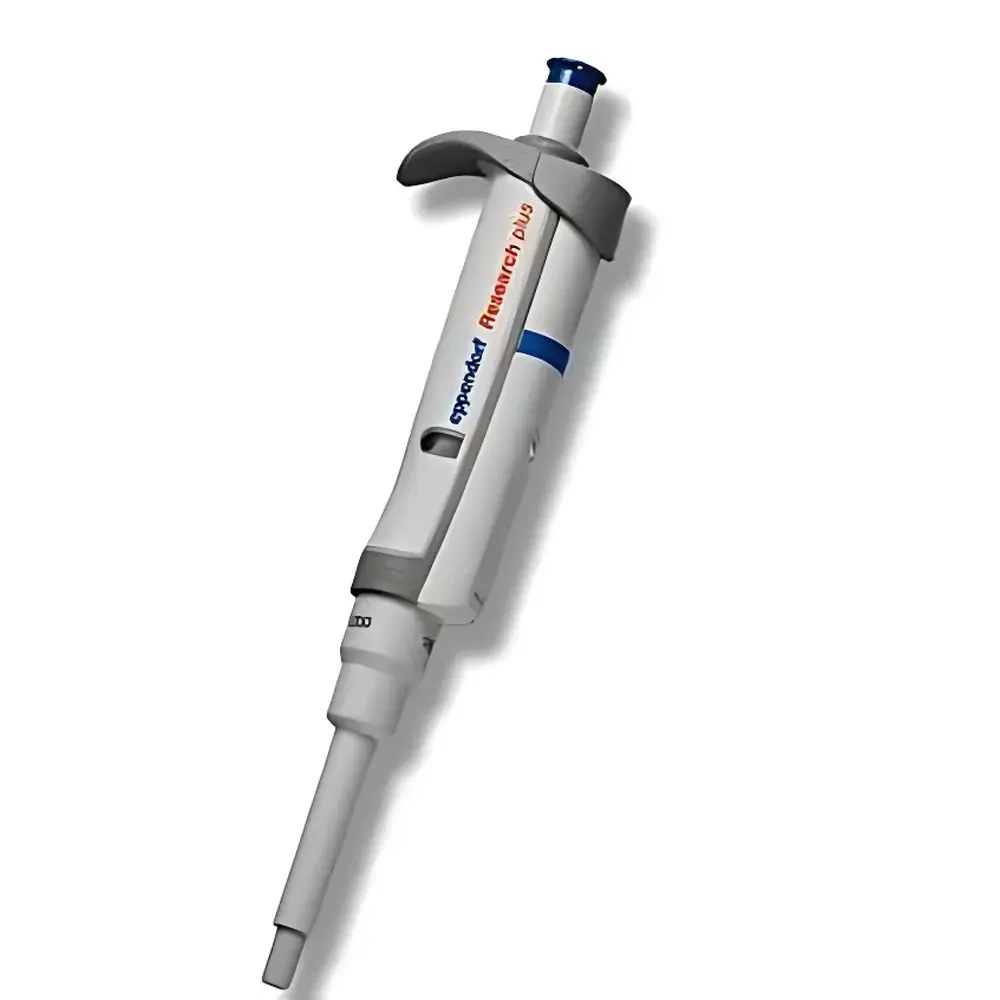
Eppendorf Research Plus Single-Channel Adjustable-Volume Pipette (0.1–2.5 µL)
| Brand | Eppendorf |
|---|---|
| Origin | Germany |
| Type | Manual Single-Channel Pipette |
| Volume Range | 0.1–2.5 µL |
| Maximum Capacity | 2.5 µL |
| Accuracy | ±3% |
| Sterilization | Full-assembly autoclavable (121 °C, 20 min, DIN EN 285) |
| Compliance | ISO 8655-2:2022, ISO 8655-5:2022, GLP/GMP-ready |
Overview
The Eppendorf Research Plus Single-Channel Adjustable-Volume Pipette (0.1–2.5 µL) is an engineered precision liquid handling instrument designed for high-reproducibility micro-volume dispensing in molecular biology, genomics, diagnostics, and analytical chemistry laboratories. Based on Eppendorf’s patented spring-loaded piston mechanism and air-cushion principle, it delivers consistent volumetric performance across its full range — from ultra-low volumes (0.1 µL) to 2.5 µL — with minimal user-induced variability. Its fully autoclavable design (entire assembly, including tip cone and volume adjustment mechanism) ensures compliance with stringent biosafety and contamination control requirements in regulated environments, including ISO 13485-certified medical device manufacturing and CLIA-certified clinical labs.
Key Features
- Full-assembly autoclavability: All components withstand standard steam sterilization (121 °C, 20 min, per DIN EN 285), eliminating cross-contamination risks without disassembly.
- Ergonomic low-force operation: Optimized spring tension and balanced weight distribution reduce hand fatigue during repetitive pipetting — validated at ≤1.5 N activation force at the upper volume limit.
- Volume lock system: Prevents accidental volume changes during handling or transport; secured via integrated mechanical lock lever.
- High-contrast volume display: Dual-scale readout with parallax-free window ensures unambiguous setting verification, even under angled viewing conditions.
- Chemical-resistant construction: Tip cone and body housing fabricated from high-grade polypropylene and stainless steel alloys resistant to ethanol, dilute acids/bases, and common organic solvents.
- Calibration traceability: Factory-calibrated per ISO 8655-2:2022; includes individual calibration certificate with uncertainty values and measurement points (10%, 50%, and 100% of nominal volume).
Sample Compatibility & Compliance
The pipette is compatible with all standard conical, low-retention, and filter tips meeting ISO 8655-3 specifications. It maintains accuracy when dispensing aqueous solutions (e.g., PCR master mixes, enzyme buffers), viscous liquids (e.g., glycerol-containing stocks up to 30% v/v), and volatile solvents (e.g., ethanol, acetone) — provided appropriate tip selection and pre-wetting protocols are applied. Regulatory alignment includes full adherence to ISO 8655 parts 2 (volumetric performance), 5 (calibration), and 7 (user requirements); supports audit readiness for FDA 21 CFR Part 11 (when used with compliant electronic logbooks), EU Annex 11, and GxP environments requiring documented calibration, maintenance, and operator training records.
Software & Data Management
While the Research Plus is a manual pipette and does not incorporate embedded electronics or connectivity, its calibration and usage data integrate seamlessly into laboratory quality management systems (QMS). Each unit ships with a QR-coded calibration certificate linking to Eppendorf’s online Certificate Portal, where users can download PDF reports, track recalibration intervals (recommended annually or after 10,000 cycles), and generate audit-ready documentation. For labs implementing digital SOPs, the pipette is fully compatible with Eppendorf’s free LabGuide software suite — enabling standardized operating procedure deployment, competency assessment checklists, and preventive maintenance scheduling aligned with ISO/IEC 17025 clause 6.4.2.
Applications
This 0.1–2.5 µL model is routinely deployed in applications demanding sub-microliter precision: qPCR and digital PCR reaction setup; CRISPR-Cas9 guide RNA complex titration; single-cell lysis buffer dispensing; microfluidic chip priming; nanoliter-scale mass spectrometry sample spotting; and high-throughput screening assay miniaturization. Its metrological stability supports critical workflows where coefficient of variation (CV) must remain ≤2.5% at 0.5 µL and ≤1.8% at 2.5 µL — verified per ISO 8655-5 repeatability testing protocols using Class A distilled water at 20 °C.
FAQ
Is this pipette suitable for sterile cell culture work?
Yes — its full autoclavability and absence of internal seals or lubricants that could leach into samples make it appropriate for aseptic technique in mammalian and stem cell culture applications.
Can it be calibrated in-house?
Yes — Eppendorf provides certified calibration kits (Cat. No. 0030 115.205) and detailed service manuals compliant with ISO/IEC 17025; however, accredited third-party calibration is recommended for GLP/GMP audits.
What is the recommended recalibration interval?
Annually under normal use, or after 10,000 pipetting cycles — whichever occurs first; frequency increases in high-humidity, high-salt, or corrosive chemical environments.
Does it require special tips?
No — it accepts any ISO-standard conical tips (10 µL nominal size); however, use of Eppendorf PhysioTip or LoRetention tips is advised for optimal accuracy at volumes ≤1 µL.
How is traceability maintained across instrument lifecycles?
Each pipette bears a unique 10-digit serial number laser-engraved on the barrel; this ID links calibration history, service logs, and firmware updates (if applicable to future generations) in Eppendorf’s global asset registry.



