
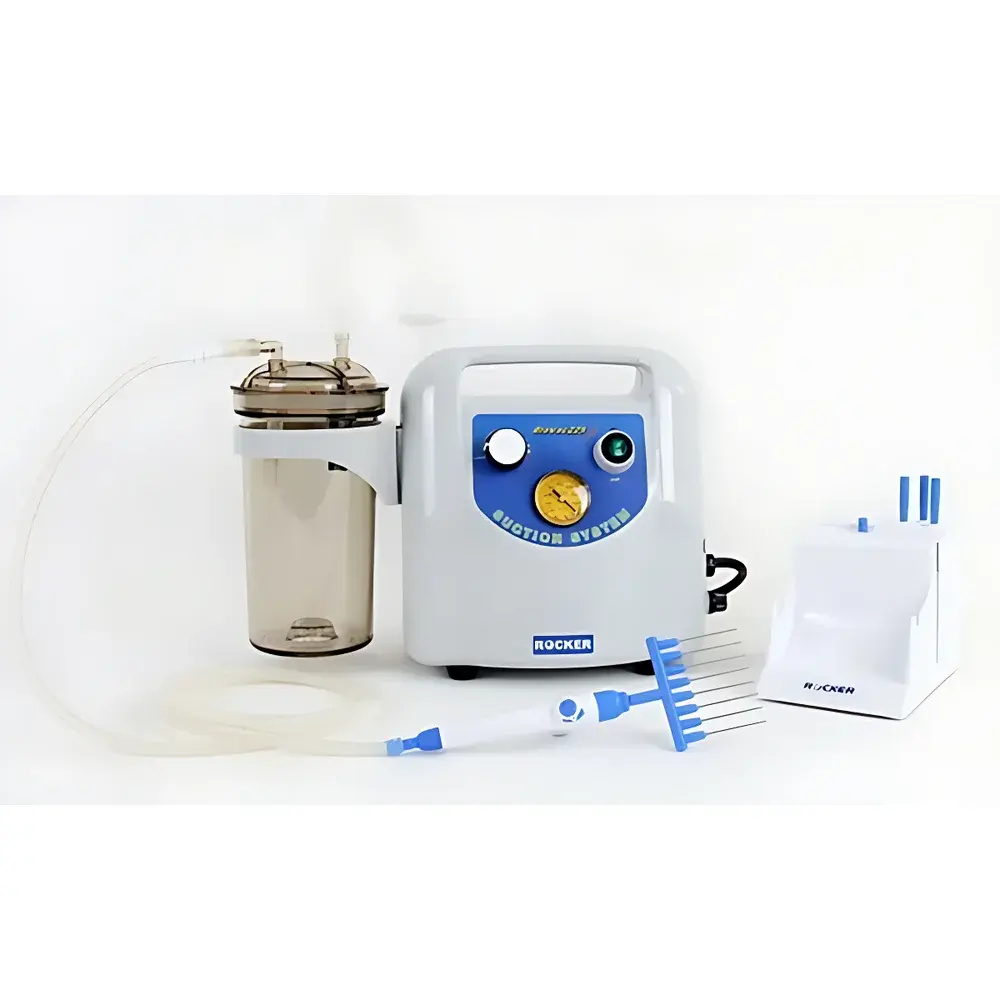
Rocker BioVac225-BioDolphin Portable Vacuum Liquid Aspiration System
| Brand | Rocker |
|---|---|
| Origin | Taiwan |
| Model | BioVac225-BioDolphin |
| Ultimate Vacuum | 107 mbar |
| Maximum Flow Rate | 25 L/min |
| Dimensions | 370 × 150 × 250 mm |
| Waste Bottle Capacity | 1000 mL |
| Hose ID | 5 mm (3/16 inch) |
| Materials | ABS (housing), POM (handheld controller & tip connectors), SUS304 stainless steel (metal components), PC (waste bottle), PES (sterilizable bottle variant) |
| Sterilization | Autoclavable (all wetted parts except stand) |
| Overflow Protection | Integrated float-valve mechanism |
Overview
The Rocker BioVac225-BioDolphin Portable Vacuum Liquid Aspiration System is an engineered solution for precise, ergonomic, and contamination-controlled removal of biological and chemical waste liquids in cell culture, molecular biology, and general laboratory workflows. Designed around the principles of controlled vacuum aspiration—utilizing a diaphragm vacuum pump to generate negative pressure within a sealed waste collection circuit—the system delivers consistent suction performance while minimizing operator fatigue and cross-contamination risk. Its portable architecture (370 × 150 × 250 mm) enables flexible deployment across biosafety cabinets, laminar flow hoods, and benchtop environments without requiring permanent plumbing or centralized vacuum infrastructure. The system operates at an ultimate vacuum of 107 mbar (equivalent to ~680 mmHg) and sustains a maximum volumetric flow rate of 25 L/min—sufficient for rapid aspiration of supernatants, media, wash buffers, and low-viscosity reagents from culture flasks, dishes, and multiwell plates.
Key Features
- Ergonomic handheld controller with integrated Lock button: Enables continuous aspiration without sustained finger pressure—reducing musculoskeletal strain during extended procedures.
- One-handed tip ejection mechanism: Patented octopus-style (eight-claw) tip connector allows secure grip and effortless, single-motion tip release—eliminating need for secondary tools or awkward hand repositioning.
- Modular quick-connect interface: All accessories—including single- and multi-claw tip adapters, suction tubes, and hose couplings—attach via standardized push-fit connections, enabling sub-30-second component swaps between protocols.
- Autoclavable wetted-path construction: Handheld unit, tip connectors, suction tubing, and PES waste bottles are rated for repeated steam sterilization at 121°C, 15 psi, 20 minutes—ensuring compliance with GLP/GMP aseptic processing requirements.
- Integrated overflow protection: A mechanically actuated float valve inside the 1000 mL waste bottle halts aspiration automatically upon liquid contact, preventing spillage, pump damage, and aerosol generation.
- Compact multifunctional accessory stand: Molded ABS stand accommodates all standard BioDolphin components and incorporates a dedicated drip tray for residual fluid containment—facilitating routine cleaning and reducing surface contamination risk.
Sample Compatibility & Compliance
The BioVac225-BioDolphin is validated for aspiration of aqueous-based biological fluids including cell culture media, PBS washes, enzymatic digestion mixtures, and diluted chemical reagents (pH 4–10, viscosity 5% solids). All wetted materials comply with USP Class VI biocompatibility standards; POM and SUS304 components meet ISO 10993-5 cytotoxicity requirements. The system supports audit-ready documentation workflows: electronic log files (when paired with optional Rocker DataLink software) retain timestamps, operator IDs, and cycle parameters—aligning with FDA 21 CFR Part 11 data integrity expectations for regulated laboratories.
Software & Data Management
While the BioVac225-BioDolphin operates as a standalone analog device, it is compatible with Rocker’s optional DataLink Module (sold separately), which converts analog vacuum and runtime signals into digital records. This module enables export of CSV-formatted logs containing aspiration duration, cumulative runtime, and event-triggered timestamps (e.g., overflow activation). Data files are stored on removable microSD cards and support integration into LIMS platforms via standard FTP/SFTP protocols. Audit trails include user authentication (PIN-based access), immutable timestamping, and change history—meeting GLP-compliant record retention requirements per OECD Principles of Good Laboratory Practice.
Applications
- Cell culture maintenance: Rapid removal of spent media from T-flasks, roller bottles, and adherent monolayers without disrupting cell layers.
- Transfection and harvesting workflows: Gentle aspiration of transfection reagent mixtures and post-harvest supernatants under sterile hood conditions.
- Microplate washing: Integration with multi-channel pipette manifolds for high-throughput buffer exchange in ELISA and assay development.
- General lab waste management: Safe disposal of non-hazardous aqueous effluents in teaching labs, QC testing facilities, and diagnostic sample preparation areas.
- Biosafety Level 1–2 containment: Approved for use inside Class II A2 biosafety cabinets when configured with HEPA-filtered exhaust options (available as accessory kit).
FAQ
Is the BioVac225-BioDolphin suitable for aspiration of ethanol or isopropanol?
No. Organic solvents degrade POM and PC components and may compromise diaphragm pump integrity. Use only with aqueous solutions meeting material compatibility specifications.
Can the waste bottle be autoclaved with liquid residue inside?
No. Always empty and rinse the PES bottle prior to autoclaving. Residual liquids may vaporize unevenly, causing pressure buildup or thermal stress fractures.
What hose diameter is required for optimal flow performance?
A 5 mm (3/16 inch) inner diameter reinforced PVC or silicone hose is specified. Smaller diameters restrict flow; larger diameters reduce vacuum response time and increase backpressure.
Does the Lock function disable emergency stop capability?
No. The Lock button engages a mechanical latch independent of the main power circuit. Pressing the primary suction button at any time overrides the lock state and terminates aspiration immediately.
How often should the diaphragm pump oil be replaced?
This model uses an oil-free diaphragm pump. No lubrication or oil changes are required—reducing maintenance intervals and eliminating contamination pathways associated with oil mist carryover.



