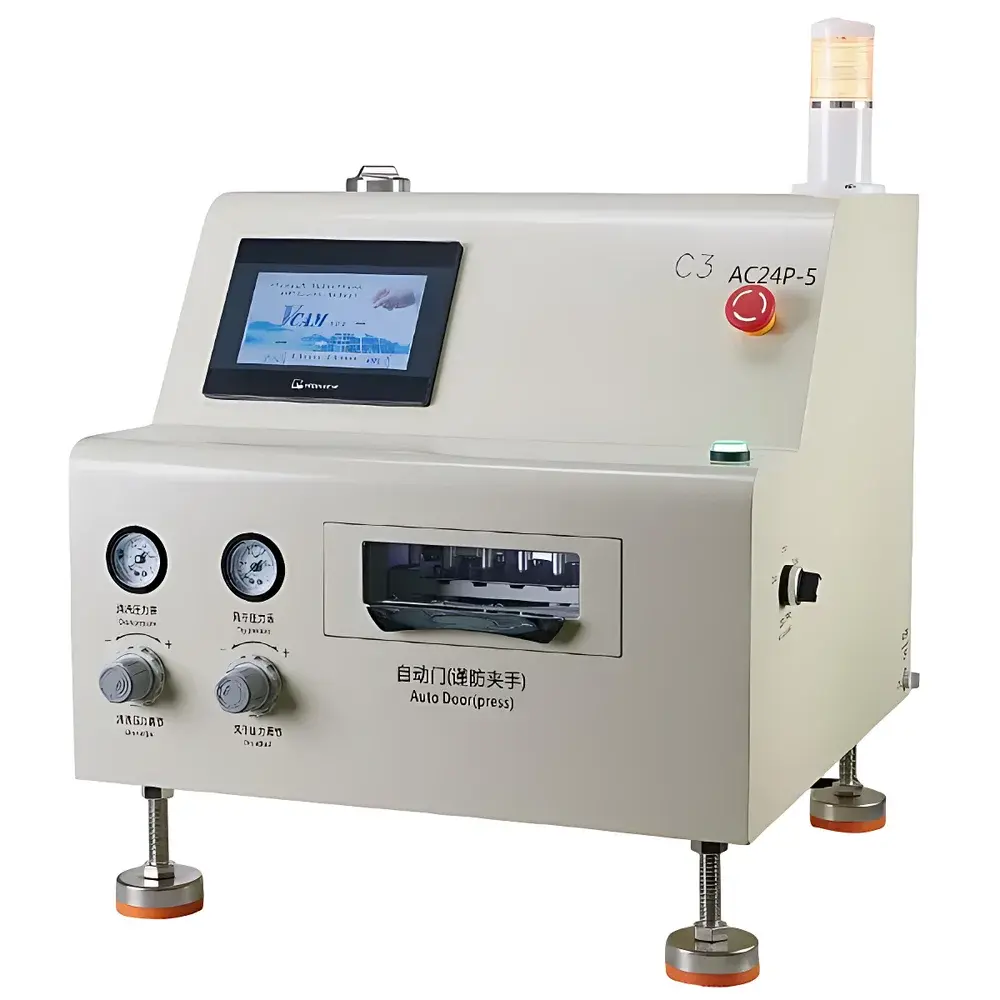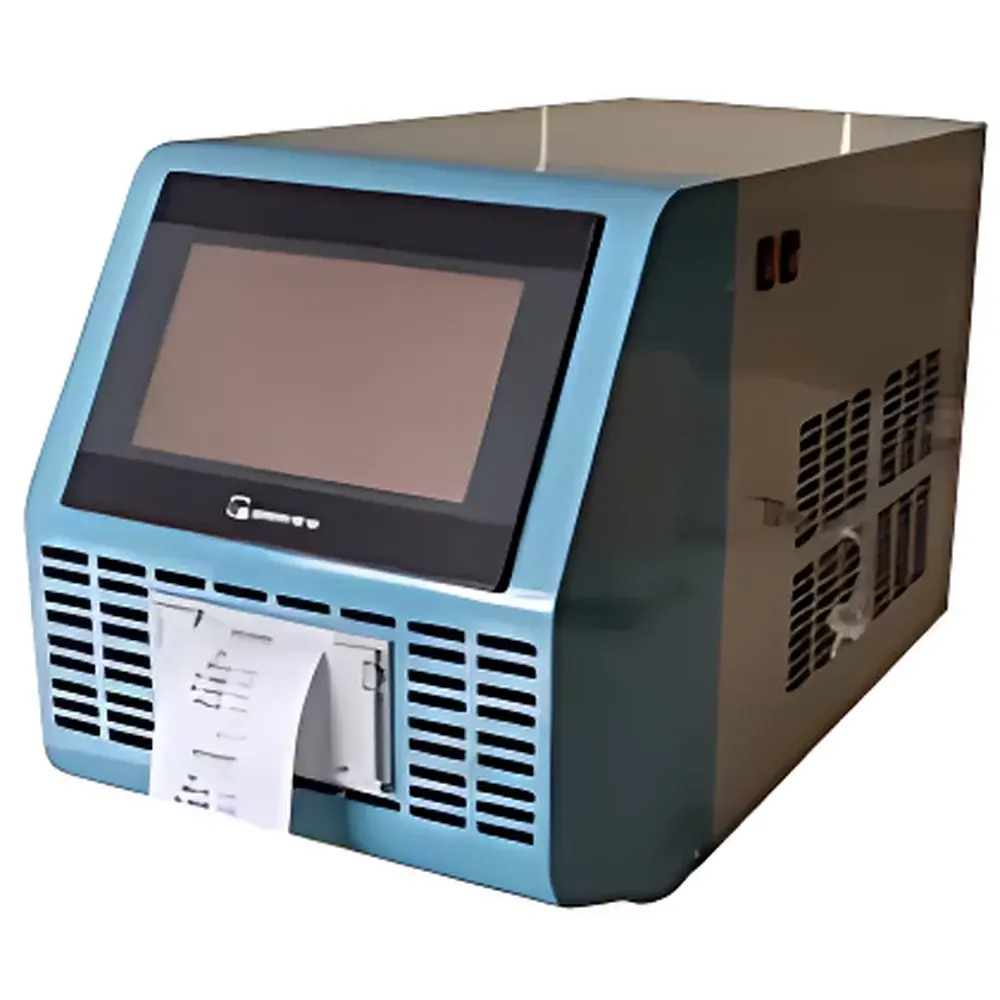
Xufeng XF-0770 Series Automated Aviation Fuel Freezing Point Tester (Phase Transition Method) ASTM D5972 Compliant
| Brand | Xufeng |
|---|---|
| Origin | Shanghai, China |
| Model | XF-0770A (-68 °C) / XF-0770B (-75 °C) |
| Cooling Method | Multi-stage semiconductor + compressor-assisted cold trap |
| Temperature Range | -68 °C or -75 °C (adjustable down to ambient) |
| Temperature Resolution | 0.1 °C |
| Sensor | PT100 platinum resistance thermometer |
| Ice Detection | Imported German KMC-620 optical phase-transition sensor |
| Control System | Embedded microprocessor with RS-232C interface |
| Power Supply | AC 220 V, 50/60 Hz, 1500 W |
| Dimensions | 400 × 210 × 250 mm (W×D×H) |
| Weight | ~25 kg |
Overview
The Xufeng XF-0770 Series Automated Aviation Fuel Freezing Point Tester is a precision-engineered instrument designed specifically for the determination of the freezing point of aviation turbine fuels (e.g., Jet A, Jet A-1, JP-5, JP-8) in strict accordance with ASTM D5972 and SH/T 0770. It employs the phase transition method—detecting the onset of solid-phase nucleation via high-sensitivity optical detection of turbidity changes during controlled cooling—thereby eliminating subjective visual interpretation and ensuring objective, operator-independent results. Unlike classical manual methods requiring frequent observation and manual temperature adjustment, this system integrates thermoelectric cooling, real-time optical monitoring, and closed-loop microprocessor control to deliver reproducible freezing point measurements within approximately 15 minutes per test. The instrument’s dual-model configuration—XF-0770A (–68 °C operational limit) and XF-0770B (–75 °C operational limit)—ensures full compliance with the most stringent low-temperature requirements specified in current aviation fuel specifications, including those mandated by NATO and IATA.
Key Features
- Fully automated operation: One-button start initiates sample aspiration, thermal equilibration, controlled descent to sub-freezing temperatures, real-time optical phase detection, and result validation—all without manual intervention.
- Integrated dual-stage cooling architecture: Combines multi-stage Peltier elements with a compressor-assisted cold trap to achieve rapid, stable, and vibration-free cooling profiles critical for accurate nucleation detection.
- High-fidelity optical sensing: Utilizes a calibrated KMC-620 photodetector module (imported from Germany) to monitor minute light-scattering changes associated with the first appearance of crystalline wax or ice nuclei—enabling precise identification of the true thermodynamic freezing point.
- Real-time process visualization: A large-format LCD display presents dynamic cooling curves, current temperature, elapsed time, detection event timestamps, and pass/fail status against method-defined acceptance criteria.
- Self-contained cleaning cycle: Integrated solvent rinse and purge sequence between tests minimizes carryover risk and eliminates manual chamber cleaning—reducing downtime and improving inter-test reproducibility.
- Embedded diagnostics and alarm logging: Continuous system health monitoring detects refrigeration anomalies, sensor drift, power fluctuations, or optical path obstruction, displaying fault codes and triggering audible alerts with on-screen diagnostic guidance.
- RS-232C serial interface: Enables seamless integration into laboratory information management systems (LIMS) and supports bidirectional data exchange for audit-ready electronic recordkeeping.
Sample Compatibility & Compliance
The XF-0770 Series is validated for use with clear, bright, undyed aviation turbine fuels meeting ASTM D1655 and DEF STAN 91-91 specifications. It accommodates standard 10–15 mL sample volumes in supplied borosilicate glass sample vials. All operational parameters—including ramp rate, dwell time, detection sensitivity thresholds, and final stabilization criteria—are programmable to align with internal SOPs or regulatory expectations. The instrument meets the essential performance requirements of ASTM D5972 (Standard Test Method for Freezing Point of Aviation Fuels (Automated Phase Transition Method)) and its Chinese national counterpart SH/T 0770. Its design supports GLP-compliant workflows through traceable calibration logs, user-accessible audit trails, and configurable electronic signatures—facilitating readiness for FDA 21 CFR Part 11 or ISO/IEC 17025 accreditation audits.
Software & Data Management
While the XF-0770 operates autonomously via its embedded controller, its RS-232C port enables connection to external PCs running optional companion software for advanced data handling. This software supports batch reporting, statistical trend analysis (e.g., moving averages, control charts), export to CSV or PDF formats, and direct LIMS upload via HL7 or ASTM E1384 protocols. All test records include timestamped metadata: operator ID, sample ID, ambient conditions, instrument firmware version, calibration due date, and raw optical signal traces. Electronic records are write-protected upon finalization and retain immutable integrity—supporting long-term archival and regulatory review requirements under GMP and aviation quality assurance frameworks.
Applications
- Quality control laboratories at refineries and fuel blending facilities performing routine release testing of jet fuel batches prior to distribution.
- Aviation maintenance organizations verifying fuel integrity after storage or transport under extreme climatic conditions.
- Third-party certification bodies conducting independent conformance testing for OEM and airworthiness authority approvals.
- Research institutions studying wax crystallization kinetics and additive efficacy in low-temperature fuel formulations.
- Government metrology institutes performing inter-laboratory comparison studies and reference material certification.
FAQ
What standards does the XF-0770 comply with?
ASTM D5972 and SH/T 0770 are fully supported; method parameters are pre-configured and user-adjustable to match revision-specific requirements.
Can the instrument distinguish between cloud point and freezing point?
No—it is specifically engineered for freezing point determination per D5972; cloud point measurement requires separate instrumentation per ASTM D2500 or D5773.
Is calibration traceable to NIST or equivalent national standards?
Yes—temperature sensors are factory-calibrated against PTB-traceable references; users receive a certificate of calibration with each unit.
Does the system support remote diagnostics or firmware updates?
Yes—via secure serial-over-IP gateway, authorized service engineers can perform real-time troubleshooting and controlled firmware upgrades without onsite visits.
What maintenance is required beyond routine cleaning?
Annual verification of optical path cleanliness, thermistor linearity, and cooling capacity is recommended; no consumables other than standard lab solvents are required.