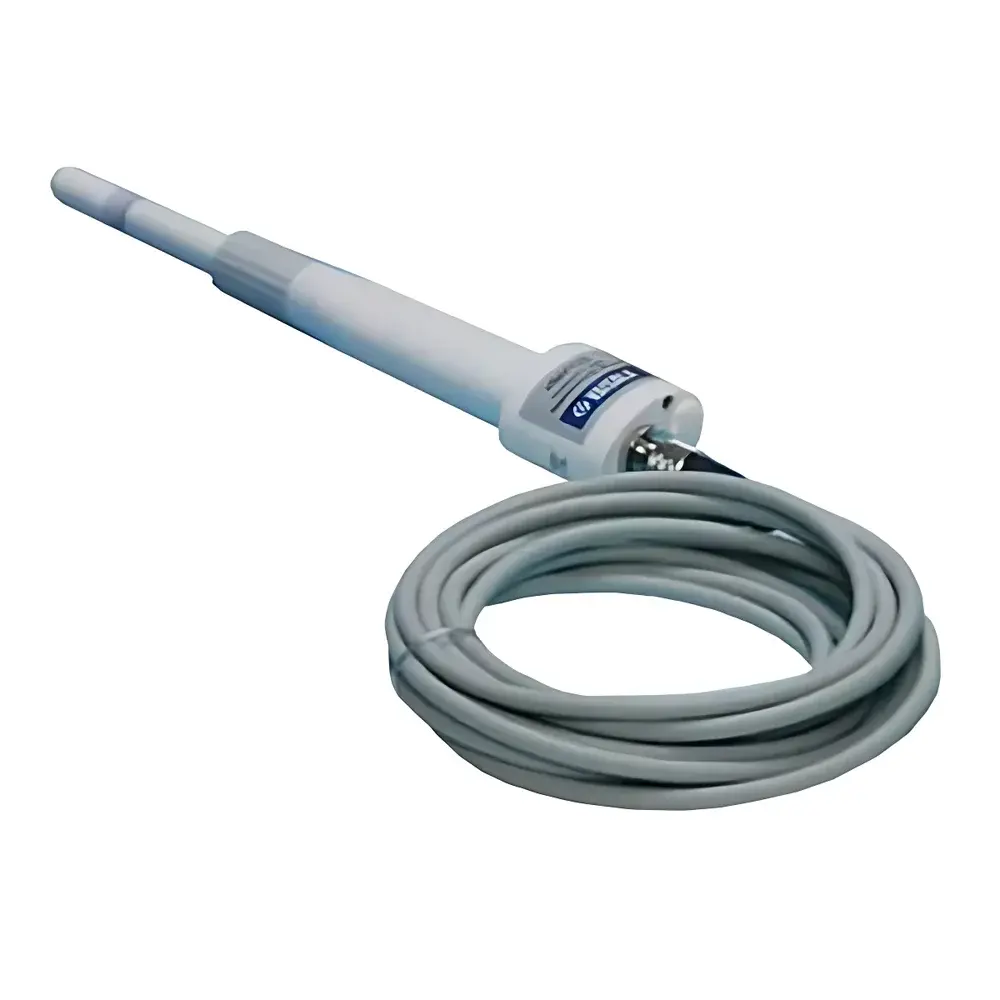
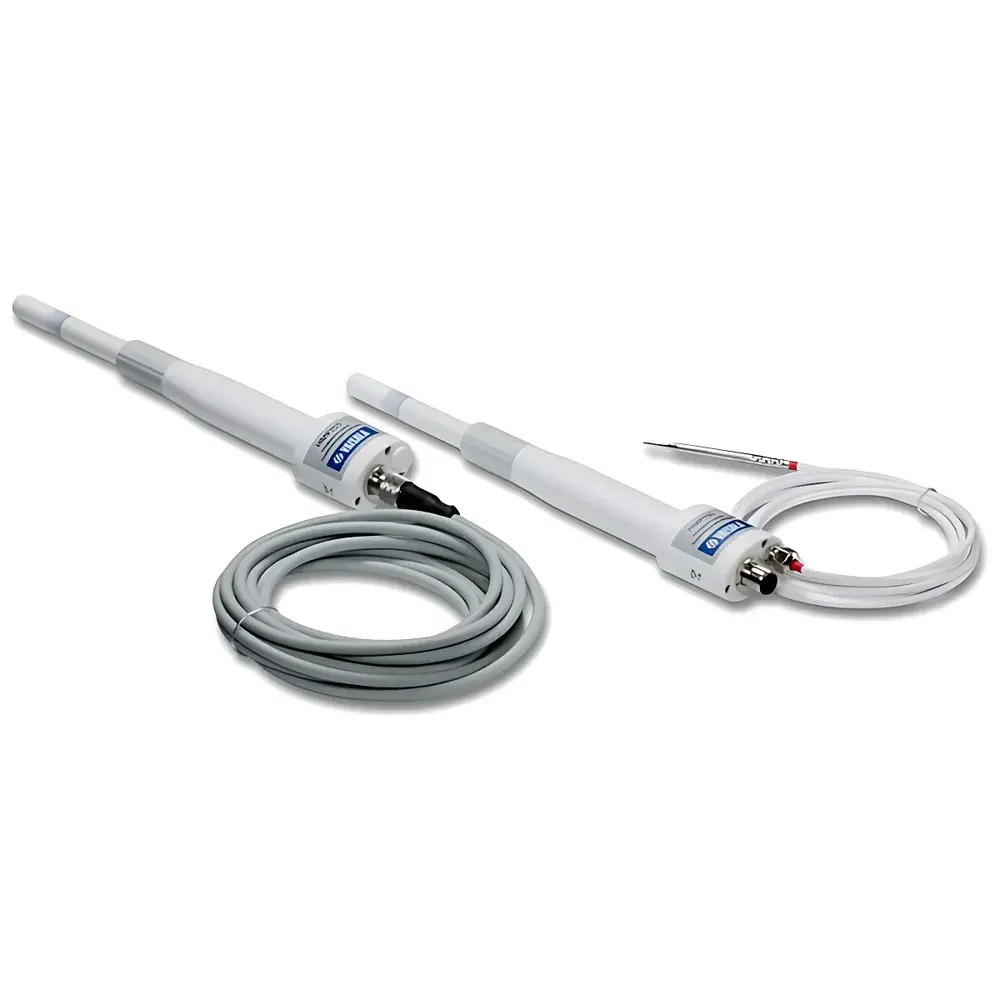
Vaisala HMP155 Temperature and Humidity Probe
| Brand | Vaisala |
|---|---|
| Origin | Finland |
| Model | HMP155 |
| Temperature Range | -80 to +60 °C |
| Temperature Accuracy | ±0.2 °C (at 20 °C, Pt1000 F0.1 per IEC 60751) |
| Relative Humidity Range | 0–100 %RH |
| RH Accuracy | ±1 %RH (15–25 °C, 0–90 %RH) |
| Resolution | 0.1 °C / 0.1 %RH |
| Operating Voltage | 7–28 VDC |
| Output Options | 0–1 V, 0–5 V, 0–10 V, RS485, Pt100 (4-wire) |
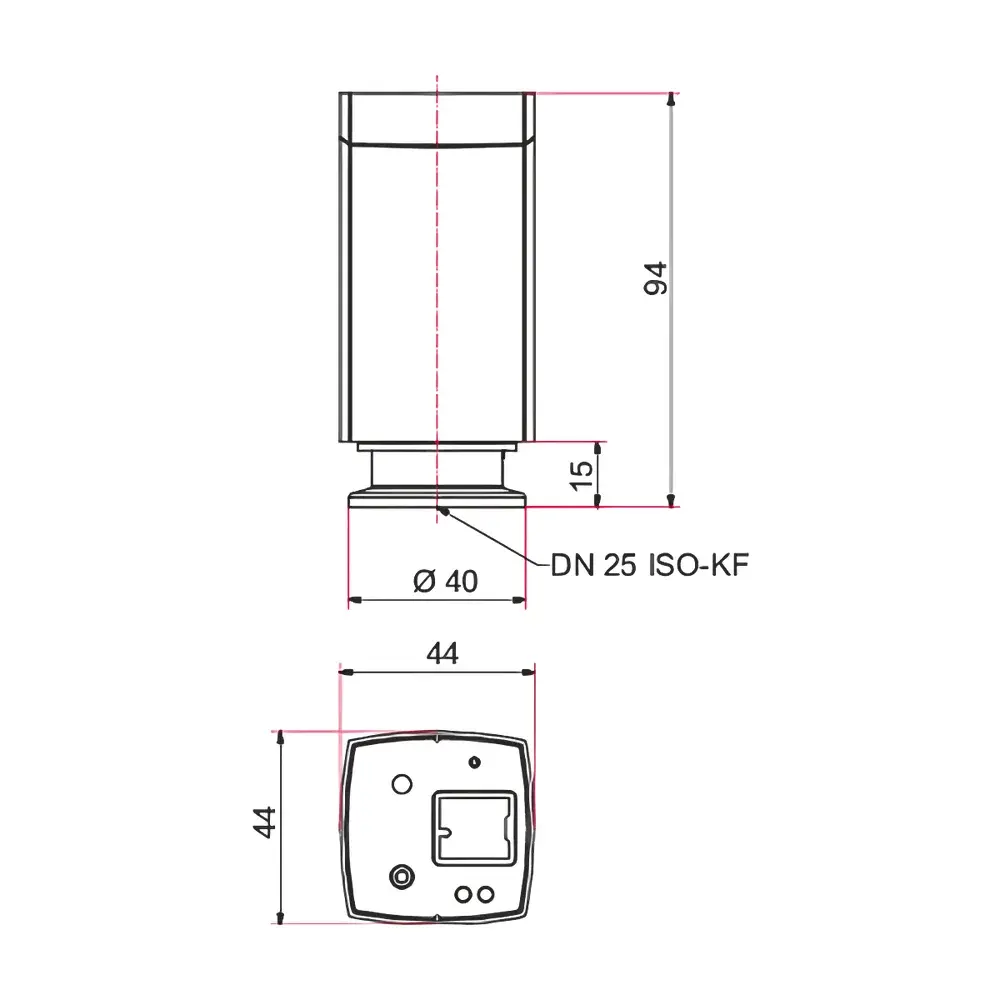
| Probe Dimensions | 267 mm × Ø40 mm |
| Weight | 86 g |
| Enclosure Rating | IP66 |
| Sensor Protection | Sintered PTFE Filter |
| Heating Function | Optional continuous probe heating (XHEAT) |
| Chemical Purge | Optional |
| EMC Compliance | EN 61326-1 (Industrial Environment) |
Overview
The Vaisala HMP155 is a high-reliability, field-deployable temperature and humidity probe engineered for long-term outdoor environmental monitoring. It integrates the proven Vaisala HUMICAP® 180R capacitive humidity sensor and a precision Pt1000 RTD (Class F0.1 per IEC 60751) for simultaneous, traceable measurements of relative humidity (RH) and temperature across an extended operational range of −80 °C to +60 °C. Its measurement principle relies on dielectric constant changes in the polymer sensing layer (HUMICAP®) under varying ambient moisture conditions, coupled with platinum resistance thermometry for thermal response. Designed specifically for meteorological, aviation, road weather, and industrial process applications where exposure to precipitation, fog, dust, and solar radiation is unavoidable, the HMP155 employs a robust mechanical architecture and active environmental mitigation strategies—including optional continuous probe heating (XHEAT) and chemical purge—to maintain measurement integrity under condensing or chemically contaminated conditions.
Key Features
- Vaisala HUMICAP® 180R sensor with documented long-term stability (typical drift <0.1 %RH/year under controlled conditions)
- Optional integrated heating element (XHEAT) to suppress condensation by maintaining probe head temperature above dew point
- Chemical purge function to remove adsorbed contaminants from the sensor surface, extending calibration interval in industrial or coastal environments
- Sintered polytetrafluoroethylene (PTFE) filter providing IP66-rated protection against liquid water ingress, particulate matter, and chemical aerosols
- Fast-response auxiliary temperature sensor optimized for dynamic thermal environments (e.g., rapid diurnal cycles or vehicle-mounted installations)
- Multiple analog and digital output options: 0–1 V, 0–5 V, 0–10 V, RS485 Modbus RTU, and 4-wire Pt100 resistance output
- USB interface for local configuration, diagnostics, and field calibration using Vaisala’s MI70 indicator or PC-based software
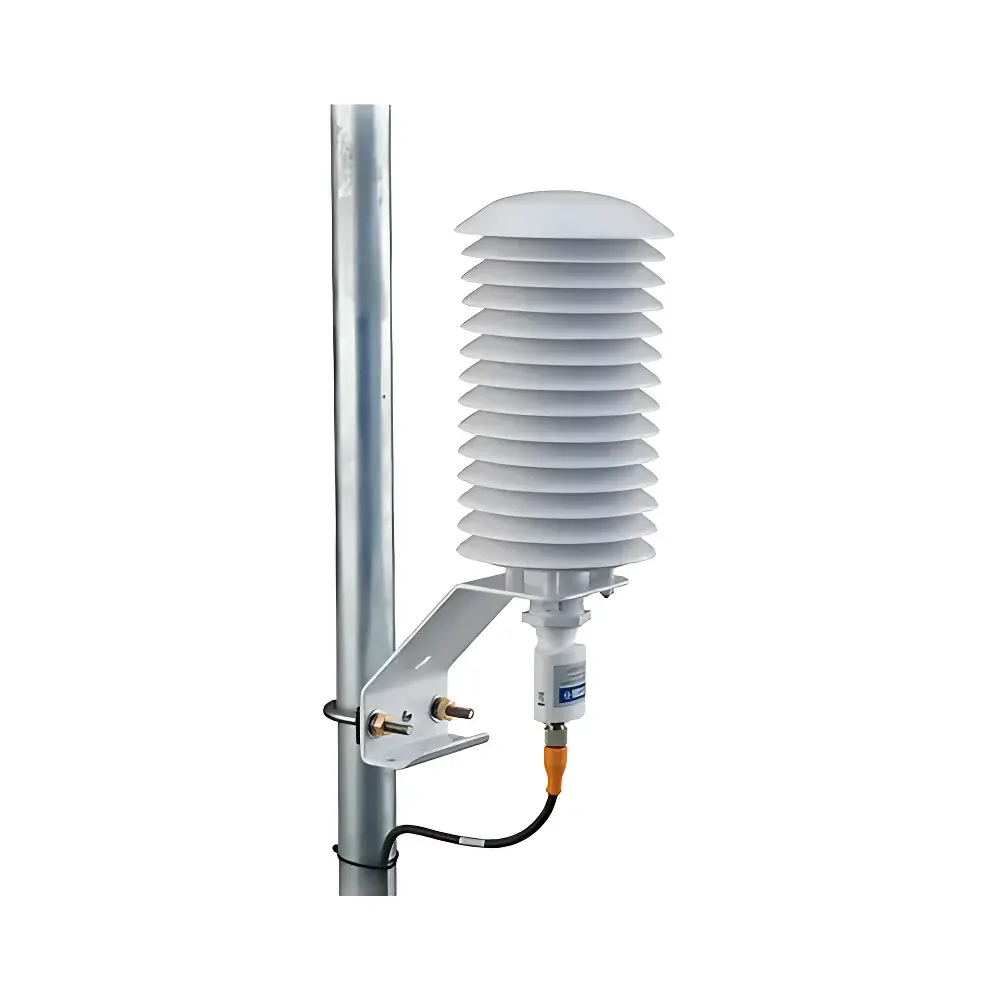
- UV-stabilized polycarbonate housing rated IP66 per IEC 60529; compatible with radiation shields DTR13, DTR503, or standard Stevenson-type louvred enclosures
Sample Compatibility & Compliance
The HMP155 is suitable for continuous monitoring of ambient air in unsheltered or semi-sheltered outdoor locations, including airport runways, highway weather stations, agricultural microclimates, and HVAC intake ducts. Its sintered PTFE filter ensures compatibility with high-humidity, dusty, saline, or mildly corrosive atmospheres without requiring frequent maintenance. The probe complies with international standards relevant to environmental instrumentation: IEC 60751 (RTD accuracy classification), EN 61326-1 (EMC immunity and emissions for industrial environments), and ISO/IEC 17025 traceability requirements when used with certified calibration procedures. While not inherently FDA 21 CFR Part 11 compliant as a standalone sensor, its digital outputs (RS485) support integration into validated systems with appropriate audit-trail and electronic signature capabilities.
Software & Data Management
Vaisala provides the free-to-use Vaisala Insight PC Software for configuration, real-time data logging, and firmware updates via USB. The HMP155 supports Modbus RTU over RS485, enabling seamless integration into SCADA, BMS, and IoT platforms using standard protocol stacks. All output channels are independently configurable for scaling, offset, and update rate (default 1–2 s). Calibration certificates—traceable to national metrology institutes—are available upon request. Field recalibration is supported using Vaisala’s MI70 handheld indicator or through automated two-point RH/T adjustment routines executed locally via USB. Data integrity is preserved through built-in diagnostics, including sensor health status, heater activation flag, and communication error counters.
Applications
- Aviation meteorology: Runway condition reporting, ceiling and visibility monitoring, and aircraft de-icing decision support
- Road weather information systems (RWIS): Frost, black ice, and wet-bulb temperature forecasting
- National weather services: Reference-grade station networks requiring low-drift, low-maintenance sensors
- Environmental research: Long-term climate observation, eddy covariance flux towers, and boundary-layer studies
- Industrial process monitoring: Outdoor air intake conditioning, cleanroom pre-monitoring, and material storage environment control
- Renewable energy: Wind farm site assessment and photovoltaic performance modeling
FAQ
Is the HMP155 suitable for sub-zero temperature measurements?
Yes. The probe is fully specified for continuous operation from −80 °C to +60 °C, with calibrated accuracy maintained across this full range per IEC 60751 and Vaisala’s internal verification protocols.
What is the purpose of the XHEAT function?
XHEAT applies continuous low-power heating to the sensor head to prevent condensation during high-RH or sub-zero conditions—critical for maintaining measurement continuity in fog, drizzle, or freezing rain.
Can the HMP155 be calibrated in the field without sending it to a lab?
Yes. Using the MI70 indicator or Insight software with USB connection, users can perform two-point RH/T adjustments or verify sensor performance against reference standards at the installation site.
Which radiation shield is recommended for highest accuracy in direct sunlight?
Vaisala recommends the DTR503 or DTR13 passive radiation shields, both designed to minimize solar loading errors and meet WMO guidance for meteorological sensors.
Does the probe require periodic filter replacement?
No. The sintered PTFE filter is maintenance-free and designed for multi-year service life under typical outdoor exposure; cleaning with distilled water is permissible if heavily soiled.