
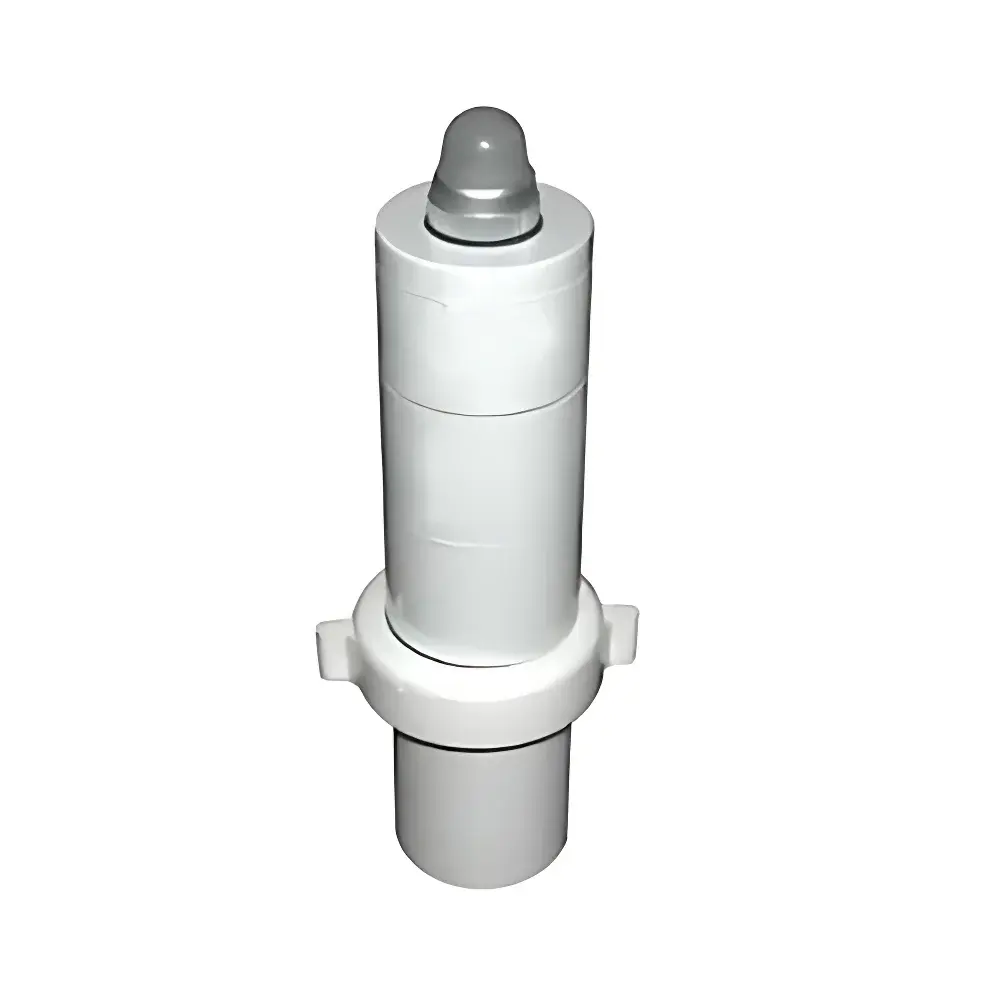
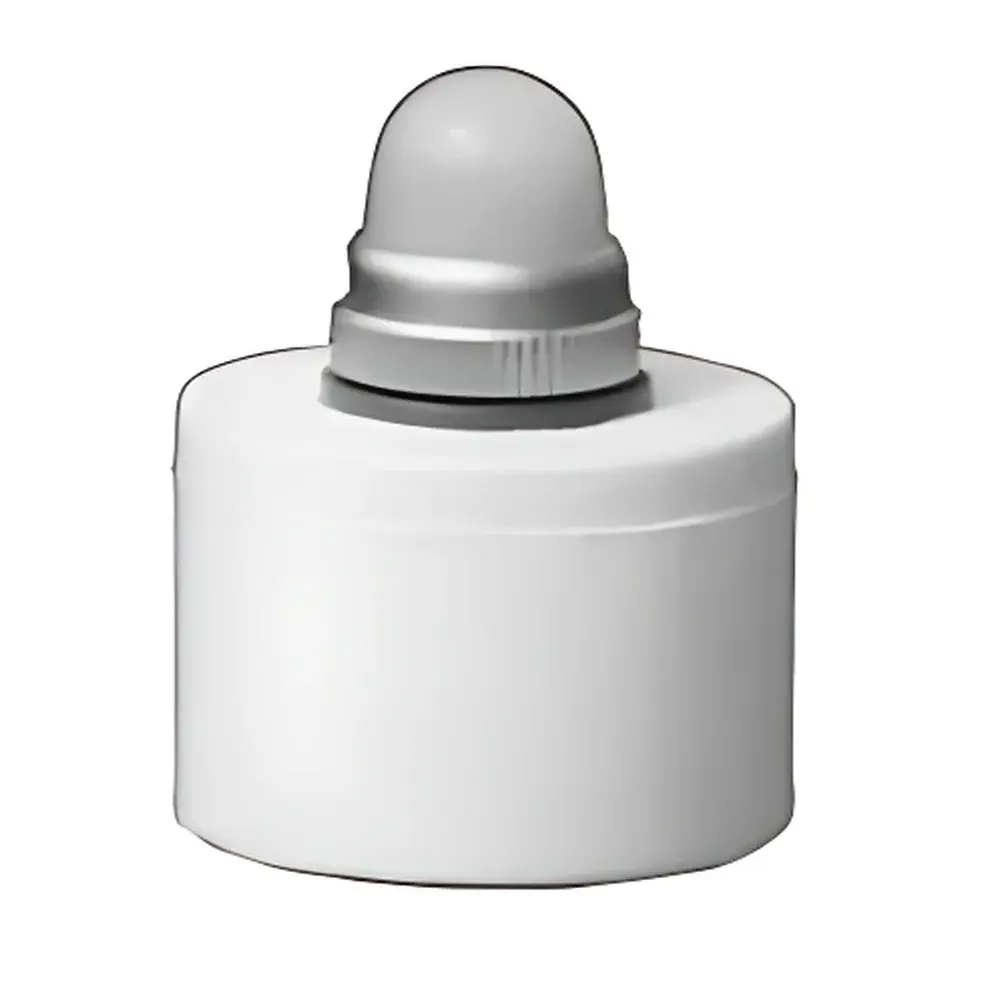
RainWise SOL-PYR Pyranometer
| Brand | RainWise |
|---|---|
| Origin | USA |
| Model | SOL-PYR |
| Spectral Range | 400–1200 nm |
| Measurement Range | 0.5–2000 W/m² |
| Accuracy | ±5% (typ. ±3%) |
| Resolution | 10 W/m² |
| Sensitivity | 0.5 mV/(W/m²) |
| Response Time | 10 ms |
| Operating Temperature | −65 °C to +80 °C |
| Operating Humidity | 0–100% RH |
| Temperature Dependence | ≤0.06 %/°C |
| Supply Voltage | 8–16 V DC |
| Housing Materials | Anodized Aluminum, Stainless Steel, Silicone, PVC |
Overview
The RainWise SOL-PYR Pyranometer is a precision-calibrated, thermally stable broadband solar irradiance sensor engineered for continuous, field-deployable measurement of global horizontal irradiance (GHI). Based on a cosine-corrected silicon photodiode with spectral responsivity optimized across the photosynthetically active and near-infrared range (400–1200 nm), the SOL-PYR delivers reliable, low-drift output under variable solar zenith angles and diffuse-dominant conditions. Unlike thermopile-based pyranometers, the SOL-PYR leverages solid-state photodiode technology—offering fast dynamic response (10 ms), low power consumption, and inherent immunity to thermal EMF drift—making it particularly suited for battery-powered remote stations, agricultural microclimate networks, and distributed solar resource assessment where size, weight, and power efficiency are critical constraints.
Key Features
- Integrated cosine diffuser ensures ISO 9060:2018 Class C angular response compliance, minimizing azimuth and zenith angle errors across full sky dome coverage
- High-stability silicon photodiode with factory-applied spectral correction for flat quantum response across 400–1200 nm
- Robust mechanical architecture: anodized aluminum housing, stainless steel mounting interface, silicone-sealed optical window, and UV-resistant PVC cable jacket
- Wide operating temperature range (−65 °C to +80 °C) validated for deployment in polar, desert, and tropical environments without active thermal regulation
- Low temperature coefficient (≤0.06 %/°C) enables stable operation across diurnal and seasonal thermal cycles without real-time compensation firmware
- Compatible with standard data loggers supporting analog voltage input (0–2.5 V or 0–5 V scalable via external resistor network)
Sample Compatibility & Compliance
The SOL-PYR is designed for outdoor, unshaded installation on fixed or adjustable mounts—including RainWise Monopod tripods—and requires no routine recalibration under normal environmental exposure. Its sealed, IP67-rated enclosure meets IEC 60529 requirements for dust and water ingress protection. While not classified as an ISO 9060:2018 Class A or B instrument due to its photodiode-based design, the SOL-PYR conforms to the performance criteria specified for Class C pyranometers in solar energy monitoring applications per IEC 61724-1 (Photovoltaic system performance monitoring) and ASTM G173-03 (Standard Tables for Reference Solar Spectral Irradiances). It supports traceable calibration against NIST-traceable reference cells and is routinely deployed in USDA ARS agronomic networks and NOAA-coordinated mesoscale weather observation arrays.
Software & Data Management
The SOL-PYR outputs a linear analog voltage signal proportional to incident irradiance (0.5 mV per W/m²), enabling direct integration with Campbell Scientific CR-series, HOBO UX120, Onset HOBO RX3000, and other industry-standard data acquisition systems. When paired with compliant logging platforms, measurements support audit-ready timestamping, metadata tagging (e.g., site ID, tilt angle, cleaning date), and export to CSV or NetCDF formats compatible with PVsyst, SAM (System Advisor Model), and RADIANCE-based modeling workflows. For long-term deployments, users may implement automated quality control flags—including nighttime zero-check validation, max irradiance clipping detection (>1200 W/m² at sea level), and rate-of-change anomaly filtering—to maintain dataset integrity per IEC 61724-1 Annex D guidelines. No proprietary software or cloud subscription is required.
Applications
- Solar photovoltaic (PV) system performance ratio (PR) analysis and yield forecasting
- Evapotranspiration (ET₀) modeling in irrigation scheduling and precision agriculture
- Surface energy balance studies in hydrological and micrometeorological research
- Long-term climate station networks requiring low-maintenance, high-reliability irradiance records
- Educational instrumentation for atmospheric science and renewable energy curricula
- Building-integrated photovoltaics (BIPV) and façade solar irradiance mapping
FAQ
Does the SOL-PYR require periodic recalibration?
No scheduled recalibration is mandated by RainWise under typical deployment conditions; however, annual verification against a reference pyranometer or certified light source is recommended for GLP-compliant research or utility-scale performance reporting.
Can the SOL-PYR measure diffuse irradiance?
No—it measures global horizontal irradiance (GHI) only. To derive diffuse irradiance, a shading ring or tracking shadow band must be used in conjunction with a second SOL-PYR unit.
Is the sensor compatible with 12 V DC battery-powered systems?
Yes—the 8–16 V DC operating range aligns with standard lead-acid and LiFePO₄ battery configurations used in remote telemetry applications.
What mounting hardware is included?
The SOL-PYR ships with M6 threaded mounting interface and is designed for seamless attachment to RainWise Monopod tripods; optional leveling base and sun-tracking adapter kits are available separately.
How does temperature dependence affect field accuracy?
With a maximum temperature coefficient of 0.06 %/°C, a 40 °C ambient swing introduces ≤2.4 % deviation—well within the ±5 % overall uncertainty budget and mitigated further by the sensor’s thermal mass and passive stabilization design.
Related Products







