
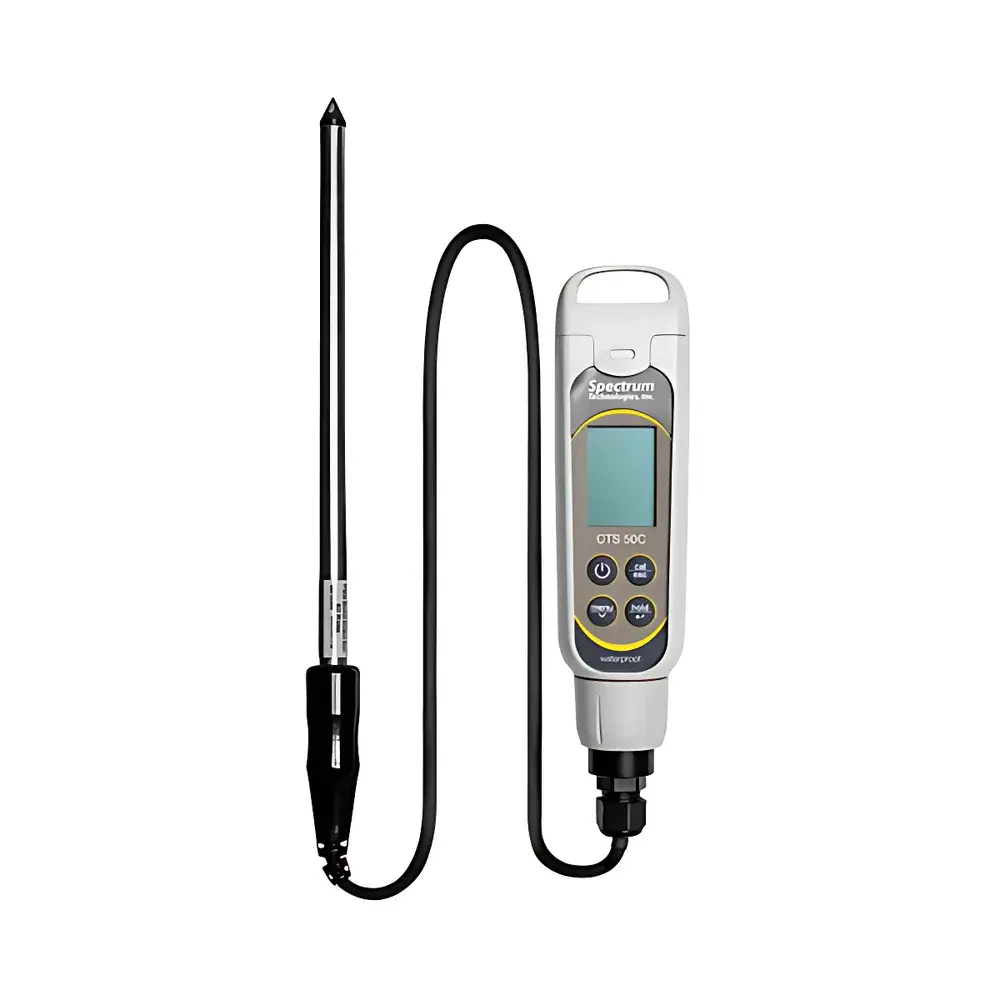
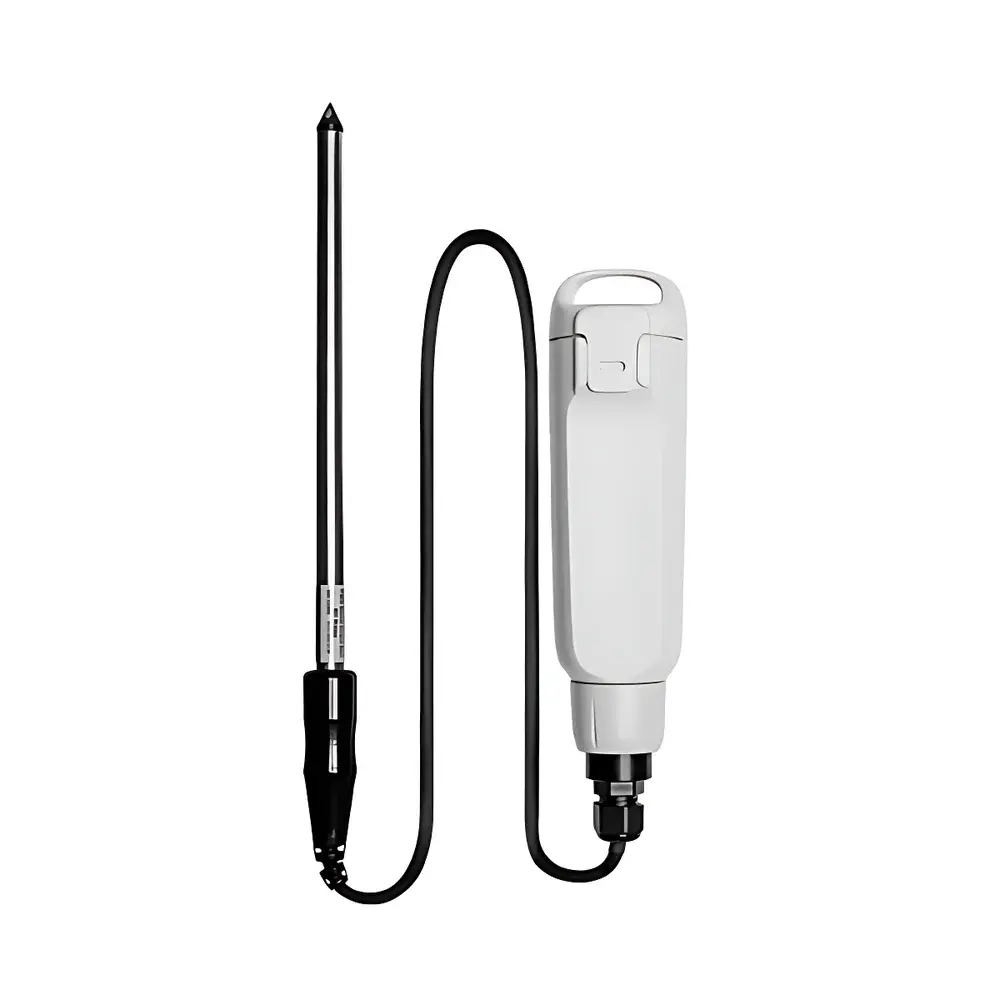
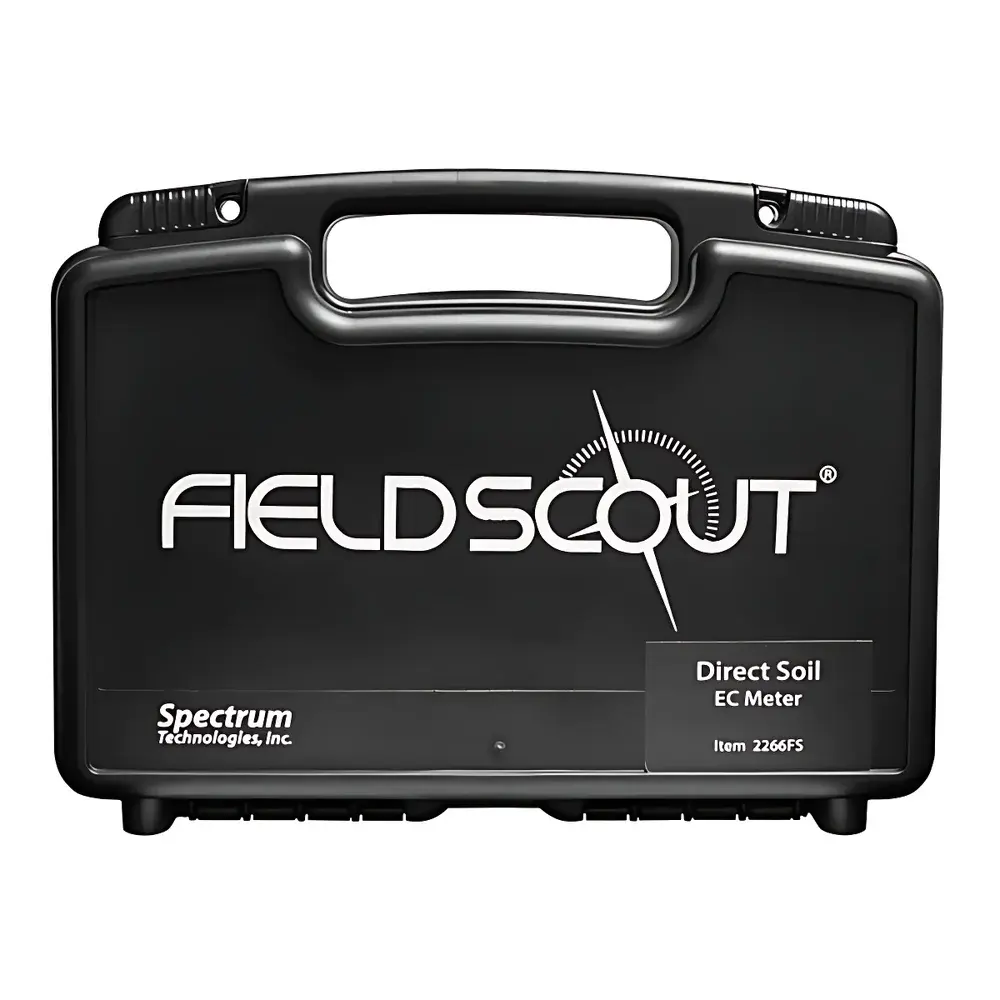
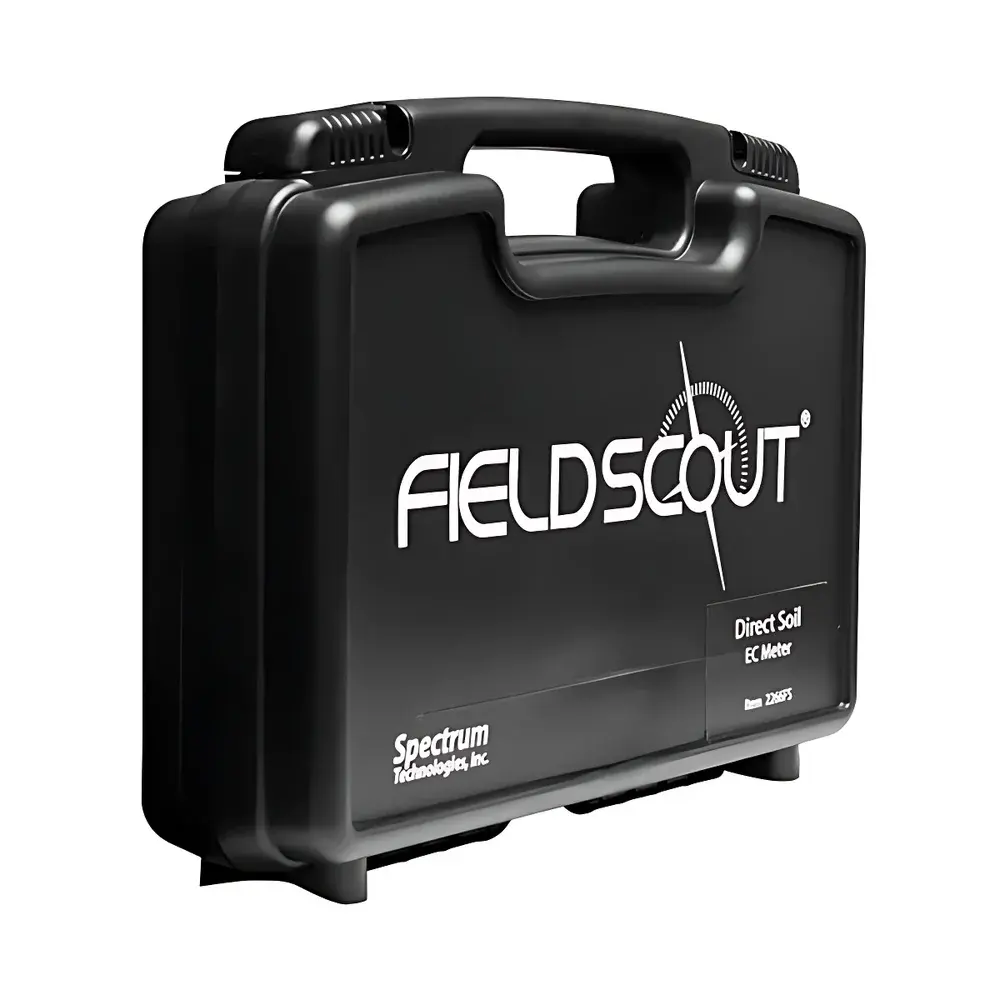
Spectrum 2266FS Portable Conductivity Meter
| Brand | Spectrum |
|---|---|
| Origin | USA |
| Model | 2266FS |
| Portability | Portable |
| Conductivity Ranges | 0.0–200.0 µS/cm |
| Resolution | 0.1 µS/cm |
| Accuracy | ±1% of full scale |
| Temperature Range | 0–60 °C |
| Temperature Resolution | 0.1 °C |
| Temperature Accuracy | ±0.5 °C (0–50 °C), ±1.0 °C (50–60 °C) |
| Automatic Temperature Compensation (ATC) | Yes |
| Ingress Protection | IP67 |
| Power | 4 × AAA 1.5 V batteries |
| Battery Life | >150 hours |
Overview
The Spectrum 2266FS Portable Conductivity Meter is an engineered field-deployable electrochemical instrument designed for rapid, on-site measurement of electrical conductivity (EC) in heterogeneous environmental and agricultural matrices—including aqueous solutions, hydroponic nutrient reservoirs, irrigation water, leachate, and directly in situ soil profiles. It operates on the principle of two-electrode AC conductometry, applying a low-frequency alternating current to minimize polarization effects and electrode fouling. The device integrates real-time automatic temperature compensation (ATC) using a built-in high-stability NTC thermistor, referenced to the standard 25 °C conductivity value per ASTM D1125 and ISO 7888. Its ruggedized architecture supports routine use in variable ambient conditions without requiring laboratory infrastructure or sample transport—reducing analytical turnaround time and preserving sample integrity.
Key Features
- Rugged IP67-rated enclosure ensures dust-tight operation and submersion resistance up to 1 meter for 30 minutes—validated per IEC 60529
- Triple-range conductivity measurement (0.0–200.0 µS/cm, 200–2000 µS/cm, 2.00–20.00 mS/cm) with auto-ranging and manual range selection
- Integrated ATC algorithm compliant with DIN EN 27888 and USP , dynamically correcting EC values across 0–60 °C
- Large backlit LCD display showing simultaneous EC, temperature, battery status, calibration state, and system readiness indicators
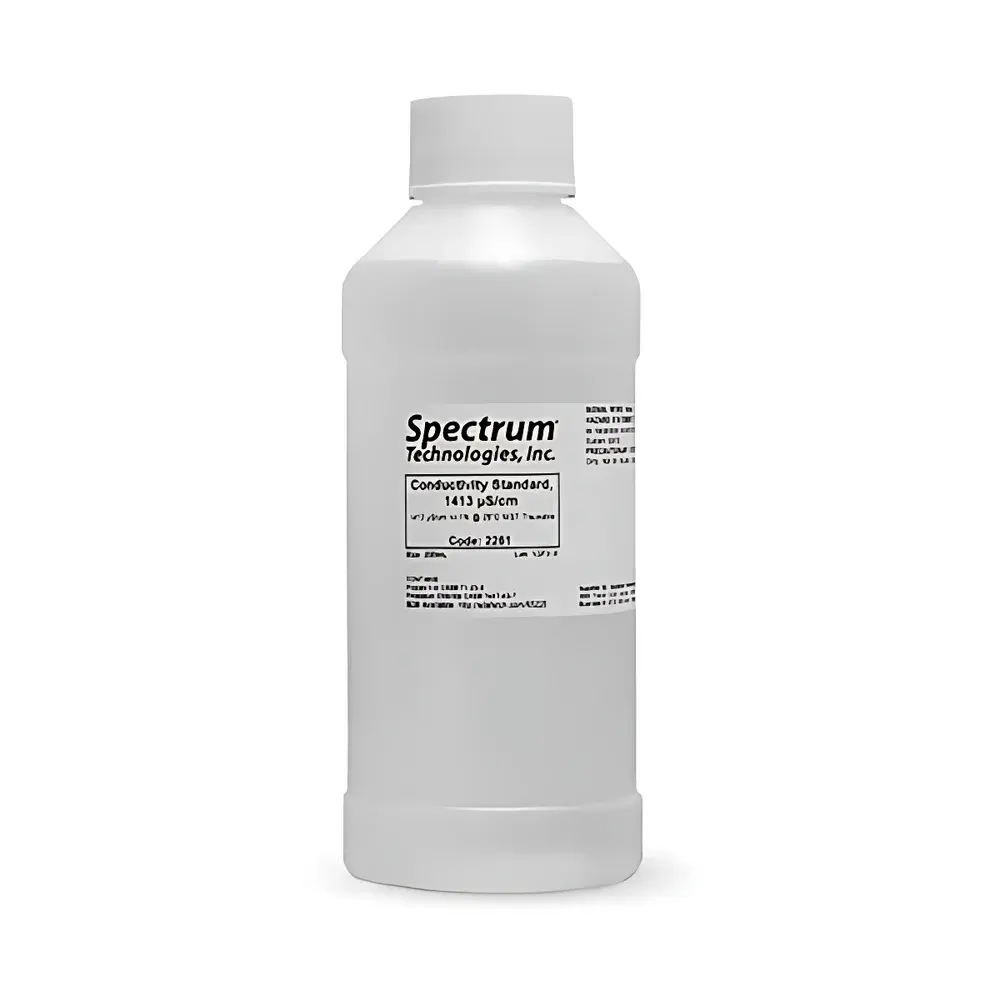
- One-button calibration protocol with automated standard recognition (1413 µS/cm KCl reference supported)
- HOLD function freezes real-time readings for documentation; MENU navigation enables quick access to settings, diagnostics, and unit toggling
- Self-diagnostic firmware delivers contextual error codes (e.g., “E1: Sensor Open”, “E3: Temp Out of Range”) to support field troubleshooting
- No sample preparation required—direct insertion into soil substrates, trays, pots, or liquid media without filtration or dilution
Sample Compatibility & Compliance
The 2266FS is validated for direct contact measurement in non-aggressive, low-viscosity aqueous systems and moist soil media with bulk moisture content ≥15% v/v. It complies with key regulatory and methodological frameworks including ASTM D512-22 (chloride ion determination via conductivity correlation), EPA Method 9060A (conductivity screening for wastewater), and ISO 11265:2020 (soil electrical conductivity as a proxy for salinity). While not certified for Class I Div 1 hazardous locations, its intrinsically safe design meets UL 61010-1 requirements for portable laboratory equipment. Calibration traceability aligns with NIST-traceable KCl standards, supporting GLP-compliant data recording when paired with external logging software.
Software & Data Management
The meter operates autonomously without proprietary software dependencies. All configuration, calibration history, and date/time stamps are stored in non-volatile memory (100+ entries retained). For audit-ready workflows, users may export timestamped readings manually via visual transcription or integrate with third-party data acquisition platforms using RS-232 or Bluetooth adapters (optional accessory). Firmware supports configurable logging intervals and pass/fail thresholds aligned with USDA-NRCS salinity classification guidelines (EC 4 dS/m = saline). Full calibration logs—including date, standard used, slope, offset, and temperature at calibration—meet minimum FDA 21 CFR Part 11 record-keeping expectations when documented externally.
Applications
- Agricultural soil salinity mapping and irrigation management decision support
- Hydroponics and greenhouse nutrient solution monitoring (EC drift detection)
- Environmental site assessment: leachate plume tracking, landfill monitoring wells, wetland porewater profiling
- Water quality screening in rivers, lakes, and stormwater retention basins
- Educational field labs for environmental science and soil chemistry curricula
- QA/QC verification of deionized water purity in maintenance and cleaning validation protocols
FAQ
Does the 2266FS require electrode cleaning between soil measurements?
Yes—wiping the sensor pins with distilled water and a lint-free cloth after each soil insertion is recommended to prevent cross-contamination and residue buildup.
Can it measure conductivity in organic solvents such as ethanol or acetone?
No—the instrument is calibrated and validated exclusively for aqueous and soil-water systems; non-aqueous media will yield non-linear, uncorrectable readings due to dielectric mismatch.
Is the temperature sensor independently calibrated?
Yes—the NTC thermistor undergoes individual thermal characterization during final assembly and is factory-matched to the conductivity cell’s thermal response profile.
What is the recommended recalibration frequency under continuous field use?
Calibration verification every 24 hours or before each new sampling session is advised; full two-point calibration required if drift exceeds ±2% of reading or after exposure to temperatures >55 °C.
Does the IP67 rating apply when the battery compartment is open?
No—IP67 protection is only guaranteed when both the main housing and battery cover are fully sealed with gaskets intact and torqued to specification.





