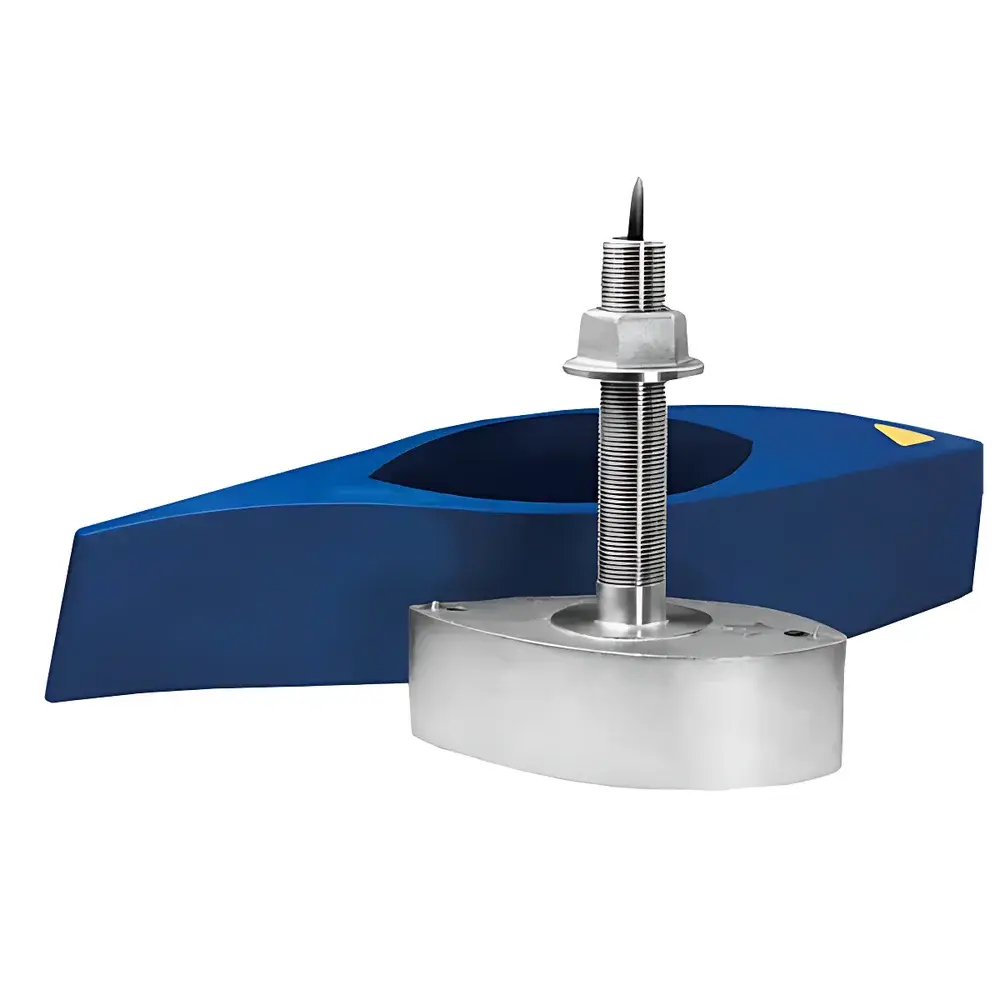
AIRMAR SS260 Through-Hull Depth Sounder
| Brand | AIRMAR |
|---|---|
| Origin | USA |
| Model | SS260 |
| Transducer Material | Stainless Steel |
| Operating Frequencies | 50 kHz / 200 kHz |
| Beamwidth | 14° × 23° @ 50 kHz / 3° × 5° @ 200 kHz |
| Output Power | 1000 W |
| Installation Type | Through-Hull |
| Housing Material | Stainless Steel (optional bronze B260 variant) |
| Temperature Sensor Accuracy | ±0.2°C |
| Temperature Sensor Response | Fast-response thermistor |
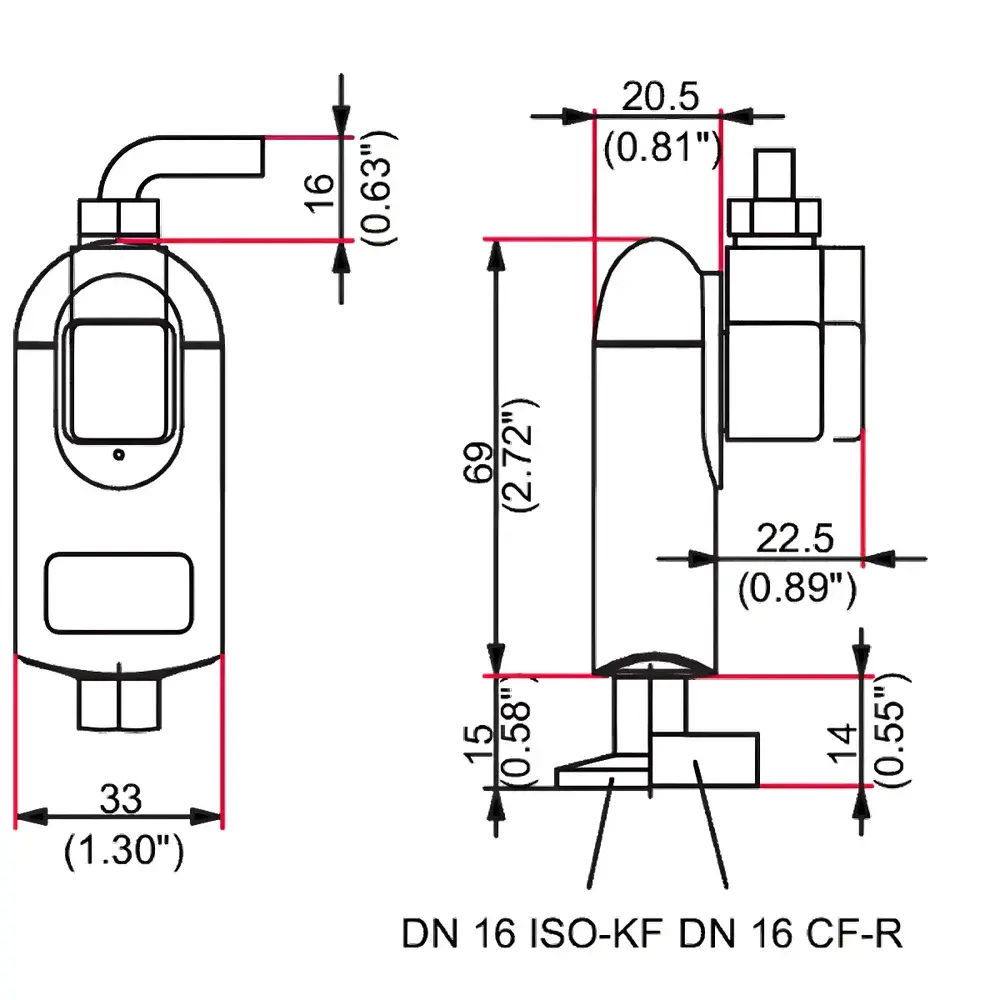
| Transducer Mounting Hole Diameter | 30 mm |
| Stub Length | 121 mm |
| Cable Length | 10 m |
| Maximum Hull Tilt Angle | 20° (with fairing) |
| Window Material | Polyurethane |
| Weight | 7.3 kg |
Overview
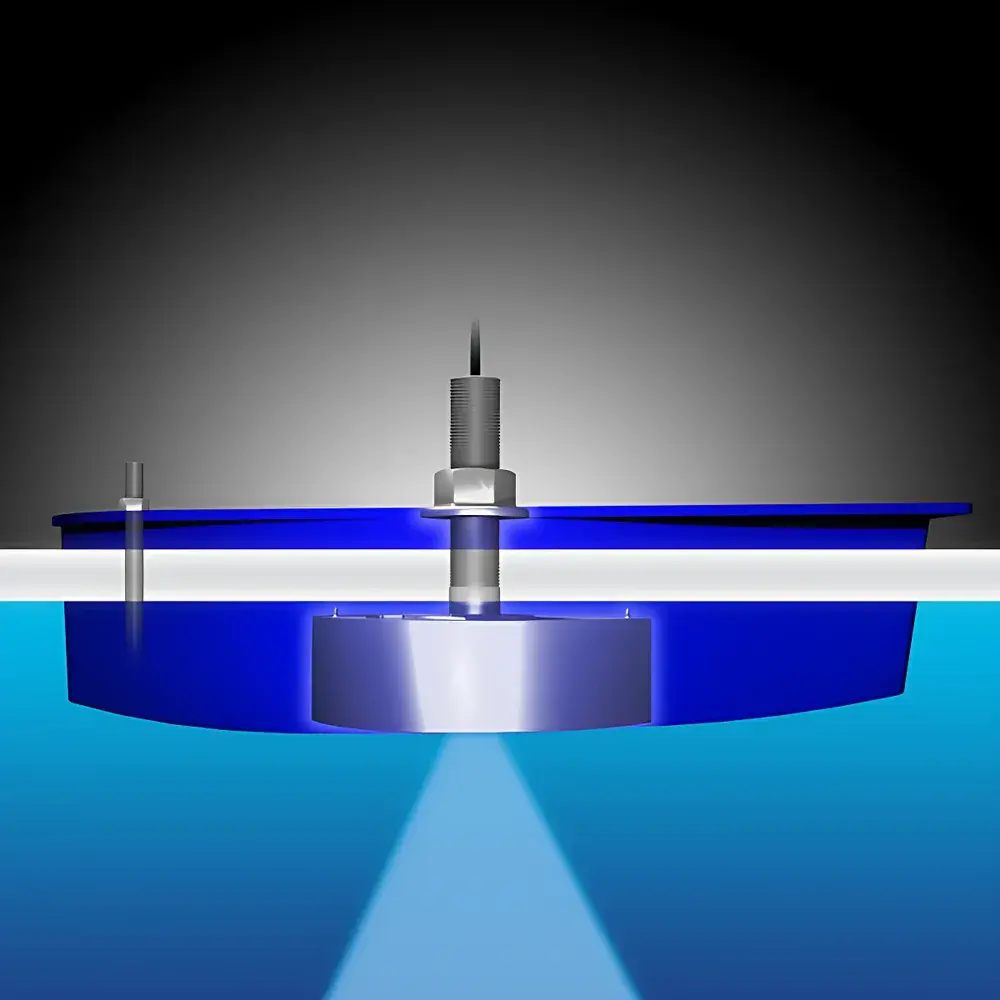
The AIRMAR SS260 is a high-performance, through-hull mounted depth sounder transducer engineered for precision hydrographic measurement in marine environments. Utilizing dual-frequency pulse-echo sonar principles—operating simultaneously at 50 kHz (long-range, wide-beam bottom profiling) and 200 kHz (high-resolution, narrow-beam target discrimination)—the SS260 delivers consistent acoustic return signals across variable water column conditions. Its stainless steel housing provides corrosion resistance and structural integrity under sustained immersion, while the integrated fast-response thermistor enables real-time water temperature compensation critical for sound velocity correction in depth calculation algorithms. Designed for fixed-mount deployment on vessels up to 9 meters (30 feet), the SS260 conforms to international maritime transducer standards for mechanical robustness, pressure rating (up to 10 bar equivalent), and acoustic impedance matching to seawater. The elliptical radiating surface geometry enhances seabed coverage area per ping, improving detection probability for irregular or sloped terrain without requiring mechanical steering.
Key Features
- 1000 W peak acoustic output power ensures reliable signal penetration in turbid, deep, or thermocline-affected waters
- Dual-frequency operation (50/200 kHz) supports both broad-area bathymetric mapping and fine-scale fish target resolution
- Stainless steel transducer body with polyurethane acoustic window offers superior durability and long-term stability in saltwater service
- XducerID® digital identification technology enables automatic configuration recognition by compatible AIRMAR-compatible chartplotters and echo sounders, reducing setup errors and ensuring optimal parameter alignment
- Integrated NTC thermistor with ±0.2°C accuracy provides calibrated temperature input for sound speed derivation per ISO 9001–traceable calibration protocols
- Elliptical beam pattern (14° × 23° at 50 kHz; 3° × 5° at 200 kHz) increases effective swath width while maintaining lateral resolution
- Through-hull mounting design minimizes hull-induced flow noise and cavitation interference compared to transom-mounted alternatives
- Optional high-performance fairing available for custom contouring to hull curvature—improves laminar flow attachment and reduces boundary layer turbulence during transit
Sample Compatibility & Compliance
The SS260 is compatible with all major marine electronics platforms supporting NMEA 2000 (IEC 61162-3) and analog 200 kHz/50 kHz echo sounder interfaces. It meets IEC 62287-1 (Marine echosounders – Part 1: Performance requirements and methods of testing) for depth measurement accuracy, repeatability, and environmental resilience. The stainless steel construction complies with ASTM A240/A240M for marine-grade austenitic alloy performance, and the polyurethane window satisfies MIL-DTL-23707C for underwater acoustic transparency and hydrolytic stability. No hazardous substances are used in manufacturing; RoHS 2011/65/EU and REACH SVHC compliance documentation is available upon request. The transducer is suitable for GLP-aligned hydrographic survey workflows when paired with time-stamped, audit-trail-enabled data loggers.
Software & Data Management
The SS260 does not include embedded firmware or onboard processing but functions as a calibrated analog/digital acoustic sensor node within larger vessel data ecosystems. When connected to NMEA 2000 networks, depth, temperature, and transducer status data are published via standardized PGNs (e.g., PGN 127250 Water Depth, PGN 130311 Environmental Parameters). Third-party software—including Qinsy, Hypack, and EIVA NaviModel—can ingest these streams for real-time bathymetric gridding, tidal correction, and post-processed uncertainty analysis. XducerID® metadata (model, serial number, calibration date) is accessible via PGN 127245 Transducer Information, enabling automated asset tracking and traceability in fleet management systems compliant with ISO 55001.
Applications
- Commercial fishing vessel depth monitoring and bottom contour navigation
- Small-craft hydrographic reconnaissance and shallow-water chart update campaigns
- Scientific limnology studies requiring concurrent depth and water temperature logging
- Port and harbor maintenance dredging support (depth change quantification)
- Marine archaeology site pre-survey screening
- OEM integration into autonomous surface vehicle (ASV) perception stacks
FAQ
Is the SS260 compatible with CHIRP-capable displays?
No—the SS260 is a fixed-frequency (50/200 kHz) transducer and does not support broadband CHIRP modulation. For CHIRP compatibility, consider AIRMAR’s TM series transducers.
Does the SS260 require a duplexer when used with a single-channel sounder?
Yes—a duplexer is required to isolate transmit and receive paths on single-channel systems. Dual-channel units (e.g., most modern multifunction displays) handle isolation internally and do not require external duplexing.
Can the SS260 be installed on aluminum or wood hulls?
Yes—through-hull installation is viable on non-ferrous metal, fiberglass, and solid wood hulls provided proper sealing and backing plate reinforcement per ABYC H-26 guidelines.
What is the maximum operational depth rating?
The SS260 is rated for continuous operation to 300 m (984 ft) in seawater at nominal power, limited primarily by signal attenuation rather than mechanical failure.
Is factory recalibration available?
Yes—AIRMAR offers certified recalibration services traceable to NIST standards, including full beam pattern verification and temperature sensor validation, with documented uncertainty budgets per ISO/IEC 17025.