
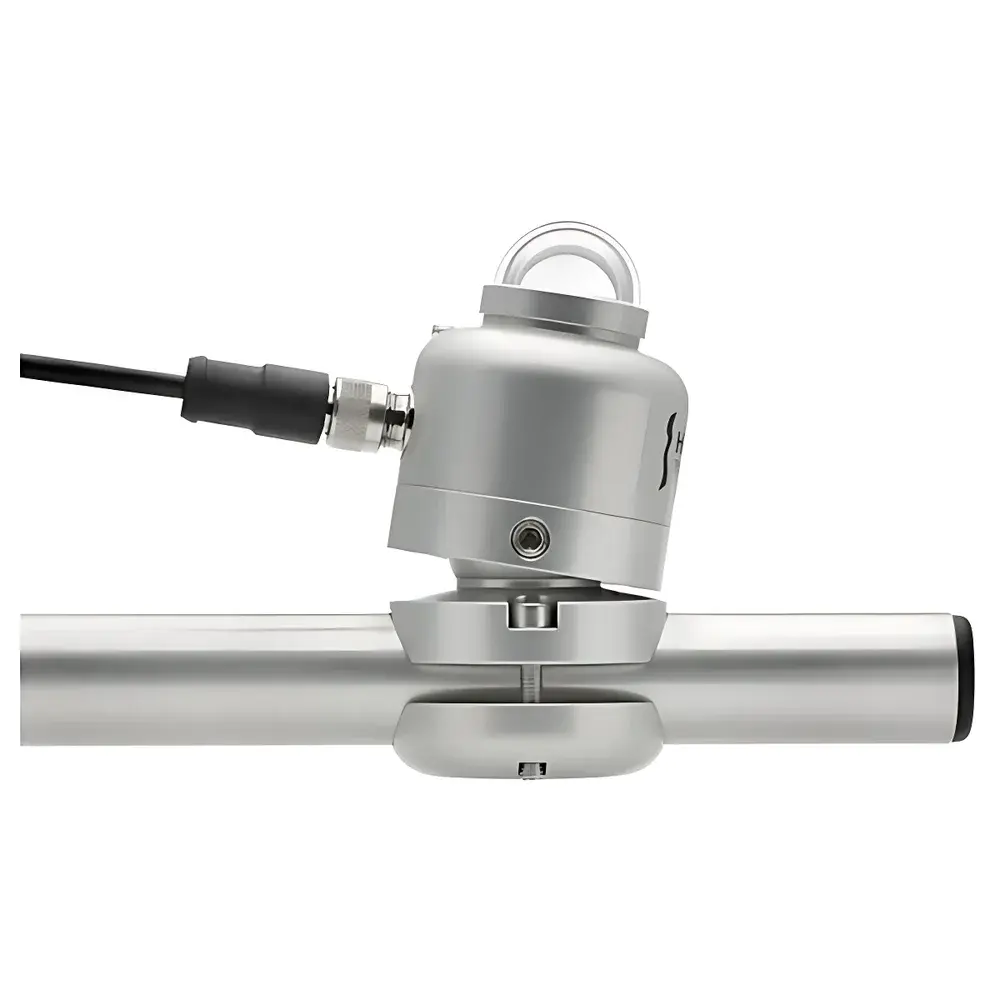
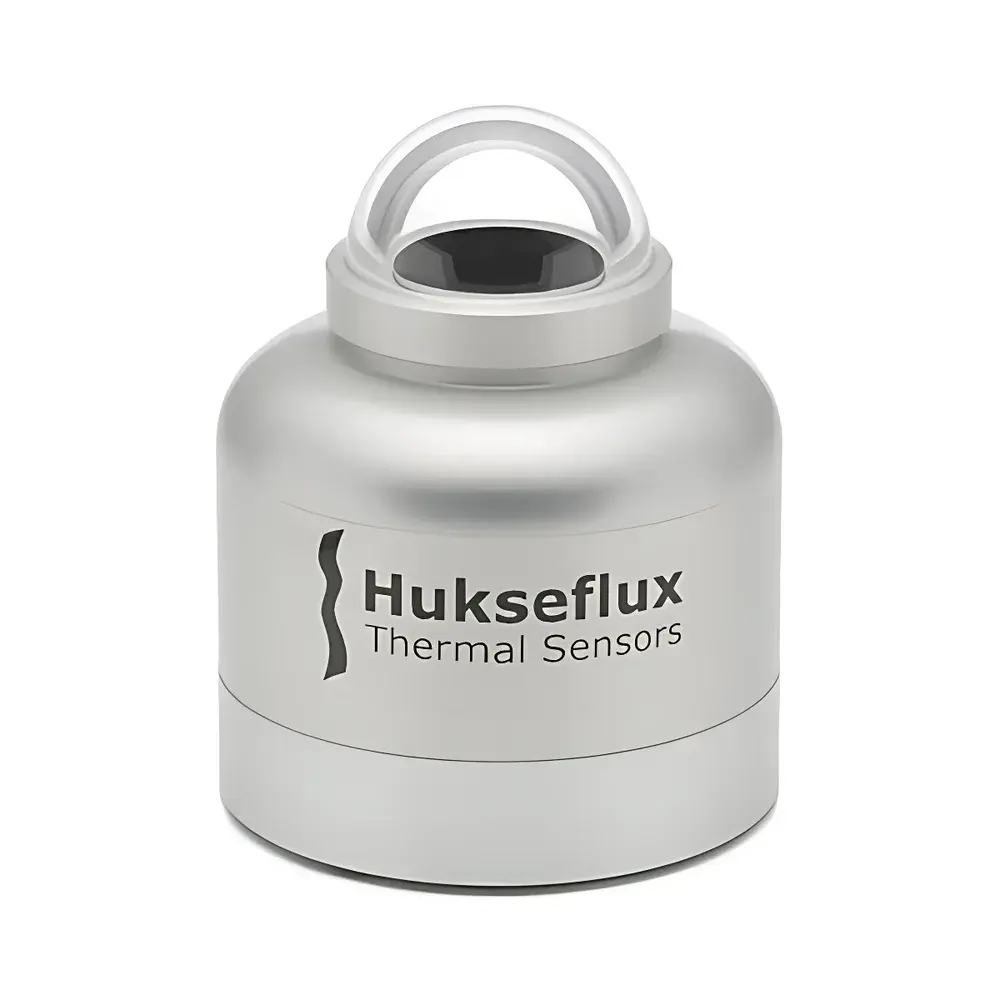
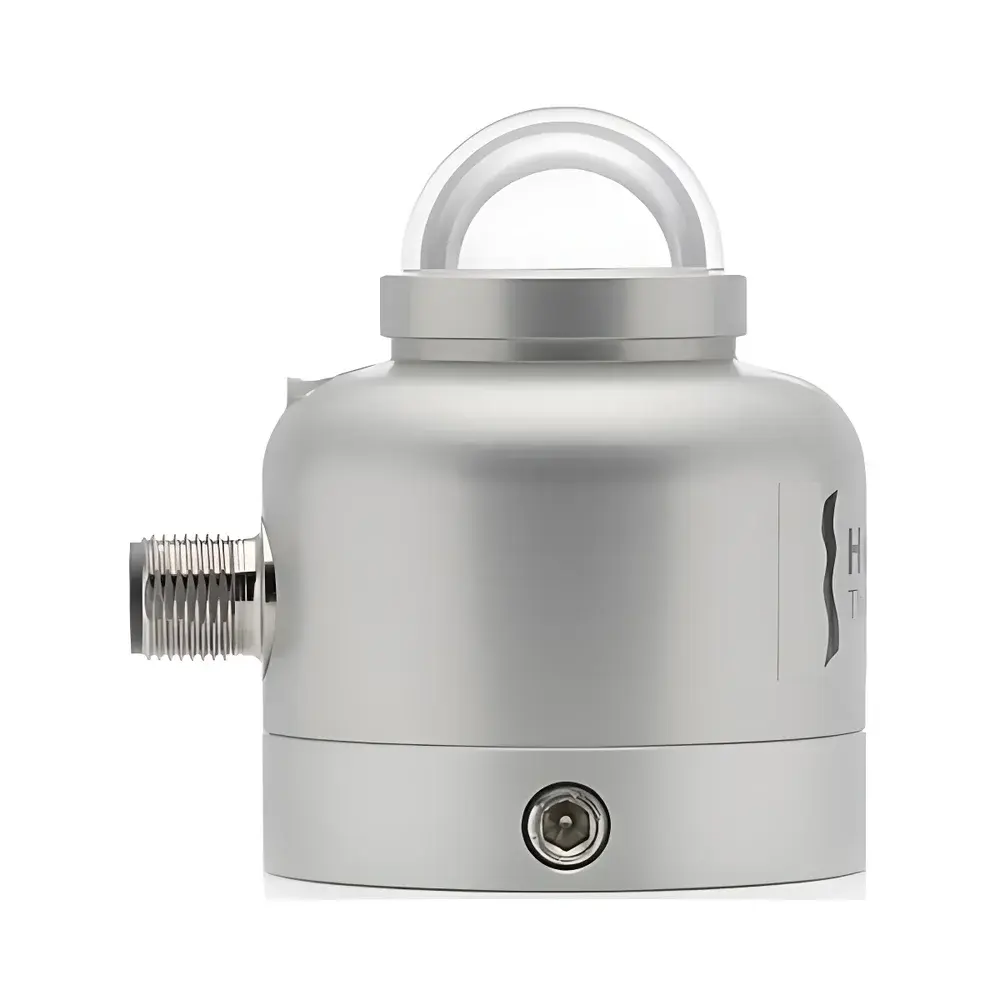
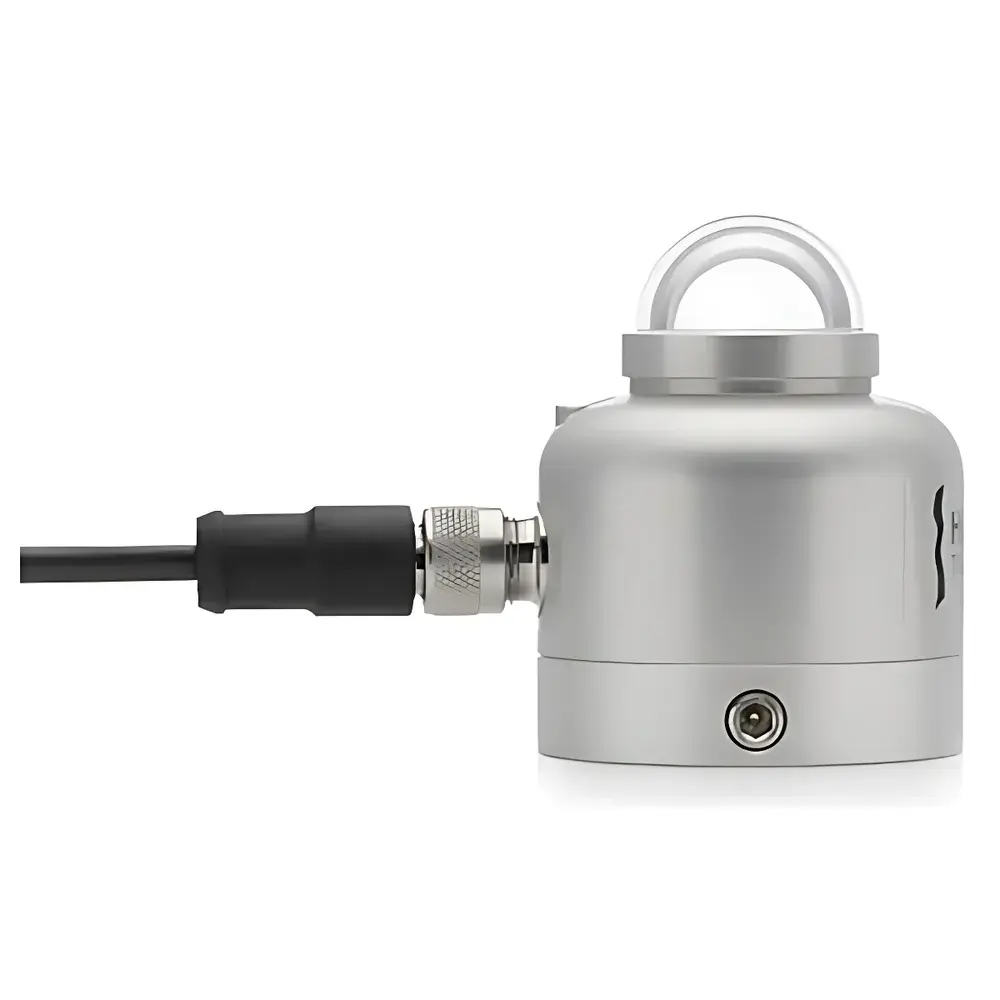
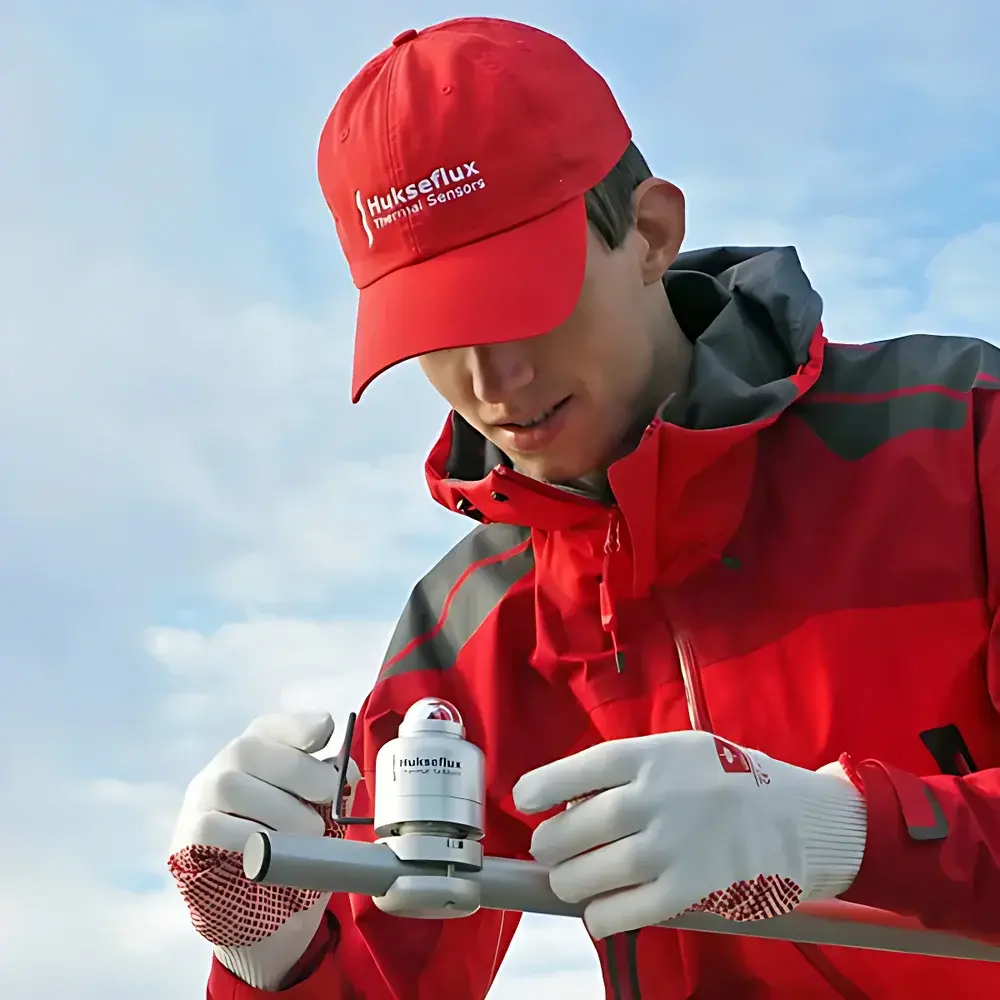
Hukseflux SR05-D1A3 Secondary Standard Pyranometer
| Brand | Hukseflux |
|---|---|
| Origin | Netherlands |
| Model | SR05-D1A3 |
| Calibration Traceability | World Radiometric Reference (WRR) |
| ISO 9060 Classification | Secondary Standard |
| Spectral Range | 285–3000 nm |
| Measurement Range | 0–2000 W/m² |
| Calibration Uncertainty | < 1.8 % (k = 2) |
| Operating Temperature | −40 to +80 °C |
| Output Options | RS-485 Modbus RTU + 0–1 V analog |
| Supply Voltage | 5–30 VDC |
| Cable Length | 3 m (extendable) |
| Leveling | Integrated spherical level |
| Field of View | 180° hemispherical |
Overview
The Hukseflux SR05-D1A3 is a secondary standard pyranometer engineered for high-reliability solar irradiance measurement in operational meteorological and photovoltaic (PV) monitoring environments. It operates on the thermopile principle: incident solar radiation is absorbed by a blackened, thermally isolated sensing surface, generating a temperature gradient across a precision thermopile junction. This produces a voltage signal proportional to the irradiance (W/m²) integrated over the full solar spectrum — from near-ultraviolet (285 nm) through visible to near-infrared (3000 nm). Certified to ISO 9060:2018 as a Secondary Standard instrument, the SR05-D1A3 delivers traceable, stable performance suitable for long-term climatological data series, agricultural weather station networks, and utility-scale PV plant performance ratio (PR) and soiling loss analysis. Its 180° field of view ensures full hemispherical capture of global horizontal irradiance (GHI), while its rugged aluminum housing and hermetically sealed quartz dome provide resistance to environmental degradation, condensation, and thermal shock across −40 °C to +80 °C ambient conditions.
Key Features
- ISO 9060:2018 Secondary Standard classification with calibration uncertainty < 1.8 % (k = 2), traceable to the World Radiometric Reference (WRR)
- Dual-output architecture: RS-485 Modbus RTU digital interface (addressable, multi-drop capable) plus galvanically isolated 0–1 V analog output for legacy SCADA or PLC integration
- Integrated spherical leveling mechanism enabling rapid, repeatable horizontal alignment without external tools — critical for minimizing cosine response error during daily sun-angle variation
- Low-power design (5–30 VDC supply) optimized for solar-powered remote stations; typical current draw < 1 mA at 12 VDC
- Thermally compensated electronics minimize zero-offset drift across operating temperature range; no internal heater required
- Robust mechanical construction: anodized aluminum body, fused silica dome with anti-reflective coating, IP67-rated connector housing
Sample Compatibility & Compliance
The SR05-D1A3 is designed for outdoor, unshaded mounting on fixed or tracking platforms aligned horizontally (for GHI) or tilted (for plane-of-array irradiance when used with appropriate tilt correction protocols). It complies with IEC 61724-1:2021 for PV system monitoring and supports data quality requirements under WMO Guide to Meteorological Instruments and Methods of Observation (CIMO Guide, Chapter 7). While not intrinsically certified for hazardous locations, its passive sensor architecture and lack of moving parts ensure suitability for Class I, Division 2 environments when installed per NEC Article 501. The instrument meets CE marking requirements for electromagnetic compatibility (EMC Directive 2014/30/EU) and low-voltage safety (LVD Directive 2014/35/EU). Calibration certificates include full uncertainty budgets compliant with ISO/IEC 17025:2017, supporting audit readiness for GLP and ISO 50001 energy management systems.
Software & Data Management
Data acquisition is facilitated via industry-standard Modbus RTU over RS-485, supporting register-based polling of real-time irradiance (W/m²), internal sensor temperature (°C), and diagnostic flags (e.g., dome contamination status inferred from thermal offset trends). Firmware supports configurable sampling intervals (1 s to 10 min), burst mode for high-resolution event capture, and non-volatile storage of last-known values during power interruption. Integration with third-party platforms — including Campbell Scientific LoggerNet, Siemens Desigo CC, and open-source solutions like ThingsBoard or Grafana — is validated using standard Modbus function codes (03h, 04h, 06h). Analog 0–1 V output enables direct connection to data loggers with 16-bit ADC resolution, providing sub-0.1 % full-scale linearity. All firmware updates are delivered via UART bootloader, ensuring field-upgradability without hardware modification.
Applications
- Long-term solar resource assessment for site feasibility studies and bankable energy yield modeling
- Real-time GHI monitoring in national and regional agro-meteorological networks (e.g., FAO Agromet Watch, WMO GSN)
- Performance validation and degradation trending in grid-connected PV plants per IEC 61724-1 Tier B requirements
- Soiling rate quantification using co-located reference cells or cleaning-event-triggered irradiance differentials
- Educational instrumentation in atmospheric physics and renewable energy curricula
- OEM integration into compact weather stations and IoT-enabled microclimate sensors
FAQ
Is the SR05-D1A3 suitable for use in harsh desert or coastal environments?
Yes — its IP67-rated housing, fused silica dome with hydrophobic coating (optional), and extended temperature range (−40 °C to +80 °C) support deployment in arid, saline, or high-UV exposure conditions. Dome heating is not included but may be added externally if dew/frost accumulation is observed.
Does it require periodic recalibration?
Per ISO 9060 and WMO recommendations, annual recalibration is advised for applications requiring metrological continuity. Hukseflux provides factory recalibration services with NIST-traceable WRR comparison and full uncertainty reporting.
Can multiple SR05-D1A3 units share one RS-485 bus?
Yes — Modbus RTU supports up to 32 nodes on a single twisted-pair line with proper termination and biasing. Each unit is assigned a unique slave address during configuration.
What is the expected lifetime under continuous outdoor exposure?
Typical operational lifetime exceeds 10 years with routine dome cleaning every 3–6 months. Long-term stability data shows < 2 % sensitivity drift over 5 years when maintained per manufacturer guidelines.
Related Products







