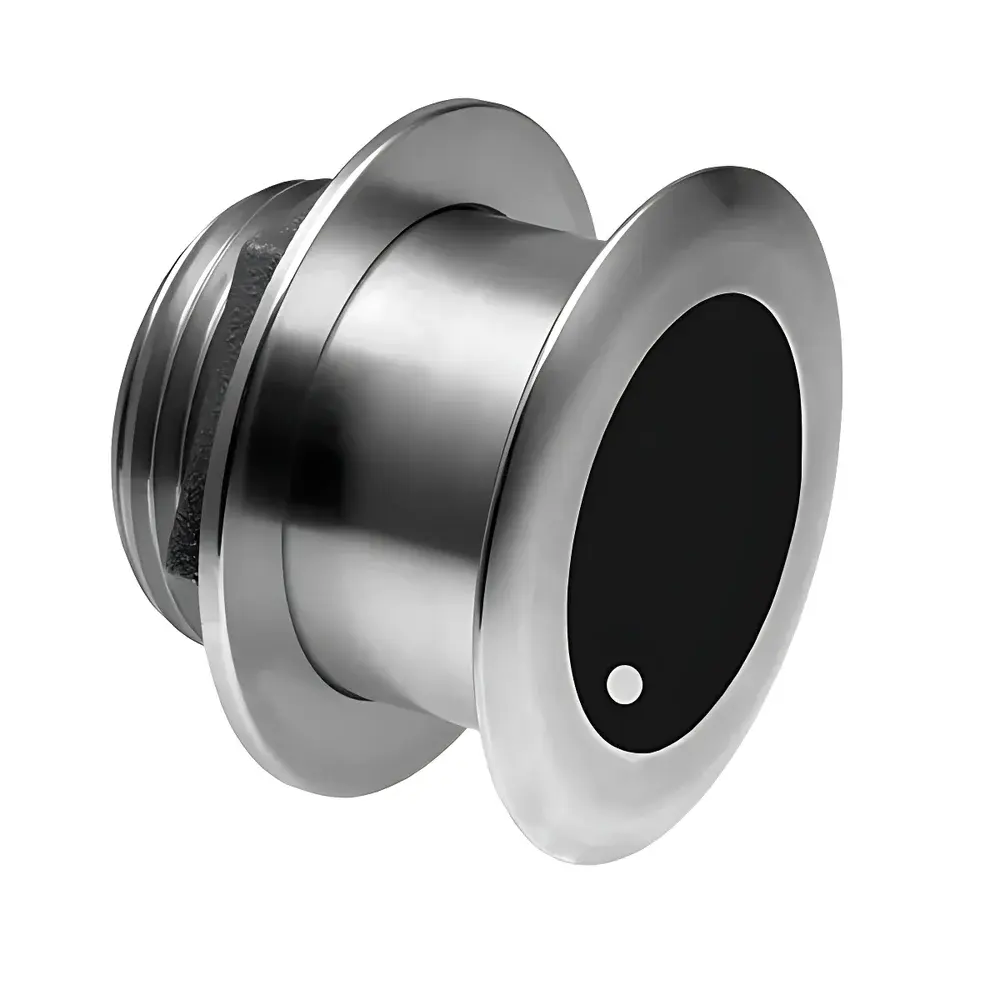
AIRMAR SS175H Chirp Depth Sounder
| Brand | AIRMAR |
|---|---|
| Origin | USA |
| Model | SS175H |
| Operating Frequency Range | 130–210 kHz |
| Transmit Power | 1000 W |
| Beamwidth | 15°–9° (variable with frequency) |
| Total Chirp Bandwidth | 80 kHz |
| Installation Type | Low-profile through-hull |
| Housing Material | Stainless Steel |
| Transducer Window Material | Polyurethane |
| Mounting Hole Diameter | 98 mm |
| Stub Length | 118 mm |
| Cable Length | 10 m |
| Integrated Temperature Sensor | Yes |
| Weight | 2.7 kg |
| Maximum Hull Deadrise Angle | 28° |
| Compatible Vessel Length | Up to 11 m |
| Hull Material Compatibility | Stainless steel or aluminum |
Overview
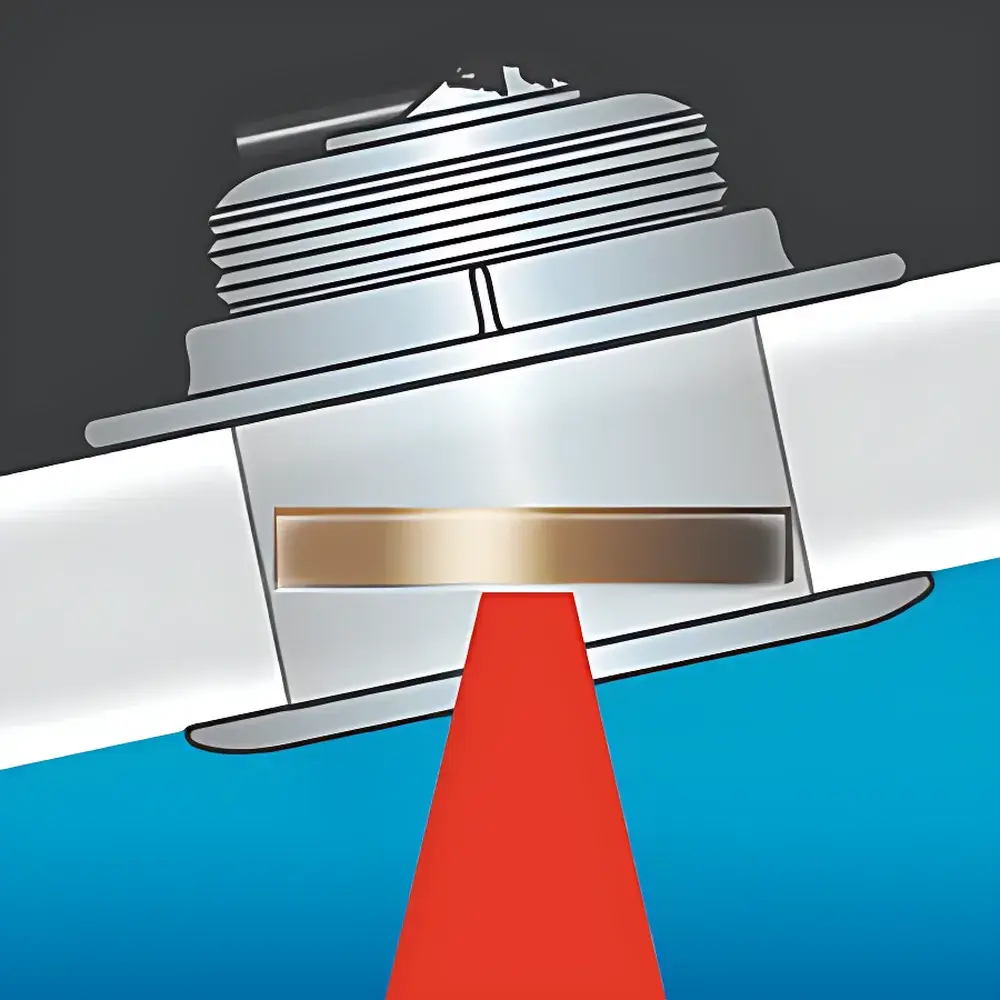
The AIRMAR SS175H is a high-frequency, single-beam CHIRP (Compressed High-Intensity Radar Pulse) depth sounder transducer engineered for precision hydrographic profiling and fisheries-oriented echosounding in marine environments. Unlike conventional fixed-frequency sonars, the SS175H employs broadband frequency-modulated pulse transmission across a continuous 130–210 kHz band—delivering 80 kHz of instantaneous bandwidth per ping. This CHIRP architecture leverages pulse compression signal processing to achieve superior range resolution (sub-meter vertical discrimination) and enhanced signal-to-noise ratio, enabling reliable detection of seafloor topography at depths up to 3,000 meters (10,000 ft) while simultaneously resolving fine-scale acoustic targets such as baitfish schools, pelagic game species, and submerged structural features (e.g., wrecks, rock outcrops, and artificial reefs). Its low-profile through-hull mounting configuration minimizes hydrodynamic drag and cavitation risk, making it suitable for planing and semi-displacement vessels up to 11 meters in length with stainless steel or aluminum hulls.
Key Features
- High-frequency CHIRP operation (130–210 kHz) optimized for target separation and bottom definition in shallow-to-mid-depth coastal and continental shelf waters
- Variable beamwidth (15° at 130 kHz → 9° at 210 kHz) ensures adaptable spatial resolution without mechanical reconfiguration
- Integrated high-stability thermistor-based water temperature sensor with fast thermal response time (<3 s), calibrated traceable to NIST standards
- Patented Xducer ID® technology enables automatic transducer recognition and configuration validation by compatible chartplotters and multifunction displays (MFDs)
- Stainless steel housing with polyurethane acoustic window provides corrosion resistance and optimal acoustic impedance matching for seawater propagation
- Three deadrise-angle variants (0°, 12°, 20°) accommodate varying hull geometries; maximum supported deadrise is 28°
- Low-profile through-hull design requires only a 98 mm diameter cutout and features a 118 mm stub length for secure internal mounting and alignment
Sample Compatibility & Compliance
The SS175H is designed for use in saltwater, brackish, and freshwater environments where acoustic attenuation remains within operational limits for its frequency band. It complies with IEC 62237-1:2017 (Marine echo sounders – Part 1: Performance requirements and methods of testing) for accuracy, repeatability, and environmental robustness. The transducer meets RoHS Directive 2011/65/EU for hazardous substance restrictions and carries CE marking for marine electronics under the Marine Equipment Directive (MED 2014/90/EU). While not certified for safety-critical navigation under IMO Resolution A.694(17), it supports GLP-aligned data acquisition workflows when integrated with compliant MFDs that implement audit-trail logging and timestamped metadata embedding per ISO/IEC 17025:2017 Annex A.2.
Software & Data Management
The SS175H operates natively with NMEA 2000® networks and outputs depth, temperature, and raw echo envelope data via PGN 128259 (Depth Below Transducer) and PGN 130311 (Environmental Parameters). When paired with AIRMAR-compatible MFDs (e.g., Garmin GPSMAP, Raymarine Axiom, Furuno TZTouch), users access real-time CHIRP image rendering, bottom hardness analysis, and fish arch classification algorithms. All echo log files are exportable in industry-standard .csv and .nmea formats for post-processing in MATLAB®, QGIS (with bathymetric plugins), or CARIS HIPS & SIPS. Firmware updates are delivered via AIRMAR’s official utility software, supporting version-controlled calibration tables and transducer-specific beam pattern compensation profiles.
Applications
- Commercial and recreational fisheries: Discrimination of multi-species aggregations and identification of spawning habitats based on echo intensity gradients and vertical distribution patterns
- Hydrographic survey support: Shallow-water bathymetric mapping (≤500 m) with sub-decimeter vertical precision when combined with RTK-GNSS positioning
- Underwater infrastructure inspection: Detection and characterization of pipeline burial status, cable routes, and scour features adjacent to offshore platforms
- Scientific limnology and oceanography: Long-term water column profiling in fjords, estuaries, and continental slope regions requiring high signal fidelity at variable salinity and temperature gradients
- Marine conservation monitoring: Baseline benthic habitat assessment and change detection over seasonal cycles using repeat-pass CHIRP transects
FAQ
Is the SS175H compatible with non-AIRMAR chartplotters?
Yes—it adheres to NMEA 2000 standards and functions with any certified N2K-compliant display, though advanced CHIRP visualization and auto-tuning require vendor-specific firmware integration.
What is the recommended minimum water speed for stable CHIRP returns?
Optimal performance is achieved at vessel speeds ≤25 knots; above this threshold, flow noise may degrade near-bottom resolution unless compensated via adaptive gain control settings.
Can the SS175H be used in freshwater lakes?
Yes—its 130–210 kHz band performs effectively in freshwater, though maximum detection range is reduced by ~30% compared to seawater due to lower acoustic absorption and higher impedance mismatch.
Does the transducer require periodic recalibration?
No routine recalibration is needed; however, annual verification against a reference depth standard (e.g., certified pressure gauge or known benchmark) is recommended for metrological traceability in regulated survey applications.
How does Xducer ID® improve system setup reliability?
Xducer ID® stores transducer-specific parameters—including beam angle correction coefficients, frequency response curves, and temperature offset values—in onboard EEPROM, eliminating manual configuration errors during installation or device replacement.