
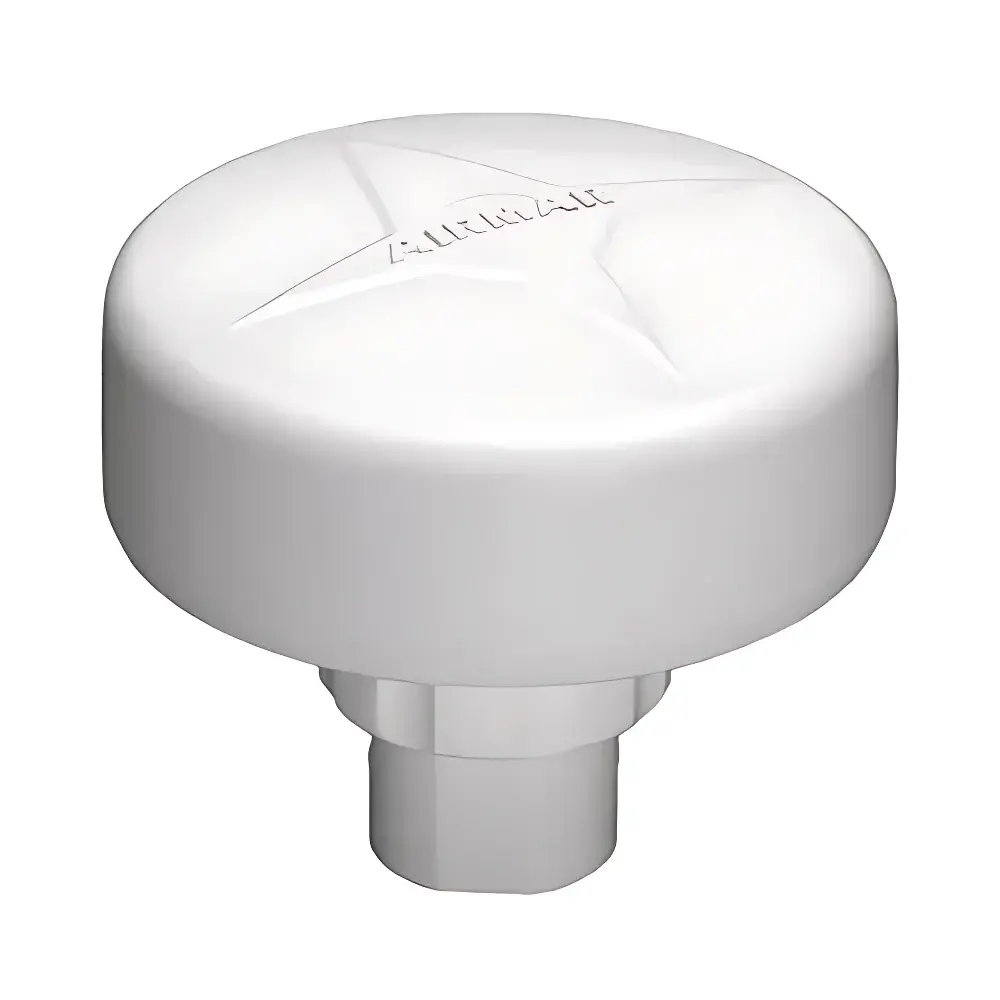
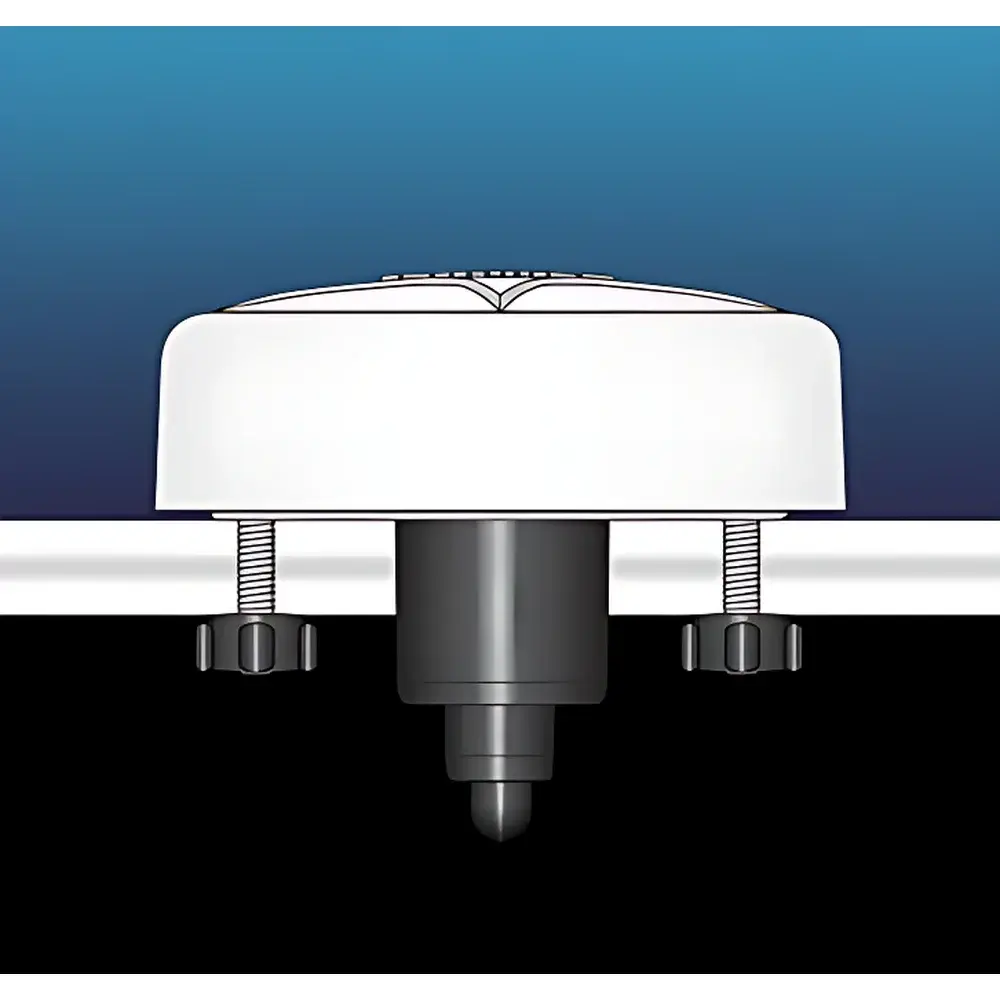
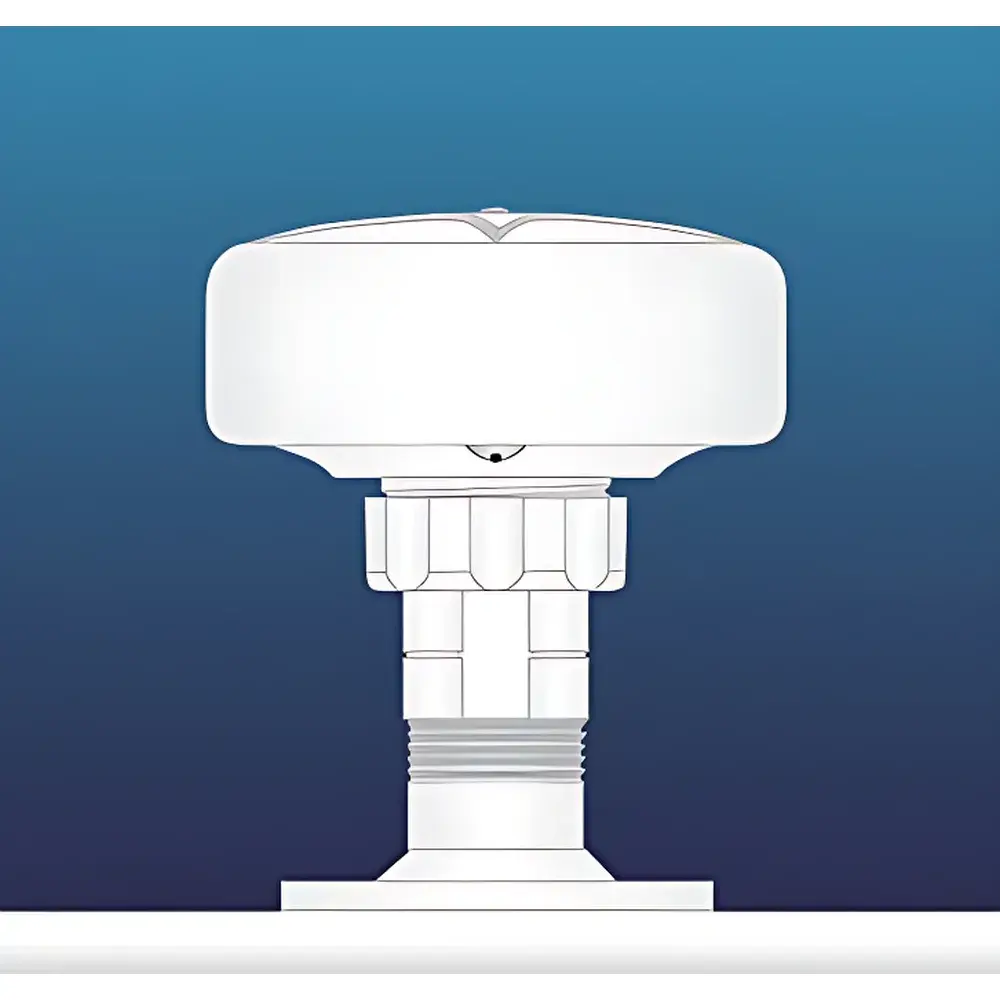
Airmar G2183 WAAS/EGNOS GPS Sensor
| Brand | Airmar |
|---|---|
| Origin | USA |
| Model | G2183 |
| IP Rating | IPX6 |
| Output Protocols | NMEA 0183 (RS422), NMEA 2000® |
| Update Rate | Up to 10 Hz (user-selectable from 1–10 Hz) |
| Position Accuracy | 3 m (95%, with WAAS/EGNOS enabled, SA off) |
| GPS Channels | 14 tracking / 51 acquisition |
| Operating Temperature | −30 to +55 °C |
| Supply Voltage | 9–40 VDC |
| Current Draw | < 90 mA |
| Power Consumption | 800 mW |
| Cold Start Time | ≤ 60 s |
| NMEA 2000® Load Equivalence Number (LEN) | 2 |
| Certifications | CE, RoHS, IEC 60945, IPX6 |
Overview
The Airmar G2183 is a marine-grade, high-integrity GPS sensor engineered for continuous, real-time position, velocity, and time (PVT) determination in demanding maritime environments. Built upon a 51-channel GNSS acquisition architecture with simultaneous 14-channel WAAS/EGNOS-enabled tracking, the G2183 delivers robust signal acquisition under canopy, near vertical structures, or in dynamic vessel motion conditions. Its dual-protocol capability—supporting both NMEA 0183 (RS422) and NMEA 2000® concurrently—ensures seamless integration into heterogeneous bridge systems, from legacy analog displays to modern digital chartplotters and integrated navigation networks. Designed to meet IEC 60945 compliance for marine electronic equipment, the G2183 operates reliably across −30 °C to +55 °C, with an IPX6-rated enclosure providing protection against powerful water jets—making it suitable for exposed masthead, rail-mount, or flush-mounted embedded installations on commercial vessels, research platforms, and autonomous surface vehicles.
Key Features
- WAAS/EGNOS-enhanced GPS positioning with typical horizontal accuracy of 3 meters (95% probability, SA off)
- User-configurable update rate from 1 Hz to 10 Hz—enabling high-fidelity motion logging for dynamic vessel performance analysis
- Simultaneous dual-output architecture: independent NMEA 0183 RS422 and NMEA 2000® data streams without protocol translation latency
- Full PVT output set including latitude/longitude, course over ground (COG), speed over ground (SOG), UTC time/date, magnetic variation, and GNSS status metadata
- Compact, low-profile housing optimized for space-constrained mounting (pole, rail, or embedded)
- Low-power design: <90 mA current draw at 12 VDC, supporting long-duration operation on battery-backed or auxiliary marine power systems
- Compliant with CE, RoHS, and IEC 60945—certified for use in safety-critical navigation applications aboard SOLAS-compliant vessels
Sample Compatibility & Compliance
The G2183 is designed for interoperability across Class B AIS transceivers, ECDIS, radar overlay systems, VMS (Vessel Monitoring Systems), and automated steering controllers. Its NMEA 2000® PGN support includes PGN 129025 (Position Rapid Update), 129026 (COG/SOG), 129029 (GNSS Position Data), 129033 (Time & Date), 129538 (GNSS Control Status), 129539 (DOPs), and 129540 (GNSS Satellites in View)—ensuring full alignment with IMO Resolution MSC.232(82) and IHO S-57/S-100 data model requirements. The device’s IEC 60945 certification confirms electromagnetic compatibility (EMC), vibration resistance, and environmental endurance per maritime operational profiles. IPX6 rating satisfies EN 60529 requirements for protection against water ingress during heavy sea spray or deck washdown procedures.
Software & Data Management
No proprietary software is required for basic operation; configuration and diagnostics are performed via standard NMEA 0183 commands or NMEA 2000® configuration tools compliant with NMEA 2000® Installation Standard (IEC 61162-3). Configuration parameters—including update rate, datum selection (WGS84 default), and NMEA sentence filtering—are retained in non-volatile memory. For system integrators, Airmar provides publicly documented PGN definitions and NMEA 0183 sentence schemas, enabling direct parsing in custom SCADA, telemetry, or fleet management platforms. Audit-ready timestamping and GNSS health indicators (e.g., DOP values, satellite count, fix type) support GLP-aligned data logging where traceability of positional metadata is required.
Applications
- Primary or backup GPS source for Class A/B AIS transceivers and VHF-DSC systems
- Real-time COG/SOG input for autopilot and dynamic positioning (DP) control loops
- Time synchronization node for networked marine electronics (e.g., synchronized radar sweep timing)
- Data acquisition sensor for hydrographic survey vessels requiring sub-5-meter positional fidelity
- Position reference for unmanned surface vehicle (USV) navigation stacks operating under ISO 19901-7 guidance
- Fleet tracking and voyage data recording (VDR/S-VDR) compliant with IMO Resolution A.861(20)
FAQ
Does the G2183 support GLONASS or Galileo?
No—the G2183 is a GPS-only receiver with WAAS/EGNOS augmentation. It does not track GLONASS, Galileo, or BeiDou signals. For multi-constellation support, consider the Airmar GH2183 or GSD 20 series.
Can the G2183 be used as a heading source?
No—it outputs COG only, not true or magnetic heading. For combined GPS+heading, select the GH2183 variant, which integrates a solid-state compass and tilt-compensated AHRS.
Is firmware upgrade supported in-field?
Yes—firmware updates are delivered via NMEA 0183 serial interface using Airmar-provided utilities and require no hardware modification.
What is the maximum cable length for NMEA 0183 RS422?
Up to 100 meters at 38.4 kbps, per TIA/EIA-422-B specifications; termination and shielding are recommended beyond 30 meters.
Does the G2183 meet USCG or MCA approval requirements for safety-of-life systems?
It complies with IEC 60945 and carries CE marking per Marine Equipment Directive (MED) Annex II, but final approval for SOLAS Chapter V systems requires vessel-specific certification by the flag state administration.







