GL-20 Laboratory-Scale Cheese Vat System
| Origin | Shanghai, China |
|---|---|
| Manufacturer Type | Authorized Distributor |
| Origin Classification | Domestic (China) |
| Model | GL-20 |
| Pricing | Available Upon Request |
Overview
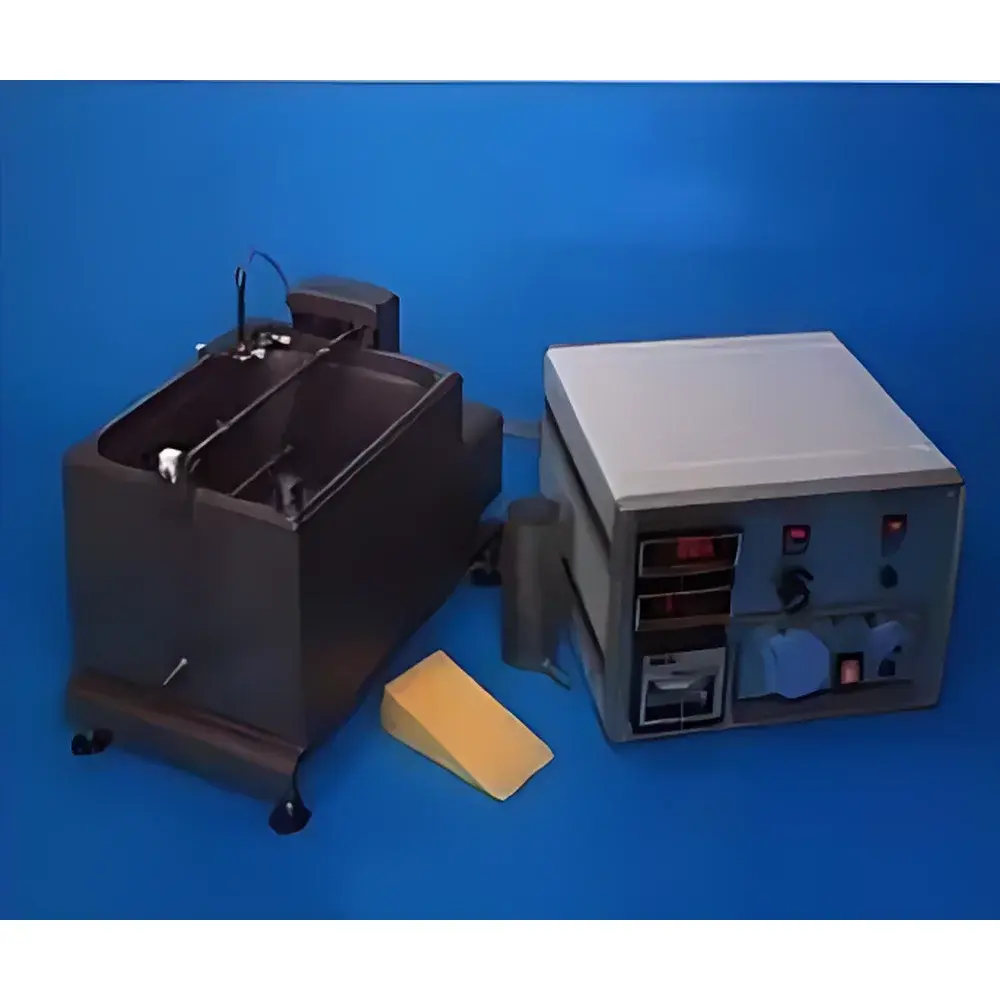
The GL-20 Laboratory-Scale Cheese Vat System is a precision-engineered, benchtop cheese-making platform designed to replicate industrial cheesemaking unit operations under controlled, repeatable laboratory conditions. Based on the fundamental principles of thermal-controlled coagulation, mechanical curd manipulation, and pH-monitored acidification, the system enables researchers, product developers, and food science educators to execute full-cycle artisanal and industrial cheese protocols—from milk standardization and starter addition to whey drainage and salting—in a single integrated vessel. Its triple-walled stainless-steel vat architecture supports precise conductive heating via circulating water jacket, while independent variable-speed agitation and real-time pH/temperature telemetry ensure strict adherence to critical process windows defined in standardized cheese manufacturing guidelines (e.g., ISO 22000, Codex Alimentarius Stan 262–2006). The GL-20 is not a demonstration unit but a functional process simulator validated for method development, strain screening, rennet activity assessment, and regulatory-compliant pilot-scale validation prior to scale-up.
Key Features
- Triple-layered 316 stainless-steel vat with fully welded sanitary seams and polished interior (Ra ≤ 0.8 µm) meeting EHEDG Category A hygienic design criteria
- Integrated magnetic-drive circulation pump (max. 20 L/min) enabling uniform jacket temperature distribution across the entire vat surface
- Programmable DC motor-driven agitator with dual-mode control: continuous rotation (0–60 rpm) and intermittent pulsing (0–90 strokes/min), synchronized with process step logic
- Digital PID temperature controller with ±0.3 °C accuracy over 20–90 °C range; ambient start capability eliminates preheating delays
- Food-grade, autoclavable pH electrode (0–14 pH, ±0.02 pH accuracy) with integrated temperature compensation and GLP-compliant calibration logging
- Modular curd handling toolkit: horizontal and vertical stainless-steel curd knives, adjustable-depth cutting grid, and vibration-assisted whey release mechanism
- Batch-mode operation with minimum working volume of 10 L and nominal capacity of 20 L—optimized for statistical process repeatability (n ≥ 3 per formulation)
Sample Compatibility & Compliance
The GL-20 accommodates raw, pasteurized, homogenized, or standardized bovine, caprine, ovine, and buffalo milks, as well as plant-based analogues formulated with casein micelle stabilizers. All wetted surfaces comply with FDA 21 CFR 178.3570 (indirect food additives) and EU Regulation (EC) No 1935/2004. The system supports validation of critical control points (CCPs) per HACCP plans and generates audit-ready electronic records traceable to ISO/IEC 17025–2017 requirements. Optional integration with time-stamped data export satisfies FDA 21 CFR Part 11 electronic record integrity standards when paired with compliant software.
Software & Data Management
The GL-20 interfaces via RS-485/USB to dedicated PC-based acquisition software (Windows 10/11 compatible), enabling simultaneous real-time plotting of temperature, pH, agitation status, and elapsed time. Raw sensor data is saved in CSV and XML formats with embedded metadata (operator ID, batch ID, calibration timestamps). The software includes built-in SOP templates aligned with common cheese types (e.g., Cheddar, Mozzarella, Feta), supports manual step annotation, and exports summary reports compliant with internal QA documentation workflows. Audit trails record all parameter modifications, user logins, and calibration events—fully retrievable for GMP/GLP audits.
Applications
- Strain selection and starter culture performance evaluation under dynamic pH–temperature profiles
- Rennet activity titration and coagulation kinetics modeling (time-to-cut, curd firming rate)
- Whey expulsion optimization via controlled syneresis ramping and mechanical vibration parameters
- Salt diffusion studies using gravimetric and conductivity-based salting rate quantification
- Process mapping for novel dairy alternatives (e.g., microbial coagulant–based plant curds)
- Training modules for food engineering curricula covering mass/energy balance in cheese vats
FAQ
Is the GL-20 suitable for regulatory submission studies?
Yes—when operated with documented calibration procedures and electronic record retention, it supports data generation acceptable for dossier submissions to EFSA, FDA, or MFDS.
Can the system be validated for IQ/OQ/PQ protocols?
Absolutely—the modular architecture, traceable sensors, and deterministic control logic facilitate formal qualification per ASTM E2500 and Annex 15.
What maintenance is required for long-term reliability?
Annual verification of pH electrode slope/response time, pump flow calibration, and thermal uniformity mapping (per ASTM D5274) is recommended.
Are custom vat geometries or larger capacities available?
Yes—engineered variants from 5 L to 500 L are offered with identical control architecture and compliance documentation.