
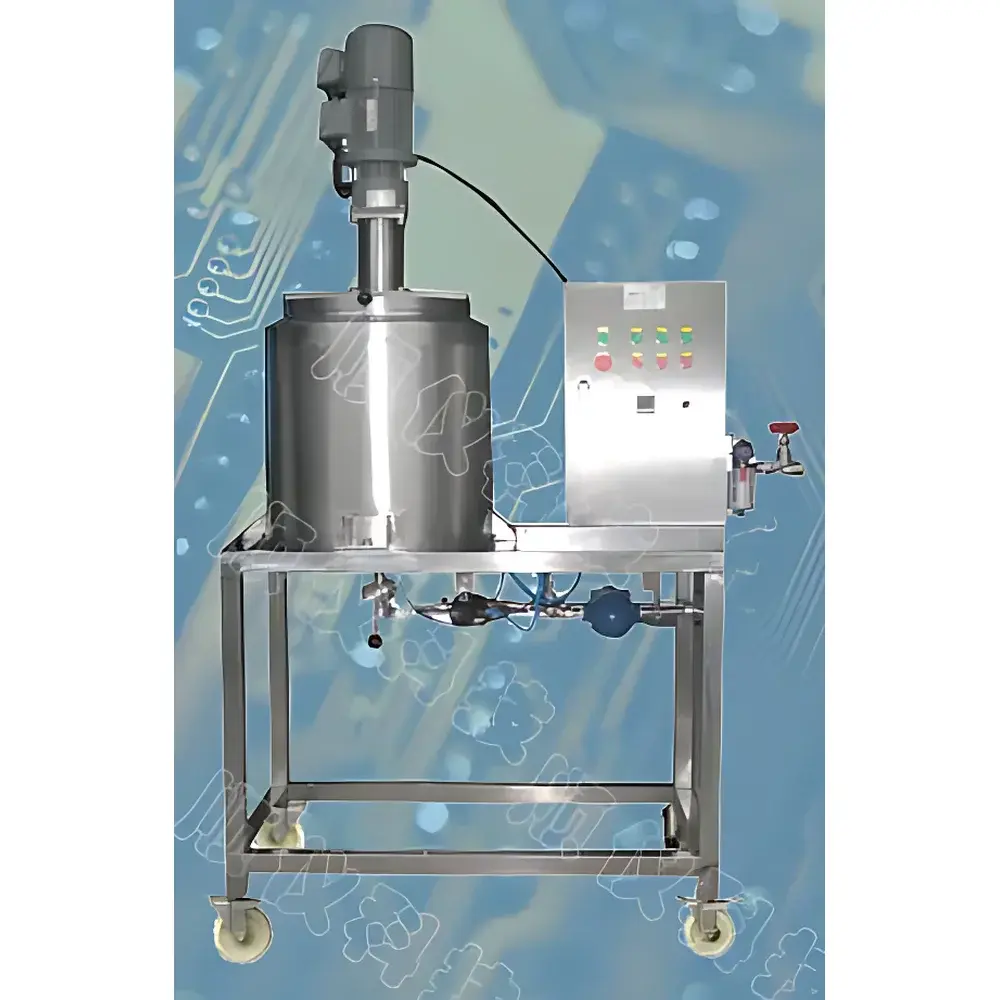
PA-TK Series Laboratory-Scale Pasteurization Vessel
| (产地 | Shanghai |
|---|---|
| 厂商性质 | Distributor |
| 产地类别 | Domestic (China) |
| 型号 | PA-TK |
| 报价 | Upon Request) |
Overview
The PA-TK Series Laboratory-Scale Pasteurization Vessel is an engineered thermal processing system designed to replicate industrial pasteurization protocols under controlled, small-batch conditions. Based on the fundamental principle of time-temperature lethality (F0 or P0 modeling), it enables precise validation and optimization of thermal treatment parameters for heat-sensitive liquid and semi-liquid food, dairy, beverage, and biopharmaceutical products. Unlike generic jacketed reactors, the PA-TK integrates process-critical features—such as programmable temperature ramping, integrated cooling circuits, and sanitary geometry—specifically to meet the operational requirements of pilot-scale thermal stability studies, shelf-life testing, and regulatory process qualification (e.g., FDA 21 CFR Part 11-compliant validation documentation).
Key Features
- Sanitary construction: All product-contact surfaces fabricated from ASTM A240 UNS S31603 (316 stainless steel); non-product-contact structural components in AISI 304 stainless steel; fully compliant with 3-A Sanitary Standards #78-01 for dairy equipment.
- Scalable capacity range: Available in six standard configurations—PA-TK-03 (3 L), PA-TK-05 (5 L), PA-TK-10 (10 L), PA-TK-30 (30 L), PA-TK-50 (50 L), and PA-TK-100 (100 L)—with custom volumes up to 500 L upon engineering review.
- Thermal management architecture: Triple-layer vessel wall (inner product chamber, middle steam/electric heating jacket, outer insulation layer) with closed-cell polyurethane foam (λ = 0.022 W/m·K) providing ≥92% thermal retention at 85°C.
- Controlled agitation: Variable-speed top-mounted agitator (0–200 rpm, ±1 rpm resolution) with optional high-shear disperser (tip speed up to 15 m/s) for viscous or particulate-laden media (e.g., yogurt bases, fruit pulps, protein suspensions).
- Dual heating mode: Selectable steam (0.2–1.0 bar(g)) or electric resistance heating (3 kW–15 kW, depending on model) with PID-controlled temperature regulation (±0.3°C accuracy over 40–95°C range).
- Cooling integration: Dedicated inlet/outlet ports for external chilled water (2–8°C) and potable water circuits, enabling rapid post-pasteurization cooling to ≤10°C within defined hold times per AOAC or ISO 7218 protocols.
- Maintenance accessibility: Top-hinged, full-diameter access hatch with silicone gasket seal; conical bottom (60° apex angle) facilitating complete drainage and CIP compatibility.
- Modular mobility: Integrated heavy-duty stainless steel frame with locking casters (100 mm diameter, stainless steel housing, polyurethane tread) rated for static loads up to 650 kg.
Sample Compatibility & Compliance
The PA-TK series accommodates Newtonian and non-Newtonian fluids—including high-viscosity dairy concentrates (up to 10,000 mPa·s), acidified beverages, plant-based emulsions, and microbial culture broths—without phase separation or thermal degradation when operated within validated time-temperature profiles. Its design adheres to key international hygienic standards: EC 1935/2004 (food contact materials), ISO 22000:2018 (food safety management), and FDA 21 CFR Part 11 (electronic records/signatures) when paired with optional audit-trail-enabled control software. Vessel geometry supports automated Clean-in-Place (CIP) using caustic (1–2% NaOH) and nitric acid (0.5–1% HNO₃) solutions per 3-A Sanitary Standard #117-01.
Software & Data Management
Standard configuration includes a programmable logic controller (PLC) with HMI touchscreen interface (7″ TFT, IP65-rated) supporting recipe storage (≥200 profiles), real-time temperature/pressure/agitation logging (1 Hz sampling), and USB data export (CSV format). Optional upgrade provides Ethernet connectivity, OPC UA server integration, and FDA 21 CFR Part 11-compliant software with electronic signatures, user role-based access control, and immutable audit trail generation for GMP/GLP environments.
Applications
- Thermal process validation for low-acid and acidified foods per USDA-FSIS and FDA guidance documents
- Pilot-scale shelf-life determination under accelerated and real-time storage conditions
- Microbial inactivation kinetics (D-value, z-value) studies for pathogens including Salmonella, Listeria monocytogenes, and Coxiella burnetii
- Enzyme inactivation profiling (e.g., alkaline phosphatase, peroxidase) for dairy quality assurance
- Process development for novel thermal treatments (e.g., extended low-temperature pasteurization, oscillating temperature profiles)
- Training and SOP development for production-scale pasteurizer operators
FAQ
What is the maximum operating temperature and pressure for the PA-TK vessels?
The standard design supports continuous operation up to 95°C and 1.0 bar(g) jacket pressure. Higher temperature/pressure variants (e.g., 121°C, 2.5 bar(g)) are available under ASME Section VIII Div. 1 certification.
Can the system be integrated with existing laboratory SCADA or MES platforms?
Yes—via optional Modbus TCP or OPC UA communication modules, enabling bidirectional data exchange with enterprise-level systems for traceability and batch record consolidation.
Is validation support provided for IQ/OQ/PQ documentation?
Comprehensive validation protocol templates (in English), factory acceptance test (FAT) reports, and on-site installation/commissioning assistance are available as part of the Engineering Services package.
How is cleaning verified after CIP cycles?
The conical bottom geometry, absence of dead legs, and smooth surface finish (Ra ≤ 0.4 µm) allow visual inspection and ATP swab testing per ISO 14644-1 Class 7 cleanroom practices; residual conductivity monitoring is supported via optional inline sensors.



