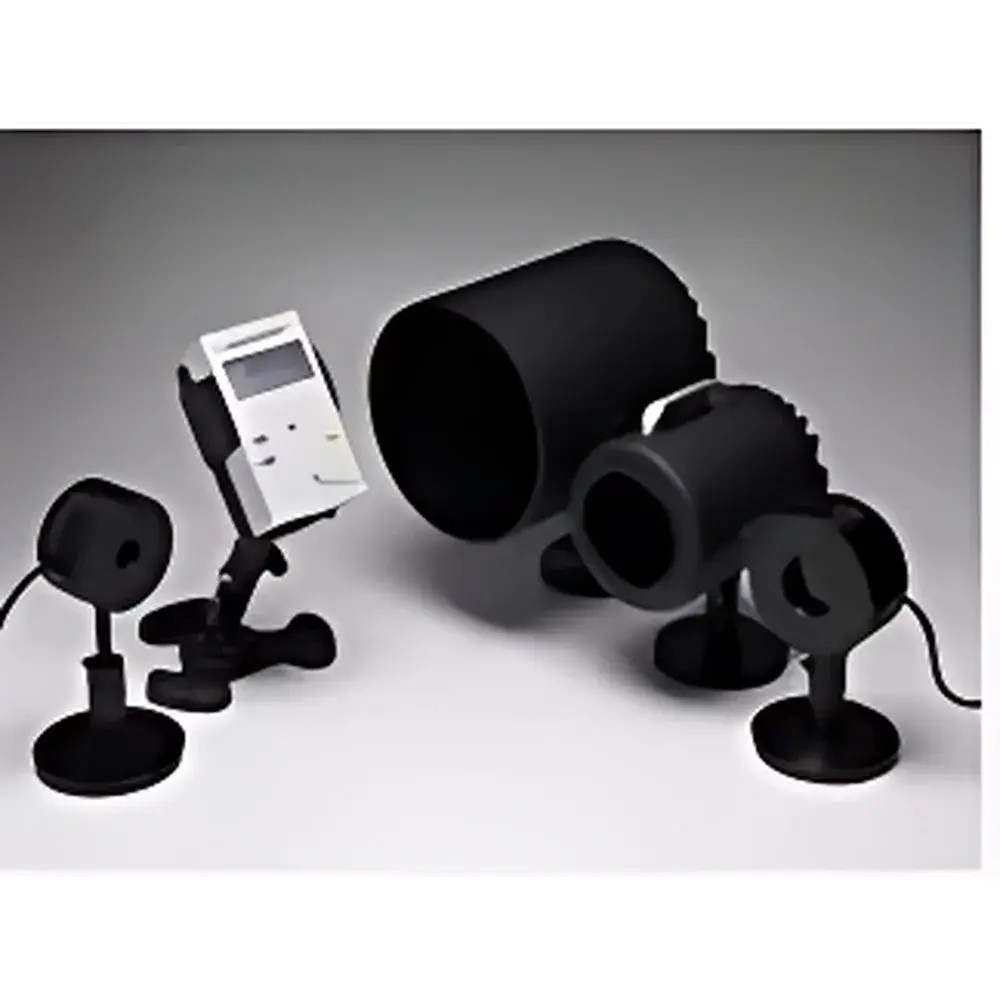
Scientech Astral Series S & Synenergy Systems Laser Power and Energy Meters
| Brand | Scientech |
|---|---|
| Origin | USA |
| Product Type | Imported Laser Power/Energy Measurement Instruments |
| Detector Types | Photodiode, Surface-Absorbing Calorimeter, Volume-Absorbing Calorimeter |
| Wavelength Range | 0.193–26 µm |
| Power Range | 100 nW–30 W (continuous) |
| Energy Range | 10 µJ–1000 J (pulsed) |
| Aperture Diameter | 8–200 mm |
| Compliance | NIST-traceable calibration available |
| Software Interface | USB/RS-232 with PC-based data acquisition and analysis suite |
| Regulatory Alignment | Designed for use in environments requiring GLP/GMP documentation support and FDA 21 CFR Part 11–compatible audit trails (when paired with compliant software) |
Overview
The Scientech Astral Series S and Synenergy Systems laser power and energy meters constitute a modular, metrology-grade instrumentation platform engineered for precise radiometric measurement of continuous-wave (CW) and pulsed laser sources across ultraviolet, visible, near-infrared, mid-infrared, and far-infrared spectral regions. These instruments operate on three fundamental transduction principles: photodiode-based detection for low-power, high-speed CW measurements; surface-absorbing calorimetry for medium-power broadband stability; and volume-absorbing calorimetry for high-energy pulse characterization—each detector type rigorously calibrated against NIST-traceable standards. The system architecture supports traceable uncertainty budgets per ISO/IEC 17025 requirements and is routinely deployed in laser development labs, semiconductor lithography process validation, medical laser QA/QC, and defense-related directed-energy testing where reproducibility and long-term drift performance are mission-critical.
Key Features
- Multi-platform detector compatibility: Interchangeable photodiode (e.g., AP50S, AP30UV), surface-absorbing (e.g., AC2500S, AC50UVS), and volume-absorbing (e.g., AC25FXS, AC5004S) sensors—each optimized for specific irradiance, fluence, and thermal load profiles.
- Extended spectral coverage: Validated response from deep UV (193 nm excimer) to far-IR (26 µm CO₂ lasers), with optional quartz, silicon carbide, or black-coated absorber variants to minimize reflectivity-induced error.
- Dynamic range scalability: Meter units (AI51, AI310, S310, H410 series) auto-detect connected sensors and configure gain, integration time, and signal conditioning to maintain <±1.5% linearity across 10+ decades of optical power or energy.
- Thermal management architecture: Active temperature stabilization in calorimeters minimizes ambient-induced baseline drift (<0.05%/°C), while thermally isolated photodiode housings reduce thermal EMF artifacts during low-power (nW-level) measurements.
- Ruggedized mechanical design: Aluminum alloy sensor bodies with precision-machined apertures (8 mm to 200 mm clear diameter), anodized finishes for environmental resistance, and standardized kinematic mounts for beamline integration.
Sample Compatibility & Compliance
These meters accommodate free-space collimated beams, fiber-coupled outputs (via optional adapters), and divergent sources within specified angular acceptance limits (±5° full cone for photodiodes; ±2.5° for calorimeters). All detectors comply with IEC 61000-4 electromagnetic immunity standards and meet RoHS Directive 2011/65/EU material restrictions. Calibration certificates include measurement uncertainty statements per GUM (Guide to the Expression of Uncertainty in Measurement) and are issued with NIST-traceable reference data. For regulated industries, the AI310D and S310D meter models support user-accessible calibration lockout, electronic signature, and timestamped audit logs—enabling alignment with FDA 21 CFR Part 11, ISO 13485, and EU Annex 11 requirements when integrated into validated laboratory information management systems (LIMS).
Software & Data Management
Scientech’s proprietary WinPower software (v5.2+) provides real-time waveform capture, statistical analysis (mean, std dev, min/max, pulse-to-pulse stability), and automated report generation in PDF/CSV formats. The application supports multi-channel synchronization, configurable alarm thresholds, and batch-mode data archiving with SHA-256 hash verification for data integrity. API libraries (DLL and Python bindings) enable integration into custom test automation frameworks—including LabVIEW, MATLAB, and Python-based CI/CD pipelines used in automated laser qualification protocols. Raw ADC data export preserves full 24-bit resolution for post-processing under ISO/IEC 17025-compliant secondary analysis workflows.
Applications
- Laser source characterization: Output stability assessment, mode-hop detection, and long-term aging studies of diode, DPSS, fiber, and CO₂ lasers.
- Optical component testing: Transmission loss quantification of lenses, filters, mirrors, and waveplates under operational fluence conditions.
- Medical device validation: Verification of output parameters for ophthalmic, dermatological, and surgical lasers per ANSI Z136.1 and IEC 60825-1 safety standards.
- Materials processing R&D: Energy density mapping for laser ablation, welding, and additive manufacturing parameter optimization.
- Academic and national lab research: High-fidelity energy metrology in ultrafast science (fs–ps pulses), nonlinear optics, and plasma diagnostics.
FAQ
What is the difference between surface-absorbing and volume-absorbing calorimeters?
Surface-absorbing calorimeters concentrate incident radiation onto a thin, high-absorptivity coating, enabling rapid response (<1 s) but limiting maximum fluence tolerance. Volume-absorbing types distribute energy throughout a bulk absorber (e.g., graphite composite), offering superior damage threshold and uniformity for high-energy pulses—though with longer thermal time constants (typically 5–20 s).
Can these meters measure both average power and single-shot pulse energy?
Yes. Photodiode-based configurations provide real-time average power with bandwidths up to 10 MHz. Calorimeters—paired with gated integrators in the AI310/S310 meters—support single-pulse energy measurement down to 10 µJ with sub-0.5% relative standard deviation over 100-shot ensembles.
Is NIST-traceable calibration included with purchase?
Each detector ships with a factory calibration certificate referencing NIST Standard Reference Materials (SRMs) 2030, 2031, and 2032. Optional annual recalibration services are available through Scientech’s A2LA-accredited calibration laboratory (ISO/IEC 17025:2017 accredited).
How is beam alignment verified prior to measurement?
All Astral Series S detectors feature integrated alignment aids: crosshair reticles etched onto aperture windows, centering pins for kinematic mounts, and optional IR-viewer-compatible alignment lasers (sold separately) for invisible-wavelength setup verification.