
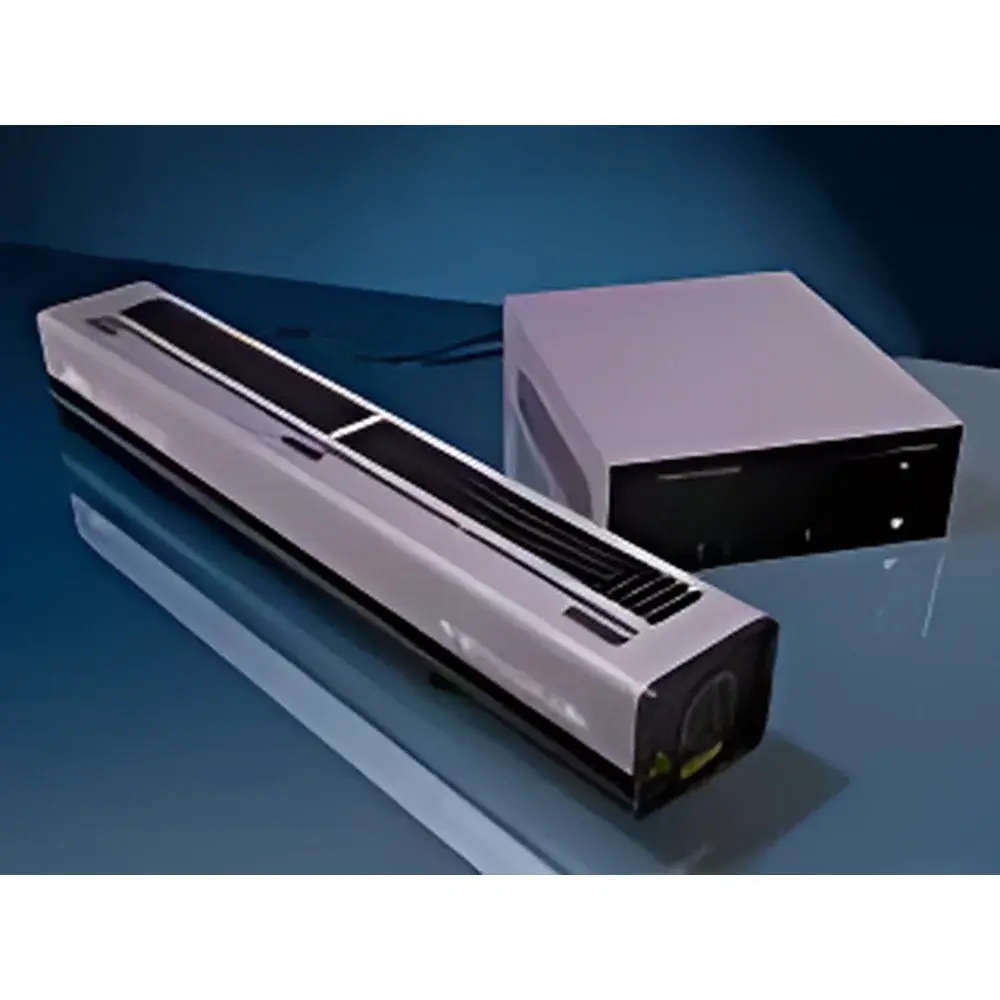
Helium-Cadmium Laser HCL-10U
| Origin | Russia |
|---|---|
| Manufacturer Type | Authorized Distributor |
| Import Status | Imported |
| Model | HCL-10U |
| Core Technology | Gas Discharge Laser System |
| Wavelength | 325 nm (UV) |
| Output Power | 10.0 mW |
| Beam Mode | TEM₀₀ |
| Polarization Ratio | 100:1 |
| Beam Diameter | ~0.65 mm (typ.) |
| Divergence | <1.5 mrad (full angle) |
| Coherence Length | >30 cm |
| Warm-up Time | <15 min |
| Operating Voltage | 220 V AC, 50/60 Hz |
| Cooling | Forced-air |
| Lifetime | ≥5,000 hours (typ.) |
Overview
The Helium-Cadmium Laser HCL-10U is a continuous-wave (CW), sealed-tube gas discharge laser engineered for stable ultraviolet (UV) output at 325 nm. Based on the He–Cd plasma transition between cadmium ion energy levels and helium metastable states, this laser delivers high spectral purity and exceptional beam quality in TEM00 mode. Its narrow linewidth (<0.003 nm), low amplitude noise (30 cm) make it suitable for precision optical applications requiring spatial and temporal coherence—particularly where mercury-free UV sources are mandated by environmental or safety regulations. Unlike solid-state frequency-doubled lasers, the HCL-10U provides intrinsic UV emission without nonlinear conversion losses, ensuring consistent power stability over extended operation cycles.
Key Features
- Stable CW UV output at 325 nm with nominal power of 10.0 mW (±10% tolerance)
- TEM00 fundamental Gaussian beam profile with M² < 1.1 and polarization ratio ≥100:1
- Low beam divergence (<1.5 mrad full angle) and near-diffraction-limited performance
- Integrated forced-air cooling system enabling continuous operation without external chillers
- Sealed-plasma tube design with integrated cathode heater and optimized Cd vapor pressure control
- Compliance with IEC 60825-1:2014 Class 3B laser safety requirements; includes interlock-ready connector and key switch
- Standard 3-pin LEMO output for TTL-compatible modulation (optional analog modulation up to 10 kHz)
Sample Compatibility & Compliance
The HCL-10U is compatible with standard optical mounts (e.g., Thorlabs KM100, Newport UH1), fiber coupling adapters (UV-grade fused silica, NA 0.12–0.22), and interferometric stages used in metrology setups. Its 325 nm emission aligns with absorption peaks of common photoresists (e.g., Shipley S1805, AZ 1518), biological fluorophores (e.g., DAPI, Hoechst), and holographic recording media (e.g., Bayfol® HX, Slavich PFG-01). The laser meets electromagnetic compatibility standards per EN 55011:2016 Group 1 Class B and conforms to RoHS Directive 2011/65/EU. For regulated environments, it supports integration into GLP/GMP-compliant workflows through optional analog monitoring outputs (photodiode feedback, voltage proportional to output power) and external shutter control interfaces.
Software & Data Management
While the HCL-10U operates as a standalone instrument, its analog monitor output (0–5 V DC, linear with power) enables seamless integration with LabVIEW™, MATLAB®, or Python-based data acquisition systems (e.g., National Instruments USB-6009, Keysight 34972A). Optional RS-232 or USB-to-serial interface modules (sold separately) support remote power adjustment, status interrogation (tube temperature, current, hours of operation), and fault logging. All firmware adheres to IEEE 11073-10201 health informatics standards for device interoperability. Audit trails for operational parameters can be generated in accordance with FDA 21 CFR Part 11 when paired with validated electronic lab notebook (ELN) platforms.
Applications
- Semiconductor lithography R&D: Mask alignment, stepper calibration, and photoresist sensitivity testing under controlled UV exposure
- Biomedical imaging: Excitation source for UV fluorescence microscopy and flow cytometry using nucleic acid–specific dyes
- Holography & diffractive optics: Master recording of volume Bragg gratings, kinoforms, and security holograms requiring high coherence and low wavefront distortion
- Interferometric metrology: Reference beam source in Twyman–Green and Mach–Zehnder configurations for surface flatness and micro-displacement measurement
- UV spectroscopy: Calibration standard for monochromator wavelength accuracy and detector quantum efficiency mapping
- Photochemical synthesis: Controlled initiation of [2+2] cycloadditions and Norrish-type reactions in flow reactors
FAQ
What is the typical warm-up time required to achieve stable output?
The HCL-10U reaches thermal and plasma equilibrium within 12–15 minutes after power-on, with output power variation ≤±2% over subsequent 4-hour operation.
Is the laser compatible with UV-transmitting optical fibers?
Yes—when coupled via AR-coated UV objectives (e.g., Mitutoyo M Plan Apo 10×, NA 0.28) and SMA905 connectors with solarization-resistant fused silica fiber (core Ø 50–200 µm), coupling efficiency exceeds 65%.
Does the system include beam steering or expansion optics?
No—beam conditioning optics (e.g., anamorphic prism pairs, Galilean expanders) are optional accessories and must be selected based on application-specific collimation or focusing requirements.
How is tube lifetime defined and monitored?
Lifetime is specified as mean time to 50% initial power degradation under rated operating conditions; internal hour-meter tracking is accessible via serial command “GET_HOURS”.
Can the HCL-10U be operated in pulsed mode?
No—it is designed exclusively for CW operation; pulse modulation is limited to external AOM or EOM devices with appropriate UV-grade components.





