
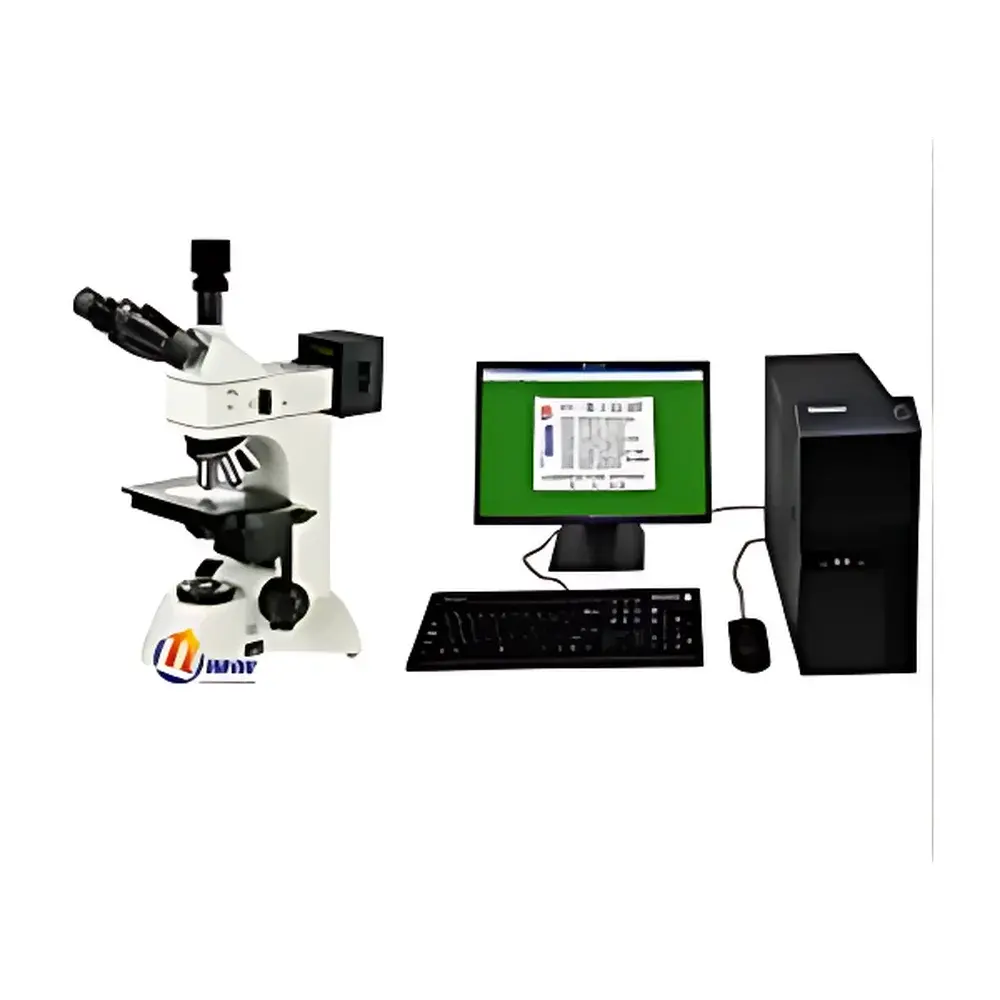
YANRUN MMAS-18 Infinity-Corrected Upright Transmitted/Reflected Light Metallurgical Microscope with Integrated Image Analysis System
| Brand | YANRUN |
|---|---|
| Origin | Shanghai, China |
| Manufacturer Type | Direct Manufacturer |
| Product Type | Upright Metallurgical Microscope |
| Imaging Analysis System Included | Yes |
| Total Magnification Range | 50×–600× |
| Eyepieces | Wide-Field WF10X (Φ22 mm) |
| Objective Lenses | 5X, 10X, 40X, 60X (Infinity-Corrected Plan Achromatic) |
Overview
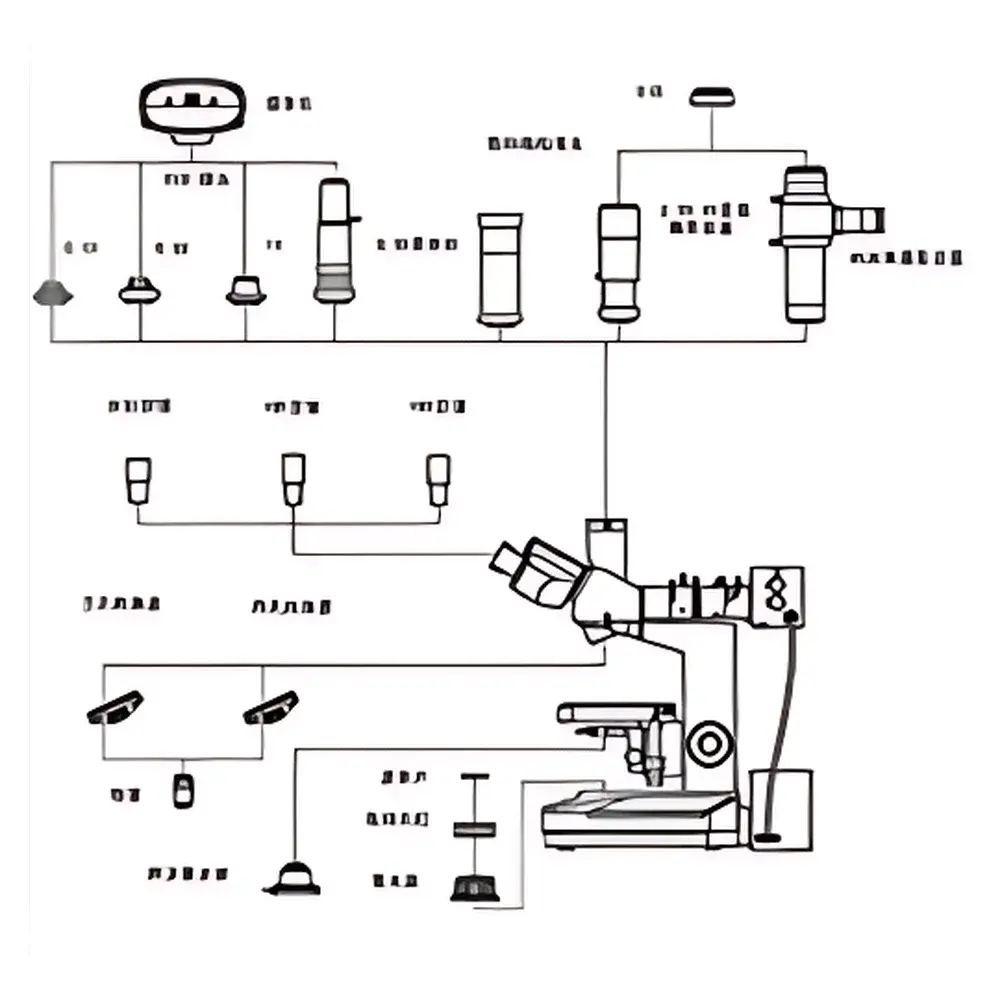
The YANRUN MMAS-18 is an infinity-corrected, upright metallurgical microscope engineered for high-fidelity microstructural analysis of both opaque and transparent specimens. Its dual-path optical architecture supports simultaneous or independent transmitted-light (for thin sections, inclusions, or transparent phases) and reflected-light (epi-illumination) observation—enabling comprehensive characterization across metallurgy, materials science, geology, electronics failure analysis, and precision engineering. The system employs a fully modular design centered on a robust mechanical platform and a parfocal, apochromatically corrected optical train compliant with ISO 10934-1 (optical microscopy — nomenclature and definitions) and aligned with ASTM E3-22 (Standard Guide for Preparation of Metallographic Specimens). Key optical components—including the objective turret, condenser, and illumination pathways—are designed to minimize spherical and chromatic aberration, ensuring diffraction-limited resolution at all magnifications within its 50×–600× operational range. The integrated MOS (Modular Optical System) platform permits seamless expansion with polarization, darkfield, and differential interference contrast (DIC) modules without realignment.
Key Features
- Infinity-Corrected Optical Pathway: Utilizes plan achromatic objectives (PL 5×/0.12, PL L10×/0.25, PL L40×/0.60, PL L60×/0.70) with working distances ranging from 26.1 mm to 2.08 mm—optimized for thick-section imaging and routine metallographic sample inspection.
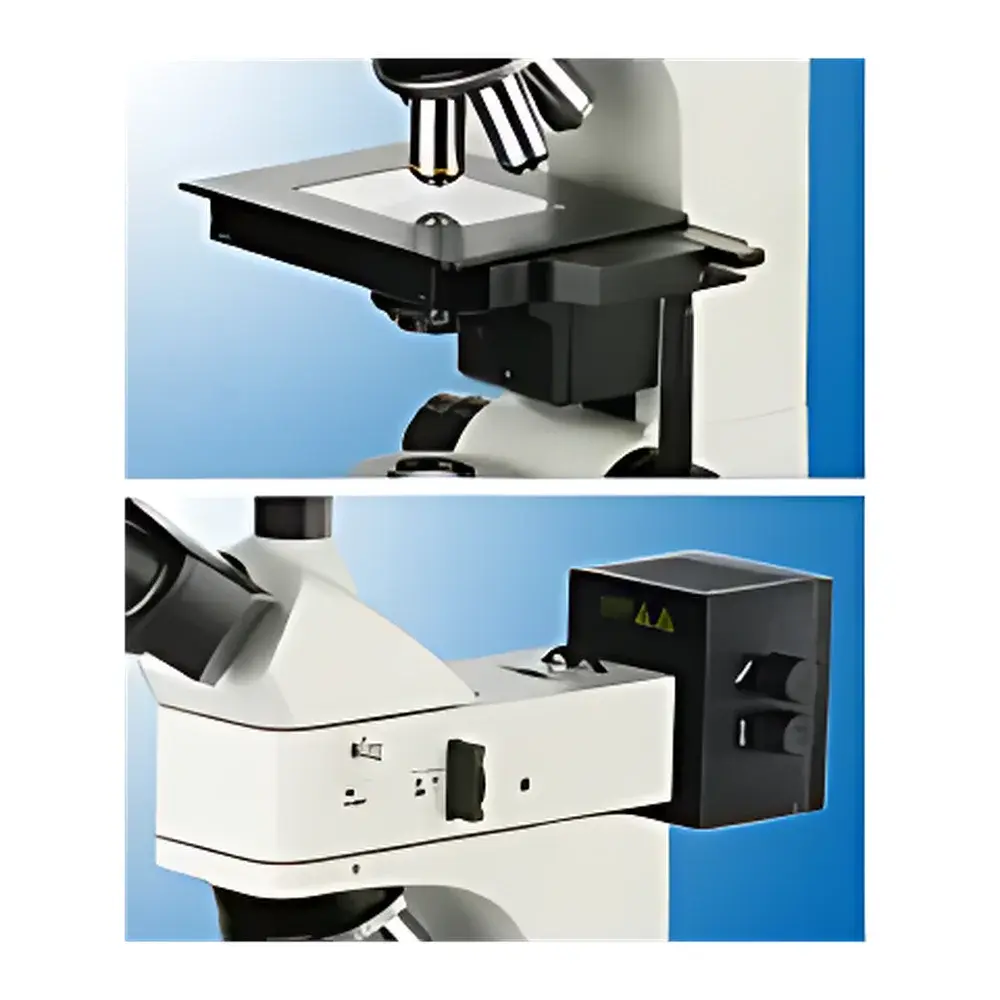
- Dual Illumination Architecture: Independent 6 V, 30 W halogen Köhler illumination systems for both epi- and trans-illumination. Reflected-light path includes centerable field and aperture diaphragms, 360° rotatable polarizer/analyzer pair, and a slide-in filter wheel (blue, green, yellow + ground glass) for contrast enhancement and stress birefringence evaluation.
- Precision Mechanical Stage: Dual-layer mechanical stage (210 × 140 mm footprint; 63 × 50 mm travel range) with low-backlash micrometer drives—compatible with standardized specimen holders per ISO 643:2021 (steel—micrographic determination of ferrite grain size).
- Ergonomic Observation System: 30° inclined, interpupillary adjustable (53–75 mm), Siedentopf-type binocular head with 100% beam-splitting capability for photomicrography and real-time digital acquisition.
- Coaxial Coarse/Fine Focus Mechanism: Micrometer-calibrated fine focus (2 µm graduation), tension-adjustable coarse drive with upper/lower mechanical stops and locking function—ensuring repeatable Z-axis positioning during serial sectioning or multi-field measurement workflows.
Sample Compatibility & Compliance
The MMAS-18 accommodates standard metallographic mounts (up to 30 mm diameter), polished wafers, solder joints, fracture surfaces, and mineral thin sections. Its modular illumination and objective compatibility support ASTM E407 (etching metals and alloys), ASTM E112 (determining average grain size), ASTM E1245 (quantifying inclusion content), and ISO 4967 (non-metallic inclusions in steel). Optional PLL-series darkfield objectives (e.g., PLL50×/0.70, WD = 1.75 mm) and dedicated darkfield condensers enable defect detection in reflective coatings and semiconductor interconnects per SEMI F20-0201. All optical components meet RoHS Directive 2011/65/EU requirements; electrical subsystems comply with IEC 61010-1:2010 for laboratory equipment safety.
Software & Data Management
The MMAS image analysis software suite is a validated, Windows-based application designed for GLP-compliant metallographic reporting. It supports FDA 21 CFR Part 11–ready audit trails, user-defined electronic signatures, and secure role-based access control. Core capabilities include automated ASTM/ISO/GOST-compliant rating (e.g., ASTM E112 grain size, ASTM E1245 inclusion classification), geometric measurement (line, polygon, angle, area), multi-field image stitching, focus stacking (z-stack synthesis), and topographic reconstruction via structured light projection (optional module). Raw image capture is supported via USB 3.0–compatible CMOS sensors (not included), with TIFF/PNG export and DICOM metadata embedding. Report templates are customizable to internal QA/QC protocols and can be exported as PDF/A-1b for long-term archival per ISO 19005-1.
Applications
- Quantitative metallography: Grain size distribution, phase fraction analysis, inclusion rating (ASTM E45, ISO 4967), carbide morphology assessment.
- Failure analysis: Crack propagation mapping, solder joint voiding, intermetallic compound (IMC) thickness measurement in PCB assemblies.
- Geological petrography: Mineral identification, texture analysis, porosity quantification in core samples.
- Quality assurance in additive manufacturing: Powder morphology screening, melt pool boundary delineation, porosity and lack-of-fusion defect enumeration.
- R&D in advanced alloys: Precipitate size distribution (Orowan strengthening modeling), oxide scale thickness measurement, corrosion pit depth profiling.
FAQ
Is the MMAS-18 compatible with third-party digital cameras and frame grabbers?
Yes—the system features standardized C-mount (1×) and optional 0.5× reduction adapter ports, supporting industrial-grade CMOS/CCD cameras from FLIR, Basler, and IDS. SDK integration is available for custom acquisition pipelines.
Does the MMAS software support calibration traceability to NIST standards?
Calibration routines include stage micrometer verification and pixel-to-micron scaling with documented uncertainty budgets. Users may import NIST-traceable calibration certificates for audit readiness.
Can the system be upgraded to support polarized light quantitative birefringence mapping?
Yes—via optional rotating analyzer stage, quarter-wave plates, and software-enabled retardation quantification (λ/4, λ/2 modes) compliant with ISO 11475:2004.
What is the maximum specimen height clearance under the objective nosepiece?
With the standard PL L60× objective installed, vertical clearance is 22 mm; using the optional PL L100×/0.85 objective reduces clearance to 11 mm.
Is remote operation and data sharing supported for multi-site laboratories?
The MMAS software includes encrypted client-server mode over LAN/WAN, enabling concurrent user access, centralized database management, and synchronized report versioning.





