YANRUN MC030-LD350/60/0.3 Auto-Collimator
| Brand | YANRUN |
|---|---|
| Origin | Shanghai, China |
| Manufacturer Type | Direct Manufacturer |
| Model | MC030-LD350/60/0.3 |
| Focal Length | 350 mm |
| Aperture | 60 mm |
| Light Source | High-Stability LED |
| Measurement Range | 0–40 m |
| Angular Resolution | 0.1″ / 0.01″ / 0.001″ / 0.0001″ (selectable, arc seconds) |
| Field of View (X/Y) | 1800″ × 1500″ (arc seconds) |
| Accuracy (Center) | ≤ ±0.3″ (0–±100″), ≤ ±1″ (0–±600″) |
| Frequency Response | ≤30 Hz |
| Interface | USB 2.0 |
| OS Compatibility | Windows 7 or later (64-bit) |
Overview
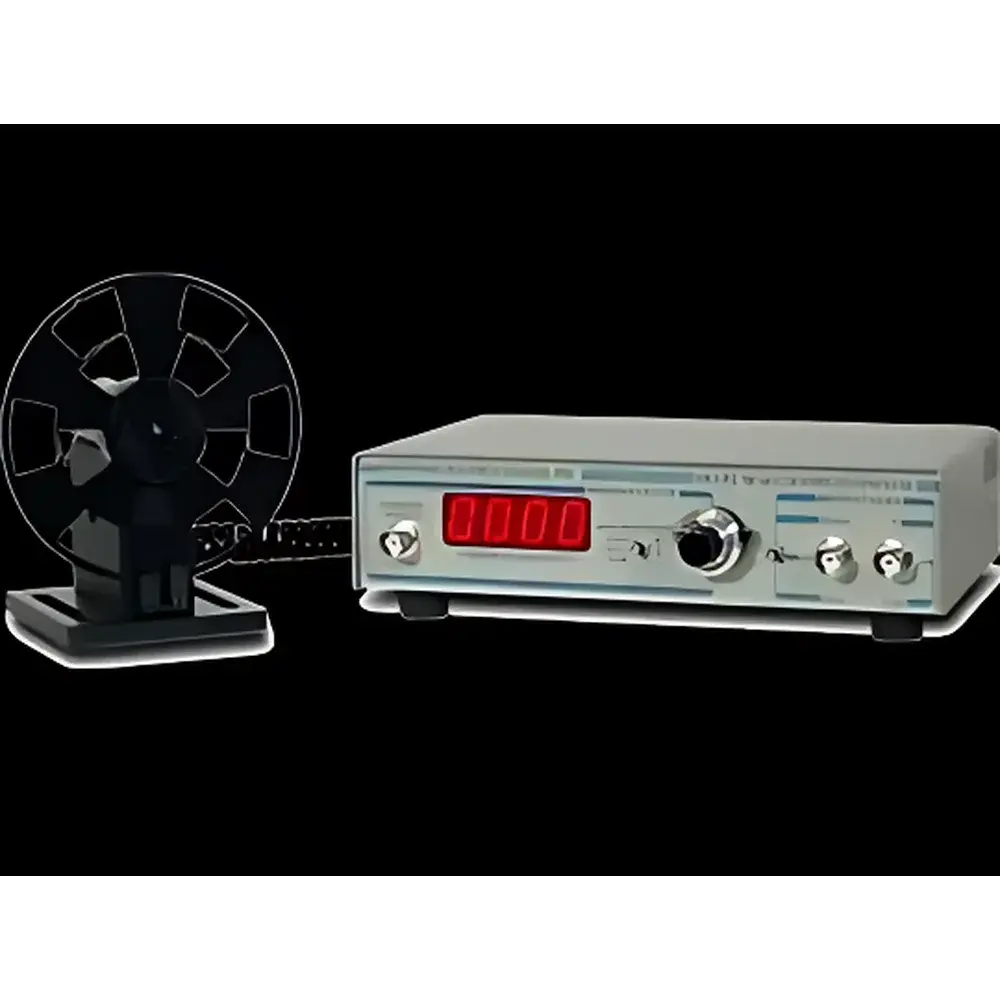
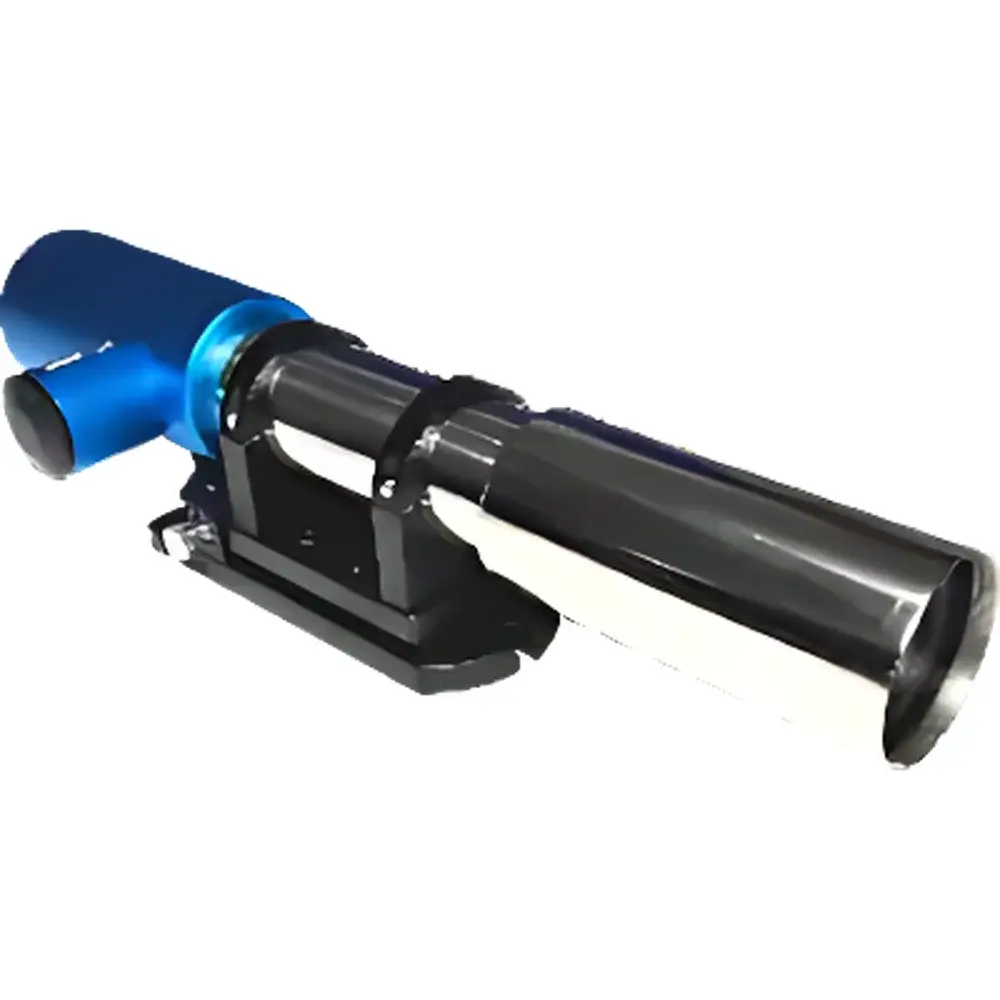
The YANRUN MC030-LD350/60/0.3 Auto-Collimator is a high-precision electro-optical angular measurement instrument engineered for metrology-grade alignment, straightness verification, and angular deviation analysis in industrial and research environments. It operates on the fundamental principle of optical autocollimation: a collimated beam—generated by projecting a reticle image located at the focal plane of a high-aperture objective lens—is directed toward a reflective surface. Upon reflection, the beam returns through the same objective and forms a re-imaged reticle on a calibrated photodetector array. Any angular tilt (α) of the reflector induces a lateral displacement (ΔS) of the returned image proportional to 2α, enabling sub-arcsecond angular quantification via precise centroid detection algorithms. With a 350 mm focal length and 60 mm clear aperture, the system delivers optimized light throughput and diffraction-limited spot stability over extended working distances up to 40 meters—making it suitable for large-scale machine tool calibration, optical bench alignment, and precision motion platform characterization.
Key Features
- Simultaneous dual-axis (X and Y) angular measurement with real-time digital display and automatic error calculation
- High-resolution CMOS-based photodetector with selectable angular resolution down to 0.0001 arc seconds (0.005 µrad)
- Digital electronic eyepiece interface eliminates parallax and observer-induced aiming uncertainty inherent in manual optical autocollimators
- Stable, low-noise semiconductor LED illumination system with >50,000-hour operational lifetime and minimal thermal drift
- Modular design supporting interchangeable accessories—including rotary stages, multi-surface retroreflectors, and motorized tilt mounts—for expanded geometric metrology workflows
- Onboard data processing engine with configurable reporting templates compliant with ISO 230-1 (machine tool testing) and ISO 10360 (CMM verification) documentation requirements
- Multi-language UI support (English, Chinese, Russian, Korean) for international laboratory and manufacturing deployment
Sample Compatibility & Compliance
The MC030-LD350/60/0.3 is compatible with standard optical flats, mirror-mounted targets, and kinematic mirror mounts conforming to DIN 55350 and ISO 10110 surface quality specifications. Its measurement traceability is maintained through factory calibration against NIST-traceable angle standards, with documented uncertainty budgets provided per ISO/IEC 17025 guidelines. The instrument supports GLP-compliant operation via timestamped audit logs, user-access controls, and exportable raw datasets—including full-frame sensor images and centroid coordinates—enabling retrospective validation. While not certified for FDA 21 CFR Part 11 out-of-the-box, its USB 2.0 interface and deterministic data capture architecture allow integration into validated systems under client-defined SOPs and IT validation protocols.
Software & Data Management
Bundled YANRUN AutoAlign Studio software provides comprehensive control, visualization, and post-processing capabilities. It enables real-time waveform monitoring of angular drift, statistical process control (SPC) charting (X̄-R, Cpk), and automated generation of Excel-based compliance reports aligned with ISO/IEC 17025 clause 7.8.2. All measurement sessions are stored with embedded metadata (operator ID, environmental conditions, calibration certificate ID), and raw pixel data can be exported in HDF5 or CSV formats for third-party analysis in MATLAB, Python (NumPy/Pandas), or LabVIEW environments. The software adheres to Windows 7+ (64-bit) system requirements and supports remote operation via TCP/IP wrapper modules for integration into factory automation networks.
Applications
- Alignment and angular stability assessment of CNC machine tools, coordinate measuring machines (CMMs), and hydrostatic guideways
- Verification of straightness, flatness, perpendicularity, and parallelism per ASME B89.1.10M and ISO 230-2 standards
- Calibration of precision rotary tables and goniometers used in aerospace component assembly
- Optical system collimation and beam steering verification in laser interferometry and adaptive optics laboratories
- Dynamic angular response testing of piezoelectric actuators and MEMS mirrors (up to 30 Hz bandwidth)
- Educational use in university physics and precision engineering labs for teaching optical metrology fundamentals
FAQ
What is the maximum working distance supported by the MC030-LD350/60/0.3?
The instrument maintains specified accuracy over a nominal range of 0–40 meters when used with a high-quality plane mirror (λ/10 surface flatness) under ambient lighting conditions with vibration isolation.
Does the system support external triggering or synchronization with other metrology devices?
Yes—via TTL-compatible trigger input on the rear panel, enabling synchronized acquisition with laser trackers, digital levels, or motion controllers.
Is firmware upgrade capability available, and how is it performed?
Firmware updates are delivered via encrypted .bin files through the AutoAlign Studio application; no hardware modification or service visit is required.
Can measurement data be integrated into enterprise quality management systems (QMS)?
Raw and processed data exports comply with ASTM E2651-20 and ISO 10012-1 Annex B formats, facilitating ingestion into QMS platforms such as MasterControl, Veeva, or Siemens Teamcenter.
What calibration documentation accompanies the instrument upon shipment?
Each unit ships with a factory calibration certificate referencing NIST-traceable angular artifacts, including measured bias, repeatability (σ ≤ 0.08″), and linearity deviations across the full angular range.