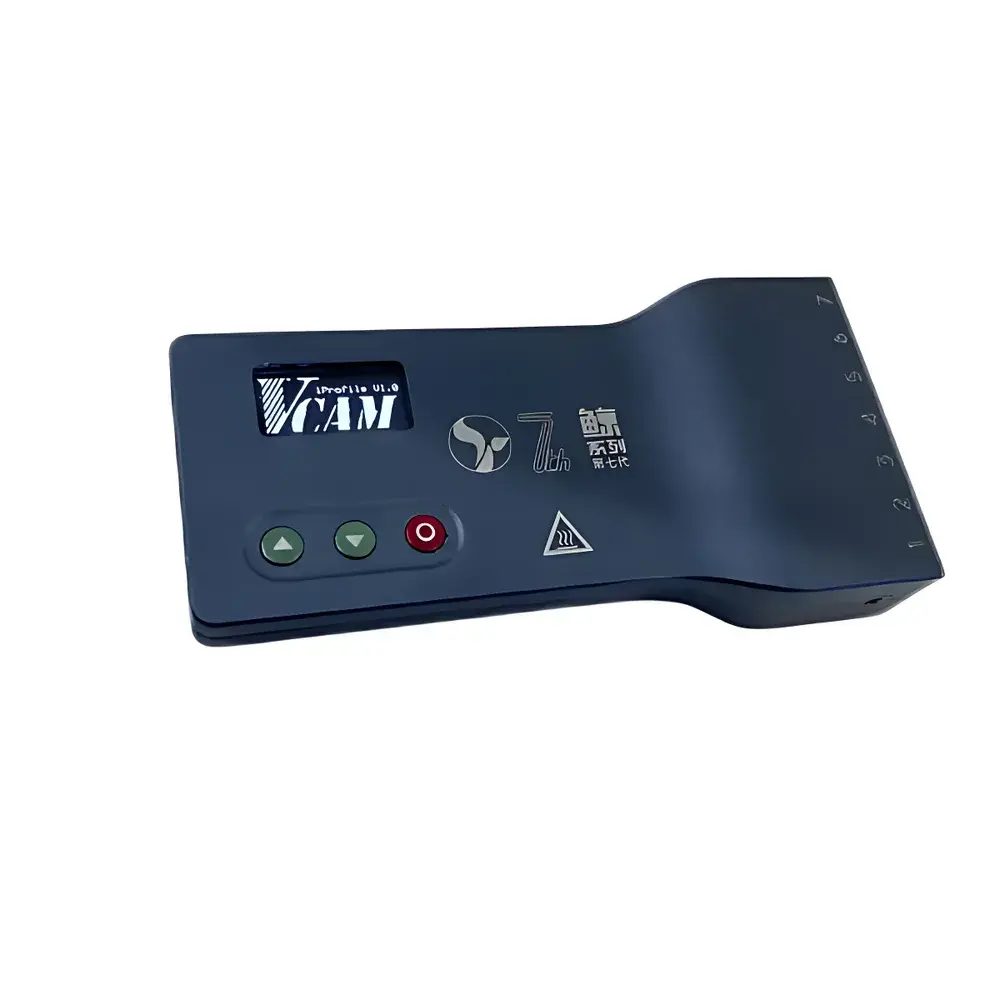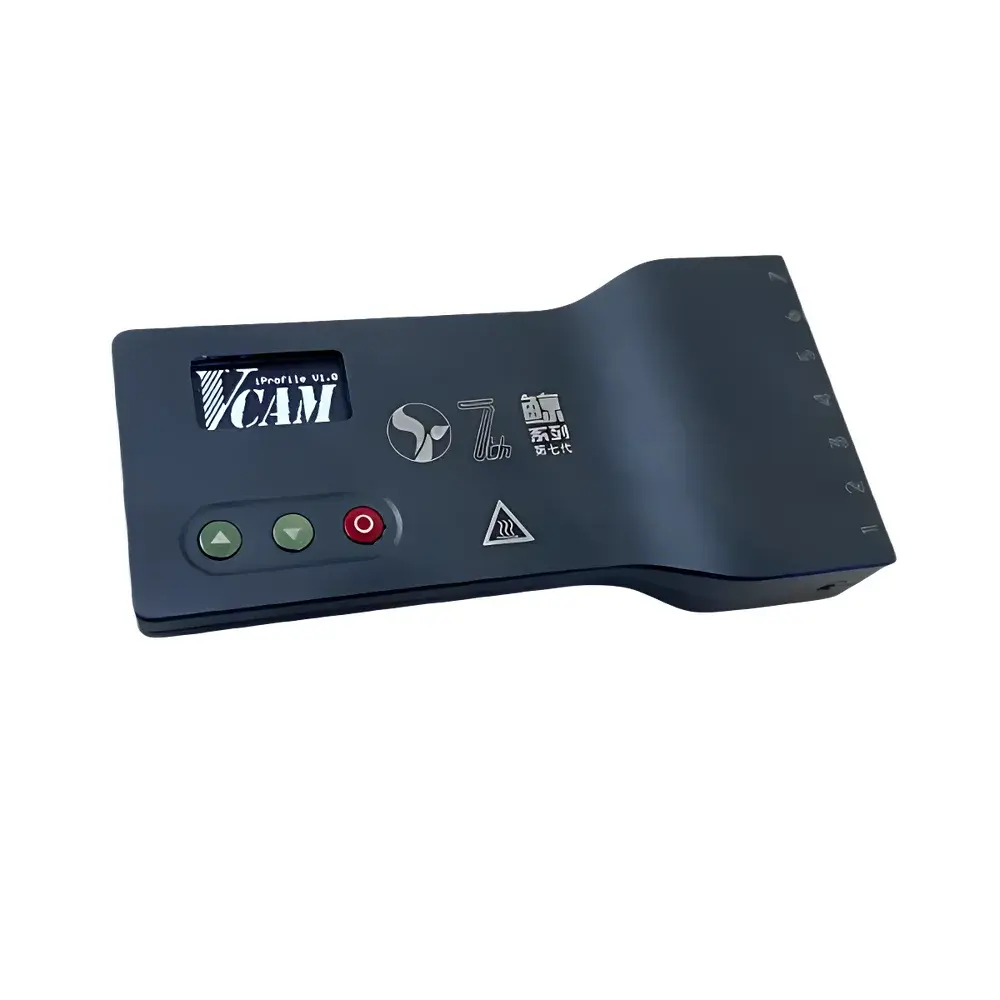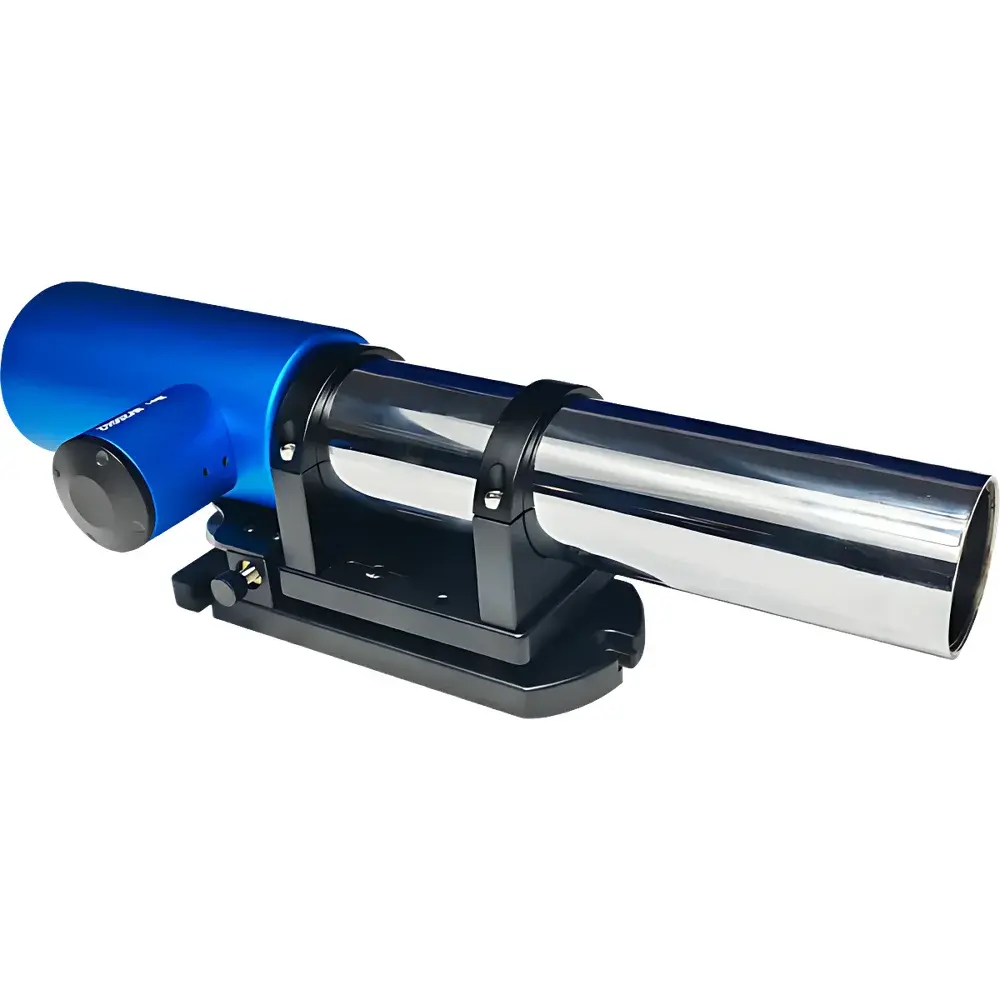
YANRUN MC030MAT300-48/0.1 Photoelectric Autocollimator
| Brand | YANRUN |
|---|---|
| Origin | Shanghai, China |
| Manufacturer Type | Manufacturer |
| Country of Origin | China |
| Model | 48/0.1 |
| Price Range | USD 2,800 – 14,000 |
| Focal Length | 500 mm |
| Objective Aperture | 80 mm |
| Light Source | Imported Semiconductor LED |
| Measurement Range | 0–80 m |
| Detector | High-Precision Photodetector |
| Display Resolution | Adjustable to 0.1″ / 0.01″ / 0.001″ / 0.0001″ (arc sec) |
| Field of View (X/Y) | 2200″ × 1800″ (arc sec) |
| Accuracy (Center) | ±0.1″ (0–±60″), ±0.5″ (0–±600″) |
| Frequency Response | ≤30 Hz (typ.) |
| Interface | USB 2.0 |
| OS Requirement | Windows 7 or later, 64-bit |
| Certification | Chinese Utility Model Patent |
Overview
The YANRUN MC030MAT300-48/0.1 is a high-precision photoelectric autocollimator engineered for non-contact angular metrology in industrial metrology, precision assembly, and optical alignment applications. It operates on the fundamental principle of optical autocollimation: a collimated beam—generated by projecting a reticle located at the focal plane of a high-aperture objective lens (f = 500 mm, Ø = 80 mm)—is directed toward a reflective surface. When that surface deviates by an angle α, the retroreflected beam undergoes a lateral displacement ΔS at the detector plane, corresponding to 2α. This linear-to-angular conversion enables traceable, sub-arcsecond angular measurement without mechanical contact or moving parts. Unlike visual autocollimators requiring manual eyepiece reading and micrometer adjustment, the MC030MAT300-48/0.1 employs a calibrated photodetector array and real-time centroid tracking algorithms to quantify displacement with resolution down to 0.0001 arc seconds. Its design conforms to the geometric optics framework defined in ISO 10110-5 and supports calibration traceability to national standards via NIST-traceable angle artifacts.
Key Features
- Simultaneous dual-axis (X and Y) angular measurement with independent resolution control—enabling comprehensive planar tilt analysis in a single acquisition.
- Real-time electronic eyepiece interface with dynamic reticle overlay, eliminating observer-dependent parallax and human aiming error inherent in analog systems.
- High-stability semiconductor LED illumination system with >50,000-hour operational lifetime and minimal thermal drift—ensuring long-term photometric consistency across environmental fluctuations.
- Adjustable display resolution (0.1″ to 0.0001″ arc sec) configurable per application requirement—supporting both rapid coarse alignment and ultra-fine calibration tasks.
- Modular architecture compatible with interchangeable optical accessories—including beam splitters, retroreflectors, wedge prisms, and multi-surface test fixtures—for extended functionality in straightness, flatness, and perpendicularity verification.
- USB 2.0 digital interface compliant with USB-IF specifications, enabling deterministic data transfer latency (<10 ms) and plug-and-play integration with host PCs running Windows 7+ (64-bit).
- Onboard firmware with embedded self-diagnostic routines, including sensor linearity verification, dark-current compensation, and focus stability monitoring.
Sample Compatibility & Compliance
The MC030MAT300-48/0.1 is designed for use with polished metallic, dielectric-coated, or uncoated optical-grade mirror surfaces (R ≥ 90% reflectivity at 635 nm). It supports measurement distances from 0 to 80 meters—validated per ISO 21093-1 for far-field collimation fidelity—and accommodates surface deviations up to ±600 arc seconds with certified accuracy. The instrument meets CE electromagnetic compatibility (EMC) requirements (EN 61326-1) and conforms to RoHS Directive 2011/65/EU. Its measurement uncertainty budget has been evaluated in accordance with ISO/IEC 17025:2017 Annex A.3 guidelines, and raw angular data output complies with ASTM E2917-22 (Standard Practice for Evaluating Angle Measurement Systems). While not FDA-regulated, its audit trail capability (via timestamped CSV export) supports GLP/GMP-aligned documentation workflows.
Software & Data Management
The included YANRUN AutoAlign Suite v3.2 provides native support for real-time waveform visualization, statistical process control (SPC) charting (X̄-R, Cp/Cpk), and automated report generation. All measurement sessions are time-stamped and stored with full metadata (operator ID, environmental conditions, calibration certificate ID, and instrument serial number). Export formats include ANSI-compliant CSV, XML (ISO 10303-21 STEP AP242 schema), and native Excel (.xlsx) files containing formatted tables, annotated plots, and pass/fail decision logic based on user-defined tolerances. Software enforces role-based access control (RBAC), session locking, and electronic signature capture—features aligned with FDA 21 CFR Part 11 requirements for regulated environments when deployed with validated IT infrastructure.
Applications
- Verification of linear and angular motion stages in semiconductor lithography tooling and coordinate measuring machine (CMM) guideways.
- Alignment of optical benches and laser resonators in R&D laboratories—particularly for interferometric cavity stabilization and beam pointing stability assessment.
- In-process validation of aerospace structural components (e.g., wing spar flatness, fuselage panel perpendicularity) per AS9100 Rev D clause 8.5.1.
- Calibration of rotary tables and goniometers used in metrology labs accredited to ISO/IEC 17025.
- Assembly guidance for high-NA objective lenses and micro-optical modules where tilt-induced wavefront error must remain below λ/20 PV.
- Dynamic angular vibration analysis of precision spindles and inertial platforms—leveraging its 30 Hz bandwidth for modal frequency identification up to the third harmonic.
FAQ
What is the maximum measurable distance without auxiliary optics?
The standard configuration supports direct measurements up to 80 meters under ambient lighting conditions with a reflectivity ≥90% and surface roughness <λ/10.
Does the system support external triggering or synchronization with other instruments?
Yes—via TTL-compatible trigger input (BNC) and programmable GPIO lines; supported in AutoAlign Suite via LabVIEW™ and Python API (PySerial + NumPy integration).
Is calibration traceable to international standards?
Each unit ships with a factory calibration certificate referencing NIST-traceable angular artifacts; optional UKAS-accredited calibration services are available through authorized partners.
Can the instrument measure rotating targets?
It is optimized for static or quasi-static angular evaluation; for continuous rotation analysis, we recommend pairing it with a synchronized encoder interface or using the optional high-speed sampling module (MC-HSS-120).
How is data integrity ensured during long-term deployments?
All acquired datasets include SHA-256 checksums, hardware-timestamped acquisition logs, and automatic backup to network-attached storage (NAS) via configurable SMB/CIFS protocols.