
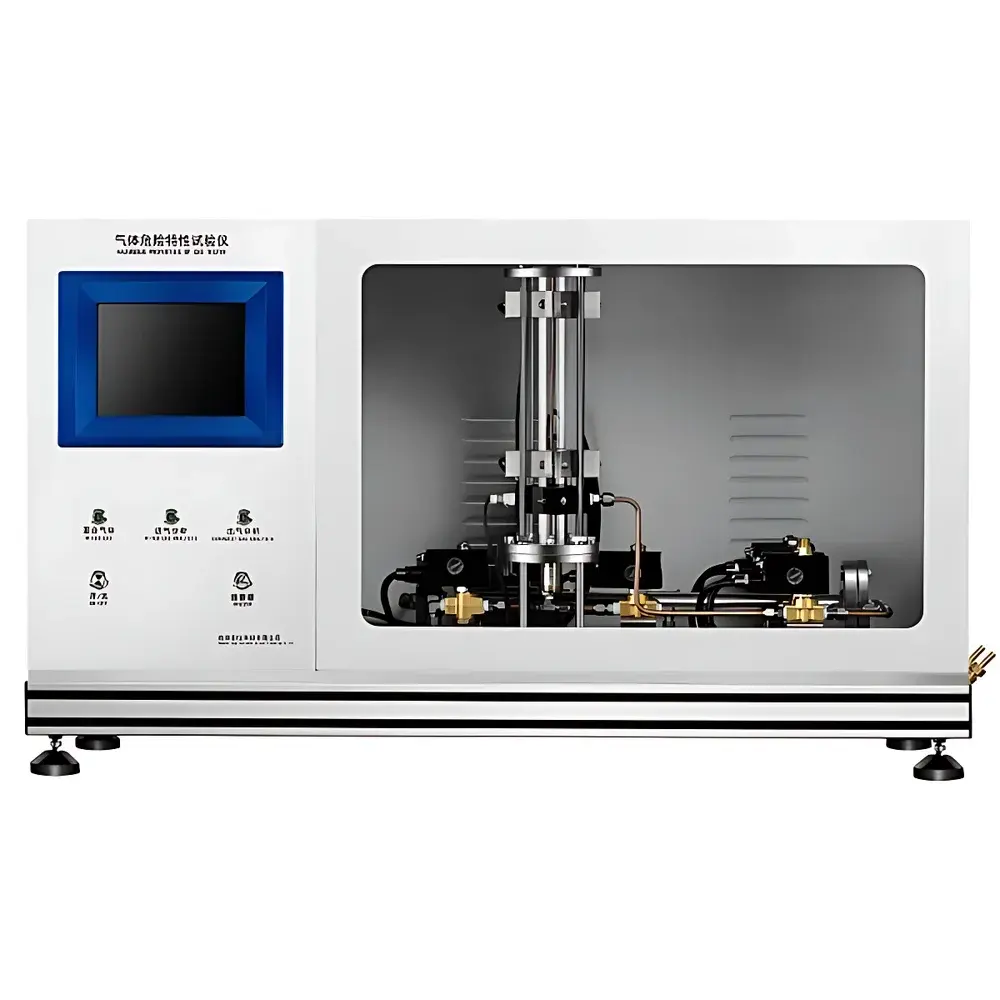
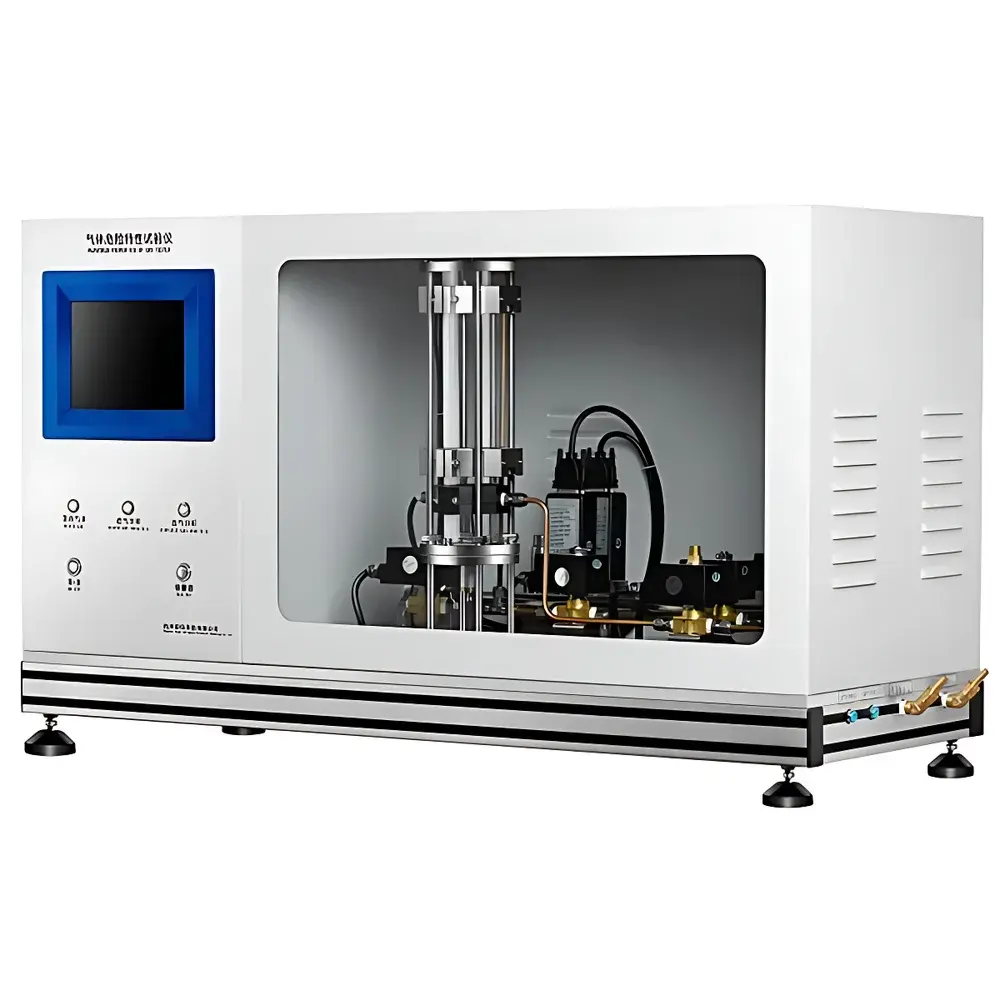
Young Instruments HWP12-10S Flammability Limits Tester for Gases
| Brand | Young Instruments |
|---|---|
| Origin | Zhejiang, China |
| Manufacturer Type | Direct Manufacturer |
| Country of Origin | China |
| Model | HWP12-10S |
| Pricing | Available Upon Request |
| Operating Temperature | (-5 to 45) °C |
| Relative Humidity | <95% RH |
| Compressed Air Flow Range | 5–500 sccm |
| Flow Control Accuracy | ±1% FS |
| Flow Response Time | ≤1 s |
| Ignition Method | Electric Spark |
| Combustion Detection | Infrared Photodetection |
| Combustion Detection Response Time | ≤1 ms |
| Flame Propagation Velocity Range | ≤500 cm/s |
| Flame Propagation Velocity Accuracy | ±5 mm/s |
| Safety Valve Activation Pressure | 2 kg/cm² |
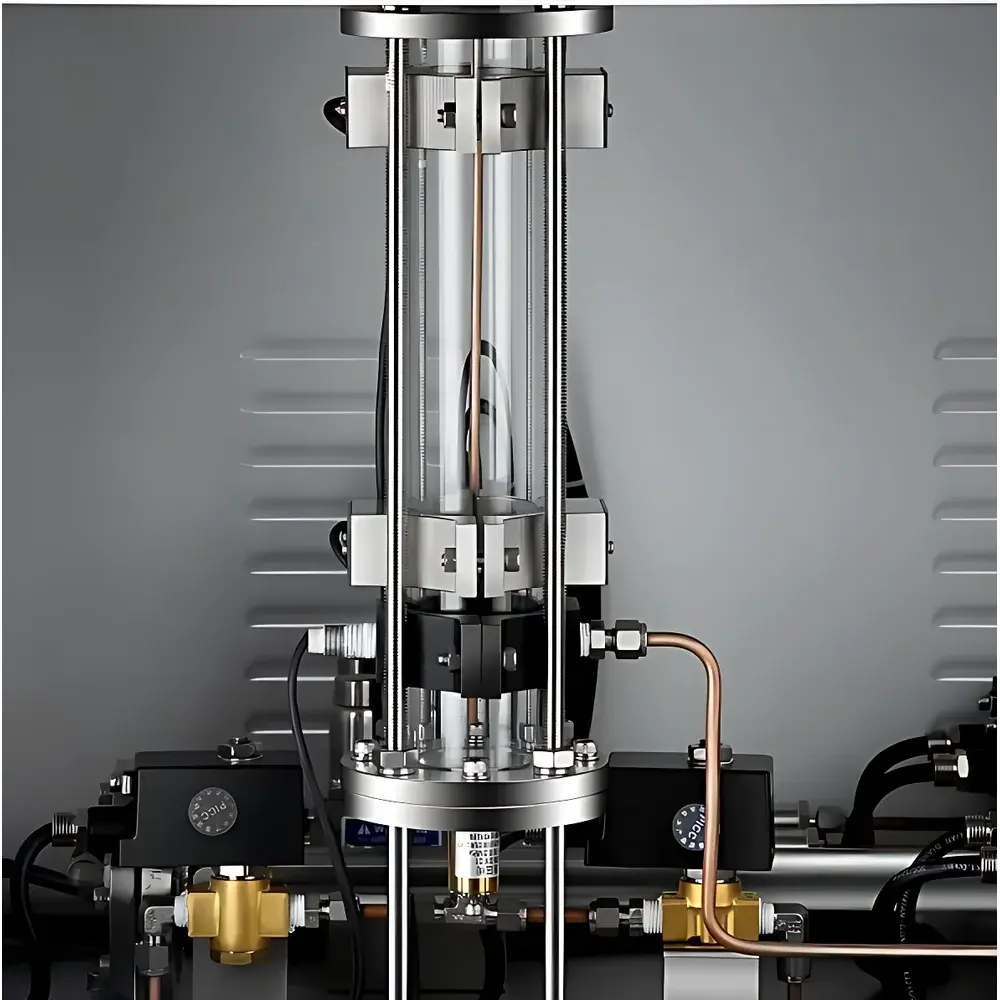
| Reaction Tube Dimensions | 300 mm (L) × 50 mm (ID) × 5 mm (wall thickness) |
| Maximum Inlet Gas Pressure | ≤5 MPa |
| Sample Bag Capacity | 1 L |
Overview
The Young Instruments HWP12-10S Flammability Limits Tester for Gases is an engineered laboratory instrument designed to determine the lower and upper flammability limits (LFL/UFL) of pure and mixed combustible gases in air under standardized atmospheric conditions. It operates on the principle of controlled stoichiometric dilution and electric spark ignition within a calibrated cylindrical reaction tube, followed by high-speed infrared photodetection of flame propagation. The system quantifies the minimum and maximum concentrations at which self-sustaining flame propagation occurs—critical parameters for hazard classification, process safety design (e.g., vent sizing, inerting strategy), and regulatory compliance in chemical manufacturing, storage, transportation, and waste handling. Its architecture adheres to fundamental combustion physics principles including laminar flame speed measurement, quenching distance validation, and thermal feedback control—ensuring traceable, repeatable results aligned with internationally recognized test methodologies.
Key Features
- Embedded Windows CE operating system with real-time control logic and deterministic I/O response for uninterrupted test sequencing
- 8-inch industrial-grade capacitive touchscreen interface enabling intuitive parameter configuration, live status monitoring, and on-device result review
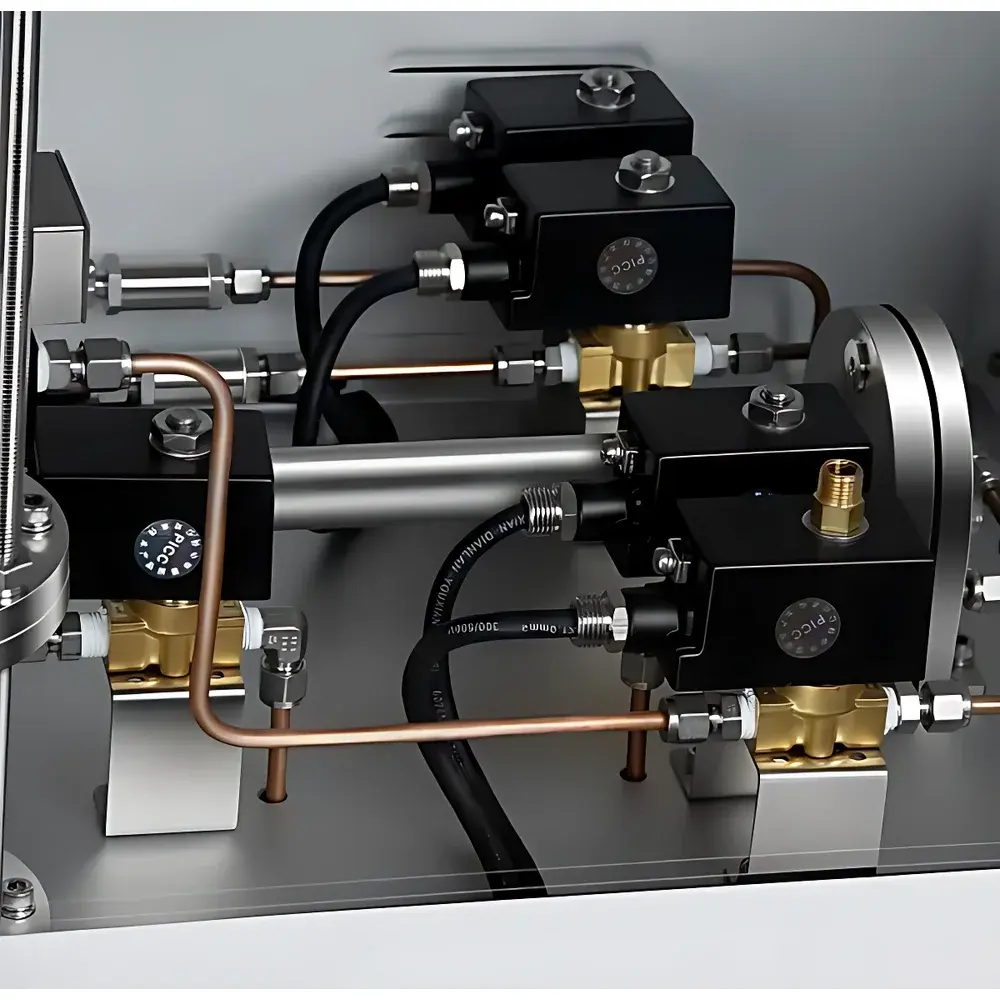
- Dual-channel digital mass flow controllers (MFCs) with ±1% full-scale accuracy for precise, independent regulation of sample gas and compressed air streams
- High-speed infrared photodetector array with ≤1 ms response time, optimized for detection of transient luminous emission during deflagration onset
- Automated concentration ramping algorithm that incrementally adjusts gas/air ratio per ASTM E681–22 stepwise protocol, minimizing operator bias and inter-test variability
- Reaction chamber constructed with dual-layer tempered safety glass viewing port (EN 170-compliant UV filtration) and pressure-relief safety valve (set at 2 kg/cm²) meeting ISO 10156 mechanical integrity requirements
- Integrated online sampling port compatible with GC/MS, FTIR, or residual gas analyzers for post-test composition verification and impurity profiling
- Full test automation—from initial purge and baseline stabilization to ignition, flame detection, velocity calculation, and pass/fail determination—requiring zero manual intervention post-initiation
Sample Compatibility & Compliance
The HWP12-10S supports testing of single-component combustible gases (e.g., hydrogen, methane, propane, ethylene, ammonia, silane) as well as multi-component mixtures whose composition is known or analytically verified. It is validated for use with non-corrosive, non-condensing gases at inlet pressures up to 5 MPa, delivered via standard CGA fittings and 1 L Tedlar® sampling bags. Regulatory alignment includes full conformance with GB 19521.3–2004 (Chinese equivalent of UN Manual of Tests and Criteria, Part I, Section 10.3), GB 5085.4–2007 (hazardous waste ignitability assessment), and NY/T 1860.25–2010 (agrochemical gas flammability testing). While not certified to UL 94 or EN 13463, its operational methodology is technically consistent with ISO/IEC 17025–2017 clause 7.2.2 for method validation and uncertainty estimation of flammability boundary determination.
Software & Data Management
Data acquisition, analysis, and reporting are handled by proprietary firmware running on the embedded platform. Each test generates a timestamped record containing: initial gas concentration, ignition event time, flame arrival times at two axial photodiode positions, calculated laminar flame speed (cm/s), pass/fail flag per concentration step, and environmental metadata (ambient T/RH). All data are stored locally in CSV and PDF report formats with SHA-256 checksum integrity verification. Audit trails—including user login, parameter changes, calibration logs, and test start/stop events—are retained for ≥18 months and comply with GLP documentation requirements. Export interfaces support USB mass storage and optional RS-485 Modbus RTU for integration into centralized LIMS or MES platforms. No cloud connectivity or remote access functionality is implemented—ensuring data sovereignty and alignment with ITAR and CNIPA cybersecurity guidelines for laboratory instrumentation.
Applications
- Hazard classification of new chemical entities under GHS Category 1 (Flammable Gases) and UN transport classification (Class 2.1)
- Validation of inerting protocols for reactor headspace management and tank blanketing systems
- Development and verification of explosion protection measures (e.g., flame arrestors, explosion vents, suppression systems)
- Supporting Process Hazard Analysis (PHA) deliverables including HAZOP and Layer of Protection Analysis (LOPA)
- Quality control of industrial gas blends (e.g., calibration standards, specialty gas mixtures)
- Regulatory submission dossiers for REACH, TSCA, and China MEPP chemical registration
- Academic research in combustion kinetics, flame inhibition mechanisms, and alternative fuel safety assessment
FAQ
What standards does the HWP12-10S directly reference in its test procedure?
It implements the experimental framework of GB 19521.3–2004, which mirrors UN Test N.1 (flammability in air) and aligns with ASTM E681–22’s general methodology for flammability limit determination.
Can the instrument test gases containing condensable vapors or particulates?
No—only dry, non-aerosol, non-corrosive gaseous samples are supported. Condensables may foul MFCs and optical sensors; particulates risk clogging precision orifices and distorting flame structure.
Is external gas chromatography required for valid results?
GC/MS is optional and used only for confirmatory composition analysis—not for primary flammability limit determination, which relies on calibrated flow control and photodetection.
How is measurement uncertainty estimated for flame speed values?
Combined standard uncertainty is derived from MFC accuracy (±1% FS), photodiode spatial resolution (±0.5 mm), timing jitter (<10 µs), and tube geometry tolerances—yielding expanded uncertainty (k=2) of ±12 mm/s for velocities <100 cm/s.
Does the system support custom test sequences beyond standard LFL/UFL sweeps?
Yes—advanced users may define bespoke concentration profiles, dwell times, and ignition delay parameters via the configuration menu, subject to hardware safety interlocks.






