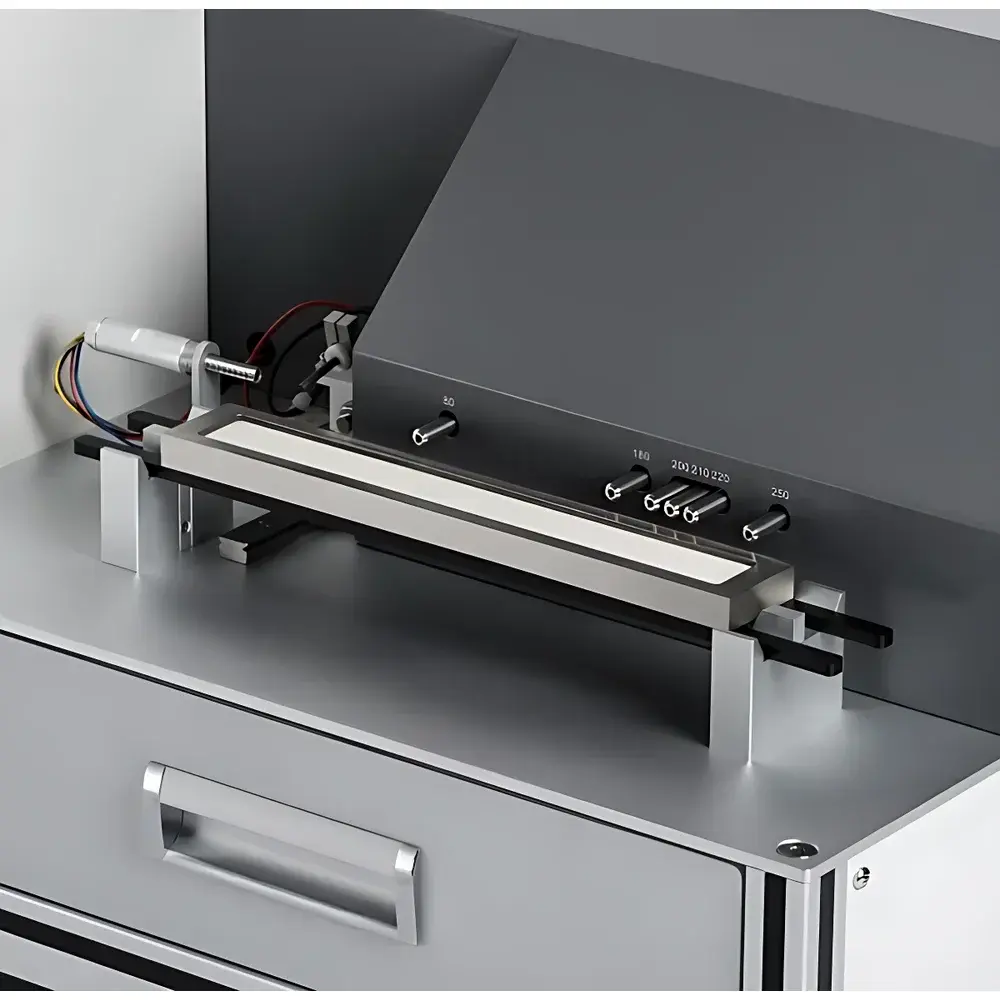
Young Instruments HWP02-20S Solid Combustion Rate Tester
| Brand | Young Instruments |
|---|---|
| Origin | Zhejiang, China |
| Manufacturer Type | Manufacturer |
| Country of Origin | Domestic (China) |
| Model | HWP02-20S |
| Quotation | Upon Request |
| Operating Environment | (-5 to 45) °C, <95% RH |
| Ignition Source Temperature | ≥1000 °C |
| Ignition Methods | Gas igniter and silicon nitride rod |
| Combustion Detection Method | Near-infrared (NIR) spectroscopy |
| Combustion Travel Range | 0–250 mm |
| Burning Distance Measurement Accuracy | ±0.5 mm |
| Maximum Combustion Velocity Detection | 250 mm/s |
| Timing Range | 5 min (non-metallic samples) |
| Time Display Resolution | 0.1 s |
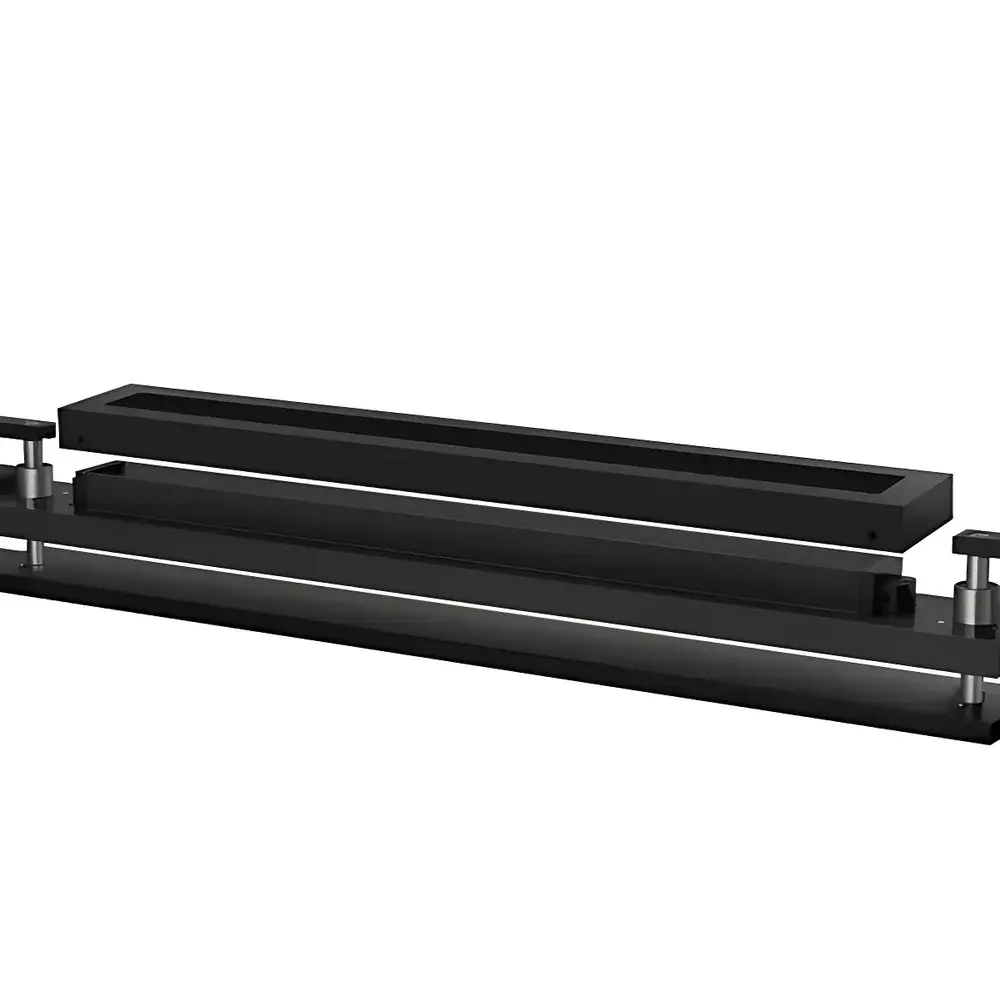
| Stacking Mold Dimensions | 260 mm (L) × 20 mm (W), triangular cross-section with internal height of 10 mm |
| Combustion Plate Material | Alumina-mullite ceramic — non-porous, non-combustible, low thermal conductivity |
Overview
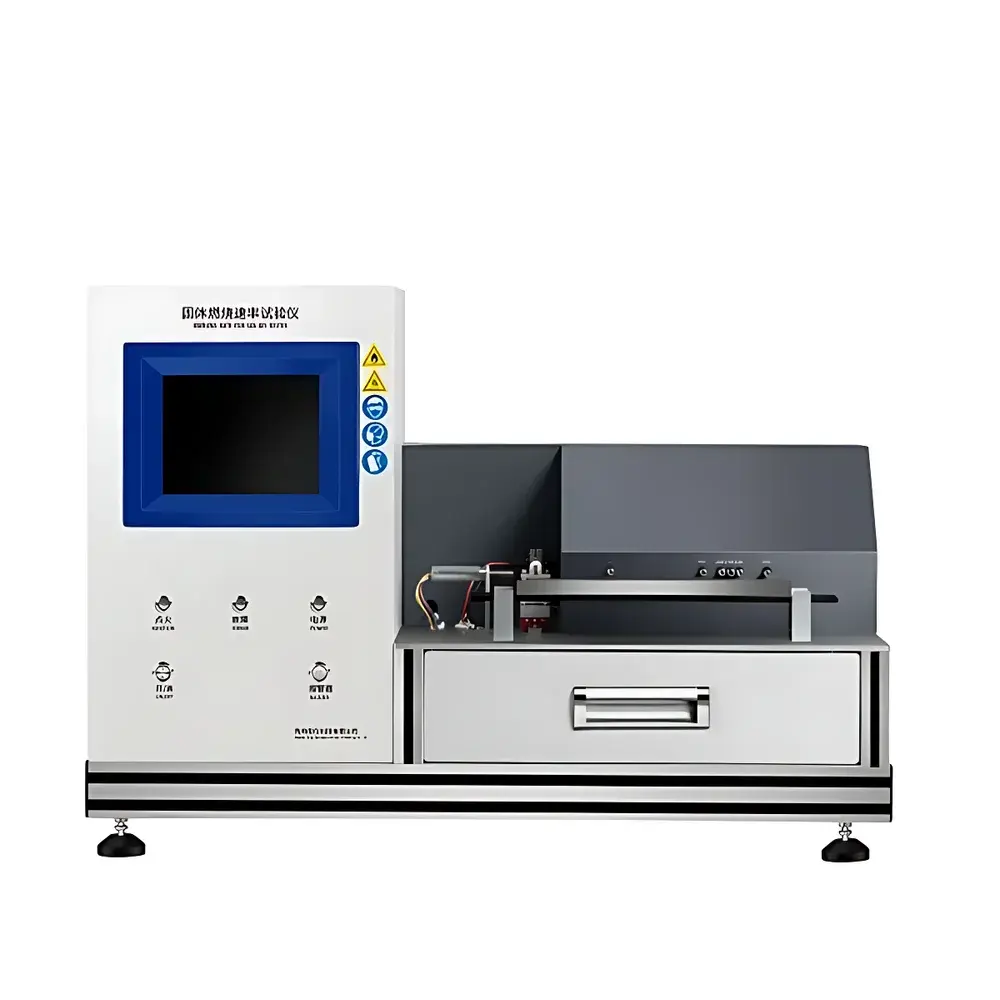
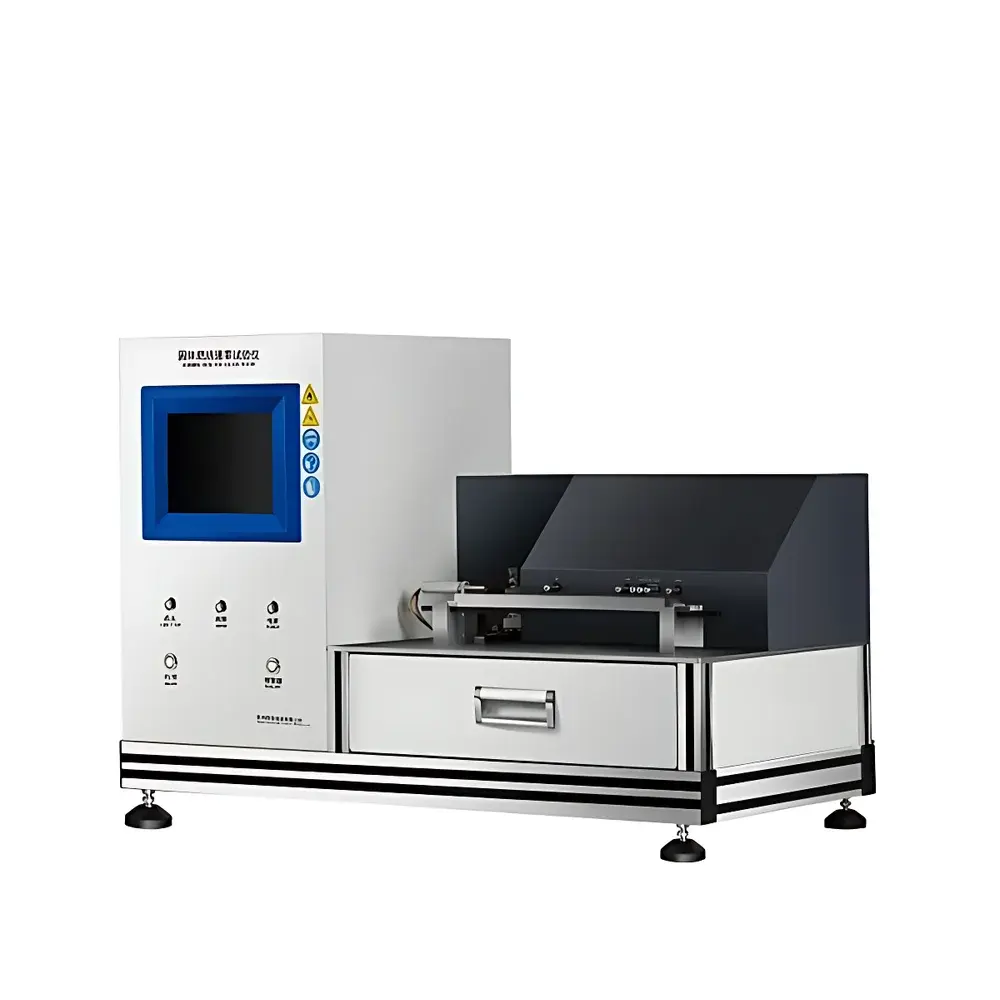
The Young Instruments HWP02-20S Solid Combustion Rate Tester is a fully automated, standards-compliant instrument engineered for precise determination of combustion propagation behavior in solid materials. It operates on the principle of controlled linear flame propagation along a standardized powder or granular sample bed, with real-time detection of flame front position via near-infrared (NIR) spectroscopy—enabling reliable discrimination between open flame and smoldering combustion. Designed in strict accordance with UN Recommendations on the Transport of Dangerous Goods, Manual of Tests and Criteria (Rev. 7, Section 33.2.1.4, Test N.1), the system quantifies burning rate as distance traveled per unit time (mm/s), providing objective, repeatable data essential for hazard classification under GHS, CLP, and national regulatory frameworks.
Key Features
- Integrated dual-function architecture supporting both sieve analysis (per UN Test N.1 pre-conditioning) and combustion rate measurement in a single platform, eliminating inter-instrument calibration drift and procedural inconsistency.
- Dual ignition capability: programmable gas igniter (no external cylinder required; integrated safety interlock) and high-stability silicon nitride heating rod (≥1000 °C surface temperature, verified by embedded thermocouple feedback loop).
- Alumina-mullite combustion plate—chemically inert, dimensionally stable up to 1600 °C, and thermally insulating—to ensure minimal heat loss and reproducible thermal boundary conditions during test execution.
- 8-inch resistive touchscreen running Windows CE OS with embedded test sequence logic; supports parameter configuration, real-time flame tracking visualization, and automatic pass/fail evaluation against threshold criteria.
- NIR-based optical detection system with spectral filtering optimized for CO2 and H2O emission bands (1.8–2.5 µm), enabling robust flame identification independent of ambient lighting or sample emissivity variations.
- Automated fault diagnostics with audible alarm and visual alert on screen—monitors ignition source integrity, sensor signal validity, mold alignment, and plate temperature stability prior to and during test initiation.
Sample Compatibility & Compliance
The HWP02-20S accommodates particulate solids including powders, granules, pastes, and agglomerated formulations—covering organic chemicals, metal powders (e.g., aluminum, magnesium), pesticides, pyrotechnic compositions, and waste streams. It complies with multiple internationally harmonized test protocols: UN Manual of Tests and Criteria, Section 33.2.1.4 (Test N.1); GB/T 21618–2008; NY/T 1860.15–2010; GB 5085.4–2007 (Hazardous Waste Identification Standard – Ignitability); and GA/T 536–2015. All mechanical dimensions—including the standardized stacking mold (260 × 20 × 10 mm triangular profile) and travel path geometry—are manufactured to within ±0.1 mm tolerance to ensure metrological traceability. The system meets ISO/IEC 17025 requirements for test method validation when operated under documented SOPs and routine performance verification using reference materials (e.g., potassium nitrate standard).
Software & Data Management
The embedded control software implements audit-trail functionality compliant with GLP and GMP principles: every test record includes operator ID, timestamp, environmental readings (temperature/humidity), ignition source verification log, raw NIR signal waveform, calculated burn rate, and pass/fail status. Data export is supported in CSV and PDF formats, with optional integration into LIMS via RS-232 or USB virtual COM port. No cloud connectivity or remote access is enabled by default—data residency remains local unless explicitly configured per site-specific IT security policy. Firmware updates are performed offline via SD card, ensuring continuity of regulated operations.
Applications
This instrument serves critical roles across regulatory testing laboratories, chemical manufacturing QA/QC departments, battery material safety assessment units, and hazardous waste characterization facilities. Typical use cases include classification of new chemical entities under UN TDG Subdivision 4.1; screening of metal powder formulations for additive manufacturing feedstock safety; evaluation of pesticide formulations for transport compliance; and determination of ignitability thresholds in industrial sludge or spent catalysts per EPA SW-846 Method 1030B (adapted). Its ability to differentiate between flaming and smoldering combustion kinetics supports root-cause analysis in fire incident investigations involving dust explosions or spontaneous ignition events.
FAQ
What sample forms can be tested with the HWP02-20S?
Powders, granules, pastes, and compacted pellets—provided they conform to the dimensional constraints of the standard stacking mold (max. particle size ≤ 500 µm recommended for uniform packing density).
Does the system require external gas cylinders for ignition?
No—the integrated gas igniter uses a sealed, refillable butane cartridge with pressure-regulated delivery and automatic cutoff; nitrogen or compressed air lines are not needed.
How is measurement uncertainty addressed in calibration?
The system undergoes factory calibration using certified gauge blocks (±0.1 mm) and NIST-traceable thermocouples; users perform daily verification using the included stainless-steel reference ruler and thermal test coupon.
Can the instrument distinguish between flame propagation and smoldering?
Yes—via spectral signature analysis in the NIR band, combined with temporal intensity profiling; the algorithm applies dynamic thresholding to classify combustion mode per ASTM E2058 Annex A3 guidance.
Is the software 21 CFR Part 11 compliant?
The base firmware supports electronic signatures, audit trails, and role-based access control; full Part 11 compliance requires supplementary procedural controls (e.g., password policies, backup validation) implemented at the laboratory level.