
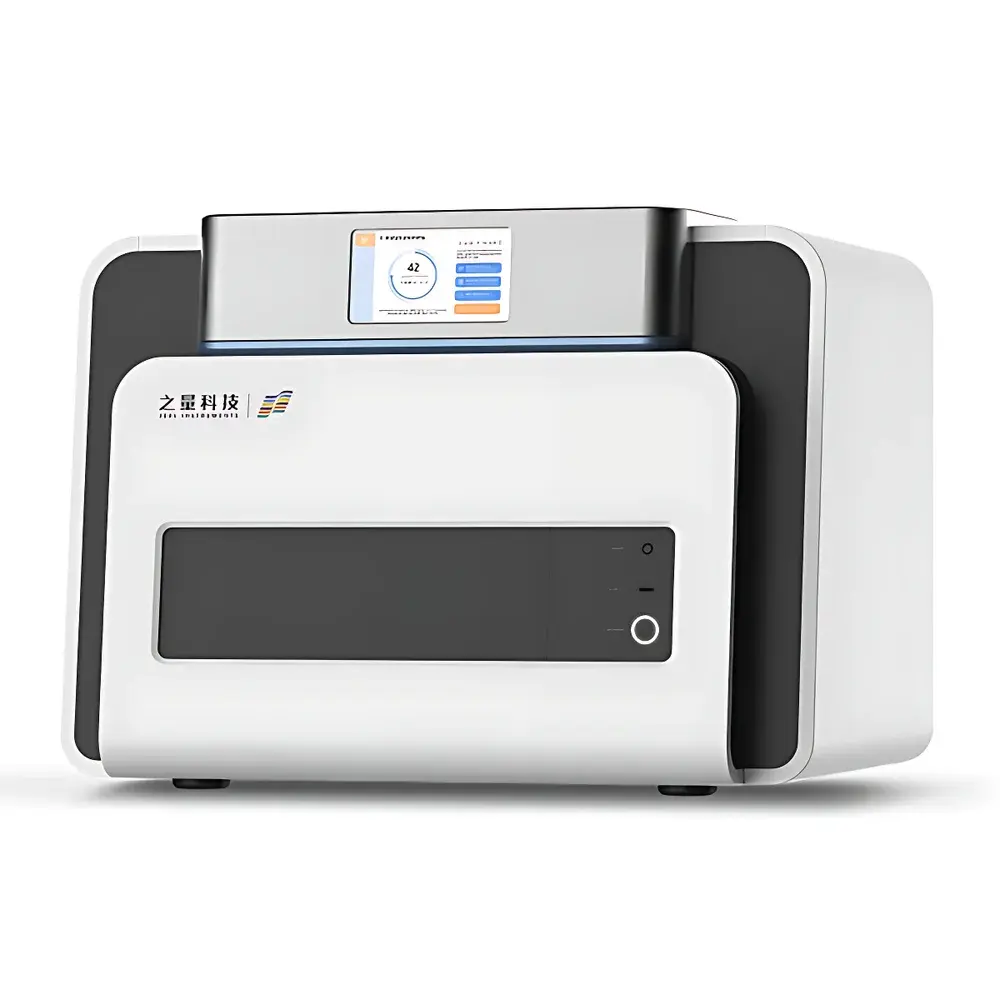
Young Instruments HFM 510A Heat Flow Meter Thermal Conductivity Analyzer
| Brand | Young Instruments |
|---|---|
| Origin | Zhejiang, China |
| Manufacturer Type | Direct Manufacturer |
| Product Category | Domestic |
| Model | HFM 510A |
| Measurement Principle | Heat Flow Method |
| Thermal Conductivity Range | 0.002–1 W/(m·K), extendable to 1–2 W/(m·K) |
| Plate Temperature Range | −30–90 °C |
| Thickness Measurement Range | 0–100 mm |
| Thickness Resolution | 0.02 mm |
| Contact Pressure | Adjustable up to 21 kPa (1930 N) |
| Thermal Resistance Range | 0.1–8 m²·K/W |
| Accuracy | ±(1–2)% |
| Repeatability | ≤0.5% |
| Sample Dimensions | 300 mm × 300 mm × ≤100 mm |
| Environmental Operating Range | −5–45 °C, <95% RH |
| Cooling System | External Oil Bath with Peltier Heating/Cooling Control |
| Data Acquisition Points | >10 per test cycle |
Overview
The Young Instruments HFM 510A Heat Flow Meter Thermal Conductivity Analyzer is a precision-engineered instrument designed for steady-state thermal conductivity and thermal resistance measurement of low-conductivity solid materials in accordance with internationally recognized standards including ASTM C518, ISO 8301, GB/T 10295-2008, JIS A1412, and DIN 12667. It operates on the guarded hot plate principle adapted for heat flow meter configuration—utilizing dual calibrated heat flux sensors positioned symmetrically between parallel plates to quantify heat transfer rate through a sample under controlled temperature differential. This method ensures high reproducibility and traceable calibration for insulating materials widely used in building science, aerospace composites, cryogenic packaging, and sustainable construction. The system features active thermal management via Peltier elements for both upper and lower plates, enabling precise, independent temperature control across a wide operational range (−30 °C to +90 °C), and supports extended-range testing up to 2 W/(m·K) with optional calibration configurations.
Key Features
- Automated mechanical operation: motorized lift mechanism for hot/cold plates, programmable contact load application (up to 21 kPa), auto-thickness measurement with ±0.02 mm resolution, and pneumatically assisted furnace door actuation
- Dual high-stability heat flux sensors with NIST-traceable calibration certificates ensure measurement integrity and minimize edge-loss error
- Integrated external oil bath cooling loop coupled with Peltier-based heating/cooling enables rapid thermal equilibration and long-term stability during extended tests
- Optional nitrogen purge system maintains dry test conditions, reducing moisture-induced thermal drift—critical for hygroscopic materials such as mineral wool, aerogels, and natural fibers
- Self-adaptive surface compensation algorithm accommodates non-planar or slightly uneven specimens without manual shimming or machining
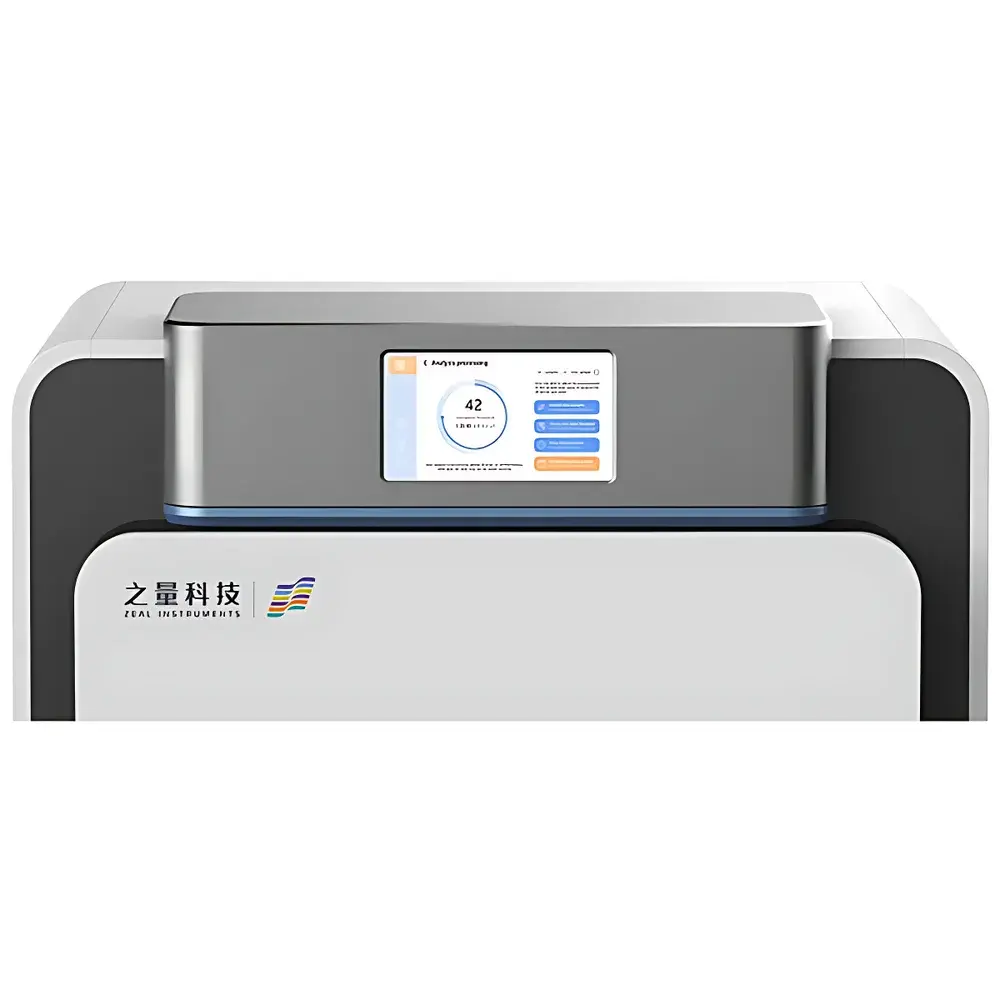
- Built-in industrial PC with 10.1″ HD capacitive touchscreen provides full standalone operation; supports USB mouse/keyboard, direct thermal printer connectivity, and local data archiving
- Intuitive HMI software includes offline mode for pre-test setup and post-run analysis without network dependency
Sample Compatibility & Compliance
The HFM 510A is validated for heterogeneous, anisotropic, and compressible low-conductivity materials—including expanded polystyrene (EPS), extruded polystyrene (XPS), rigid polyurethane (PU) foams, mineral wool, expanded perlite, foam glass, cork, sheep’s wool, silica aerogel blankets, lightweight concrete, and gypsum board. Its 300 mm × 300 mm test area and 100 mm maximum thickness capacity accommodate standard ASTM and ISO specimen geometries. All firmware and data handling routines comply with GLP requirements, supporting audit-ready electronic records, user authentication (role-based login), timestamped test logs, and configurable data export (CSV, PDF, XML). Optional 21 CFR Part 11 compliance packages are available upon request for regulated pharmaceutical or medical device thermal insulation validation.
Software & Data Management
The embedded analytical software delivers real-time visualization of temperature gradients, heat flux transients, and convergence metrics during each test cycle. It implements automatic equilibrium detection based on ASTM-defined criteria (e.g., <0.1 °C/h drift over 30 min). Test reports include raw sensor outputs, calculated thermal conductivity values with uncertainty budgets, reference standard traceability statements, and graphical overlays of thermal profiles. Historical data is indexed by operator ID, sample ID, date/time, and environmental metadata. Users may define custom storage paths, apply batch naming rules, and schedule automated backups to network drives or USB media. API-level integration with LIMS platforms is supported via TCP/IP socket protocol for enterprise-scale deployment.
Applications
- Building envelope R-value certification for insulation products under EN 12667 and ASTM C177
- Quality assurance of aerogel composite panels in HVAC ducting and cryogenic pipe wraps
- Thermal performance benchmarking of bio-based insulators (hempcrete, mycelium composites, cellulose fiber)
- R&D of phase-change material (PCM)-integrated boards requiring baseline conductivity verification
- Validation of fire-rated assemblies where thermal conductivity affects charring depth prediction models
- Material qualification for space-grade thermal blankets per NASA-STD-6002 and ECSS-Q-ST-70-08C
FAQ
What standards does the HFM 510A support out-of-the-box?
ASTM C518, ISO 8301, GB/T 10295-2008, JIS A1412, and DIN 12667 are fully implemented in the default test method library.
Can the system measure anisotropic materials like wood or layered composites?
Yes—the dual-sensor architecture and independent plate control allow directional thermal property assessment when samples are oriented orthogonally to heat flow.
Is calibration traceable to national metrology institutes?
All heat flux sensors ship with individual calibration certificates traceable to NIST or CNAS-accredited laboratories, with recalibration intervals recommended annually or per 500 test cycles.
Does the instrument require external PC connectivity for routine operation?
No—it operates autonomously using its onboard industrial computer; external PCs are only needed for advanced data migration or LIMS integration.
How is sample thickness measured during testing?
Integrated linear variable differential transformers (LVDTs) mounted on each plate provide continuous, non-contact thickness monitoring with 0.02 mm resolution before and during compression.



