
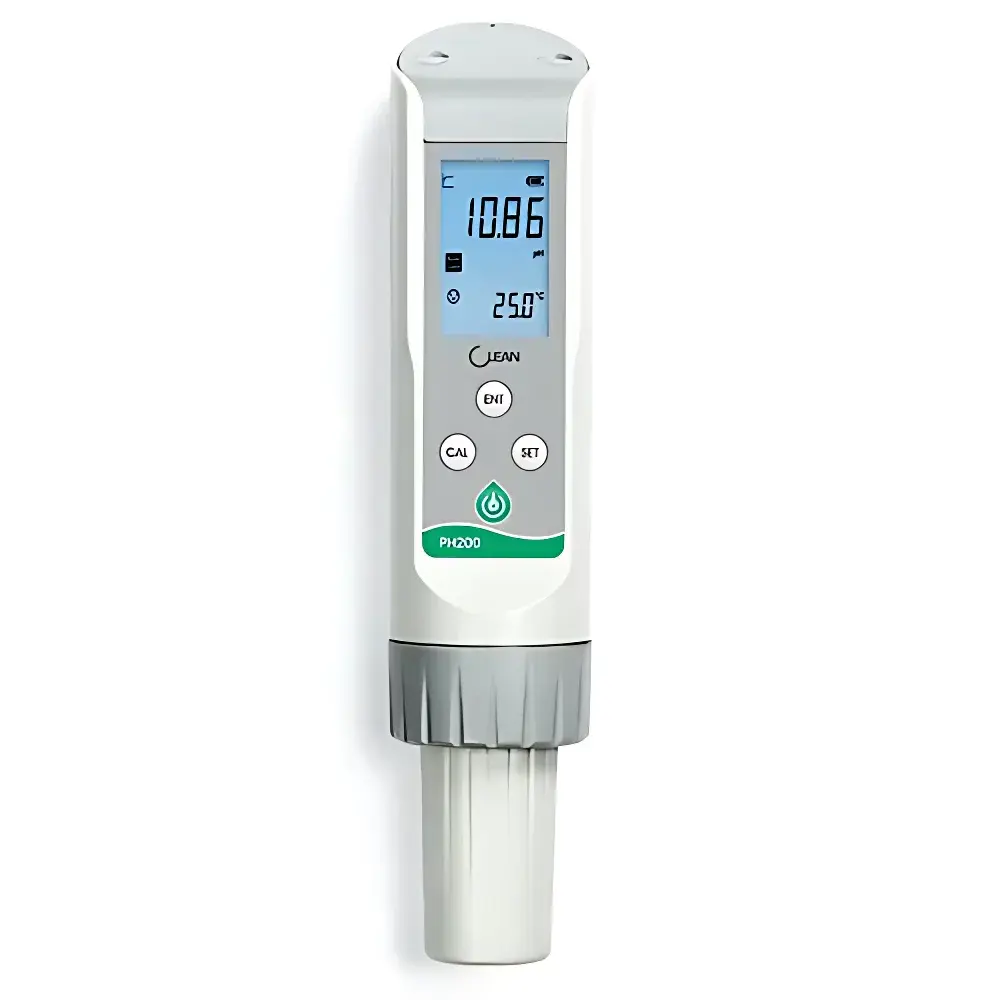
CLEAN PH30 Portable pH Meter
| Brand | CLEAN |
|---|---|
| Origin | USA |
| Model | PH30 |
| Instrument Type | Pen-style pH Meter |
| Parameter Type | Single-parameter (pH) |
| Measurement Range | -2.00 to +16.00 pH |
| Resolution | 0.01 pH |
| Accuracy | ±0.01 pH |
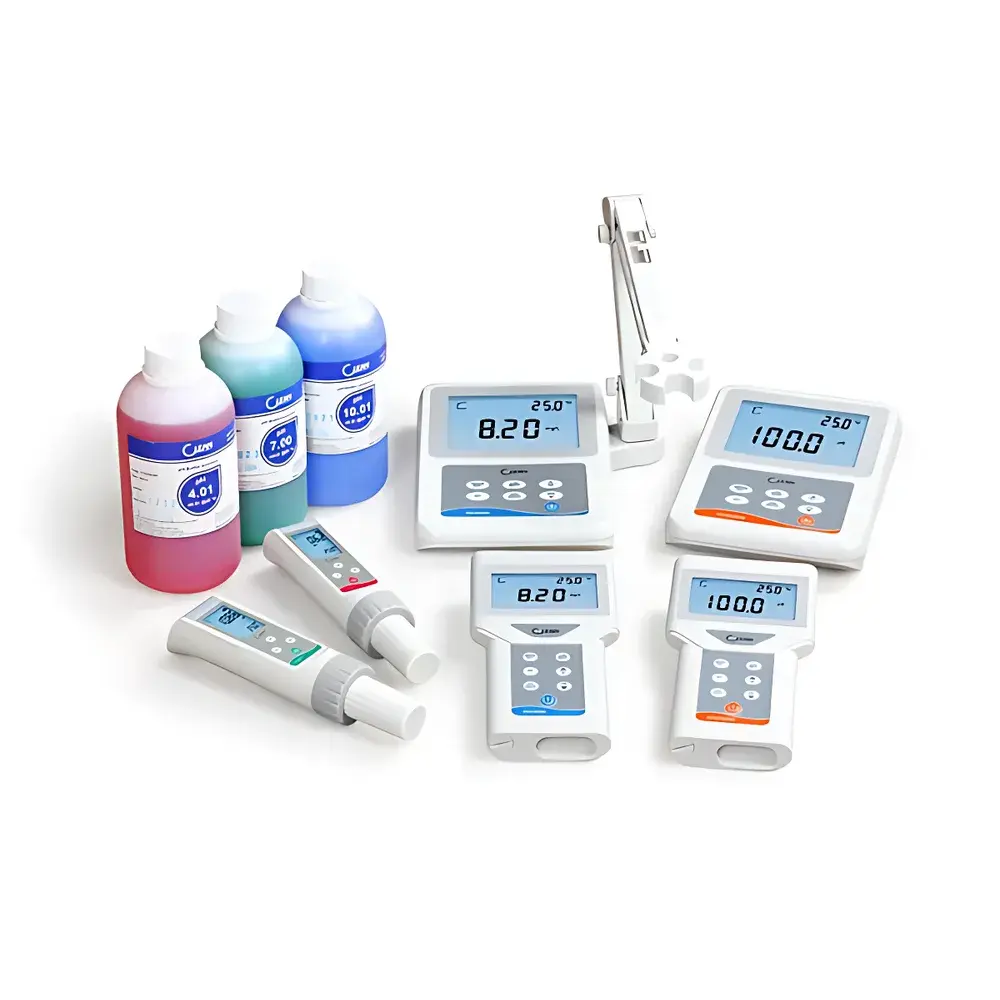
| Calibration Standards | USA (4.01, 7.00, 10.01) and NIST traceable (4.01, 6.86, 9.18) |
| Temperature Range | 0.0–100.0 °C |
| Temperature Resolution | 0.1 °C |
| Temperature Compensation | ATC / MTC |
| Electrode | Replaceable high-impedance flat-surface electrode (CS1930) |
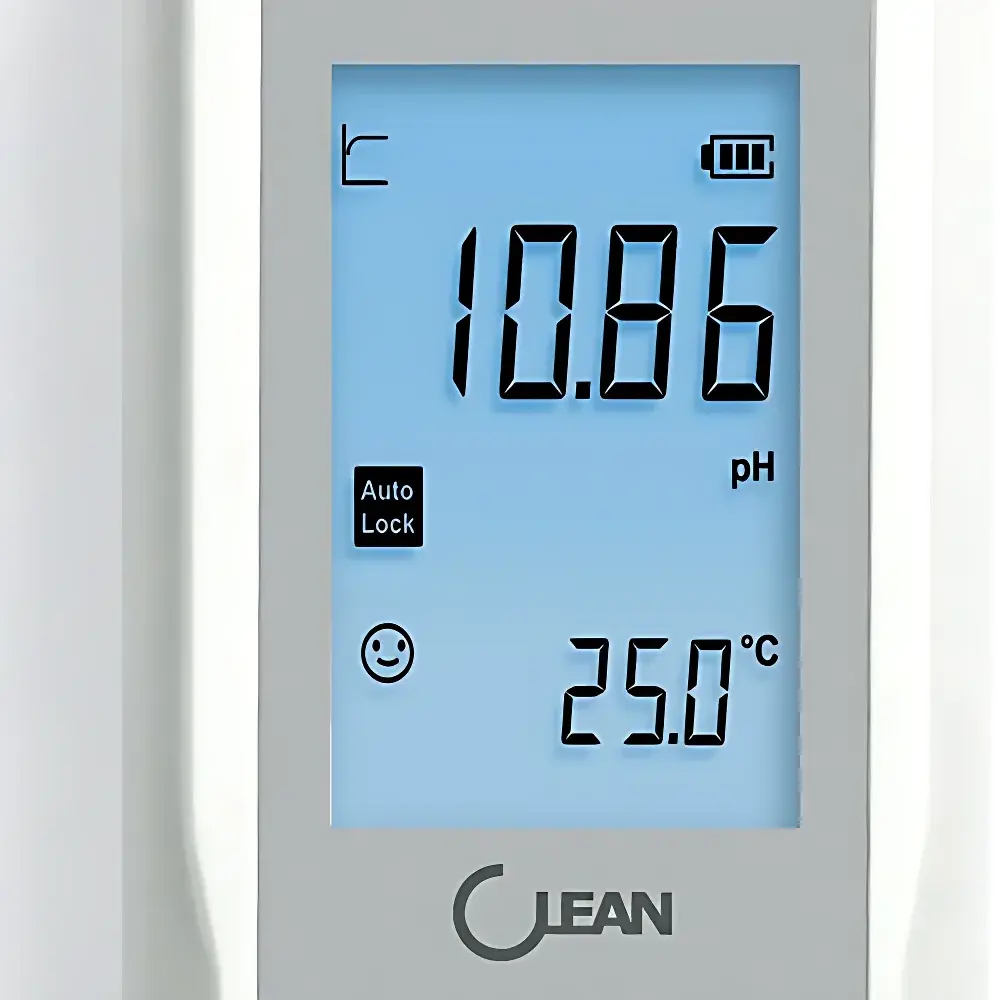
| Display | Multi-line LCD (21 × 34 mm), backlight with energy-saving mode |
| IP Rating | IP67 |
| Auto-off | 5 min |
| Power | 1 × 1.5 V AAA battery (>500 h lifetime) |
| Dimensions | 185 × 40 × 48 mm |
| Weight | 95 g |
Overview
The CLEAN PH30 Portable pH Meter is a precision-engineered, single-parameter electrochemical instrument designed for reliable, field-deployable, and laboratory-grade pH measurement across diverse sample matrices. Based on potentiometric principle using a high-impedance flat-surface glass electrode (model CS1930), the PH30 measures the hydrogen ion activity in aqueous and semi-solid media by detecting the potential difference between the sensing electrode and integrated reference system. Its extended pH range (–2.00 to +16.00) accommodates highly acidic or alkaline environments—such as industrial cleaning solutions, electroplating baths, or caustic wastewater—where conventional meters may fail. The device complies with fundamental electrochemical measurement standards under ISO 7888 and ASTM D1293 for pH determination in water, and its calibration protocol supports both USA-certified and NIST-traceable standard buffers, ensuring metrological traceability required for quality control and regulatory documentation.
Key Features
- IP67-rated rugged housing for full dust ingress protection and immersion resistance up to 1 m for 30 minutes—validated for field use in rain, humidity, or splashing conditions.
- Flat-surface CS1930 electrode enables direct surface contact measurements on non-liquid substrates including filter paper, blotting membranes, skin (for dermatological screening), and hydrated gel matrices—without requiring sample dilution or extraction.
- Auto-read and auto-hold functionality allows stable endpoint capture during in-situ water sampling; ideal for stream profiling, pond monitoring, or rapid grab sampling where manual stabilization is impractical.
- Multi-line LCD with adaptive backlight (30 s timeout) ensures legibility in low-light lab environments or shaded outdoor locations—no external illumination required.
- On-screen electrode health diagnostics provide real-time status feedback (e.g., slope deviation, offset drift, junction impedance), supporting proactive maintenance and GLP-compliant recordkeeping.
- Tool-free modular design permits user replacement of both battery and electrode—eliminating service downtime and reducing total cost of ownership over multi-year deployment cycles.
- Intelligent auto-calibration recognizes buffer pH values automatically during 3-point calibration, minimizing operator error and supporting audit-ready calibration logs.
Sample Compatibility & Compliance
The PH30 is validated for use with aqueous solutions, buffered standards, slurries, moist solid surfaces, and semi-viscous biological samples (e.g., agar plates, hydrogels). It meets IEC 61010-1 safety requirements for portable electrical equipment and conforms to RoHS Directive 2011/65/EU for hazardous substance restrictions. While not certified for medical device use under FDA 21 CFR Part 820, its measurement performance aligns with USP and EP 2.2.3 guidelines for pH verification in pharmaceutical water systems. Calibration traceability to NIST SRM 186, 186a, and 186b is supported via documented buffer preparation protocols included in the English-language operating manual.
Software & Data Management
As a standalone handheld meter, the PH30 does not interface with PC-based software or cloud platforms. However, all calibration events—including date/time stamp, buffer IDs, measured mV values, calculated slope (%), and offset (mV)—are retained in non-volatile memory and displayed on-screen for immediate review. This local data persistence satisfies basic GLP requirements for traceability without dependency on external systems. For laboratories requiring electronic records, users may manually transcribe calibration and measurement data into LIMS or Excel templates compliant with 21 CFR Part 11 when paired with documented SOPs for data entry validation.
Applications
- Environmental monitoring: Real-time pH profiling of rivers, lakes, stormwater runoff, and groundwater wells using throw-and-read methodology.
- Quality assurance in paper manufacturing: Surface pH assessment of coated stocks, recycled pulp sheets, and archival documents per TAPPI T 435 sp.
- Academic teaching labs: Student experiments involving titration endpoints, buffer capacity analysis, and acid–base equilibrium demonstrations.
- Food & beverage QC: Spot-checking rinse water pH in dairy processing lines or sanitizing solution acidity prior to CIP cycles.
- Hydroponics and aquaculture: Daily monitoring of nutrient solution stability and recirculating tank chemistry to prevent microbial imbalance.
FAQ
What calibration standards are supported?
The PH30 auto-detects and accepts both USA-certified (pH 4.01, 7.00, 10.01) and NIST-traceable (pH 4.01, 6.86, 9.18) buffers. Calibration reports display slope and offset for each point.
Can the electrode be used for soil or paste measurements?
Yes—the flat-surface CS1930 electrode is suitable for direct contact with moist soils, creams, gels, and filter papers. Ensure consistent hydration and avoid excessive pressure to prevent membrane damage.
Is temperature compensation fully automatic?
The PH30 offers both Automatic Temperature Compensation (ATC) via integrated thermistor and Manual Temperature Compensation (MTC) input; ATC is enabled by default during measurement.
How often should the electrode be replaced?
Under typical use (≤5 measurements/day), the CS1930 electrode maintains ±0.01 pH accuracy for 12–18 months. Performance degradation is indicated by slope ±35 mV during calibration.
Does the PH30 meet ISO/IEC 17025 requirements for accredited testing?
While the instrument itself is not accredited, its metrological specifications, NIST-traceable calibration support, and on-device calibration logging enable laboratories to implement it within an ISO/IEC 17025-compliant measurement process when combined with documented uncertainty budgets and proficiency testing.




