
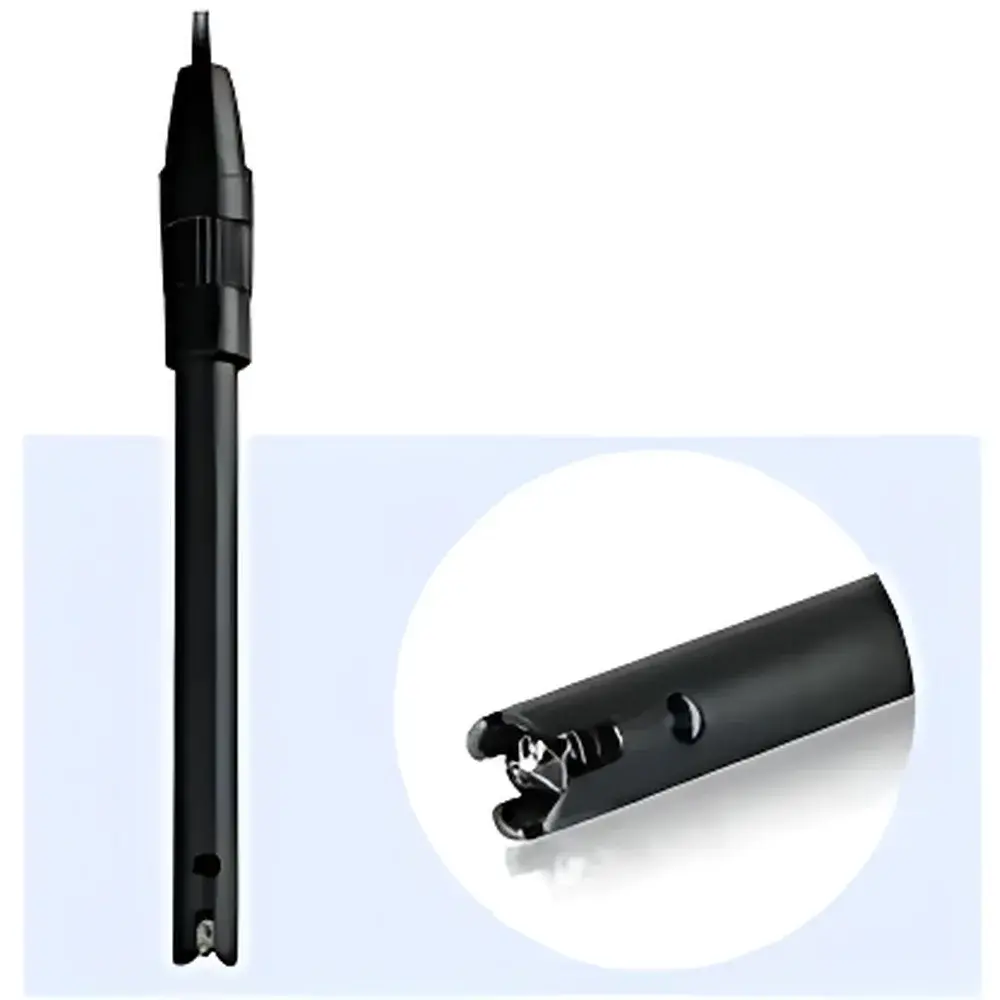
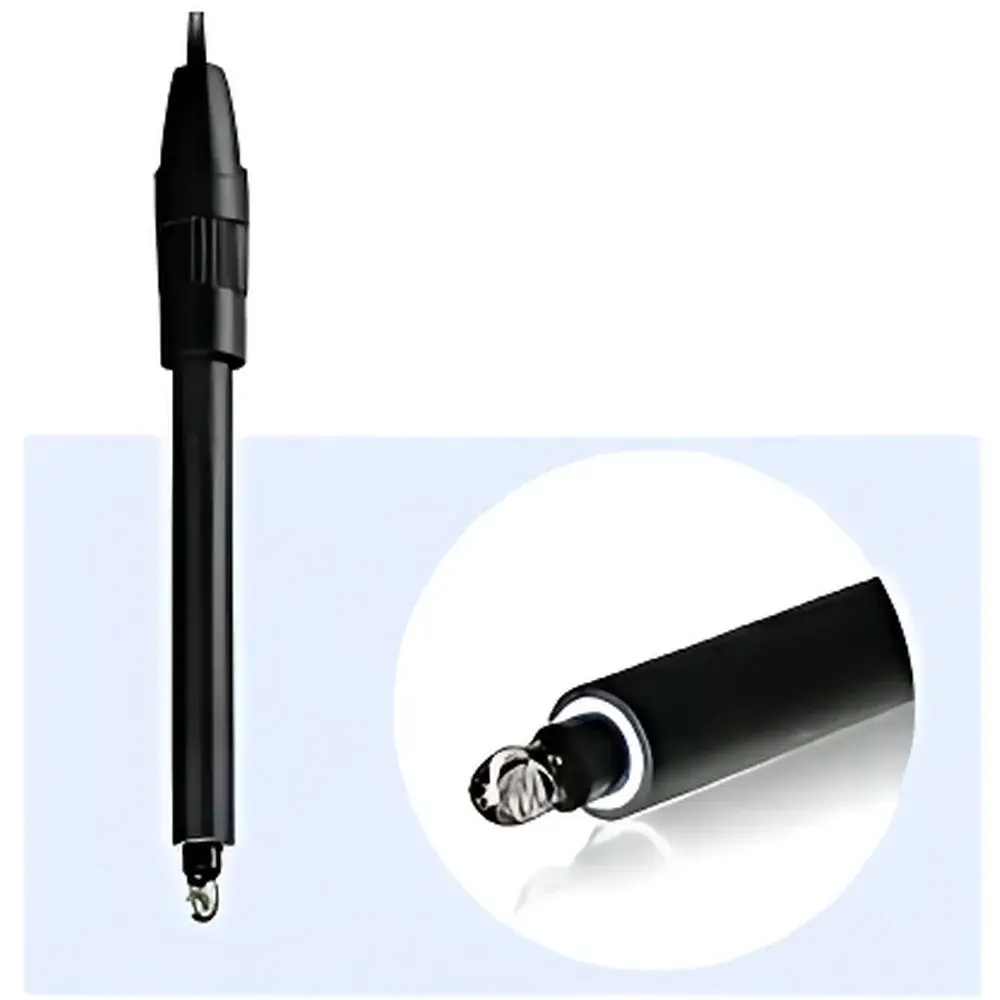
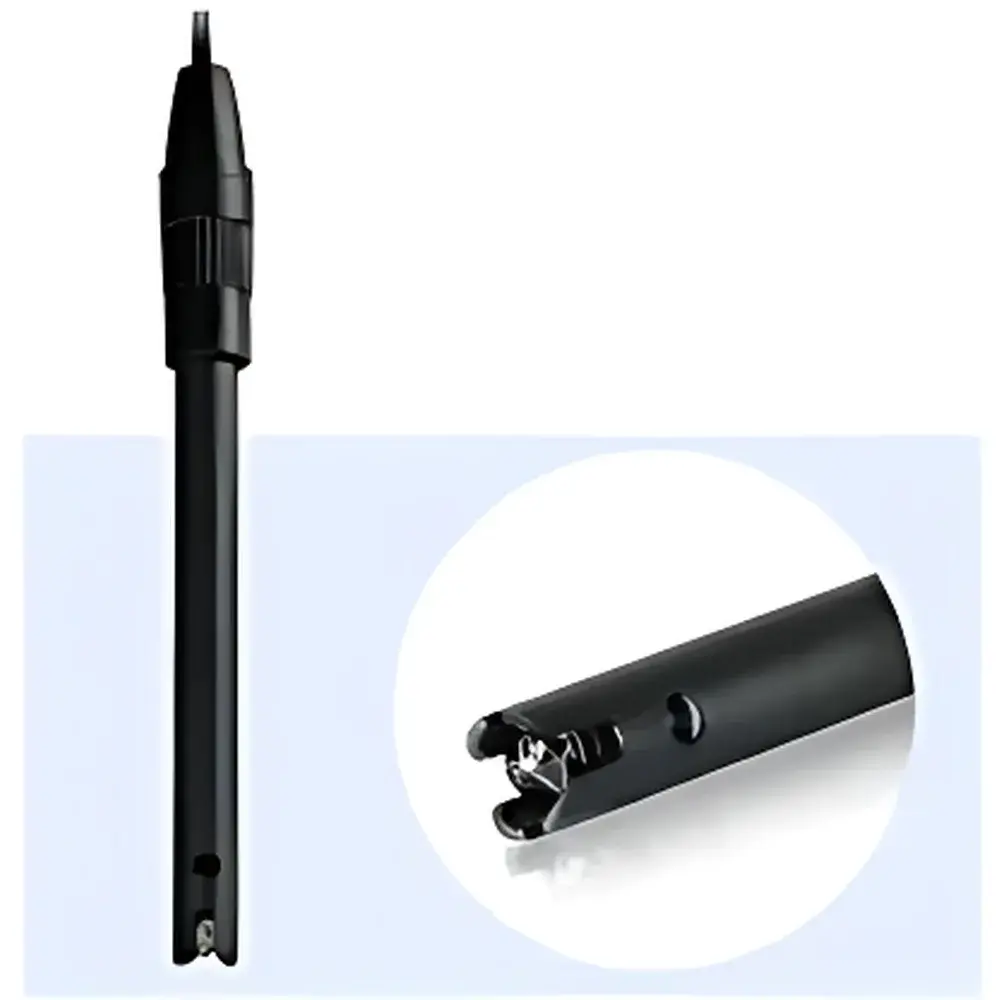
CLEAN CS1778 SNEX Solid-State Junction pH Combination Electrode
| Brand | CLEAN |
|---|---|
| Origin | USA |
| Model | CS1778 |
| Instrument Type | Inline/Process pH Electrode |
| Parameter Type | Single-Parameter (pH) |
| Measurement Range | 0–14.0 pH |
| Resolution | 0.1 pH |
| Accuracy | ±0.1 pH |
| Calibration Standard | NIST-traceable USA buffer solutions (pH 4.01, 7.00, 10.01) |
| Operating Temperature | 0–90 °C |
| Max Pressure | 20 bar (@ 50 °C) |
| Body Material | Polyphenylsulfone (PPS) |
| Reference System | SNEX Ag/AgCl/KCl solid-state junction |
| Liquid Junction | Solid-State Junction (SSJ), non-porous, ion-exchange-free |
| Temperature Sensor | Integrated Pt1000 RTD |
| Process Connection | NPT 3/4" |
| Cable | 5 m coaxial, BNC termination |
| pH Sensing Element | Chemically resistant, abrasion-resistant glass membrane |
Overview
The CLEAN CS1778 SNEX Solid-State Junction pH Combination Electrode is an industrial-grade, process-optimized electrochemical sensor engineered for continuous, high-reliability pH monitoring in aggressive wet flue gas desulfurization (WFGD) systems. Unlike conventional pH electrodes relying on porous ceramic or sleeve-type liquid junctions, the CS1778 implements CLEAN’s proprietary Solid-State Junction (SSJ) technology — a non-porous, ionically conductive polymer matrix that eliminates electrolyte diffusion and physical exchange with the process medium. This architecture fundamentally decouples the reference potential from contamination pathways common in limestone slurry environments: particulate fouling, sulfide poisoning of Ag/AgCl elements, KCl depletion, and junction clogging. The electrode operates on standard potentiometric principles, generating a Nernstian response (−59.16 mV/pH at 25 °C) referenced against a stable, internally buffered Ag/AgCl/KCl system. Its design targets applications where traditional electrodes exhibit rapid drift, frequent recalibration, and premature failure — particularly in high-solids, high-sulfide, alkaline slurries typical of forced-oxidation WFGD absorbers.
Key Features
- Solid-State Junction (SSJ): Non-porous, chemically inert polymer junction eliminates electrolyte leakage, prevents sulfide (H₂S, HS⁻) ingress, and ensures long-term reference stability in sulfur-rich environments.
- Abrasion-Resistant pH Glass Membrane: Specially formulated low-resistance glass optimized for sustained signal fidelity under turbulent, high-density limestone slurry flow (up to 15–20 wt% solids).
- Robust PPS Housing: Polyphenylsulfone body provides exceptional chemical resistance to oxidizing agents, strong alkalis (e.g., Ca(OH)₂, NaOH), and thermal cycling up to 90 °C.
- Integrated Pt1000 Temperature Sensor: Enables automatic temperature compensation (ATC) compliant with IEC 60746-1 and ASTM D1293, supporting accurate pH calculation across the full operating range.
- NPT 3/4″ Process Thread: Facilitates secure, leak-tight installation into absorber sumps, recirculation lines, and slurry tanks; rated for continuous operation at ≤20 bar (70 °C derated).
- Extended Maintenance Interval: Validated for calibration intervals up to 90 days under typical WFGD conditions — reducing operational downtime and labor cost versus conventional electrodes.
Sample Compatibility & Compliance
The CS1778 is validated for direct immersion in limestone-gypsum slurry (pH 4.8–6.2), lime slurry, caustic scrubber solutions, and other high-TDS, high-suspended-solids media containing sulfides, carbonates, and fine particulates. It complies with material compatibility requirements per ASTM D1129 (standard terminology for water) and meets functional performance criteria outlined in ISO 15197:2013 Annex C for process pH sensors. While not a medical device, its construction adheres to RoHS 2011/65/EU and REACH SVHC screening protocols. For regulated industries, the electrode supports audit-ready documentation including NIST-traceable calibration certificates and material declarations (EN 10204 3.1).
Software & Data Management
The CS1778 outputs a standard mV signal (±1500 mV) compatible with all industrial pH transmitters supporting high-impedance differential input (≥10¹² Ω). When paired with CLEAN-compatible or third-party transmitters (e.g., METTLER TOLEDO M300, Endress+Hauser Liquiline CM44P), it enables full digital integration via HART 7 or Modbus RTU. Transmitter firmware must support SSJ-specific calibration routines, including asymmetric two-point calibration (e.g., pH 5.00 and 6.00) reflecting actual WFGD setpoints. Data logging, trend analysis, and alarm thresholds (e.g., drift > ±2 mV/24 h) are configurable per site-specific QA/QC protocols. For FDA-regulated facilities, transmitter systems employing this electrode may be validated under 21 CFR Part 11 when equipped with electronic audit trails and user access controls.
Applications
Primary deployment includes real-time pH control in forced-oxidation wet limestone FGD systems across coal- and biomass-fired power plants. Secondary applications span chemical process control in sulfate recovery units, pulp & paper bleach plant effluent streams, mining tailings neutralization ponds, and wastewater treatment bioreactors exposed to sulfidic conditions. The electrode is not recommended for ultra-low-ionic-strength applications (<50 µS/cm) or highly fluorinated media (e.g., HF solutions), where alternative sensing architectures (e.g., double-junction or gel-filled reference) remain preferable.
FAQ
What distinguishes the SNEX Solid-State Junction from conventional liquid junctions?
The SSJ replaces porous frits or fiber wicks with a dimensionally stable, ion-conductive polymer. It conducts current without net ion transfer — eliminating junction potential drift, electrolyte depletion, and chemical poisoning.
Can the CS1778 be used in pure water or low-conductivity streams?
No. Due to its high-impedance design and lack of flowing electrolyte, it requires minimum conductivity ≥200 µS/cm. For deionized water, specify model CS1788 or CS1688.
Is cleaning required between calibrations?
Yes — mechanical cleaning with soft brush and mild detergent is recommended weekly; avoid abrasive pads or strong acids. Soaking in 10% HNO₃ is permissible only if sulfide blackening is observed.
Does the electrode require refilling or electrolyte replacement?
No. The SNEX reference system is sealed and maintenance-free for the service life of the sensor (typically 18–24 months in WFGD service).
How does pH control impact gypsum quality in FGD systems?
Optimal pH (5.4–5.5) balances SO₂ absorption kinetics and CaSO₄·2H₂O crystallization. Deviations increase unreacted CaCO₃ carryover and reduce dewatering efficiency — making stable, low-drift pH measurement critical to product specification compliance (ASTM C227).



