
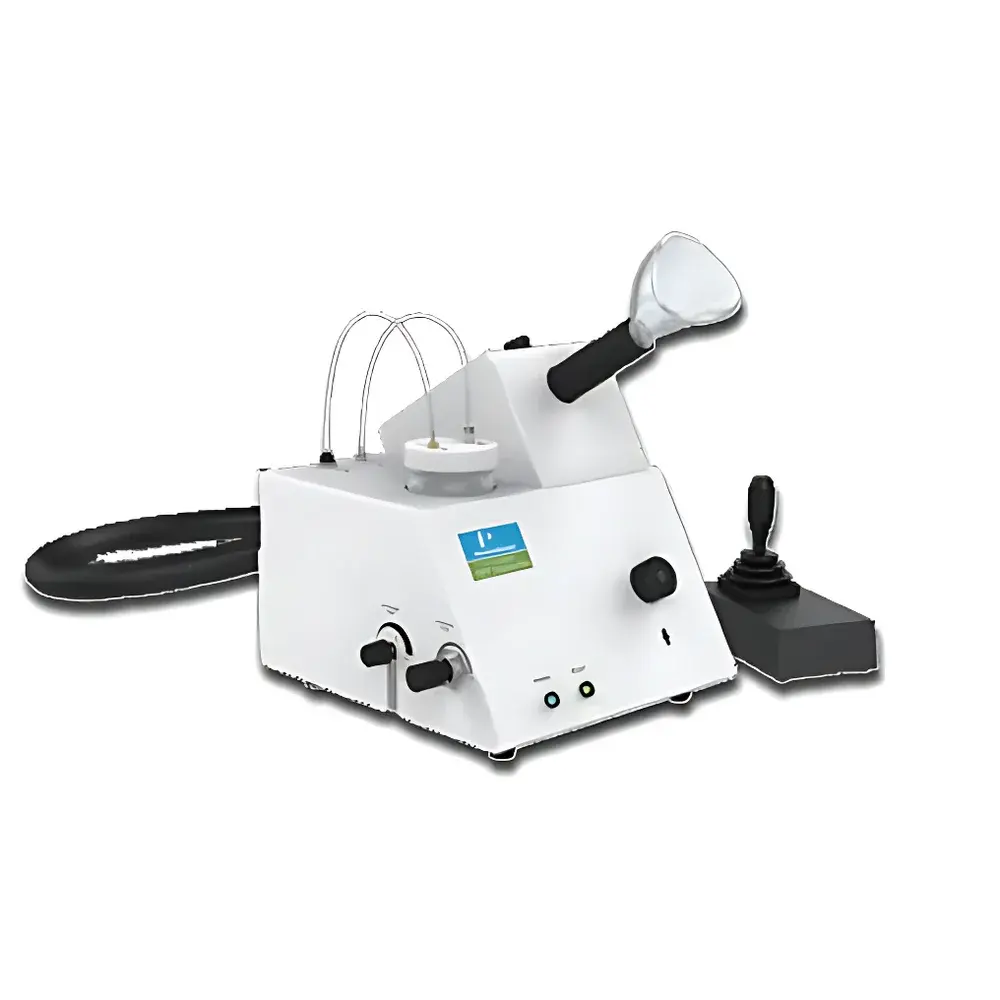
PerkinElmer SNFR Olfactometry Interface for Gas Chromatography
| Brand | PerkinElmer |
|---|---|
| Origin | USA |
| Manufacturer Type | Original Equipment Manufacturer (OEM) |
| Import Status | Imported |
| Model | SNFR |
| Pricing | Available Upon Request |
Overview
The PerkinElmer SNFR Olfactometry Interface is a purpose-built, GC-coupled olfactometric detection system engineered to integrate human sensory evaluation directly into gas chromatographic analysis. Unlike standalone sniffing ports or third-party add-ons, the SNFR is designed and manufactured by PerkinElmer—the original developer of the host GC platform—ensuring native hardware synchronization, precise retention time alignment, and zero-latency odor delivery. It operates on the principle of simultaneous parallel detection: as analytes elute from the capillary column, the effluent is split in real time among up to three analytical detectors (e.g., FID, MS, ECD) and the olfactometric port, maintaining stoichiometric flow integrity and enabling direct correlation between chemical identity (retention index/mass spectrum) and perceived odor quality/intensity. This architecture supports rigorous sensory-chemical correlation studies required in flavor & fragrance R&D, product reformulation, off-flavor troubleshooting, and regulatory characterization under ISO 11036 and ASTM E679 methodologies.
Key Features
- Native GC integration with PerkinElmer Clarus® and Torion® GC platforms—no external signal converters or timing offsets
- Inert, low-dead-volume flow path constructed from deactivated fused silica and electropolished stainless steel
- Adjustable, replaceable borosilicate glass sniffing nozzle with integrated humidified air dilution control (RH 40–80% adjustable)
- Dedicated voice capture module with noise-canceling condenser microphone and on-board speech-to-text engine compliant with ISO/IEC 15504 process capability Level 2
- Ergonomic joystick interface for real-time intensity scoring (0–10 scale) synchronized to chromatographic retention time
- Simultaneous multi-detector compatibility: supports concurrent operation with FID, TCD, ECD, and single-quadrupole or triple-quadrupole mass spectrometers
- Retention-time-locked odor annotation: all sensory annotations are time-stamped with sub-second precision relative to GC acquisition clock
Sample Compatibility & Compliance
The SNFR interface accommodates standard 0.1–0.53 mm ID fused-silica capillary columns across all common stationary phases (e.g., DB-5ms, DB-WAX, FFAP, CP-Sil 8 CB). It accepts both split/splitless and cool-on-column injection modes. The inert flow path ensures compatibility with thermally labile volatiles (e.g., aldehydes, terpenes, sulfur compounds) without adsorption or catalytic degradation. Regulatory alignment includes support for GLP-compliant workflows: full audit trail logging (user ID, timestamp, intensity score, voice transcript hash), electronic signature capability per FDA 21 CFR Part 11, and traceable calibration records for humidification and flow splitting modules. Method validation documentation conforms to ICH Q2(R2) guidelines for combined instrumental/sensory assays.
Software & Data Management
Controlled via PerkinElmer’s TurboMass™ or Chromera™ CDS software, the SNFR module adds dedicated olfactometry acquisition panels within the same acquisition session. Sensory data—including voice recordings (WAV, 44.1 kHz), transcribed text, intensity scores, and annotator metadata—are embedded as structured XML objects within the native .chm or .raw file container. Overlay visualization renders odor intensity profiles as semi-transparent bar graphs directly atop the base chromatogram; cross-hair cursors enable synchronized inspection of MS spectra, FID response, and annotated odor descriptors at any retention time. Export formats include CSV (for multivariate statistical analysis in SIMCA or XLSTAT), PDF reports with embedded hyperlinked audio clips, and LIMS-ready XML schemas compliant with ASTM E1447.
Applications
- Flavor release kinetics profiling in beverages, dairy matrices, and baked goods
- Off-odor root-cause analysis in packaging migration studies and sterilization by-product identification
- Quantitative structure–odor relationship (QSOR) modeling using retention index–intensity–descriptor triads
- Consumer panel training standardization via reference chromatogram–sniffing profile libraries
- FDA GRAS dossier preparation requiring orthogonal sensory/chemical evidence for volatile constituents
- ISO 8586-compliant descriptive analysis method development for new aroma chemicals
FAQ
Is the SNFR compatible with non-PerkinElmer GC systems?
Yes—via analog/digital trigger I/O and standardized 1/8″ Swagelok fittings—but native synchronization, automated calibration, and full software integration are only guaranteed on PerkinElmer Clarus and Torion GC platforms.
What is the minimum detectable odor concentration supported?
Detection thresholds depend on compound volatility and panelist sensitivity; the system enables dynamic dilution down to 1:1000 (v/v) with humidified carrier gas, meeting ISO 11036 dilution series requirements.
How is voice data secured and validated?
All audio is encrypted at rest (AES-256) and tagged with SHA-256 hash; transcription logs retain speaker verification metadata and are immutable post-acquisition per 21 CFR Part 11 §11.10(d).
Can odor intensity be correlated with instrumental detector response?
Yes—TurboMass software computes Pearson correlation coefficients between FID peak area (or TIC intensity) and mean panelist intensity score across replicate injections, generating scatter plots with confidence intervals.
What maintenance is required for routine operation?
Quarterly nozzle cleaning with methanol/acetone, annual humidifier cartridge replacement, and biannual flow splitter calibration using certified NIST-traceable mass flow meters.




