
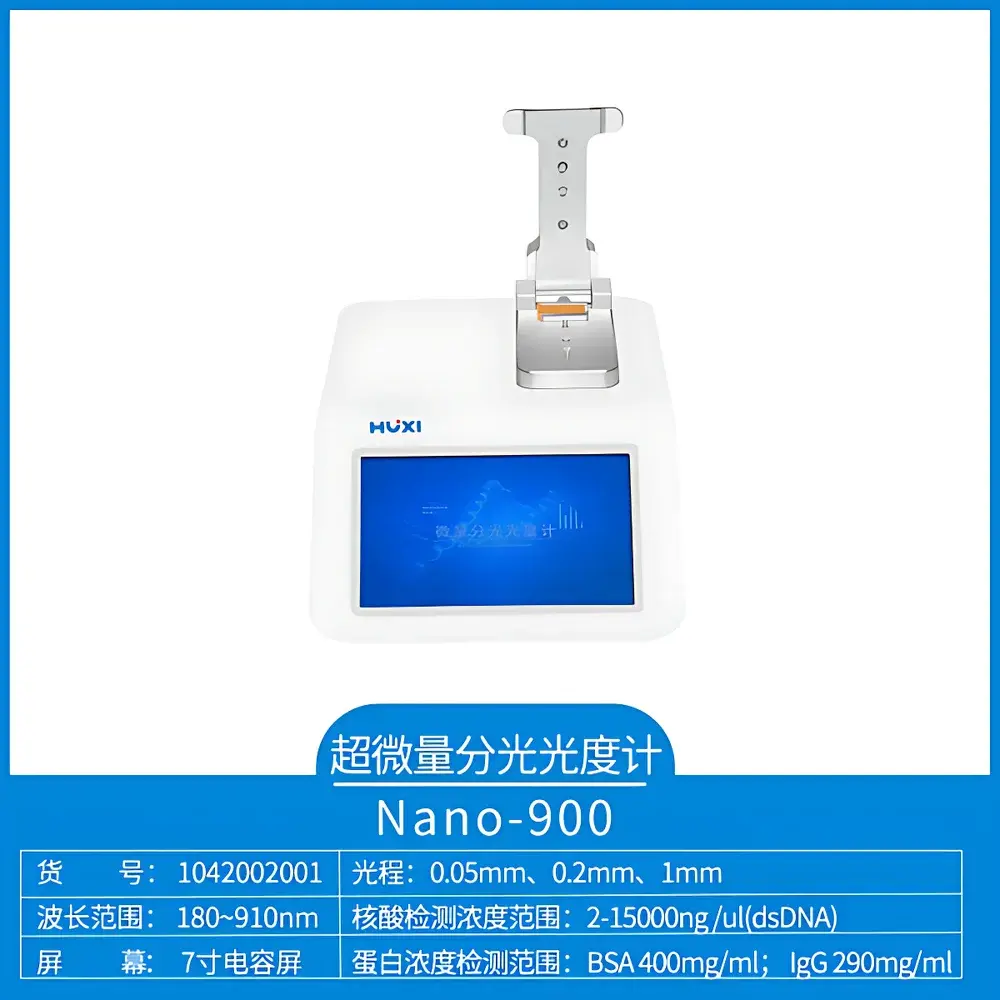
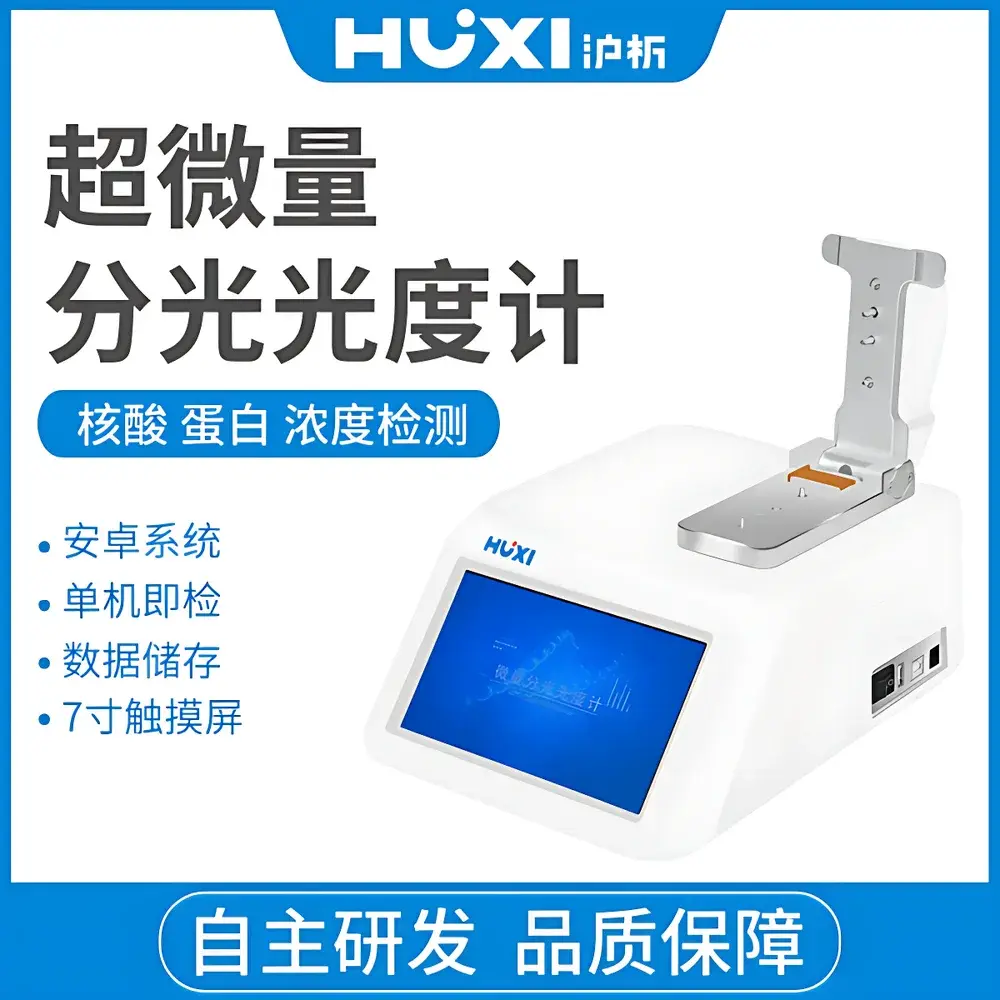
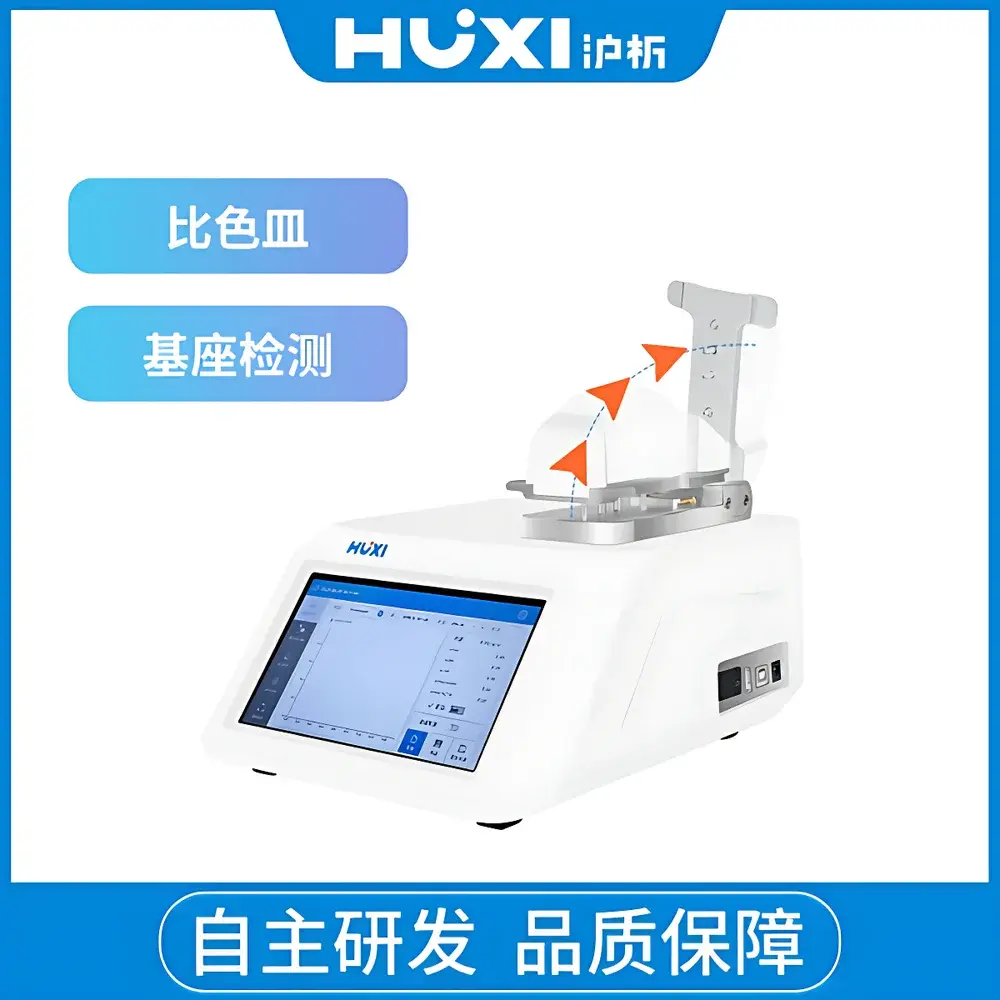
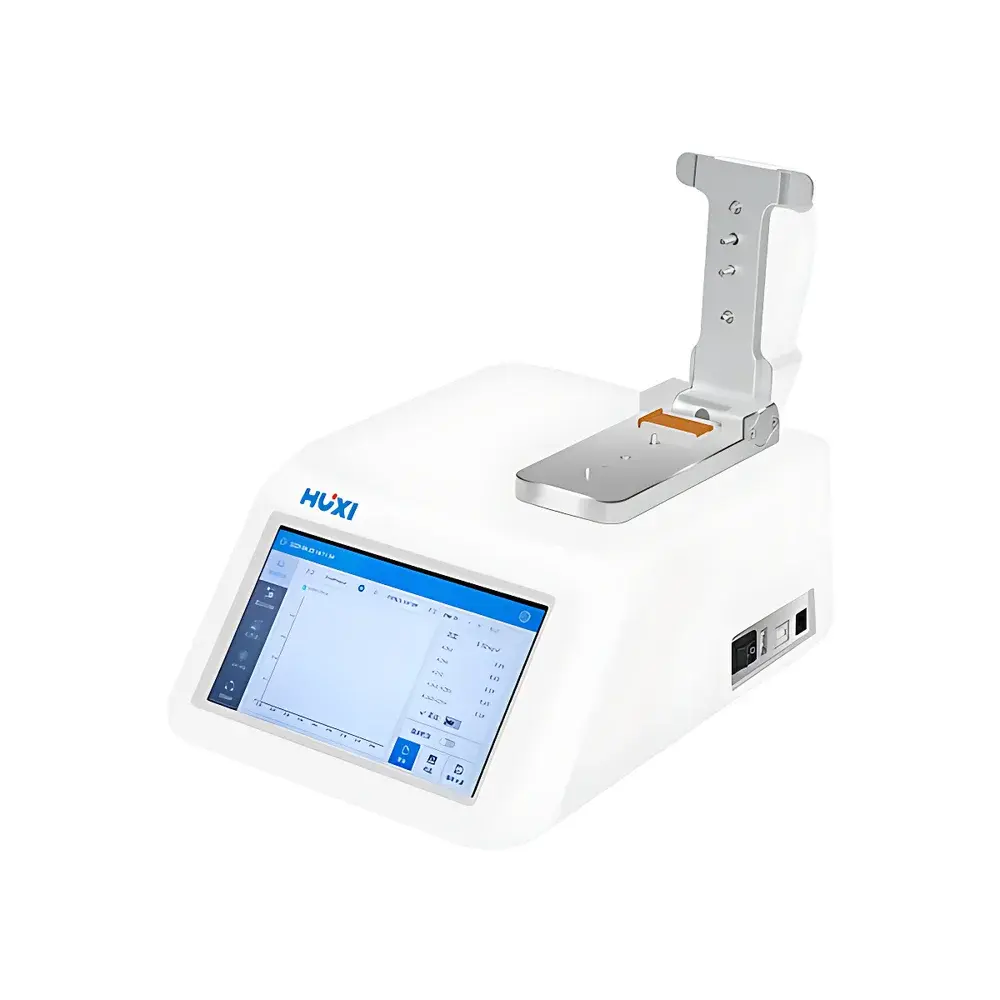
HUXI Nano-900 Ultra-Micro UV-Vis Spectrophotometer
| Brand | HUXI |
|---|---|
| Origin | Shanghai, China |
| Manufacturer Type | Direct Manufacturer |
| Model | Nano-900 |
| Spectral Bandwidth | ≤1.5 nm |
| Wavelength Accuracy | ±1 nm |
| Wavelength Range | 180–910 nm |
| Sample Volume | 0.5–2 µL |
| Optical Path Options | 0.05 mm, 0.2 mm, 1 mm |
| Light Source | Pulsed Xenon Lamp (≥10⁹ flashes) |
| Detector | 2048-pixel Linear CMOS Array |
| Absorbance Precision | 0.002 Abs (1 mm path) |
| Absorbance Range | 0.02–300 A (equivalent to 10 mm path at 260 nm) |
| DNA Quantification Range | 2–15,000 ng/µL (dsDNA) |
| Protein Quantification Range | BSA up to 400 mg/mL |
| OD₆₀₀ Range | 0–4.000 Abs |
| Measurement Time | <6 s |
| Data Output | USB storage (CSV, Excel-compatible tables |
Overview
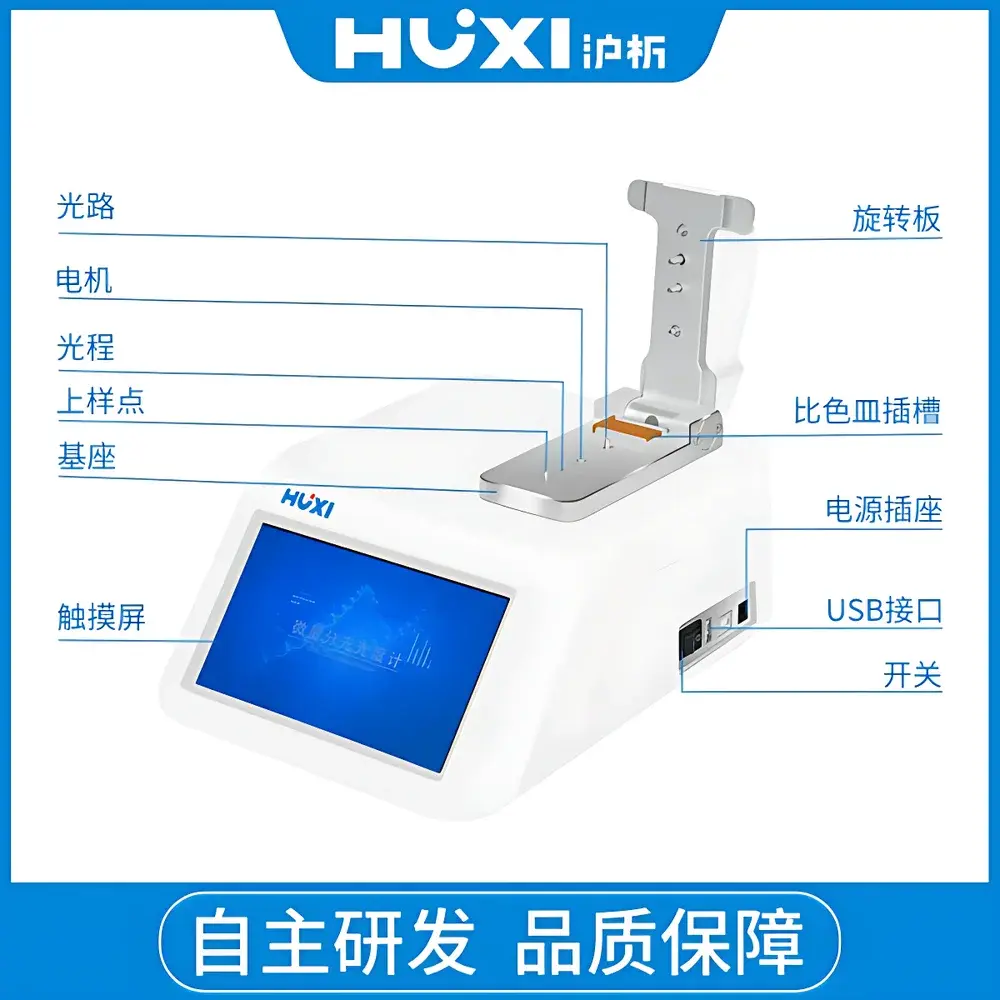
The HUXI Nano-900 Ultra-Micro UV-Vis Spectrophotometer is a benchtop, self-contained analytical instrument engineered for rapid, high-precision quantification of nucleic acids, proteins, and microbial suspensions using microvolume absorbance spectroscopy. It operates on the fundamental principle of Beer–Lambert law-based ultraviolet–visible absorption measurement, with integrated variable-pathlength technology enabling accurate concentration determination without sample dilution. Unlike conventional cuvette-based spectrophotometers requiring ≥50 µL volumes and fixed 10 mm pathlengths, the Nano-900 utilizes a quartz fiber–stainless steel optical base that accommodates sample volumes as low as 0.5 µL across three programmable pathlengths (0.05 mm, 0.2 mm, and 1 mm), delivering effective concentration sensitivity up to 50× higher than standard instruments. Its pulsed xenon lamp provides stable, broad-spectrum illumination from 180 nm to 910 nm—covering deep UV (nucleic acid A₂₆₀), near-UV (aromatic amino acids), visible (dye assays), and NIR regions—while eliminating warm-up time and photodegradation risks associated with deuterium/tungsten lamps.
Key Features
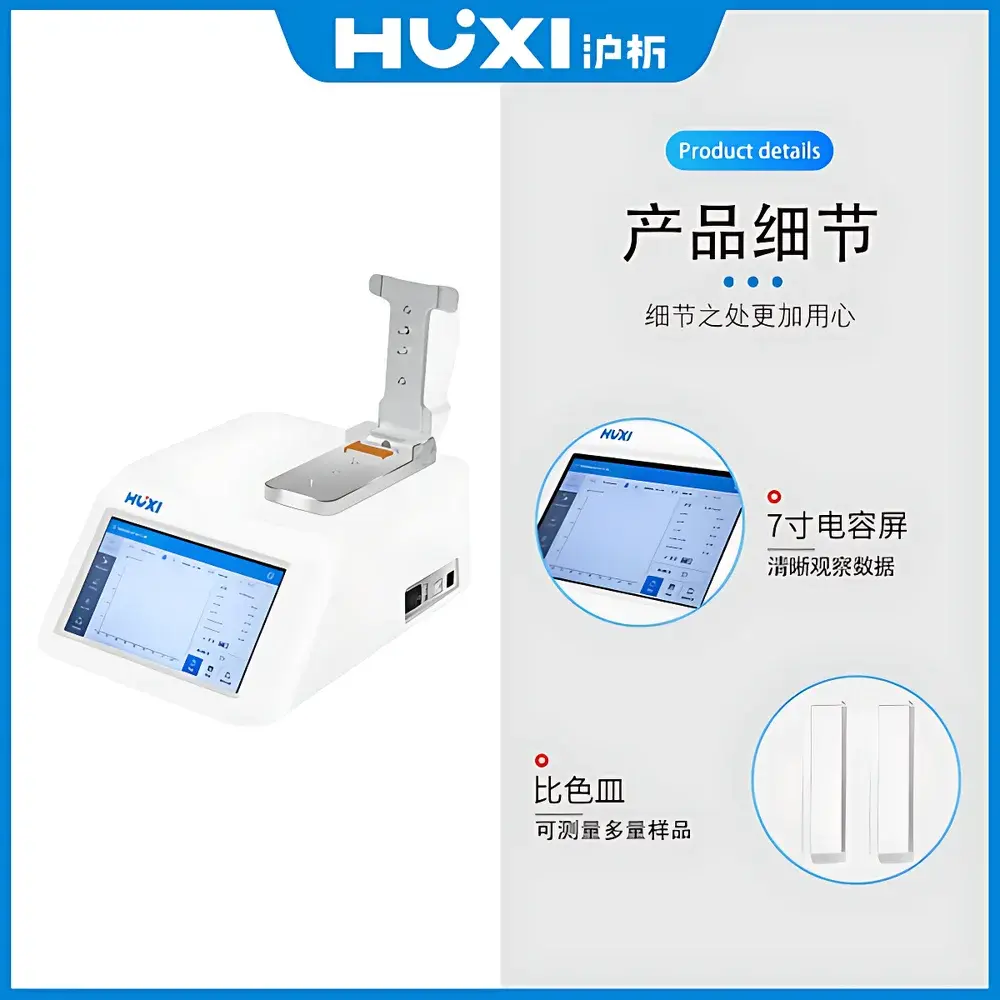
- Integrated Android-based operating system with 7-inch capacitive multi-touch display and dedicated spectral analysis interface—designed for intuitive navigation and minimal training requirements.
- Motor-driven precision stage with linear actuation (0.001 mm resolution) ensures repeatable optical path positioning and high absorbance reproducibility (≤0.5% RSD in 0–3 A range).
- Self-contained architecture: no external PC required for operation, data acquisition, or local storage—ideal for cleanroom environments, QC labs, and field-deployable applications.
- Simultaneous support for both microvolume drop-based analysis and standard 10 mm cuvette measurements via dedicated sample chamber—enabling flexible workflow integration for OD₆₀₀ bacterial culture monitoring and purified biomolecule characterization.
- Direct concentration output: automatic calculation and display of dsDNA (ng/µL), RNA, oligos, BSA (mg/mL), IgG (mg/mL), and custom analytes based on user-defined extinction coefficients.
- Robust mechanical design featuring 304 stainless steel housing and fused quartz optical surfaces—optimized for long-term stability, chemical resistance, and low-maintenance operation.
Sample Compatibility & Compliance
The Nano-900 supports a wide range of biological and chemical samples including purified dsDNA, ssDNA, RNA, synthetic oligonucleotides, proteins (BSA, IgG, lysozyme), labeled dyes (e.g., Cy3, Alexa Fluor), and microbial cell suspensions (E. coli, yeast). Its 180–910 nm spectral coverage meets common regulatory requirements for nucleic acid purity assessment (A₂₆₀/A₂₈₀, A₂₆₀/A₂₃₀ ratios per ISO 20395 and USP ). While not pre-certified for GMP environments, the instrument’s audit-ready data export (CSV with timestamp, operator ID, and measurement metadata), non-volatile internal storage, and deterministic firmware architecture facilitate alignment with GLP documentation practices and internal SOP validation protocols. The absence of moving parts in the optical train and flash-lamp longevity (>1 billion pulses) contribute to consistent inter-day performance required for routine QC applications.
Software & Data Management
All instrument control, spectral acquisition, and quantitative analysis are executed through the embedded Android OS application. Data files—including full-wavelength absorbance spectra (1 nm intervals), concentration reports, and ratio metrics—are saved locally to internal storage or exported via USB 2.0 to FAT32-formatted drives. Export formats include Excel-compatible CSV tables (UTF-8 encoded, comma-delimited) and annotated JPG images suitable for inclusion in lab notebooks or regulatory submissions. No proprietary software installation is required on host computers; raw spectral data retains wavelength calibration and pathlength metadata, supporting retrospective reprocessing if needed. Firmware updates are delivered via USB-loaded ZIP packages with SHA-256 checksum verification to ensure integrity.
Applications
- Routine quantification of nucleic acid yields post-extraction or enzymatic reaction (e.g., PCR, in vitro transcription).
- Assessment of protein purity and concentration prior to crystallization, SEC-MALS, or mass spectrometry workflows.
- High-throughput OD₆₀₀ monitoring of bacterial and yeast cultures during fermentation optimization and bioreactor inoculation.
- Verification of labeling efficiency in fluorescent probe conjugation (e.g., NHS-ester coupling) via absorbance ratio analysis.
- Quality control of oligonucleotide synthesis batches, including detection of truncation products via spectral shape deviation.
- Educational use in undergraduate biochemistry and molecular biology laboratories due to its plug-and-play simplicity and visual feedback loop.
FAQ
Does the Nano-900 require daily calibration with standards?
No—factory calibration is retained across power cycles. Users may perform optional baseline correction using ultrapure water or buffer before each session, but no NIST-traceable recalibration is necessary under normal operating conditions.
Can I import custom extinction coefficients for novel proteins or modified nucleic acids?
Yes—the instrument supports user-defined extinction coefficient entry (in L·g⁻¹·cm⁻¹ or L·mol⁻¹·cm⁻¹) for concentration calculations beyond the built-in library.
Is the quartz measurement surface resistant to common solvents like ethanol, isopropanol, or low-concentration SDS?
The fused quartz platform exhibits excellent resistance to alcohols and mild detergents; however, prolonged exposure to strong acids (e.g., TFA), bases (e.g., NaOH >0.1 M), or halogenated solvents is not recommended.
How is data security handled for regulated environments?
While the Nano-900 does not implement FDA 21 CFR Part 11 electronic signature or role-based access control, its immutable local logs (with timestamps and operator tags) and exportable audit trails support manual compliance documentation in ISO 17025 or CAP-accredited labs.
What maintenance is required beyond routine cleaning?
Annual verification of wavelength accuracy (using holmium oxide or didymium filters) and absorbance linearity (neutral density filters) is recommended for traceability; no optical alignment or lamp replacement is needed within the first 5 years of typical usage.




