
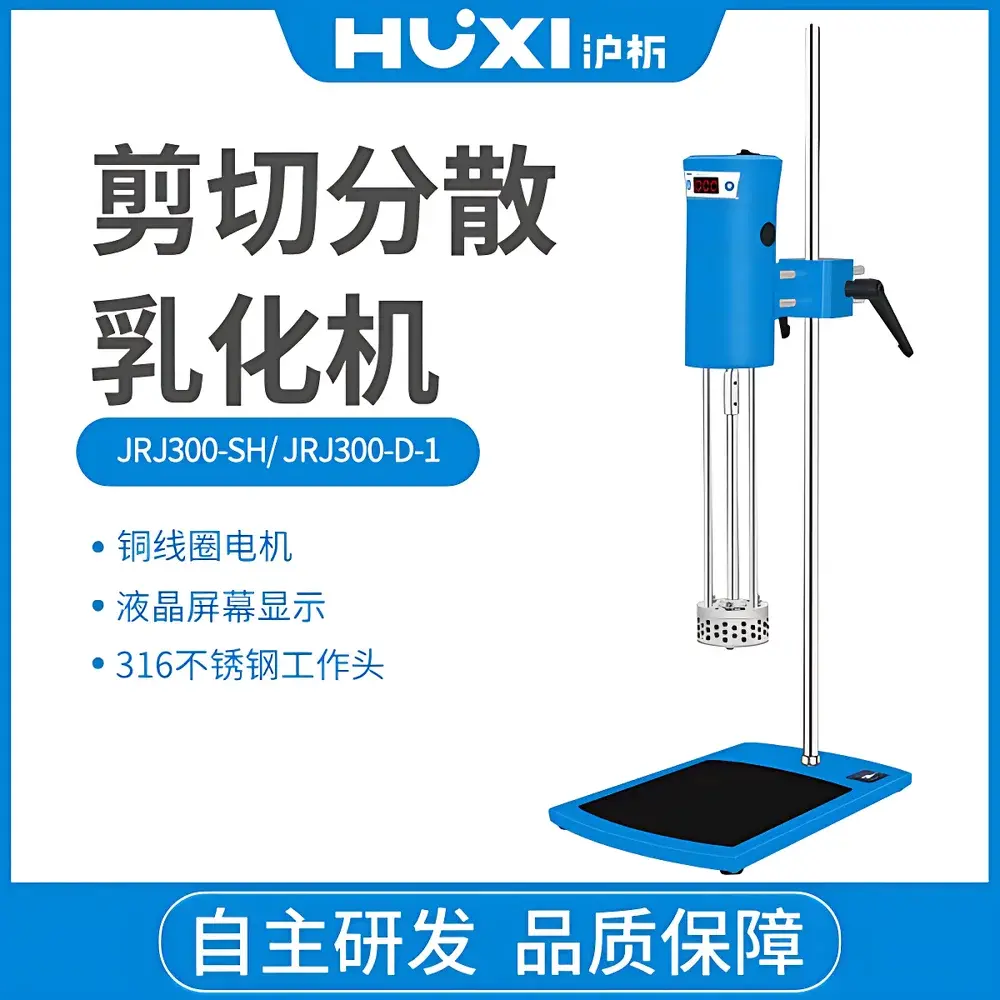
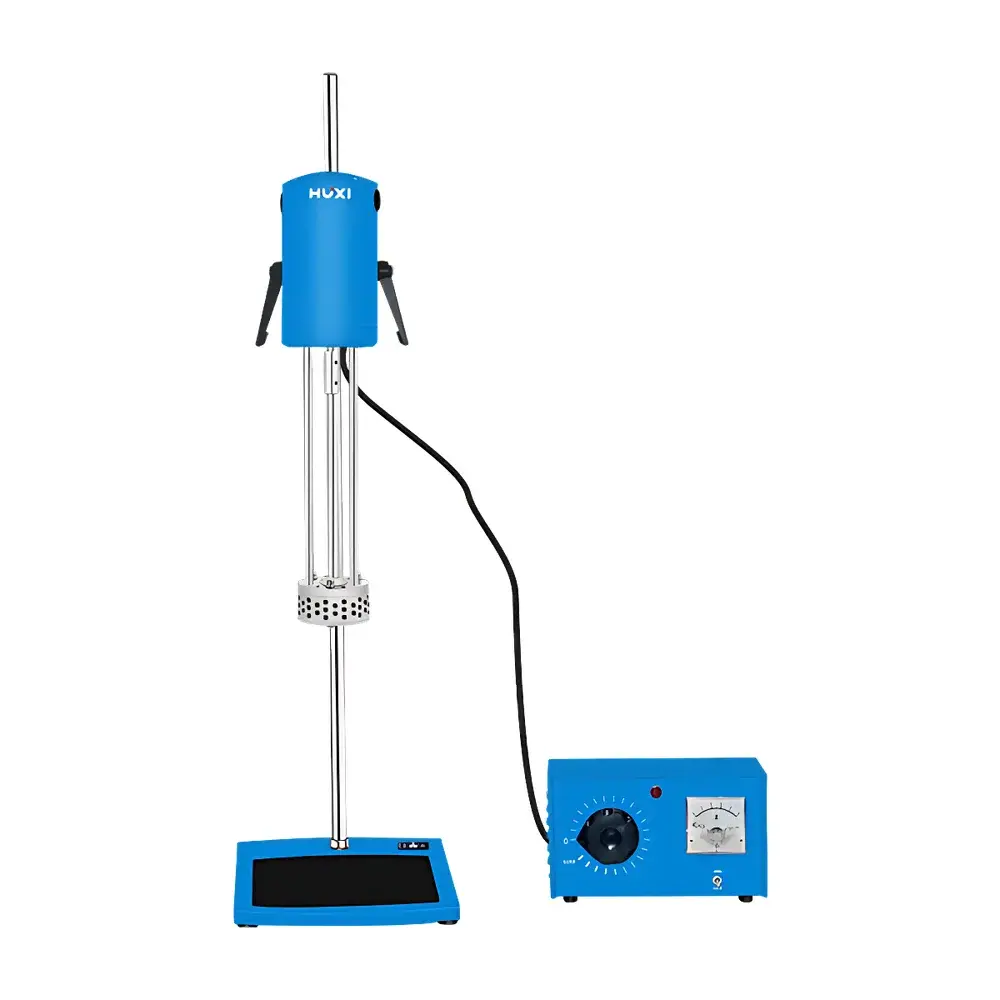
HUXI JRJ300-D-1 High-Speed Shear Dispersion Homogenizer
| Brand | HUXI |
|---|---|
| Origin | Shanghai, China |
| Manufacturer Type | Direct Manufacturer |
| Product Category | Domestic |
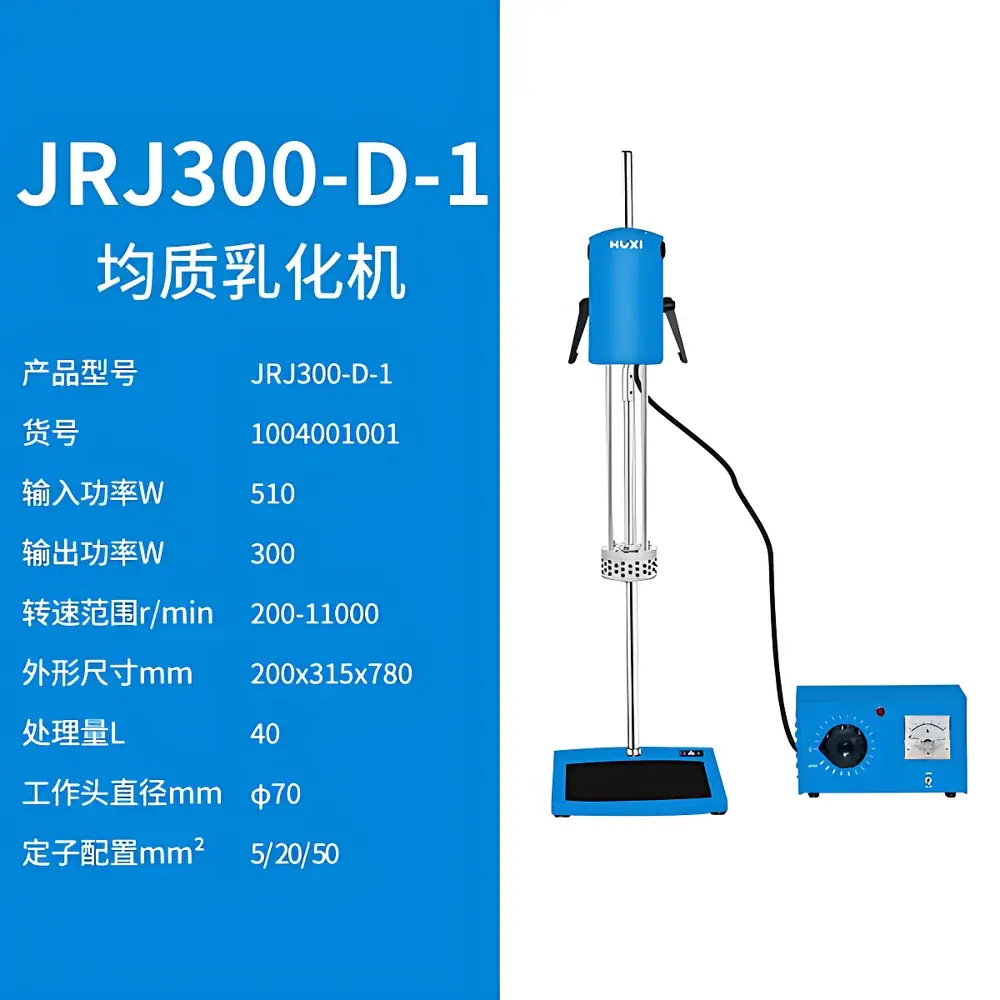
| Model | JRJ300-D-1 |
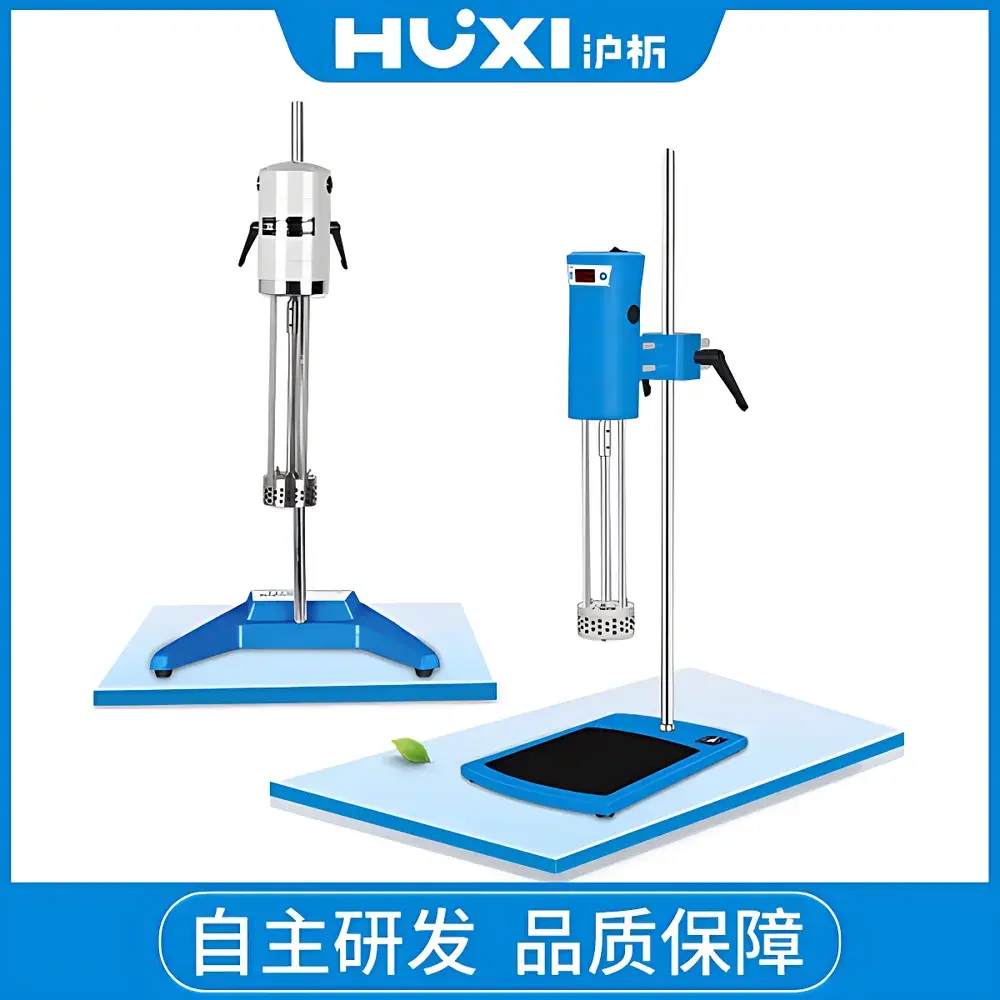
| Instrument Type | Probe-Type Rotor-Stator Homogenizer |
| Dimensions (W×D×H) | 250 × 650 × 720 mm |
| Maximum Processing Volume | 40 L |
| Speed Range | 200–11,000 rpm |
| Input Power | 510 W |
| Output Power | 300 W |
| Rated Torque | 34.1 N·cm |
| Power Supply | AC 220 V, 50 Hz |
| Rotor-Stator Head Diameter | φ70 mm |
| Interchangeable Stator Orifice Areas | 5 mm², 20 mm², 50 mm² |
Overview
The HUXI JRJ300-D-1 is a high-performance probe-type rotor-stator homogenizer engineered for rigorous laboratory and pilot-scale applications requiring controlled high-shear dispersion, emulsification, and particle size reduction in liquid-phase systems. It operates on the principle of intense hydrodynamic shear generated between a rapidly rotating rotor and a fixed stator—creating localized turbulence, cavitation, and extensional flow that disrupt aggregates, disintegrate soft solids, and stabilize oil-in-water or water-in-oil emulsions. Unlike ultrasonic or valve-based homogenizers, the JRJ300-D-1 delivers scalable, reproducible mechanical energy input across viscosities ranging from low (e.g., aqueous buffers) to moderately high (e.g., polymer solutions up to ~5,000 mPa·s), making it suitable for formulation development, nanoparticle synthesis support, cell lysis pre-screening, and quality control of suspensions and colloids.
Key Features
- Robust drive system powered by a compact, high-torque series-wound micro-motor delivering stable output up to 300 W mechanical power at speeds adjustable from 200 to 11,000 rpm.
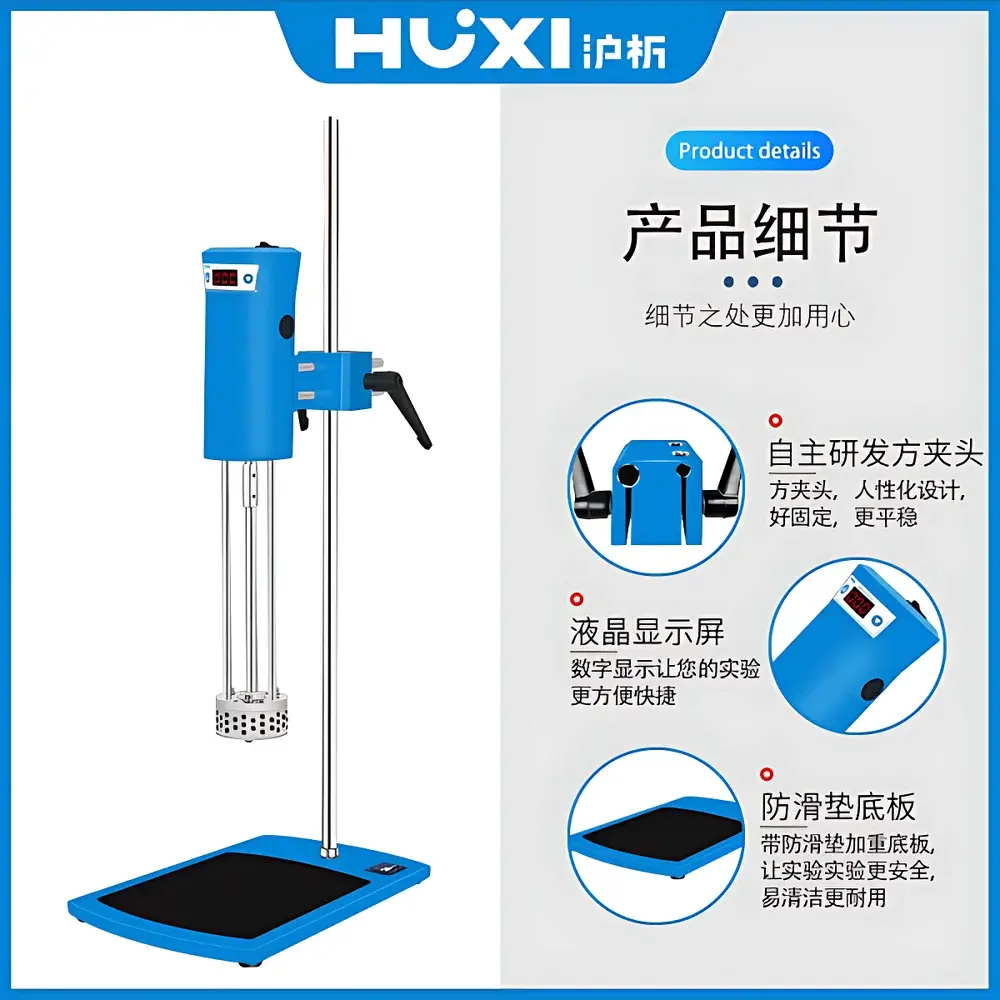
- Digital touch-enabled speed controller with real-time RPM display ensures precise parameter setting and repeatability across experiments.
- Rotor-stator homogenizing head fabricated from premium-grade stainless steel (AISI 316 equivalent), offering excellent corrosion resistance and compatibility with organic solvents, acidic/basic media, and sterilization protocols.
- Modular head design with quick-release coupling enables rapid interchange of three standardized stator orifices (5 mm², 20 mm², 50 mm²) to tailor shear intensity and throughput for specific process requirements.
- Integrated shaft coupling and precision-balanced rotor assembly minimize vibration at elevated rotational speeds, supporting extended operation without thermal drift or mechanical fatigue.
- Aluminum die-cast housing provides structural rigidity, effective heat dissipation, and electromagnetic shielding—enhancing long-term reliability under continuous duty cycles.
Sample Compatibility & Compliance
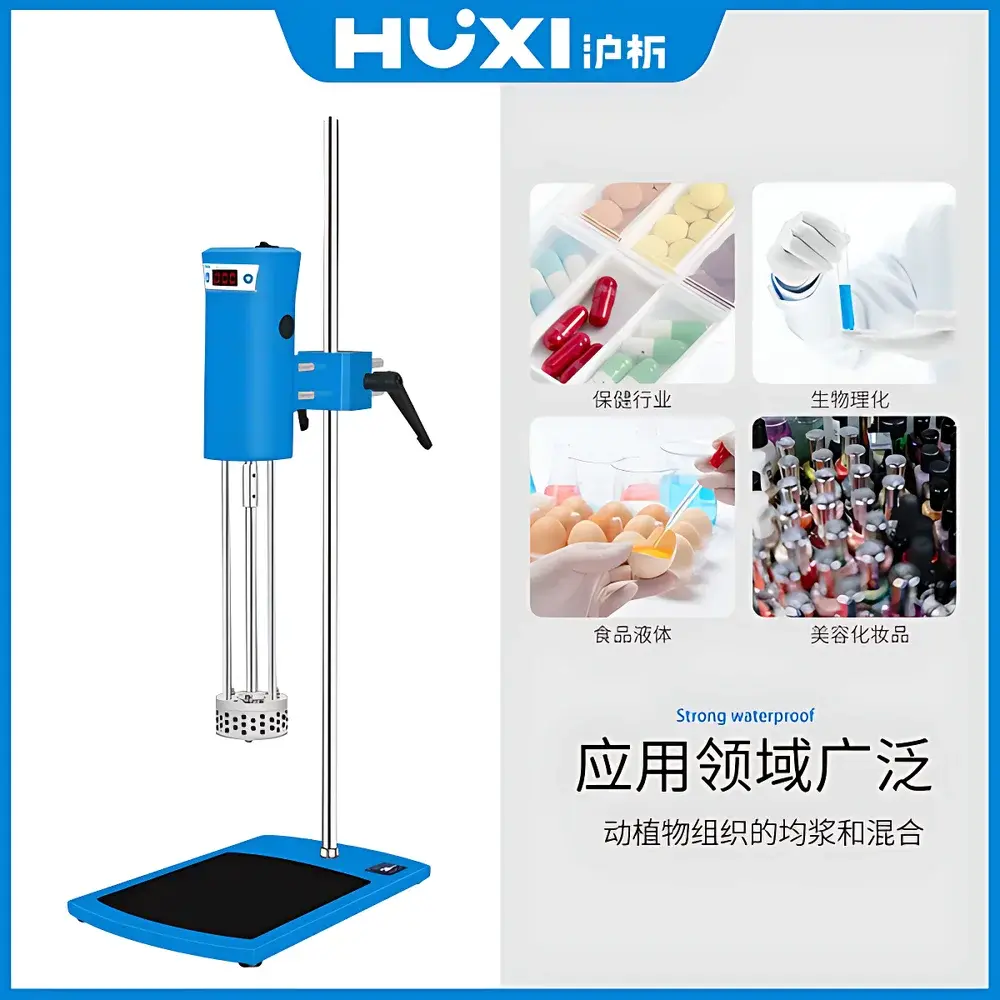
The JRJ300-D-1 accommodates a wide range of sample types including aqueous and non-aqueous suspensions, polymer melts (within viscosity limits), biological lysates, cosmetic emulsions, pharmaceutical nanosuspensions, and food-grade dispersions. Its stainless-steel wetted parts comply with general Good Manufacturing Practice (GMP) material suitability guidelines for non-sterile pharmaceutical intermediates and research-grade reagents. While not certified for ISO 13485 or FDA 21 CFR Part 11 out-of-the-box, the device supports audit-ready documentation when integrated into validated workflows—including traceable speed logging via external data acquisition systems. It meets CE safety directives (2014/30/EU EMC, 2014/35/EU LVD) and conforms to IEC 61000-6-3 emission standards.
Software & Data Management
The JRJ300-D-1 operates as a stand-alone instrument with local digital control; no proprietary software is bundled. However, its analog tachometer output (0–10 V DC proportional to RPM) and optional RS-485 interface (available upon request) allow integration with third-party laboratory information management systems (LIMS), SCADA platforms, or programmable logic controllers (PLCs). This enables time-stamped operational logging, remote start/stop commands, and synchronization with auxiliary equipment such as temperature-controlled jackets or feed pumps—facilitating compliance with GLP documentation requirements and enabling SOP-driven batch records.
Applications
- Preparation of uniform nanoemulsions and microemulsions for drug delivery research.
- Dispersion of carbon nanotubes, graphene oxide, or ceramic nanoparticles into polymeric matrices.
- Homogenization of tissue homogenates prior to protein extraction or nucleic acid isolation.
- Scale-down simulation of industrial inline homogenization processes during formulation transfer.
- Rapid deagglomeration of pigment concentrates, catalyst slurries, and functional filler suspensions.
- Quality assurance testing of viscosity-dependent stability in topical gels and oral suspensions.
FAQ
What is the maximum recommended viscosity for continuous operation?
For sustained use beyond 30 minutes, the unit is rated for liquids up to approximately 5,000 mPa·s at 20°C using the 50 mm² stator; lower orifice areas require correspondingly reduced viscosity limits to avoid motor overload.
Can the homogenizer be used in sterile environments?
Yes—the stainless-steel head is autoclavable (121°C, 20 min); however, the main unit must remain outside biosafety cabinets or isolators due to electrical and cooling constraints.
Is calibration traceable to national standards available?
Speed calibration can be verified using an externally calibrated optical tachometer; HUXI provides factory verification reports upon request, though NIST-traceable certification requires third-party metrology service.
How often should the rotor-stator assembly be inspected or replaced?
Under typical lab use (≤4 hrs/day), visual inspection every 200 operating hours is advised; replacement intervals depend on abrasive load but generally exceed 1,000 hours for non-corrosive, low-particulate samples.
Does the device support variable-speed ramping profiles?
No—ramp functionality is not embedded in the base controller, but external programmable timers or PLCs can modulate the analog speed input signal to achieve linear or stepwise acceleration/deceleration sequences.
Related Products



