
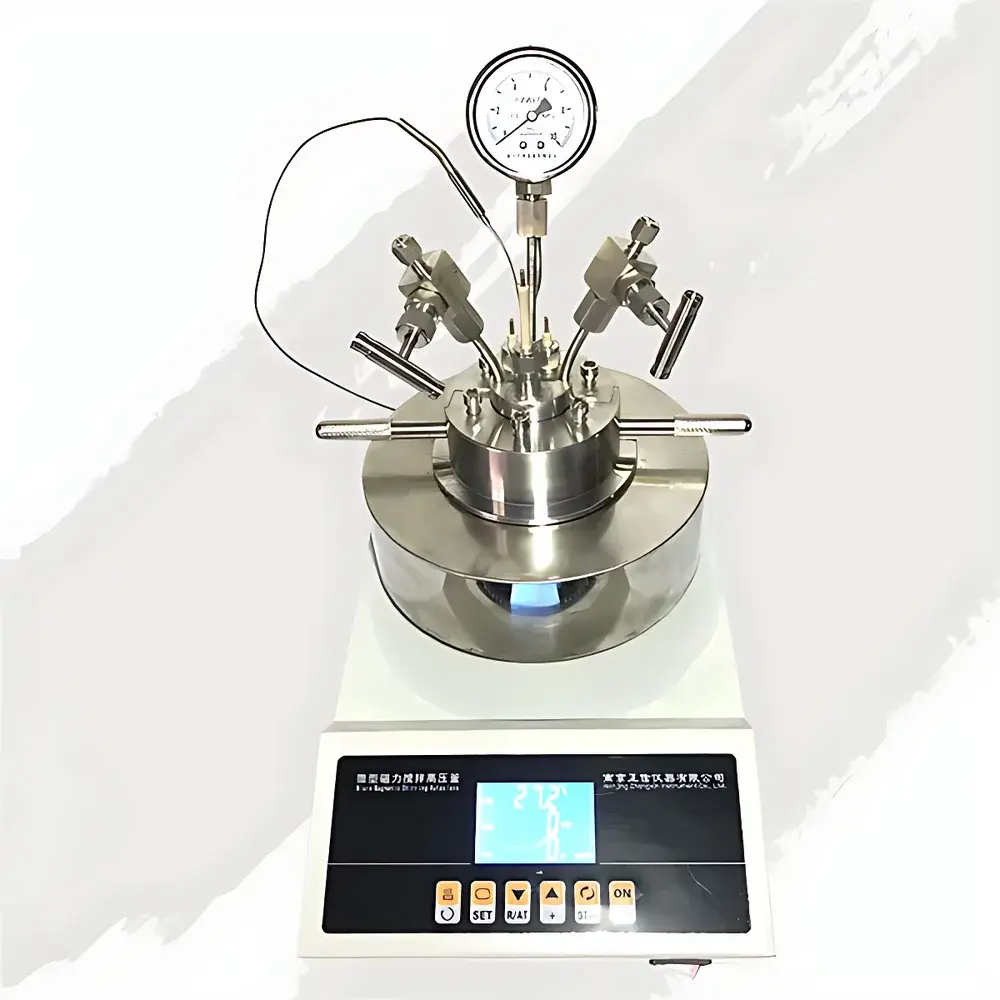
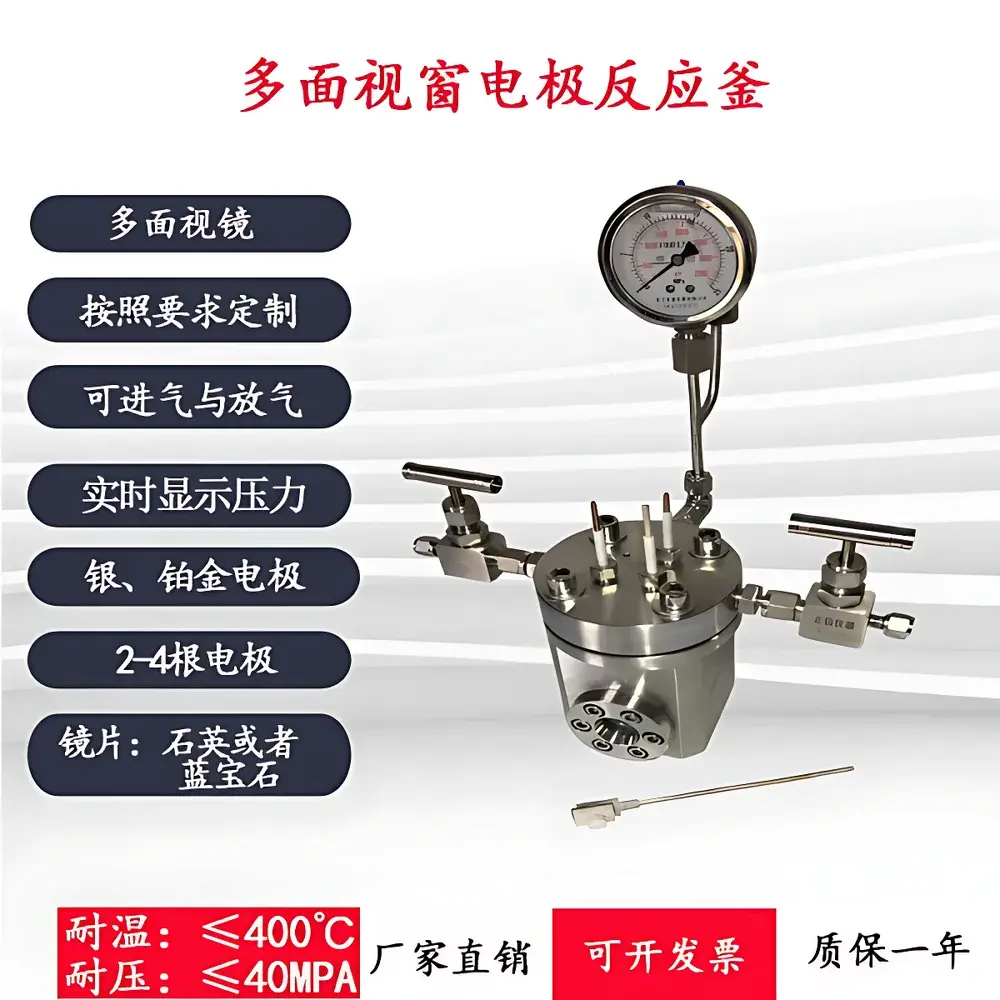
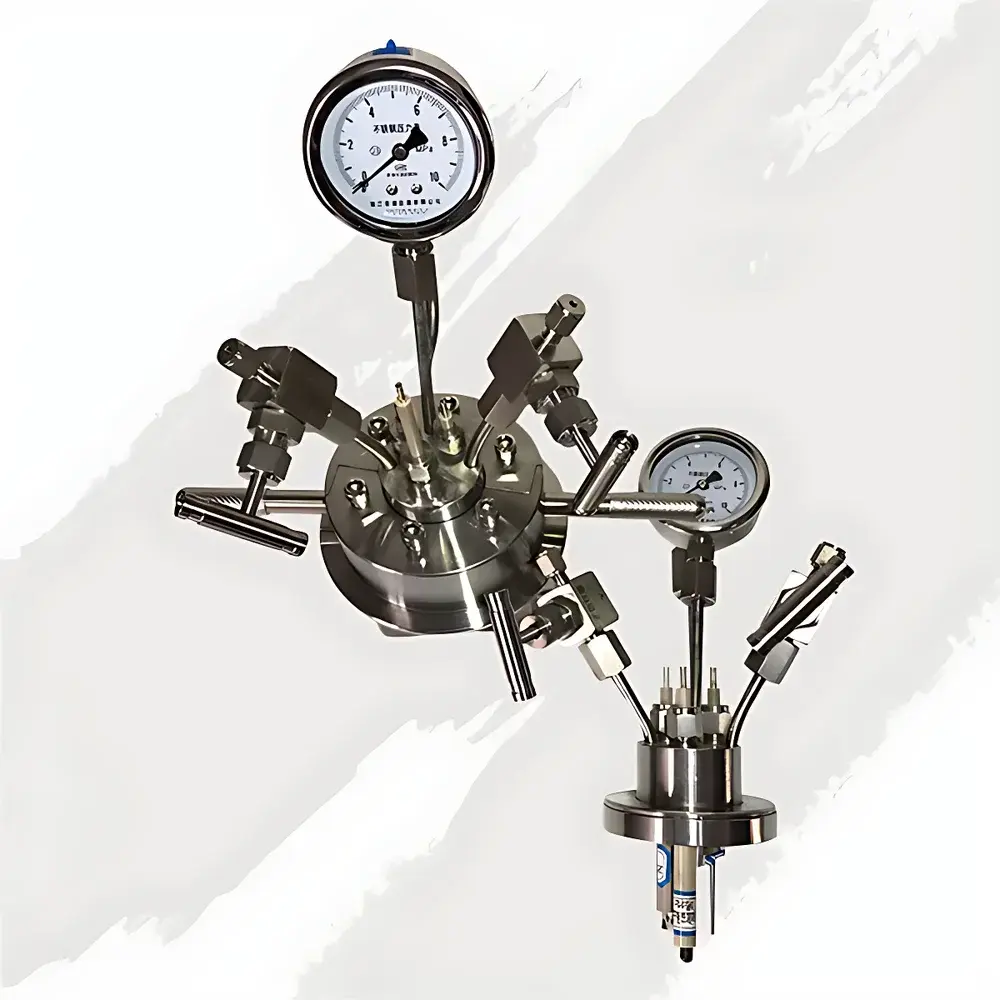
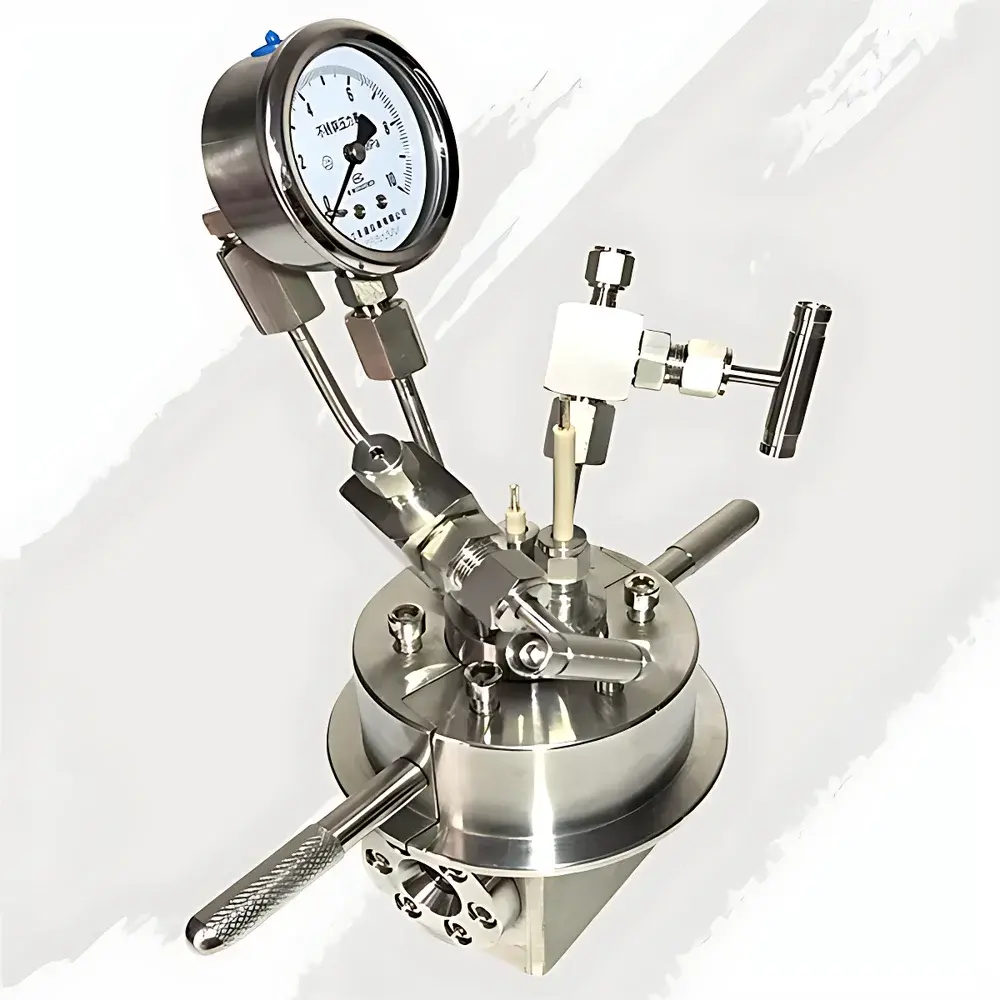
Zhengxin ZEK Series Electrochemical High-Pressure Autoclave Reactor
| Brand | Zhengxin Instrument Factory (ZXYIQI) |
|---|---|
| Origin | Jiangsu, China |
| Manufacturer Type | Authorized Distributor |
| Country of Origin | China |
| Model | ZEK |
| Capacity | 30 mL – 1000 mL |
| Vessel Material | 316L SS, 310S SS, Hastelloy C-276, Titanium, 904L, or custom alloy |
| Operating Pressure Range | −0.1 MPa (vacuum) to 25 MPa |
| Maximum Temperature | 350 °C |
| Electrode Configuration | Multiple feedthrough ports for working, reference, and counter electrodes |
| Stirring | Magnetic suspension drive, 0–1000 rpm |
| Heating Method | Embedded modular PID-controlled resistive heating |
| Temperature Sensor | K-type thermocouple (316L sheath, Φ2.0 mm) |
| Pressure Indication | Analog or digital gauge (domestic or imported) |
| Safety Features | Dual-stage pressure relief membrane (Hastelloy), overtemperature/overpressure interlock, audible & visual alarm |
| Compliance | Designed per GB/T 150.1–2011 (China NB/T 47003.1), compatible with ISO 4775, ASTM E2877 for lab-scale pressure vessel integrity |
Overview
The Zhengxin ZEK Series Electrochemical High-Pressure Autoclave Reactor is a precision-engineered benchtop pressure vessel designed specifically for in situ electrochemical characterization under controlled thermal and mechanical stress conditions. It operates on the principle of sealed electrochemical cell confinement, enabling real-time voltammetric, impedance, and potentiostatic measurements inside a pressurized, temperature-regulated environment. Unlike conventional glass cells or low-pressure electrochemical cells, the ZEK reactor integrates hermetic electrical feedthroughs, corrosion-resistant internal wetted surfaces, and robust pressure containment—making it suitable for fundamental studies of electrode kinetics, catalyst stability, electrolyte decomposition pathways, and solid-electrolyte interphase (SEI) formation under industrially relevant P–T conditions. Its compact footprint and modular design support integration into glovebox-compatible workflows, synchrotron beamlines, and automated reaction screening platforms.
Key Features
- Monolithic vessel construction from forged 316L stainless steel, 310S, or Hastelloy C-276—machined in a single CNC pass to eliminate weld seams and ensure structural homogeneity under cyclic pressure loading.
- Multi-port top flange with standardized M12 or M16 electrical feedthroughs accommodating Pt wire/foil working electrodes, Ag/AgCl reference electrodes, graphite or glassy carbon counter electrodes, and optional auxiliary sensors (pH, O2, conductivity).
- Dual-loop PID temperature control with independent heating and monitoring circuits; prevents thermal overshoot via real-time thermocouple feedback and adaptive power modulation.
- Magnetic suspension stirring system using rare-earth permanent magnets and brushless DC motor—ensures zero leakage path, silent operation, and precise rotational control (0–1000 rpm) without shaft seals.
- Integrated safety architecture: rupture disc assembly (Hastelloy C-276 membrane rated to 25 MPa), redundant pressure transducer monitoring, and programmable alarm thresholds for both temperature and time parameters.
- Quick-release clamp-and-flange interface with 4/6/8/12 high-strength bolts (ASTM A193 B8M Class 2), enabling repeatable sealing performance across >500 thermal–pressure cycles.
Sample Compatibility & Compliance
The ZEK reactor accommodates aqueous, non-aqueous, ionic liquid, and supercritical fluid electrolytes—including LiPF6/EC:DMC, NaTFSI/glyme, and molten salt systems—without compromising seal integrity or electrode functionality. Internal linings of PTFE, PPL, or quartz are available for highly aggressive media (e.g., HF-containing etchants or anhydrous AlCl3-based melts). All pressure-bearing components conform to GB/T 150.1–2011 (equivalent to ASME BPVC Section VIII Div. 1 for lab-scale vessels) and undergo hydrostatic proof testing at 1.5× maximum allowable working pressure (MAWP). Electrical feedthroughs meet IEC 60529 IP67 ingress protection standards. Documentation includes material traceability certificates, pressure test reports, and dimensional inspection records—supporting GLP-compliant data generation and audit readiness.
Software & Data Management
While the base ZEK model operates via front-panel keypad and LCD interface, optional RS485/USB communication modules enable bidirectional integration with third-party potentiostats (e.g., BioLogic SP-300, Gamry Interface 5000E) and data acquisition systems. Logged parameters—including real-time pressure, temperature, stir speed, elapsed time, and alarm status—are timestamped and exportable in CSV format. Firmware supports user-defined ramp-hold profiles, multi-step electrochemical sequences, and hardware-triggered data capture synchronized with CV or EIS sweeps. For regulated environments, optional 21 CFR Part 11-compliant software add-ons provide electronic signatures, audit trails, and role-based access control—fully traceable to individual experimental runs.
Applications
- High-pressure lithium/sodium-ion battery electrode cycling under realistic operating pressures (up to 12 MPa) to assess gas evolution, interfacial delamination, and SEI growth dynamics.
- In situ Raman and FTIR spectroelectrochemistry during CO2 reduction or nitrogen fixation in pressurized aqueous electrolytes (5–15 MPa).
- Hydrothermal electrocatalysis of biomass-derived platform molecules (e.g., HMF oxidation) at elevated temperatures (200–300 °C) and autogenous pressures.
- Corrosion electrochemistry of pipeline steels or nuclear fuel cladding alloys in simulated geological disposal environments (brine + H2S + CO2, 10–20 MPa).
- Electrochemical hydrogenation of fine chemicals under subcritical H2 pressure (2–8 MPa), eliminating external gas cylinders and enabling stoichiometric control.
FAQ
What electrode configurations are supported?
Standard configurations include three-electrode setups (working, reference, counter) with Pt, Ag/AgCl, and graphite electrodes. Custom feedthroughs accept rotating disk electrodes (RDE), microelectrodes, or fiber-optic pH probes.
Can the reactor be used under vacuum prior to pressurization?
Yes—the vessel achieves −0.1 MPa (absolute) vacuum via integrated Swagelok VCR fittings and is rated for full vacuum-to-25-MPa pressure cycling without seal degradation.
Is calibration documentation provided?
All units ship with NIST-traceable pressure transducer and thermocouple calibration certificates, plus as-built dimensional drawings and hydrotest reports.
How is temperature uniformity verified within the reaction zone?
Radial and axial temperature gradients are characterized per ASTM E2877 using embedded thermocouple mapping; typical uniformity is ±1.5 °C across the 30–500 mL active volume at 250 °C.
Are OEM customization services available?
Yes—Zhengxin offers mechanical redesign (e.g., optical windows, neutron-transparent Ti–6Al–4V bodies), bespoke electrode geometries, and integration with external cooling jackets or mass spectrometer inlets upon engineering review.



