
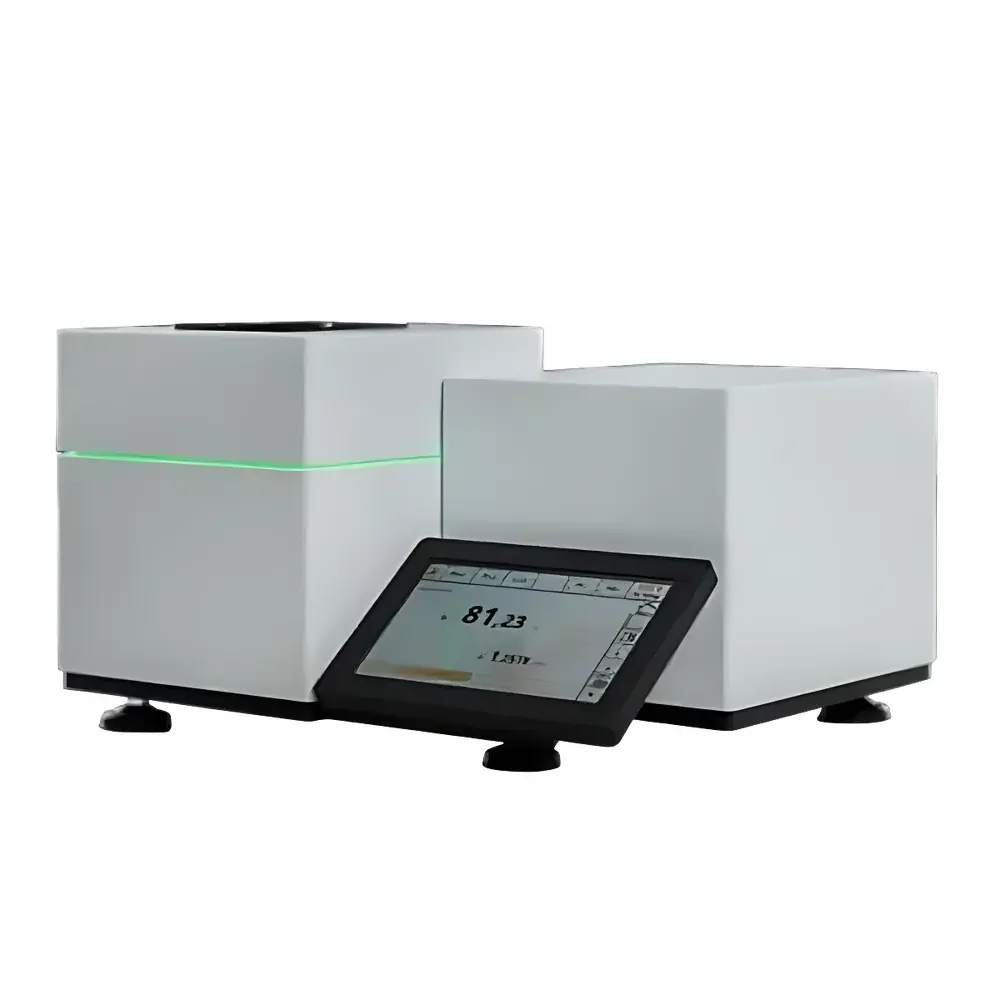
PerkinElmer Pyris™ TGA 9, DSC 9, and STA 9 Thermogravimetric Analyzer / Differential Scanning Calorimeter / Simultaneous Thermal Analyzer System
| Brand | PerkinElmer |
|---|---|
| Origin | Shanghai, China |
| Manufacturer Type | Original Equipment Manufacturer (OEM) |
| Regional Classification | Domestic (China-manufactured) |
| Model | Pyris™ |
| Pricing | Available upon Request |
Overview
The PerkinElmer Pyris™ TGA 9, DSC 9, and STA 9 represent a unified platform of high-performance thermal analysis instruments engineered for precision, reproducibility, and operational efficiency in regulated and research-intensive laboratory environments. These systems operate on fundamental thermal analysis principles: thermogravimetric analysis (TGA) measures mass change as a function of temperature or time under controlled atmosphere; differential scanning calorimetry (DSC) quantifies heat flow differences between sample and reference to determine thermal transitions (e.g., glass transition, melting, crystallization, cure kinetics); simultaneous thermal analysis (STA) integrates both TGA and DSC capabilities within a single furnace assembly, enabling correlated mass loss and thermal event data acquisition. Designed with a legacy of over 25 years of PerkinElmer thermal instrumentation expertise, the Pyris™ platform delivers robust temperature control (±0.1 °C stability), rapid heating/cooling rates (up to 100 °C/min), and high-resolution microbalance performance (<0.1 µg sensitivity), all housed in a compact, space-optimized footprint suitable for shared analytical labs.
Key Features
- Modular, Interchangeable Furnace Architecture: TGA 9 and STA 9 share identical furnace modules—enabling seamless hardware reconfiguration without recalibration or service downtime. This design reduces capital expenditure and expands analytical capacity across multiple techniques.
- Integrated Touchscreen Interface: A 7-inch capacitive touchscreen provides direct access to instrument status, real-time thermogram visualization, method editing, and basic run control (start/stop, pause, purge gas switching), minimizing reliance on external PCs for routine operations.
- 48-Position Automated Sample Handling: The optional autosampler supports unattended operation for up to 48 samples, accommodating standard platinum or alumina crucibles (20–100 µL). It enables overnight multi-sample sequences, batch calibration runs, and statistical replicate analysis—critical for QC release testing and material qualification workflows.
- Durable Mechanical Design: Constructed with thermally stable ceramic insulation, low-drift suspension systems, and corrosion-resistant gas path components, the platform ensures long-term baseline stability and minimal maintenance intervals—validated through >10,000 hours of continuous operational logging in GMP-compliant facilities.
- Atmosphere Control Flexibility: Equipped with dual mass flow controllers (MFCs) supporting inert (N₂, Ar), oxidative (air, O₂), reducing (H₂, forming gas), and dynamic vacuum environments (down to 10⁻² mbar), compliant with ASTM E1131, ISO 11358, and USP <1163> requirements.
Sample Compatibility & Compliance
The Pyris™ series accommodates solid powders, films, fibers, granules, and small metallic specimens (≤100 mg typical mass range). Crucible options include hermetic aluminum, open/closed platinum, and high-purity alumina—compatible with evolved gas analysis (EGA) coupling via FTIR or MS interfaces. All instruments are designed and verified to meet essential regulatory expectations: full audit trail capability (user action logging, method versioning, electronic signature support), 21 CFR Part 11–ready software architecture (when used with Pyris™ Software v12.2+), and GLP/GMP-aligned documentation packages including IQ/OQ/PQ protocols, calibration certificates traceable to NIST standards, and raw data integrity assurance (unalterable .qdb binary + ASCII export).
Software & Data Management
Pyris™ Software (v12.x) provides a unified interface for instrument control, data acquisition, and advanced post-processing—including baseline correction, derivative thermogravimetry (DTG), peak deconvolution, kinetic modeling (Friedman, Ozawa-Flynn-Wall), and multi-curve comparison. Data files are stored in encrypted, timestamped project databases with built-in version control. Export formats include CSV, PDF reports (customizable templates), and XML for LIMS integration. Raw data retention complies with ISO/IEC 17025 clause 7.5.2 and EU Annex 11 requirements for electronic records.
Applications
- Pharmaceutical: Polymorph screening, excipient compatibility, residual solvent quantification, decomposition onset determination per ICH Q1A(R2).
- Polymers: Thermal stability assessment, filler content analysis, oxidative induction time (OIT), crosslink density estimation.
- Advanced Materials: Catalyst decomposition profiling, battery electrode thermal runaway characterization, ceramic sintering behavior.
- Quality Control: Batch-to-batch consistency verification, incoming raw material ID, shelf-life prediction modeling.
- Academic Research: Reaction enthalpy mapping, phase diagram construction, nanocomposite thermal degradation mechanisms.
FAQ
Are the TGA 9 and STA 9 furnaces truly interchangeable without recalibration?
Yes—the furnace modules are mechanically and thermally identical, with shared calibration coefficients stored in firmware. Swapping requires only physical replacement and software confirmation; no user recalibration is needed.
Does the system support cGMP-compliant data archiving?
When configured with Pyris™ Software v12.2+ and enabled audit trail settings, it meets core 21 CFR Part 11 requirements for electronic records and signatures—including role-based access control and immutable raw data storage.
Can the autosampler handle corrosive or volatile samples?
Yes—using sealed platinum crucibles and programmable purge gas sequencing, the system safely analyzes hydrochloric acid-containing polymers, lithium salt electrolytes, and other reactive materials under controlled inert atmospheres.
Is remote monitoring supported?
The instrument supports Ethernet connectivity and optional VNC-based remote desktop access for real-time status viewing and limited intervention—subject to internal IT security policy approval.
What validation documentation is provided?
PerkinElmer supplies factory-verified IQ/OQ protocols, NIST-traceable calibration reports, and software validation summaries aligned with ASTM E2554 and ISO/IEC 17025 Annex A.2 guidance.



