
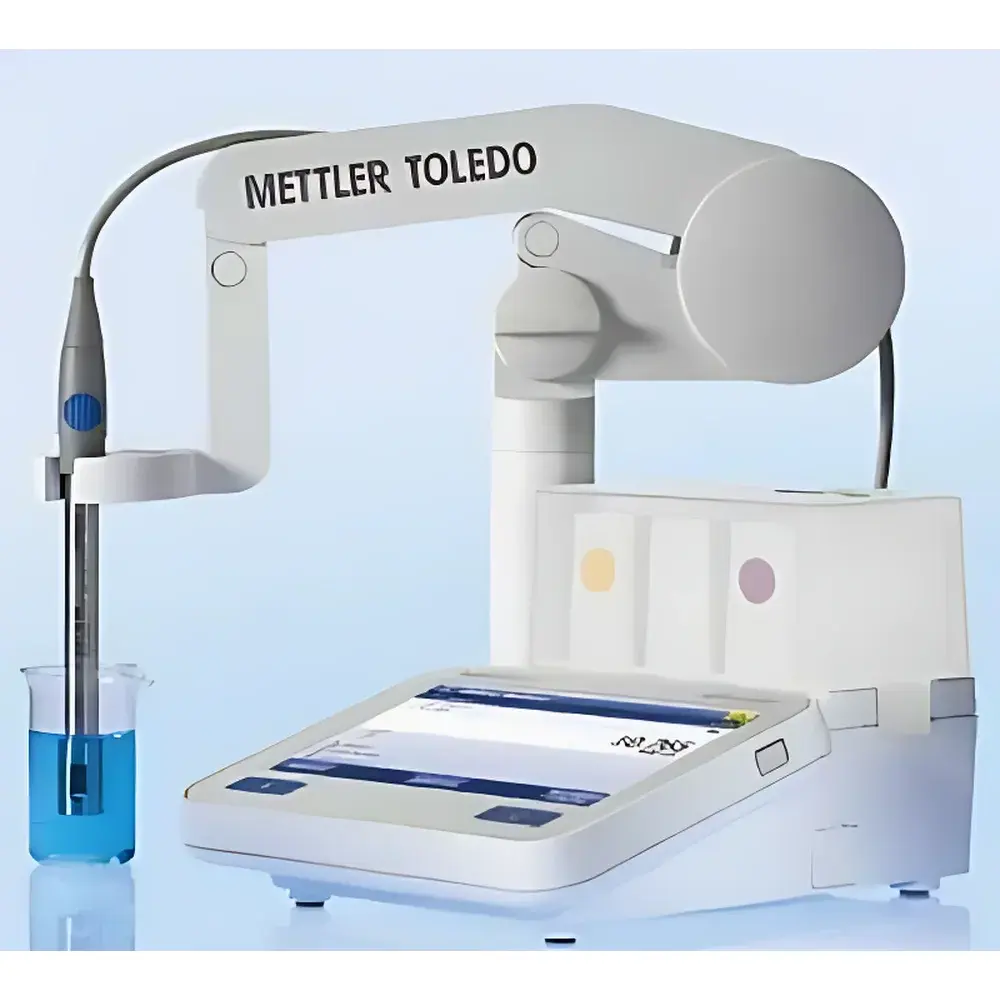
METTLER TOLEDO SevenExcellence™ Multi-parameter Benchtop Meter
| Brand | METTLER TOLEDO |
|---|---|
| Origin | Switzerland |
| Model | SevenExcellence™ |
| Compliance | GLP-compliant architecture |
| Connectivity | USB, RS232, Ethernet, Bluetooth (optional) |
| Display | 7-inch full-color capacitive touchscreen |
| Data Storage | Internal memory for ≥10,000 measurement records with timestamp, user ID, and electrode metadata |
| Security | Role-based user access, audit trail, electronic signatures (21 CFR Part 11 ready) |
Overview
The METTLER TOLEDO SevenExcellence™ Multi-parameter Benchtop Meter is an advanced electrochemical platform engineered for precision, traceability, and regulatory compliance in demanding laboratory environments. Built upon a modular architecture, it employs potentiometric, conductometric, and amperometric measurement principles to deliver accurate, reproducible results across pH, mV, ion concentration (ISE), conductivity, total dissolved solids (TDS), salinity, resistivity, and dissolved oxygen (with optional modules). Designed for laboratories operating under Good Laboratory Practice (GLP), Good Manufacturing Practice (GMP), and ISO/IEC 17025 frameworks, the instrument integrates hardware-level security controls with software-driven data integrity protocols. Its core architecture supports real-time sensor diagnostics, automatic temperature compensation (ATC), and intelligent electrode recognition—ensuring measurement validity before, during, and after analysis.
Key Features
- Modular multi-parameter capability: Simultaneous or sequential measurement of pH, conductivity, ISE, ORP, DO, and turbidity via interchangeable SmartConnect-enabled modules.
- 7-inch high-resolution capacitive touchscreen with intuitive icon-driven navigation—no training required for routine operation.
- SmartElectrode technology: Automatic detection, calibration history recall, and lifetime tracking for all METTLER TOLEDO InLab® and DL series electrodes.
- Full GLP/GMP compliance: Audit trail with immutable timestamps, operator ID logging, and change tracking for all calibration, measurement, and configuration events.
- 21 CFR Part 11 readiness: Supports electronic signatures, role-based user permissions (administrator, analyst, reviewer), and secure data export without modification.
- Multi-interface connectivity: Native support for USB host/device, RS232, Ethernet (TCP/IP), and optional Bluetooth LE for wireless peripheral integration (e.g., printers, barcode scanners, balance interfaces).
- Onboard data management: Stores ≥10,000 fully annotated results including sensor serial numbers, calibration curves, environmental conditions, and user-defined sample IDs.
Sample Compatibility & Compliance
The SevenExcellence™ accommodates aqueous, buffered, low-ionic-strength, viscous, and mildly corrosive samples typical in pharmaceutical QC, environmental monitoring, food & beverage testing, and academic research. Electrode compatibility includes liquid-filled, gel-filled, refillable, and solid-state pH sensors; bipolar and tetrapolar conductivity cells (0.01–1000 mS/cm); and gas-permeable optical DO probes. All measurements adhere to internationally recognized standards—including ASTM D1293 (pH of water), ISO 7888 (conductivity), USP (pH), and EN 27888 (water quality)—when paired with certified reference materials and validated procedures. The system’s design conforms to IEC 61010-1 safety requirements and electromagnetic compatibility (EMC) per IEC 61326-1.
Software & Data Management
Data integrity is enforced at the firmware level: every calibration event generates a digitally signed certificate containing slope, offset, buffer IDs, and uncertainty estimates. Measurement records include embedded metadata—electrode type, serial number, calibration date, ambient temperature, and operator credentials. Export options include CSV, PDF (with customizable templates), and XML formats compatible with LIMS and ELN systems. Optional LabX® software provides centralized instrument control, automated report generation, statistical process monitoring (SPC), and full audit trail review—including rollback prevention and version-controlled method storage. All data exports retain cryptographic hash verification to ensure non-repudiation.
Applications
- Pharmaceutical: Release testing of active pharmaceutical ingredients (APIs) and final drug products per USP/EP monographs; buffer preparation verification; cleaning validation conductivity checks.
- Biotechnology: Cell culture media pH and osmolality monitoring; fermentation broth conductivity profiling; downstream purification buffer exchange verification.
- Environmental: Surface water and wastewater pH/conductivity screening per EPA methods; soil extract analysis; drinking water compliance reporting (e.g., WHO guidelines).
- Food & Beverage: Titration endpoint confirmation; brine and marinade conductivity control; dairy product pH stability testing; shelf-life study monitoring.
- Academic Research: Teaching labs requiring traceable electrochemical fundamentals; method development for novel ion-selective sensors; inter-laboratory comparison studies.
FAQ
Does the SevenExcellence™ support IQ/OQ/PQ documentation?
Yes—METTLER TOLEDO provides validated installation qualification (IQ), operational qualification (OQ), and performance qualification (PQ) protocols aligned with GAMP 5 and FDA guidance.
Can I import custom calibration curves or user-defined methods?
Yes—via LabX or direct USB import; all imported methods are subject to digital signature verification and version control.
Is remote monitoring or cloud-based data backup possible?
Ethernet-enabled units support secure HTTP(S) API access for integration with enterprise IT infrastructure; cloud backup requires on-premise middleware compliant with organizational data governance policies.
How does the system handle electrode drift or out-of-spec calibration?
Real-time sensor diagnostics trigger visual alerts and block result export until corrective action is logged; drift thresholds are configurable per electrode type and application.
Are firmware updates validated and documented?
All firmware releases undergo internal verification per ISO 13485; release notes, test reports, and rollback procedures are provided with each update package.





