
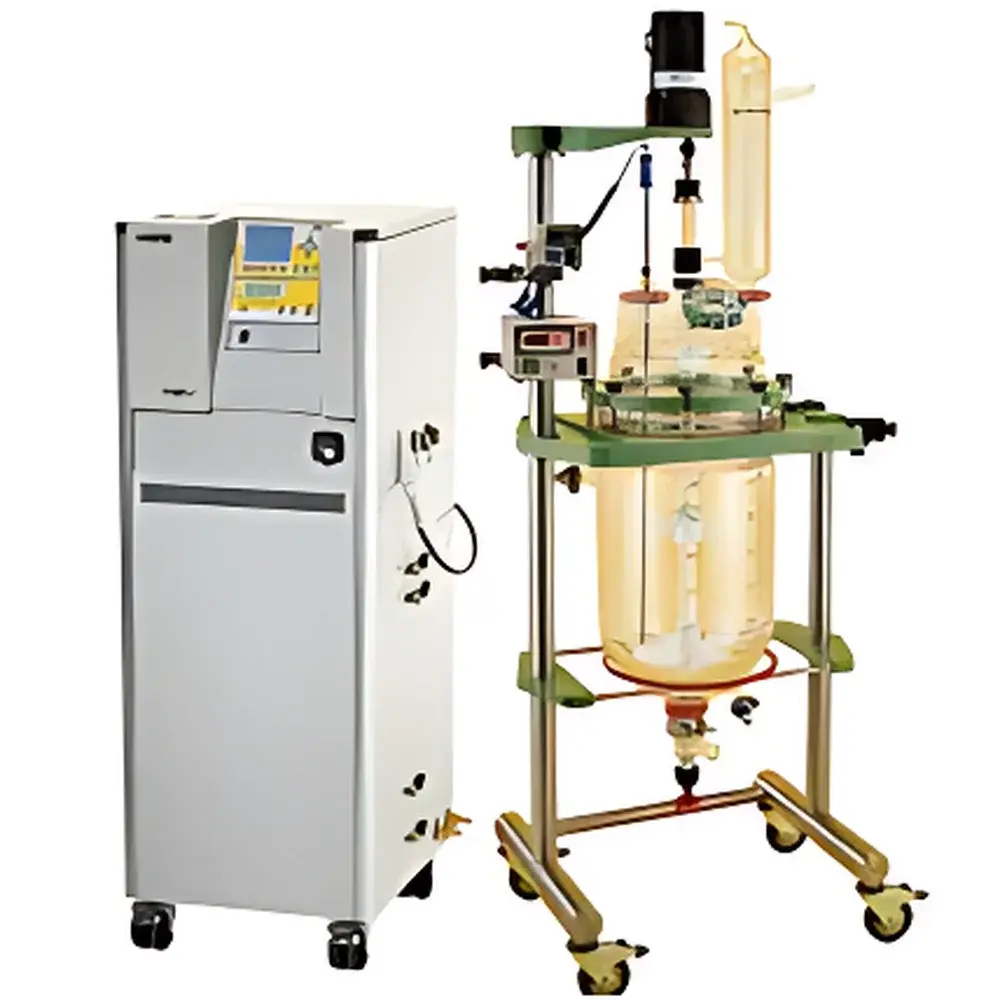
LAUDA Integral XT 950 Air-Cooled Circulating Thermostat
| Origin | Germany |
|---|---|
| Manufacturer Type | Authorized Distributor |
| Origin Category | Imported |
| Model | Integral XT 950 W |
| Pricing | Upon Request |
Overview
The LAUDA Integral XT 950 Air-Cooled Circulating Thermostat is an engineered solution for high-precision temperature control in demanding laboratory and pilot-scale process applications. Designed and manufactured in Germany, this thermostatic circulator employs a robust single-stage air-cooled refrigeration system optimized for stable operation across a wide working temperature range of –50 °C to +220 °C. Unlike water-cooled variants, the XT 950 W eliminates dependency on external cooling water infrastructure—making it ideal for facilities with limited water access, variable municipal supply pressure, or strict water conservation protocols. Its thermodynamic architecture integrates a high-efficiency scroll compressor, PID-controlled electric heating elements, and a precision-machined stainless steel circulation pump—all housed within a rigid, vibration-damped chassis. The device operates on the principle of forced convection heat exchange: a thermally stable bath fluid (e.g., silicone oil, glycol/water mixtures) is continuously circulated through an external process loop while its temperature is regulated via real-time feedback from a calibrated Pt100 sensor immersed directly in the reservoir. This closed-loop architecture ensures ±0.1 K temperature stability at –10 °C—a critical performance benchmark for kinetic studies, material curing validation, and calorimetric calibration.
Key Features
- Single-stage air-cooled refrigeration system with low-noise axial fan array and intelligent thermal load modulation
- Stainless steel reservoir (5.0 L minimum fill volume; 6.7 L expansion chamber capacity) resistant to corrosion and thermal shock
- High-flow, low-pulsation circulation pump delivering up to 45 L/min at 2.9 bar maximum pressure
- Dual Pt100 sensors—one in reservoir, one in external loop—for differential temperature monitoring and fail-safe overtemperature protection
- Integrated safety systems compliant with EN 61000-6-2 (EMC immunity) and EN 61000-6-3 (EMC emission) standards
- IP20-rated enclosure with lockable front panel, emergency stop button, and visual/audible alarm indicators
- RS485 interface supporting Modbus RTU protocol for integration into centralized LabVantage or DeltaV control environments
Sample Compatibility & Compliance
The XT 950 W accommodates a broad spectrum of heat transfer fluids—including mineral oils, synthetic polyalkylene glycols (PAG), and silicone-based media—with viscosity compatibility up to 500 mm²/s at 20 °C. Its wetted parts consist exclusively of AISI 316 stainless steel, EPDM seals, and borosilicate glass (for optional sight glasses), ensuring chemical inertness toward acidic, alkaline, and mildly oxidizing process streams. From a regulatory standpoint, the unit meets essential requirements of the EU Machinery Directive 2006/42/EC and carries CE marking. While not intrinsically rated for hazardous areas, it may be deployed in Zone 2 environments when installed per IEC 60079-14 guidelines. Documentation packages include Factory Acceptance Test (FAT) reports, material traceability certificates (EN 10204 3.1), and conformity declarations aligned with ISO/IEC 17025-accredited calibration practices.
Software & Data Management
The integral controller features a 5.7-inch TFT touchscreen HMI with multilingual UI (English, German, French, Chinese), enabling local setpoint programming, ramp/soak profiles, and real-time trend visualization. All operational parameters—including bath temperature, outlet temperature, pump speed, compressor status, and alarm history—are timestamped and stored internally for ≥30 days. Optional LAUDA SmartLink software (v4.2+) provides secure remote monitoring via Ethernet/Wi-Fi, supports automated data export to CSV or XML, and enables audit-trail generation compliant with FDA 21 CFR Part 11 requirements—including electronic signatures, user role-based access control, and immutable log archiving. Raw sensor data can be synchronized with third-party LIMS platforms using OPC UA connectivity.
Applications
- Temperature conditioning of reaction vessels, jacketed reactors, and calorimeters in pharmaceutical development (ICH Q5, Q7)
- Thermal validation of sterilization cycles (e.g., depyrogenation tunnels, autoclave mapping per HTM 2030)
- Material testing per ASTM D3418 (DSC calibration), ISO 294-4 (injection molding simulation), and DIN 53330 (viscosity bath standardization)
- Environmental stress screening of electronic assemblies under JEDEC JESD22-A108 thermal cycling profiles
- Stabilization of optical benches, interferometers, and laser sources requiring sub-0.1 K thermal drift control
FAQ
What is the minimum recommended heat transfer fluid volume for safe operation?
The reservoir requires a minimum fill volume of 5.0 L to ensure adequate submersion of the heater and sensor assembly, prevent dry-run damage, and maintain thermal mass sufficient for stability specification.
Can the XT 950 W be integrated into a building management system (BMS)?
Yes—via its native RS485 Modbus RTU port or optional analog I/O module (4–20 mA temperature output, relay alarms), enabling interoperability with Tridium Niagara, Siemens Desigo, or Honeywell Experion platforms.
Is remote firmware update supported?
Firmware updates are performed locally via USB stick following validated procedures documented in the Service Manual; remote OTA updates are intentionally disabled to preserve GxP data integrity and cybersecurity posture.
Does LAUDA provide IQ/OQ documentation for GMP environments?
Yes—comprehensive Installation Qualification (IQ) and Operational Qualification (OQ) templates are supplied with each unit, pre-formatted for execution under ISO 13485 or EU Annex 11 frameworks, including test scripts, acceptance criteria, and blank execution records.



