
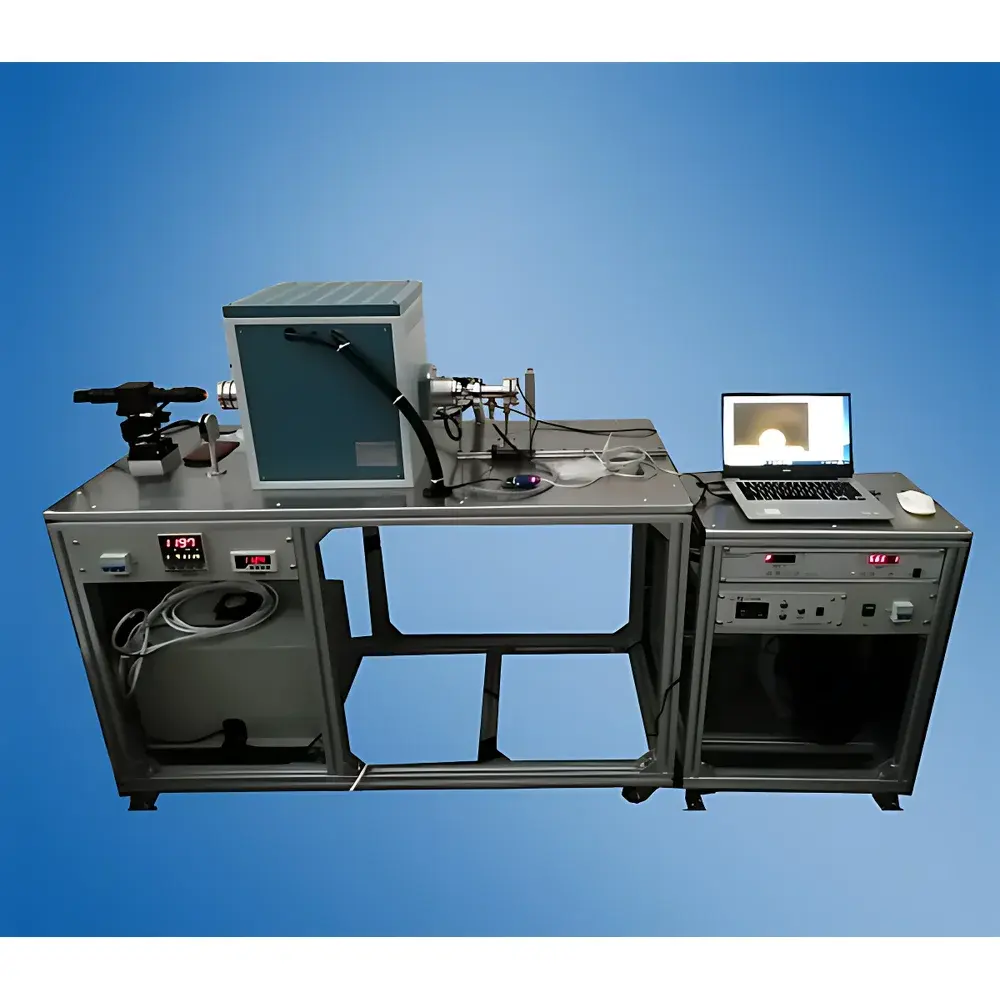
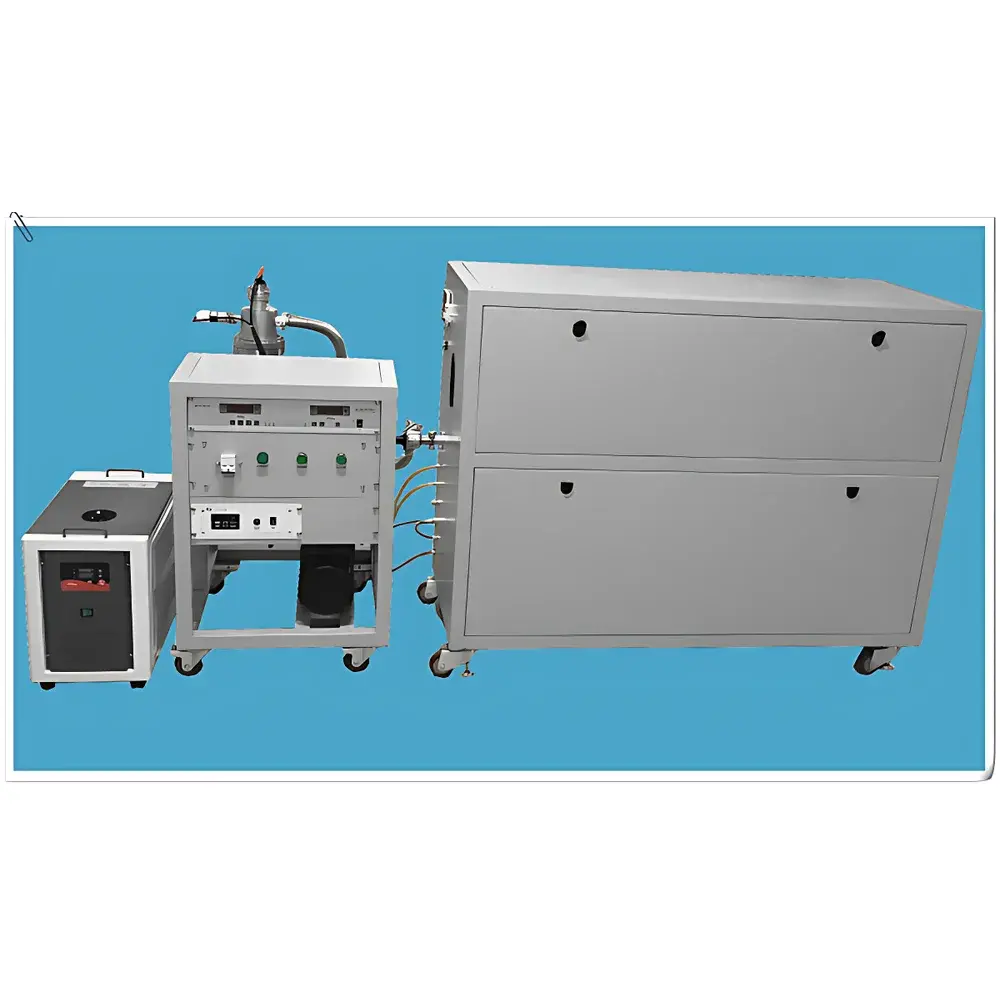
ZYKX SCI-1700 High-Temperature Vacuum Contact Angle Analyzer
| Brand | ZYKX |
|---|---|
| Origin | Beijing, China |
| Model | SCI-1700 |
| Instrument Type | Benchtop High-Temperature Vacuum Contact Angle Measurement System |
| Contact Angle Range | 0–180° |
| Contact Angle Accuracy | ±0.1° (circle fitting method) |
| Sample Stage Dimensions | 30 × 20 mm |
| Optical Magnification | 0.7–5× |
| Surface/Interfacial Tension Range | 1–1000 mN/m |
| Surface/Interfacial Tension Accuracy | ±0.1 mN/m |
| Maximum Operating Temperature | 1700 °C (long-term: 1650 °C) |
| Ultimate Vacuum | 5 × 10⁻⁵ Pa |
| Heating Rate | 3–5 °C/min |
| Temperature Control Precision | ±1 °C (>1000 °C), ±0.1 °C (<1000 °C) |
| Cooling System | Water-cooled, 1200 W capacity, flow rate 10–20 L/min, pressure 1.0–1.3 bar |
| Imaging | Industrial color CCD, 750 TV lines, minimum illumination 0.0005 lux |
| Light Source | Adjustable cold LED backlight, >20,000 h lifetime |
| Lens | 300 mm working distance telecentric lens with continuous zoom |
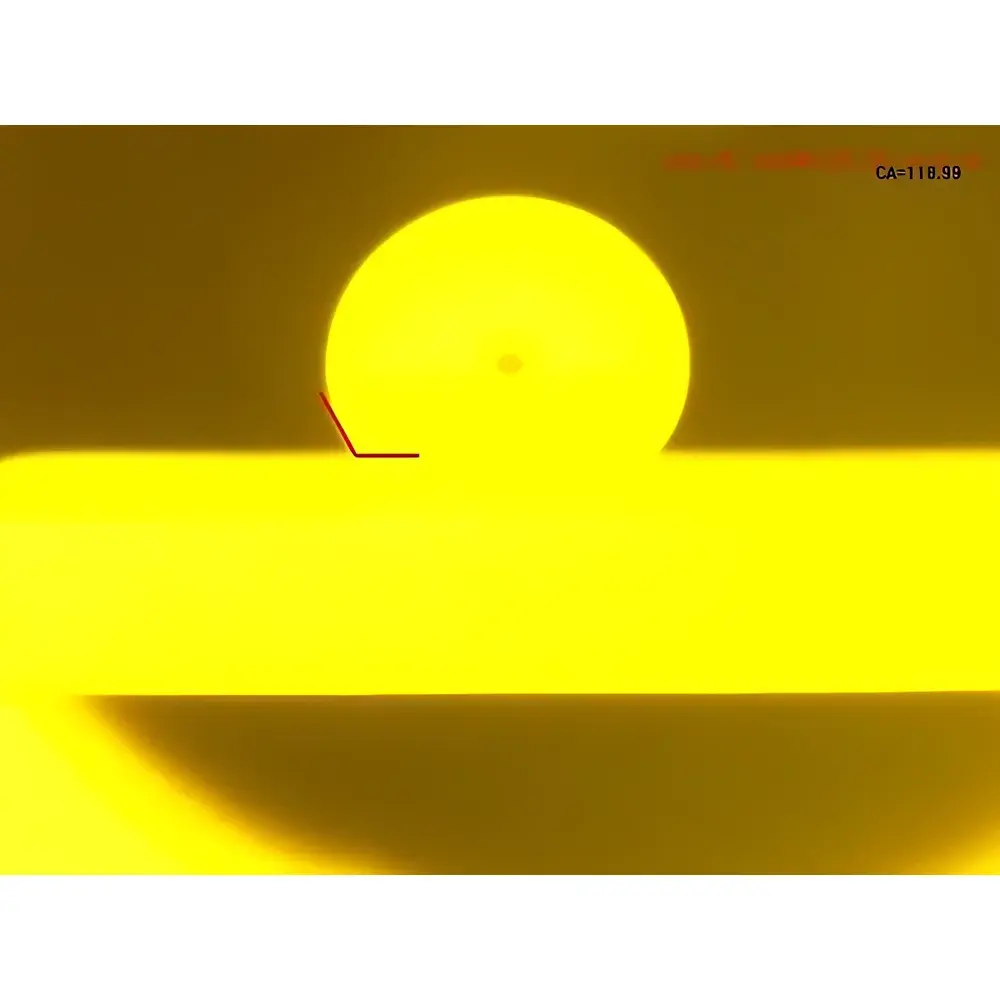
| Software Analysis Methods | 6 algorithms (θ/2, tangent, circle fit, ellipse fit, height measurement, automated image analysis) |
Overview
The ZYKX SCI-1700 High-Temperature Vacuum Contact Angle Analyzer is an engineered optical tensiometer designed for quantitative assessment of wettability and interfacial thermodynamics under extreme thermal and atmospheric conditions. It operates on the principle of video-based optical goniometry—capturing high-resolution silhouette images of liquid droplets or menisci on solid substrates under controlled high-temperature and ultra-high-vacuum (UHV) or inert gas environments. The system integrates a B-type thermocouple-controlled furnace capable of sustained operation up to 1650 °C (peak 1700 °C), coupled with a dual-stage vacuum system (mechanical pump + turbomolecular pump) achieving ≤5 × 10⁻⁵ Pa. This enables direct in-situ observation of dynamic wetting behavior of molten metals (e.g., Al, Cu, Ni, Ti alloys), reactive ceramics (SiC, ZrO₂), and refractory composites during heating, holding, and cooling cycles—critical for understanding interfacial reactions in high-temperature processing.
Key Features
- Ultra-stable high-temperature furnace with PID-controlled 40-segment programmable ramping, supported by B-type platinum-rhodium thermocouples and real-time temperature feedback compensation
- Dual-mode atmosphere control: seamless switching between high vacuum (≤5 × 10⁻⁵ Pa) and inert gas purging (Ar, N₂) via integrated mass flow controllers and pressure regulation modules
- Optimized optical train: 300 mm working distance telecentric lens with 0.7–5× continuous zoom, paired with industrial-grade low-light color CCD (0.0005 lux sensitivity, 750 TV lines)
- Water-cooled viewport and furnace housing ensure thermal stability of imaging optics and prevent window fogging or distortion at elevated temperatures
- Six validated contact angle calculation algorithms—including advanced ellipse fitting for asymmetric droplets and curvature-corrected baseline detection for non-planar or rough surfaces
- Automated temperature-triggered imaging: user-defined temperature thresholds or intervals initiate frame capture, enabling precise correlation of θ(t) with thermal history
- Full pendant drop analysis module compliant with ISO 19403-2 and ASTM D7490 for interfacial tension determination across 1–1000 mN/m range
Sample Compatibility & Compliance
The SCI-1700 accommodates cylindrical or disc-shaped specimens up to Ø14 × 10 mm, mounted on a precision-machined 30 × 20 mm adjustable stage. Compatible sample classes include oxide and non-oxide ceramics (Al₂O₃, Si₃N₄, BN), refractory metals (Mo, W, Ta), intermetallics, graphite, C/C composites, and metallized ceramic substrates. All operational parameters—including temperature ramp profiles, vacuum sequencing, image acquisition timing, and data annotation—are logged with timestamped audit trails, supporting GLP-compliant documentation per FDA 21 CFR Part 11 requirements when configured with user authentication and electronic signature modules. The system meets mechanical safety standards IEC 61000-6-2 (immunity) and IEC 61000-6-4 (emission), and its vacuum architecture conforms to ISO 27874 for UHV component outgassing specifications.
Software & Data Management
ZYKX’s proprietary AnalySIS Pro software provides a unified interface for hardware orchestration, image acquisition, quantitative analysis, and report generation. Raw images and metadata (temperature, pressure, time, stage position) are stored in a relational database with automatic versioning and checksum validation. Batch processing supports time-series contact angle extraction from hundreds of frames, generating θ vs. T curves with statistical confidence intervals (n ≥ 3). Export formats include CSV, XLSX, PNG/TIFF (with embedded measurement overlays), and AVI video files annotated with real-time parameter overlays. All curve-fitting residuals, algorithm selection rationale, and manual correction logs are retained for traceability—essential for peer-reviewed publication and regulatory submissions.
Applications
- Wettability evaluation of brazing filler metals on aerospace superalloys (Inconel 718, Haynes 230) under simulated service atmospheres
- Kinetic analysis of reactive wetting in ceramic-metal joining (e.g., Al₂O₃–Cu, SiC–Ti systems) for electronic packaging and nuclear cladding
- Surface energy evolution of sintering aids (e.g., Y₂O₃, MgO) on Si₃N₄ during liquid-phase sintering
- Interfacial tension mapping of molten slag–metal systems in steelmaking process optimization
- Thermal stability assessment of anti-wetting coatings (e.g., rare-earth oxides) on graphite crucibles used in semiconductor crystal growth
- Fundamental studies of dynamic contact line motion under Marangoni and thermocapillary forces in microgravity-relevant conditions
FAQ
What is the maximum sustained operating temperature under vacuum?
The SCI-1700 is rated for continuous operation at 1650 °C under vacuum (≤5 × 10⁻⁵ Pa), with short-term excursions to 1700 °C permitted for calibration or transient experiments.
Can the system measure advancing and receding contact angles dynamically?
Yes—by integrating programmable syringe pumps (optional) for controlled liquid dosing and retraction, combined with temperature-synchronized high-speed imaging (up to 100 fps with optional camera upgrade), dynamic hysteresis loops can be constructed.
Is the software compliant with 21 CFR Part 11 for regulated laboratories?
When deployed with role-based access control, electronic signatures, and audit trail configuration enabled, the AnalySIS Pro software satisfies core technical requirements of 21 CFR Part 11 for electronic records and signatures.
What surface tension methods does the system support besides pendant drop?
The standard configuration implements the axisymmetric drop shape analysis (ADSA) algorithm for pendant and sessile drop geometries. Sessile drop surface energy estimation (Owens–Wendt, Fowkes, van Oss–Chaudhury–Good) is also included.
How is thermal drift in the optical path compensated during long-duration experiments?
The water-cooled viewport assembly, thermally isolated lens mount, and real-time background subtraction in the image processing pipeline collectively minimize focus shift and contrast degradation over multi-hour runs.



