
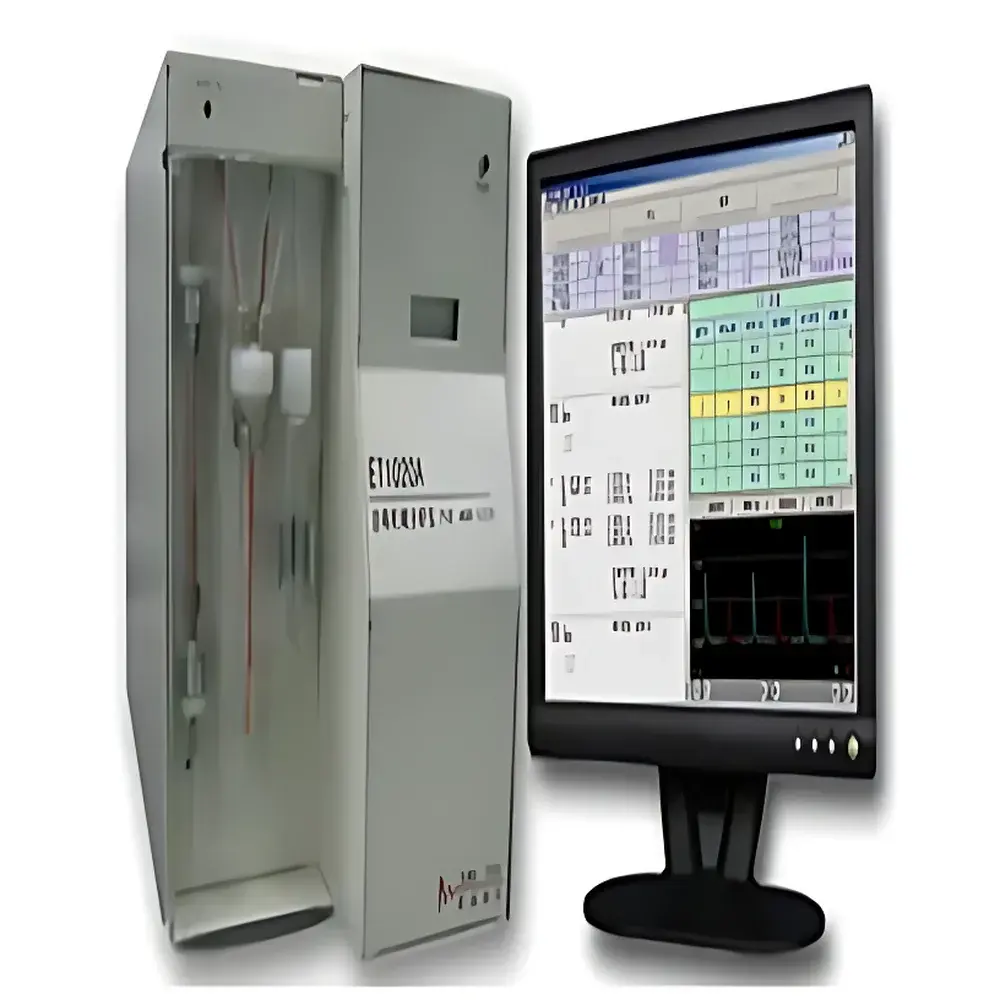
InLab-ET1020A Total Organic Carbon (TOC) Analyzer
| Origin | Beijing, China |
|---|---|
| Manufacturer Type | Authorized Distributor |
| Product Origin | Domestic (PRC) |
| Model | InLab-ET1020A |
| Price Range | USD 1,400 – 7,200 |
| Instrument Type | Benchtop Laboratory TOC Analyzer |
| Detection Principle | Non-Dispersive Infrared (NDIR) Absorption |
| Oxidation Method | High-Temperature Catalytic Combustion (680 °C w/ catalyst or 900 °C non-catalytic) |
| Measurement Range | 0–50,000 ppm C |
| Accuracy | ±3% of reading |
| Resolution | 0.001 ppb C |
| Detection Limit | 0.05 ppm C |
| Repeatability | ≤3% RSD |
| Sample Loop Volumes | 25–400 µL (user-selectable) |
| Analysis Time | 4–8 min per TC/TIC/TOC cycle |
| Compliance | ASTM D5907, EPA Method 415.3, ISO 8245, EN 1484, DIN 38409-H32, USP <643>, Chinese National Standard GB 13193–1991 & WS/T 138–1999 |
Overview
The InLab-ET1020A Total Organic Carbon (TOC) Analyzer is a benchtop laboratory instrument engineered for precise, trace-level quantification of organic carbon in aqueous matrices using high-temperature catalytic combustion coupled with non-dispersive infrared (NDIR) detection. It operates on the fundamental principle that all organic carbon compounds are quantitatively oxidized to CO₂ under controlled thermal and oxidative conditions; the resulting CO₂ concentration—measured via NDIR photometry—is directly proportional to the mass of carbon present. By sequentially determining total carbon (TC) and total inorganic carbon (TIC) in the same sample, the analyzer computes TOC as the arithmetic difference (TOC = TC − TIC). An alternative NPOC (non-purgeable organic carbon) mode is supported via acidification and sparging prior to combustion, enabling selective quantification of recalcitrant organic fractions. Designed for robustness in routine QC/QA and regulatory-compliant environments, the ET1020A delivers high reproducibility across diverse water types—including seawater, wastewater, ultrapure water, hydrogen peroxide solutions, and industrial process streams—without requiring pre-filtration for particles up to 400 µm.
Key Features
- Programmable high-temperature oxidation furnace with dual-mode operation: 680 °C catalytic oxidation (Pt-based catalyst) or 900 °C direct thermal oxidation—both compliant with EPA 415.3 and ISO 8245 validation requirements.
- Precision syringe-driven aspiration sampling with user-selectable fixed-volume loops (25, 50, 100, 200, or 400 µL), ensuring volumetric accuracy and minimizing carryover.
- Integrated acidification and sparging module for automated TIC removal, supporting both TOC (TC−TIC) and NPOC measurement protocols.
- NDIR detector with temperature-stabilized optical path and dual-wavelength referencing, delivering stable baseline performance and low drift over extended operation.
- Robust fluidic architecture featuring corrosion-resistant PFA and quartz components, compatible with aggressive matrices including 3% NaCl brine and low-pH peroxide solutions.
- Real-time graphical display of CO₂ evolution profiles during combustion, enabling visual verification of reaction completeness and method suitability.
Sample Compatibility & Compliance
The InLab-ET1020A accommodates a broad spectrum of aqueous samples without pretreatment: surface water, drinking water, wastewater effluents, seawater, pharmaceutical water (PW/WFI), semiconductor rinse water, and hydrogen peroxide formulations (up to 30% v/v). Its tolerance for suspended solids ≤400 µm eliminates routine filtration—reducing preparation time and contamination risk. The system meets international regulatory and methodological standards including EPA Methods 415.1 and 415.3, ASTM D5907, ISO 8245:1999, EN 1484:1996, DIN 38409-Part 32, USP , and Chinese national standards GB 13193–1991 and WS/T 138–1999. All calibration, system suitability testing, and data acquisition workflows support ALCOA+ principles (Attributable, Legible, Contemporaneous, Original, Accurate, Complete, Consistent, Enduring, Available), facilitating GLP/GMP audit readiness.
Software & Data Management
The ETTOC software suite—designed exclusively for Windows OS—provides full instrument control, method development, and compliant data handling. It supports multi-point calibration with outlier rejection, customizable sequence programming (including bracketing standards and duplicate injections), real-time status monitoring of pumps, valves, and temperature zones, and automated QA/QC flagging (e.g., % recovery, RSD, drift limits). Raw chromatographic and signal-integrated data are stored in encrypted binary format with immutable timestamps. Export options include CSV, PDF analytical reports, and XML for LIMS integration. Audit trail functionality records all user actions, parameter changes, and calibration events in accordance with FDA 21 CFR Part 11 requirements when configured with electronic signatures.
Applications
- Environmental monitoring laboratories performing compliance testing for municipal wastewater discharge permits (e.g., NPDES) and source water assessment.
- Pharmaceutical and biotechnology facilities verifying TOC levels in purified water systems per USP and EU Annex 1.
- Power generation plants monitoring condensate and boiler feedwater for organic fouling precursors.
- Microelectronics manufacturers controlling organic contamination in ultrapure rinse water used in wafer fabrication.
- Research institutions studying carbon cycling in estuarine and marine systems, including high-salinity and humic-rich matrices.
- Public health laboratories assessing disinfection by-product precursors in drinking water distribution networks.
FAQ
What oxidation methods does the InLab-ET1020A support, and how are they validated?
It supports both catalytic combustion at 680 °C (using a platinum catalyst) and high-temperature thermal oxidation at 900 °C—each meeting EPA 415.3 and ISO 8245 criteria for complete organic carbon conversion.
Can the instrument analyze saline or hydrogen peroxide-containing samples?
Yes—its fluidic path is chemically inert (PFA, quartz), and performance has been verified in 3% NaCl brine and up to 30% H₂O₂ solutions without degradation or memory effects.
How is data integrity ensured for regulated environments?
ETTOC software provides full 21 CFR Part 11 compliance when deployed with role-based access control, electronic signatures, and permanent audit trails recording all critical events.
What is the typical analysis time per sample, and can it be adjusted?
Standard TC/TIC/TOC analysis requires 4–8 minutes; users may optimize dwell times, gas flows, and temperature ramp rates to balance throughput and precision.
Is external gas purification required for the oxygen carrier gas?
Yes—a certified ultra-high-purity oxygen supply (≥99.5%, with CO, CO₂, and THC <1 ppm) is mandatory; optional in-line scrubbers are recommended for long-term stability.
Related Products







