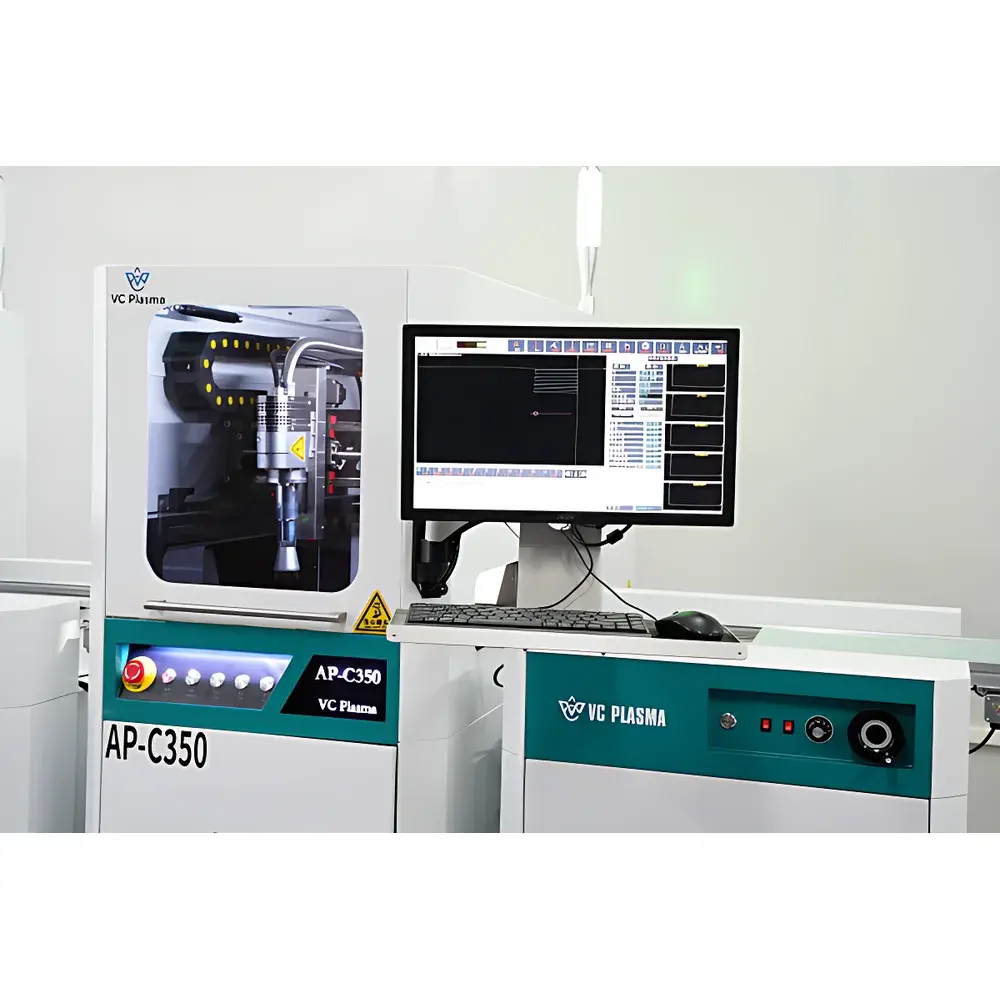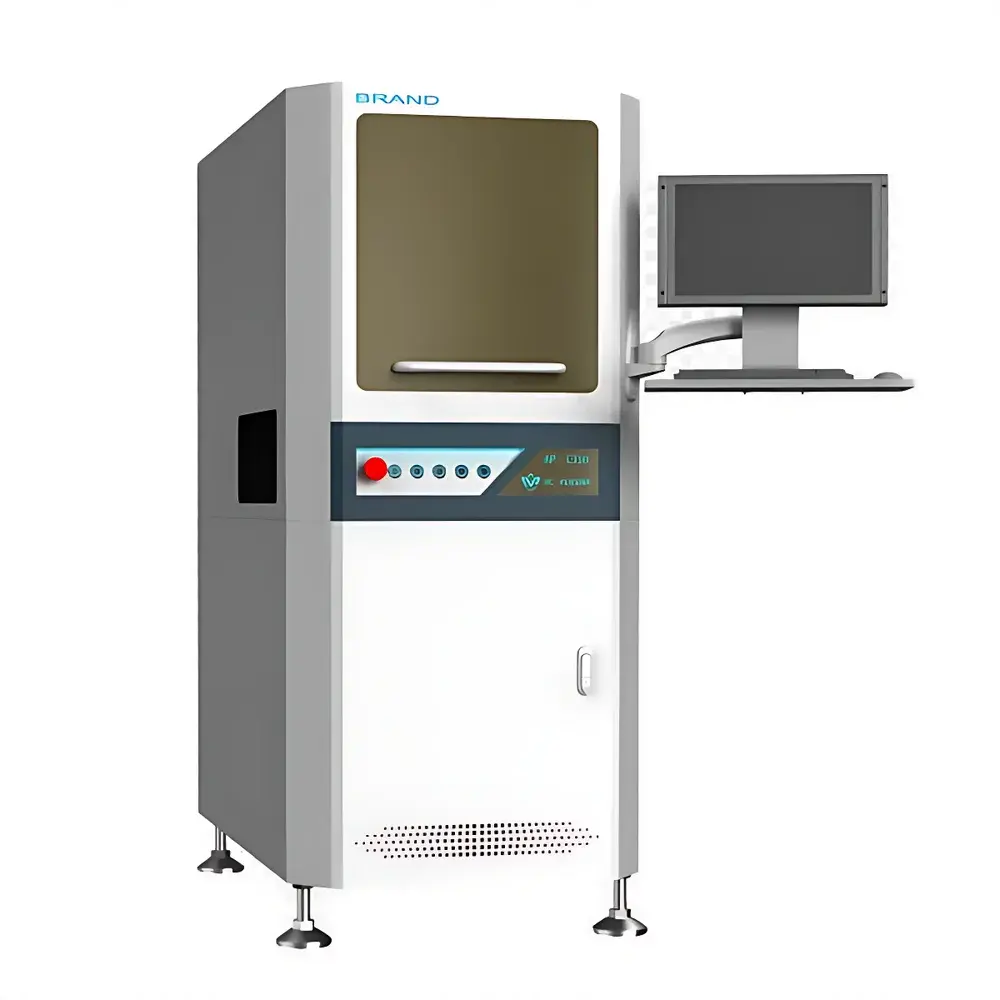
MCC HPB-5B High-Power Burn-In Test System with Individual Chip Temperature Control
| Brand | MCC |
|---|---|
| Origin | USA |
| Manufacturer Type | Authorized Distributor |
| Origin Category | Imported |
| Model | HPB-5B |
| Pricing | Available Upon Request |
| Cooling Method | Forced Air with Precision Thermal Valves |
| Heating Mechanism | Integrated Heat-Sink Heaters |
| Max Power per DUT | 150 W |
| I/O Channels | 128 Independent |
| Vector Depth | Up to 32 M |
| Scan Memory | >1 GB |
| Repetition Rate | 10 MHz |
| Clock Speed | 400 MHz |
| Timing Resolution | 1 ns |
| Temperature Control | Per-DUT, Real-Time Monitoring & Closed-Loop Adjustment |
Overview
The MCC HPB-5B High-Power Burn-In Test System is an engineered platform for accelerated reliability stress testing of integrated circuits (ICs) under controlled thermal and electrical conditions. Designed specifically for semiconductor qualification laboratories and high-volume production test environments, the HPB-5B implements Couette-flow–inspired thermal management architecture—where each device under test (DUT) operates within its own thermally isolated zone, regulated via synchronized air-valve cooling and heat-sink resistive heating. This individual chip temperature control (ICTC) methodology enables precise, real-time thermal setpoint adherence across heterogeneous IC populations—including high-power logic, DRAM, NAND flash, and power management units—without cross-device thermal coupling or ambient drift. Unlike conventional batch-style burn-in ovens, the HPB-5B maintains traceable, calibrated thermal profiles per socket, supporting JEDEC JESD22-A108F and A110C compliance requirements for high-temperature operating life (HTOL) and early-life failure rate (ELFR) screening.
Key Features
- Per-Socket Independent Temperature Control: Each of the 128 test sites features dedicated thermal actuators (Peltier-assisted air valves + embedded heat-sink heaters), enabling ±0.5°C setpoint accuracy from 25°C to 150°C with <1.2°C inter-site uniformity.
- High-Fidelity Electrical Stimulus Engine: 400 MHz system clock with 1 ns timing resolution supports complex vector patterns for functional burn-in; dual-depth pattern memory (8 M / 32 M) accommodates both legacy and advanced memory architectures.
- Real-Time Power & Thermal Telemetry: On-board current/voltage sensing and IR-based surface temperature monitoring deliver per-DUT power dissipation and junction temperature estimates at 100 Hz sampling rate—integrated into audit-ready CSV/JSON logs.
- Scalable Mechanical Architecture: Modular backplane design allows seamless integration with automated handler interfaces (SECS/GEM compliant) and supports optional RF shielding kits for mixed-signal IC validation.
- Robust Thermal Management: Forced-air convection system with dynamically balanced airflow distribution ensures stable thermal gradients across full-load configurations—even at sustained 150 W per DUT.
Sample Compatibility & Compliance
The HPB-5B accommodates industry-standard IC packages including QFP, BGA (up to 15 x 15 mm), LGA, and CSP formats via interchangeable socket modules. All thermal and electrical interfaces comply with IPC-9701A solder joint reliability guidelines and JEDEC MO-266 mechanical specifications. The system’s firmware and data logging architecture meet FDA 21 CFR Part 11 requirements for electronic records and signatures, including role-based access control, audit trail generation, and immutable log archiving. Calibration certificates are traceable to NIST standards, and thermal validation reports conform to ISO/IEC 17025-accredited procedures.
Software & Data Management
MCC BurnInSuite™ v5.2 provides centralized test program development, execution orchestration, and failure analytics. The software supports hierarchical test plan definition (per lot, per wafer, per bin), real-time dashboard visualization of thermal/power outliers, and automated root-cause tagging based on pattern-dependent failure signatures. All data exports include metadata tags for GMP/GLP-aligned documentation—such as operator ID, environmental chamber logs, calibration timestamps, and sensor health status. Export formats include STDF, CSV, and XML for direct ingestion into enterprise MES (e.g., Camstar, FactoryTalk) and statistical process control (SPC) platforms.
Applications
- High-temperature operating life (HTOL) testing per JEDEC JESD22-A108F
- Early-life failure rate (ELFR) screening for automotive-grade ICs (AEC-Q100 Grade 0–2)
- Power integrity validation of GaN/SiC driver ICs under dynamic load conditions
- Thermal-aware burn-in for 3D-stacked memory (HBM2E, HBM3) with interposer-level thermal profiling
- Qualification support for space-grade radiation-hardened ASICs requiring MIL-STD-883 TM1015.10 compliance
FAQ
Does the HPB-5B support JEDEC-compliant thermal profiling for HTOL tests?
Yes—the system delivers per-DUT thermal profiles validated against JEDEC JESD22-A108F Annex B, with documented uncertainty budgets for temperature, voltage, and timing parameters.
Can the system be integrated into a fully automated test line?
Yes—it supports SECS/GEM v2.4 communication protocols and includes hardware handshaking signals for synchronous handler interfacing.
Is remote monitoring and diagnostic capability available?
Yes—BurnInSuite™ includes TLS-secured web-based remote access with live thermal map overlays and predictive maintenance alerts based on actuator duty-cycle trends.
What calibration interval is recommended for traceable operation?
MCC recommends annual full-system calibration with optional quarterly verification checks using NIST-traceable reference sensors.
Are custom socket modules available for non-standard package types?
Yes—MCC offers engineering services for bespoke socket and thermal interface design, including finite-element thermal modeling and mechanical validation reports.