
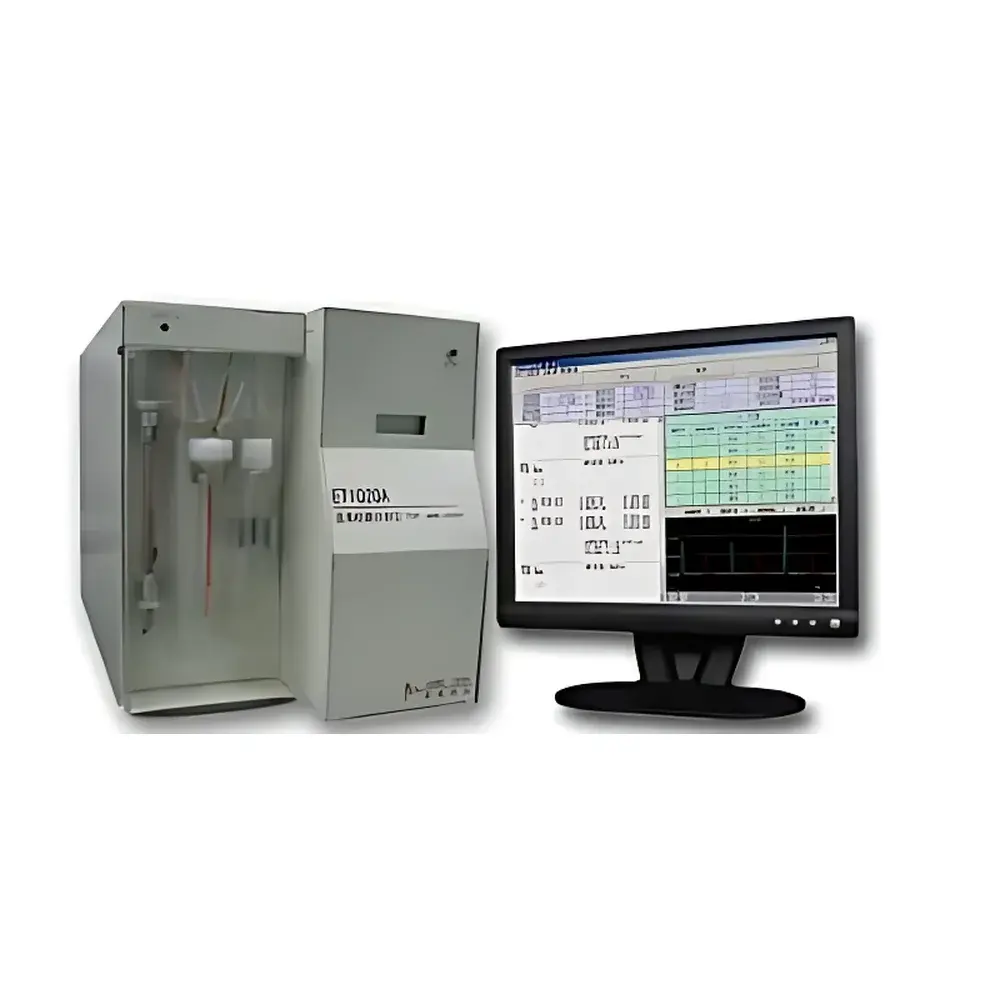
ET1020A Total Organic Carbon (TOC) Analyzer
| Origin | Beijing, China |
|---|---|
| Manufacturer Type | Authorized Distributor |
| Model | ET1020A |
| Pricing | Available Upon Request |
Overview
The ET1020A Total Organic Carbon (TOC) Analyzer is a robust, laboratory-grade combustion-based instrument engineered for precise quantification of total organic carbon in aqueous matrices. It operates on the principle of high-temperature catalytic or thermal oxidation followed by non-dispersive infrared (NDIR) detection of evolved CO₂ — a method widely accepted under international regulatory frameworks including EPA Method 415.1/415.3, ASTM D5907, ISO 8245, EN 1484, and Standard Methods 5310B. The analyzer measures total carbon (TC) via complete oxidation of all carbon species at programmable temperatures (200–950 °C), and total inorganic carbon (TIC) via acidification and sparging; TOC is derived as the arithmetic difference (TOC = TC − TIC). An alternative NPOC mode is supported by pre-acidification and sparging to remove TIC and purgeable organic carbon (POC), followed by TC measurement. This dual-mode architecture ensures compliance with both regulatory reporting requirements and research-grade accuracy across diverse water types.
Key Features
- Programmable high-temperature oxidation: Selectable 680 °C + catalyst or 900 °C direct thermal oxidation — both fully compliant with EPA, ISO, and Chinese national standards (GB 13193–91, Ministry of Health Drinking Water Specifications).
- Precision sample introduction: Fixed-volume loop injection (25–400 µL selectable) ensures high accuracy and reproducibility (<3% RSD) across routine and high-throughput workflows.
- Robust fluidic design: Suction-driven sampling system tolerates suspended solids up to 400 µm in diameter without clogging — ideal for wastewater, seawater, and industrial process streams.
- Real-time process monitoring: Integrated NDIR detector provides continuous CO₂ signal output; software displays live chromatogram-like trace for immediate verification of oxidation efficiency and peak resolution.
- Comprehensive hardware diagnostics: Built-in self-test routines verify operational status of peristaltic pumps, solenoid valves, temperature sensors, and gas flow controllers prior to analysis.
Sample Compatibility & Compliance
The ET1020A accommodates a broad spectrum of aqueous samples, including surface water, potable water, wastewater, seawater, hydrogen peroxide solutions, and high-salinity industrial effluents (e.g., 3% NaCl matrix validated over 500 consecutive injections). Its oxidation efficiency exceeds 95% for both TC and TIC at 10 ppm concentration levels, meeting performance criteria outlined in US EPA 415.3 and EN 1484. Instrument design adheres to GLP principles: audit-trail-capable software logging, user-access-level controls, electronic signature support, and full traceability of method parameters, calibration events, and raw data files. All measurements are traceable to NIST-certified TOC standards.
Software & Data Management
The ETTOC Windows-based control software provides full lifecycle management of TOC analysis. It supports multi-point calibration with outlier rejection, customizable sequence definition (including bracketing standards and blanks), and automated calculation of TOC, TC, TIC, and NPOC values. Each analysis session records timestamped raw NDIR voltage signals, temperature profiles, gas flow rates, and valve timing logic. Data files are stored in vendor-neutral CSV format with embedded metadata (operator ID, method name, instrument serial number, calibration certificate ID). Report generation complies with 21 CFR Part 11 requirements when deployed in regulated environments — including electronic signatures, immutable audit logs, and role-based access permissions.
Applications
- Environmental monitoring laboratories performing regulatory compliance testing for municipal drinking water and wastewater discharge permits.
- Pharmaceutical manufacturing sites conducting purified water (PW) and water-for-injection (WFI) quality assurance per USP and EP 2.2.44.
- Power generation facilities monitoring condensate and boiler feedwater for organic contamination that may accelerate corrosion or deposit formation.
- Chemical and petrochemical plants assessing process water integrity and tracking organic load in closed-loop cooling systems.
- Academic and government research labs studying carbon cycling in estuarine and marine ecosystems.
FAQ
What oxidation methods does the ET1020A support, and how are they selected?
The instrument offers two validated oxidation pathways: catalytic combustion at 680 °C (using platinum catalyst) or high-temperature thermal oxidation at 900 °C. Selection is made via software configuration — no hardware modification required.
Is the ET1020A suitable for saline or high-TDS water samples?
Yes. Performance validation includes continuous operation with 3% NaCl matrix containing 100 ppm TOC and 10 ppm TIC, demonstrating <1.2% mean bias and 1.05% RSD over 500 injections.
How is data integrity ensured during long-term deployment?
All raw detector outputs, method parameters, calibration history, and user actions are time-stamped and cryptographically hashed. Audit trails are exportable and tamper-evident per FDA 21 CFR Part 11 Annex 11 expectations.
What sample volumes are supported, and how is precision maintained across ranges?
Six fixed-volume loops (25, 50, 100, 200, and 400 µL) are available. Precision remains ≤3% RSD across the full 0.5–10,000 ppm dynamic range due to gravimetric loop fabrication and thermally stabilized NDIR optics.
Does the system meet international regulatory requirements for pharmaceutical water testing?
Yes. When operated with validated methods and calibrated against certified reference materials, the ET1020A satisfies USP , EP 2.2.44, and JP 2.05 for TOC determination in purified water and WFI.







