
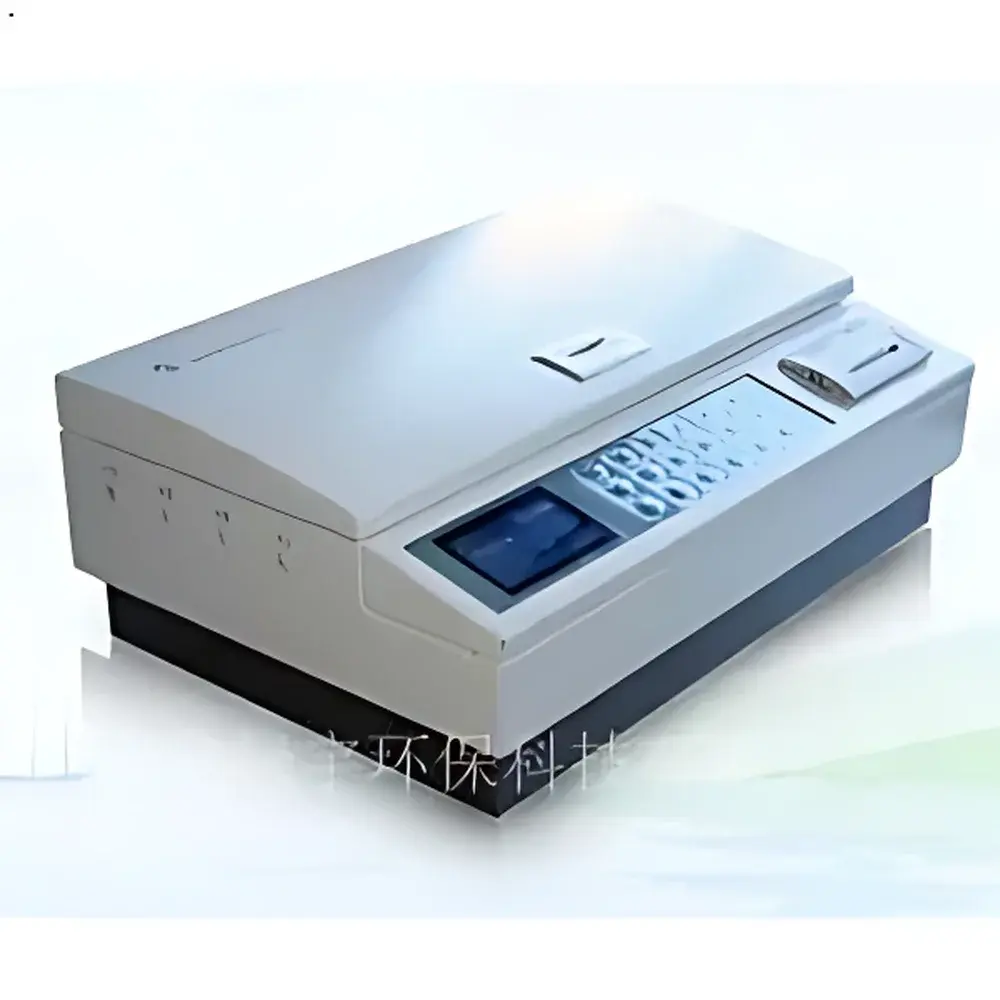
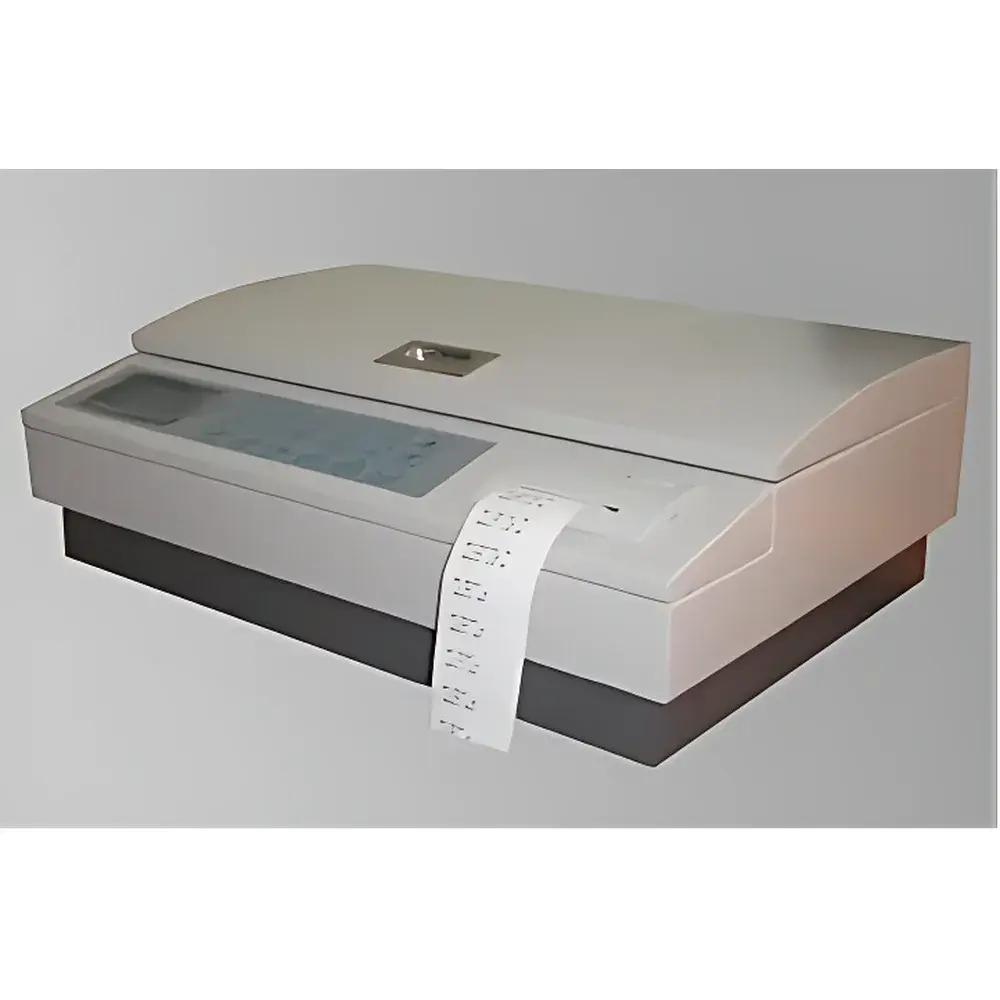
Inlab-2000 Microbial Electrode-Based BOD Analyzer
| Origin | Beijing, China |
|---|---|
| Manufacturer Type | Authorized Distributor |
| Origin Category | Domestic (PRC) |
| Model | Inlab-2000 |
| Price Range | USD 1,400–7,200 (FOB) |
| Instrument Type | Laboratory-Scale BOD Analyzer |
| Measurement Principle | Microbial Electrode Method |
| Measurement Range | 2–4000 mg/L |
| Detection Limit | 2 mg/L |
| Accuracy | ±5% of reading |
| Single-Sample Analysis Time | ≤8 min |
| Repeatability (RSD) | ≤8% |
| Sensor Configuration | Integrated Triple-Electrode Sensor with Reference Electrode |
| Microbial Membrane | BOD₅-specific immobilized bacterial strain (no pre-cultivation required) |
| Membrane Shelf Life | >12 months (dry, ambient storage) |
| Temperature Control | Proportional PID heating |
| Data Storage | 140 measurement records with timestamp |
| Sample Volume Requirement | ≥30 mL |
| Operating Ambient | 5–40 °C |
| Dimensions (W×D×H) | 530 × 360 × 200 mm |
| Weight | 18.5 kg |
| Power Supply | AC 220 V, 50 Hz |
Overview
The Inlab-2000 is a laboratory-grade Biochemical Oxygen Demand (BOD) analyzer engineered for rapid, reliable quantification of biodegradable organic load in aqueous matrices using the standardized microbial electrode method. Unlike conventional 5-day dilution methods (e.g., ISO 5815-1:2019 or ASTM D5210), the Inlab-2000 employs an immobilized, oxygen-sensitive microbial biosensor—comprising Pseudomonas fluorescens-derived BOD5-specific strains—to catalyze substrate oxidation under controlled dissolved oxygen (DO) conditions. The resulting current change across a triple-electrode sensor assembly (working, counter, and reference electrodes) is linearly correlated to BOD concentration. This electrochemical transduction enables direct, real-time measurement without sample dilution or incubation, delivering results compliant with HJ/T 86–2002—the official Chinese standard for microbial sensor-based BOD determination—and referenced in the fourth edition of *Methods for Examination of Water and Wastewater* (State Environmental Protection Administration of China). Its design targets routine compliance monitoring in municipal wastewater treatment plants, environmental monitoring stations, and industrial effluent laboratories requiring high-throughput screening.
Key Features
- Automated liquid-path switching system: Patented (CN Utility Model No. 200920158907.5) peristaltic-driven flow manifold enabling unattended sequential analysis of up to 140 stored samples without manual valve manipulation.
- Triple-electrode integrated sensor: Built-in Ag/AgCl reference electrode ensures stable baseline potential and minimizes drift during extended operation; working electrode surface optimized for consistent biofilm adhesion and electron transfer kinetics.
- PID-controlled thermostatic chamber: Maintains sensor and reaction zone at 20 °C ±0.3 °C—meeting HJ/T 86–2002 temperature tolerance requirements—via proportional heating algorithm, eliminating overshoot and thermal hysteresis.
- Self-cleaning fluidic protocol: Automatic rinse cycles for sample, standard, and blank lines using deionized water or buffer, reducing carryover risk and extending sensor membrane service life.
- Intuitive LCD interface: Backlit 128×64 dot-matrix display showing real-time DO signal, temperature status, calibration progress, and final BOD value; supports English-language menu navigation.
Sample Compatibility & Compliance
The Inlab-2000 is validated for use with municipal sewage, surface water (rivers, lakes, reservoirs), and moderately complex industrial effluents—including food processing, pharmaceutical, and pulp/paper discharges—provided suspended solids are 0.1 mg/L, heavy metal concentrations exceeding WHO guideline values) that may inhibit microbial activity. Method validation data confirm linearity (R² ≥0.997) across the full 2–4000 mg/L range and demonstrate compliance with HJ/T 86–2002 repeatability criteria (RSD ≤8%) and accuracy specifications (±5%). While not FDA 21 CFR Part 11-certified out-of-the-box, audit trails and user-access logs can be exported for GLP/GMP-aligned internal documentation.
Software & Data Management
Data acquisition and reporting are managed via embedded firmware supporting timestamped storage of 140 measurement records—including sample ID, BOD result, temperature, analysis duration, and sensor response slope. Export is facilitated through RS-232 serial interface to external PCs running Windows-compatible terminal software (e.g., Tera Term or custom LabVIEW VI), enabling CSV-formatted output for LIMS integration. Calibration history (zero, span, sensitivity checks) is retained separately and traceable to NIST-traceable BOD standards. No cloud connectivity or proprietary software installation is required; all configuration and diagnostics are accessible via front-panel controls.
Applications
- Routine BOD5 screening in wastewater treatment plant influent/effluent quality control labs.
- Field-deployable verification of BOD compliance for discharge permits (e.g., GB 8978–1996 Class I/II limits).
- Educational laboratories demonstrating microbial respiration kinetics and sensor-based environmental analytics.
- Pre-screening tool prior to definitive 5-day BOD testing—reducing labor and incubator occupancy by >85%.
- Process optimization studies where rapid feedback on biodegradability changes (e.g., after coagulation or ozonation) is critical.
FAQ
What regulatory standards does the Inlab-2000 satisfy?
It conforms to HJ/T 86–2002 (China’s standard method for microbial sensor BOD), and its measurement principle aligns with ISO 10260:1992 (water quality — determination of biochemical oxygen demand — microbial sensor method).
Can the instrument measure BOD in seawater or high-salinity samples?
No—salinity >5 g/L significantly suppresses microbial membrane activity and alters oxygen diffusion kinetics; freshwater or low-salinity (<1 g/L) effluents only.
How often must the microbial membrane be replaced?
Under continuous daily use at 20 °C, the immobilized BOD5 biofilm retains >90% sensitivity for ≥30 days; shelf life exceeds 12 months when stored desiccated at 4–25 °C.
Is sample filtration required before analysis?
Yes—samples with turbidity >40 NTU or total suspended solids >50 mg/L must be filtered through 0.45-µm membrane to prevent clogging and biofilm fouling.
Does the analyzer support multi-point calibration?
Yes—up to three-point calibration (zero, mid-range, high-range) using certified BOD standards is supported, with automatic slope calculation and deviation alerting.







